
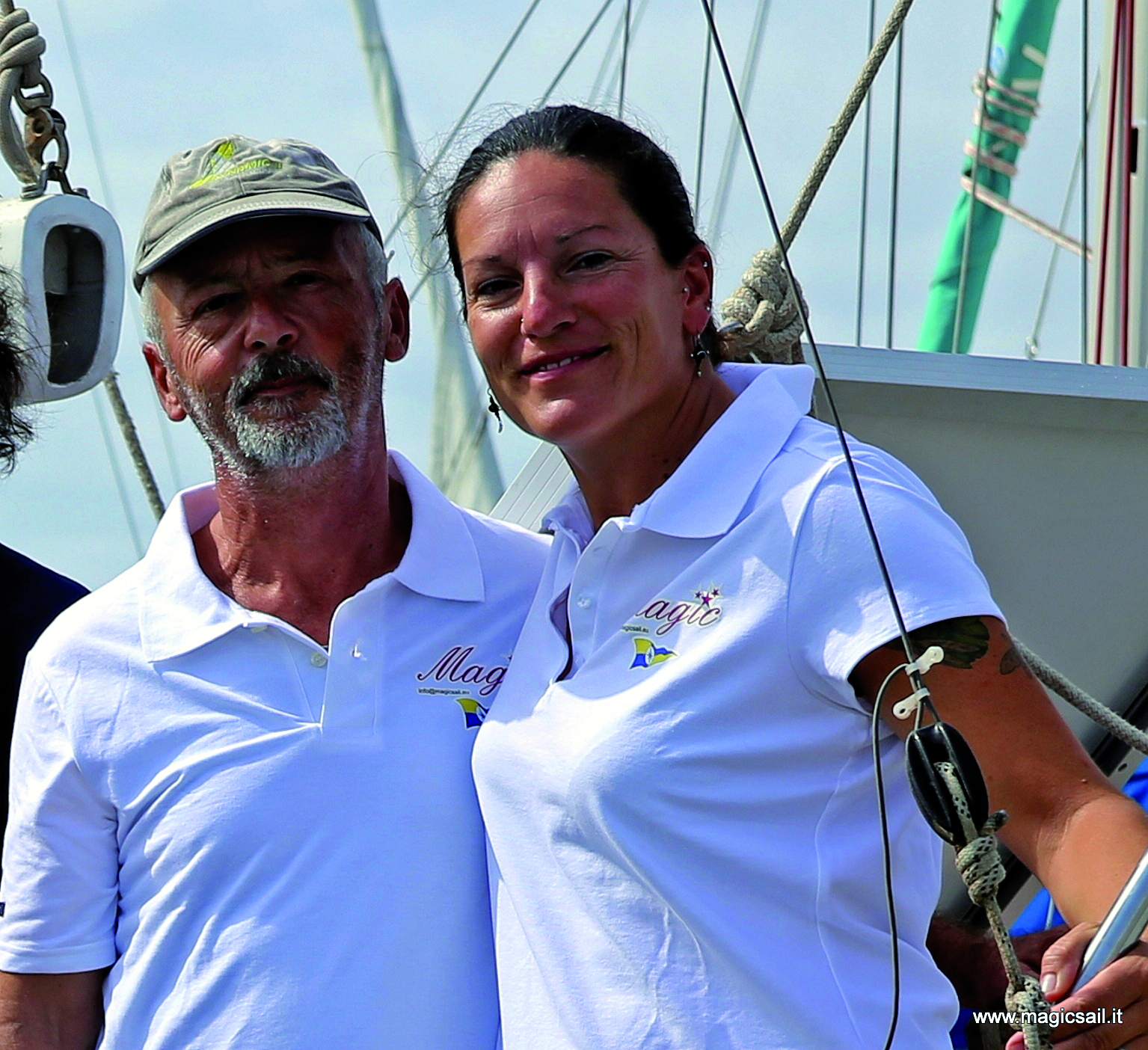
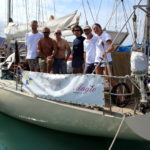
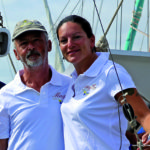
 “Guys, these are the owners of the Magic, my former boat. They are great people, you definitely need to contact them.” Speaking is Umberto Marzotto, the ‘globetrotting count’ whose story we told you HERE and HERE.
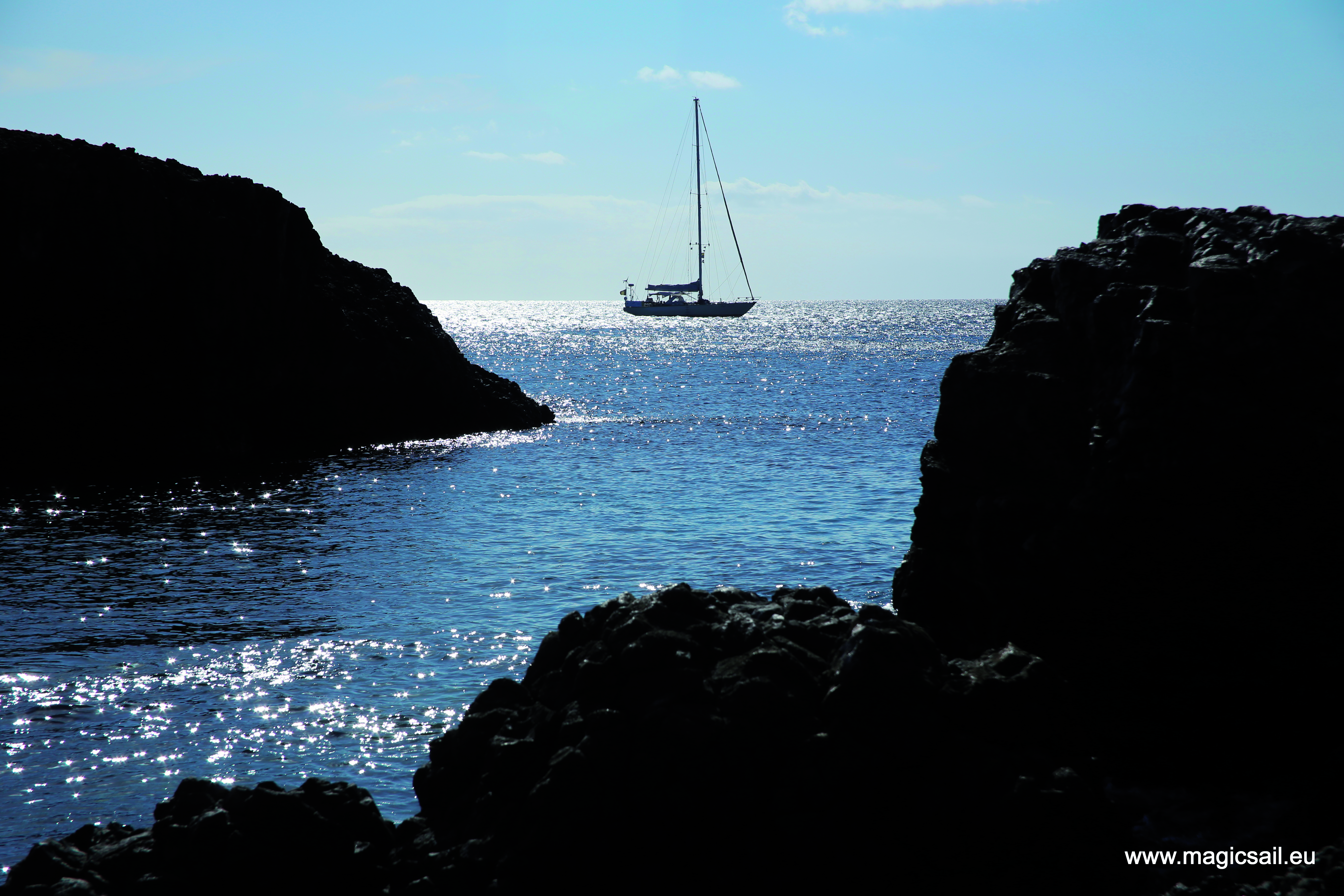
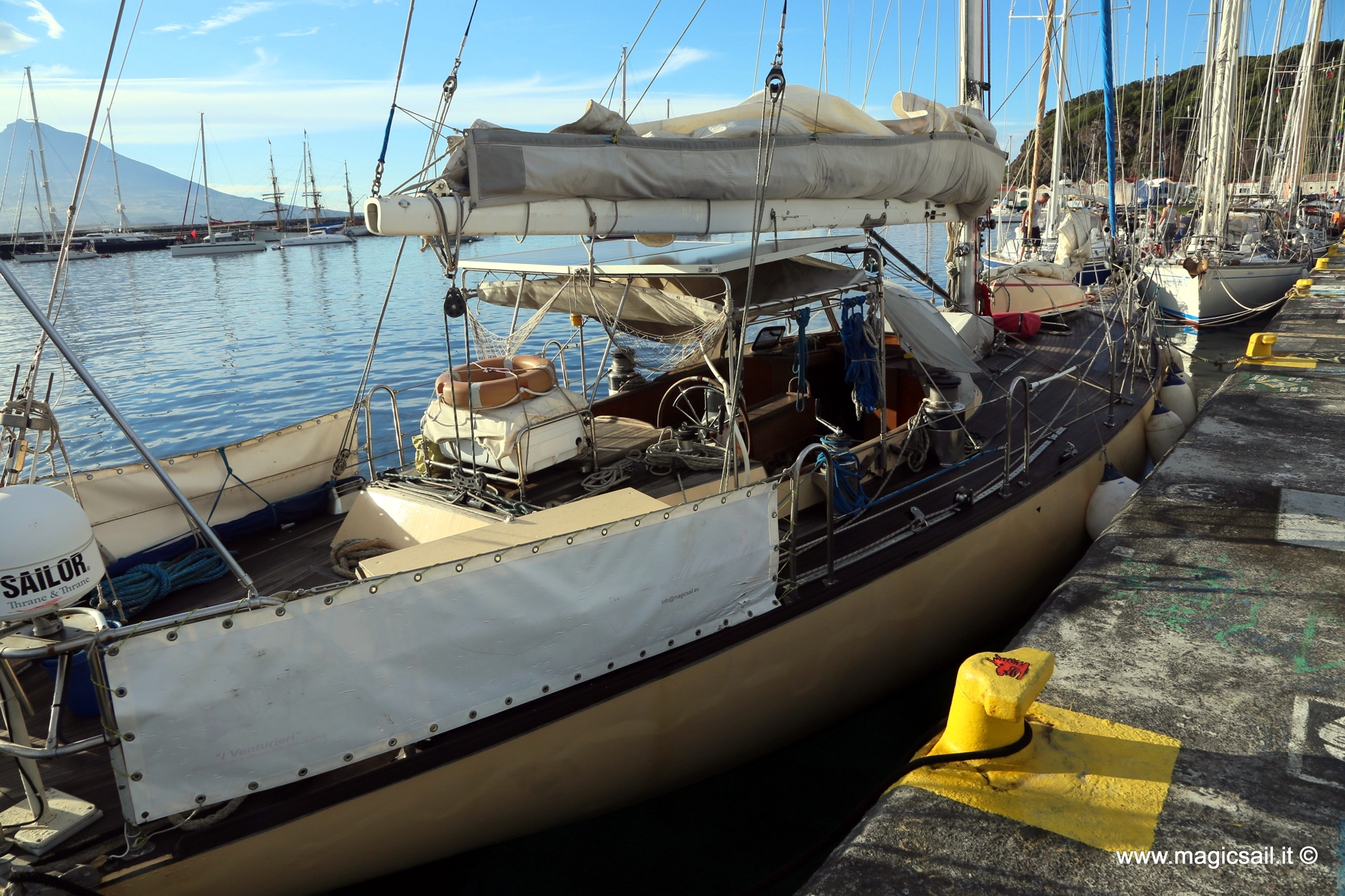
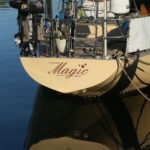
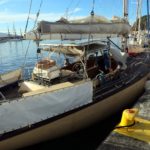
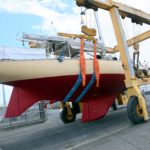
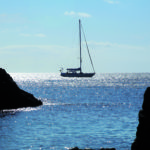
Magic, on the other hand, is a splendid 55-foot Sparkman & Stephens, built in 1973 in light alloy. Aboard which Antonino Stefani, an avid lifelong sailor, and partner Daniela ‘Lilly’ Strappaghetti realized their dream, abandoning their “terrestrial” life and setting off on a five-year round-the-world: “We left S. Giorgio di Nogaro on July 11, 2013, and arrived in the Azores on July 7, 2018, after traveling about 50,000 miles largely along the tropical route,” says Antonino, 64, from Udine (Lilly is 49 and from Cividale del Friuli).
 THE FIRST TWO YEARS BETWEEN THE ATLANTIC AND THE PACIFIC
“After reaching the Cape Verde Islands, we tackled the Atlantic Ocean crossing by landing in Grenada in the Caribbean, sailed up the Caribbean islands of the Lesser Antilles to the British Virgin Islands, then reached the island of Ispanola and Jamaica.
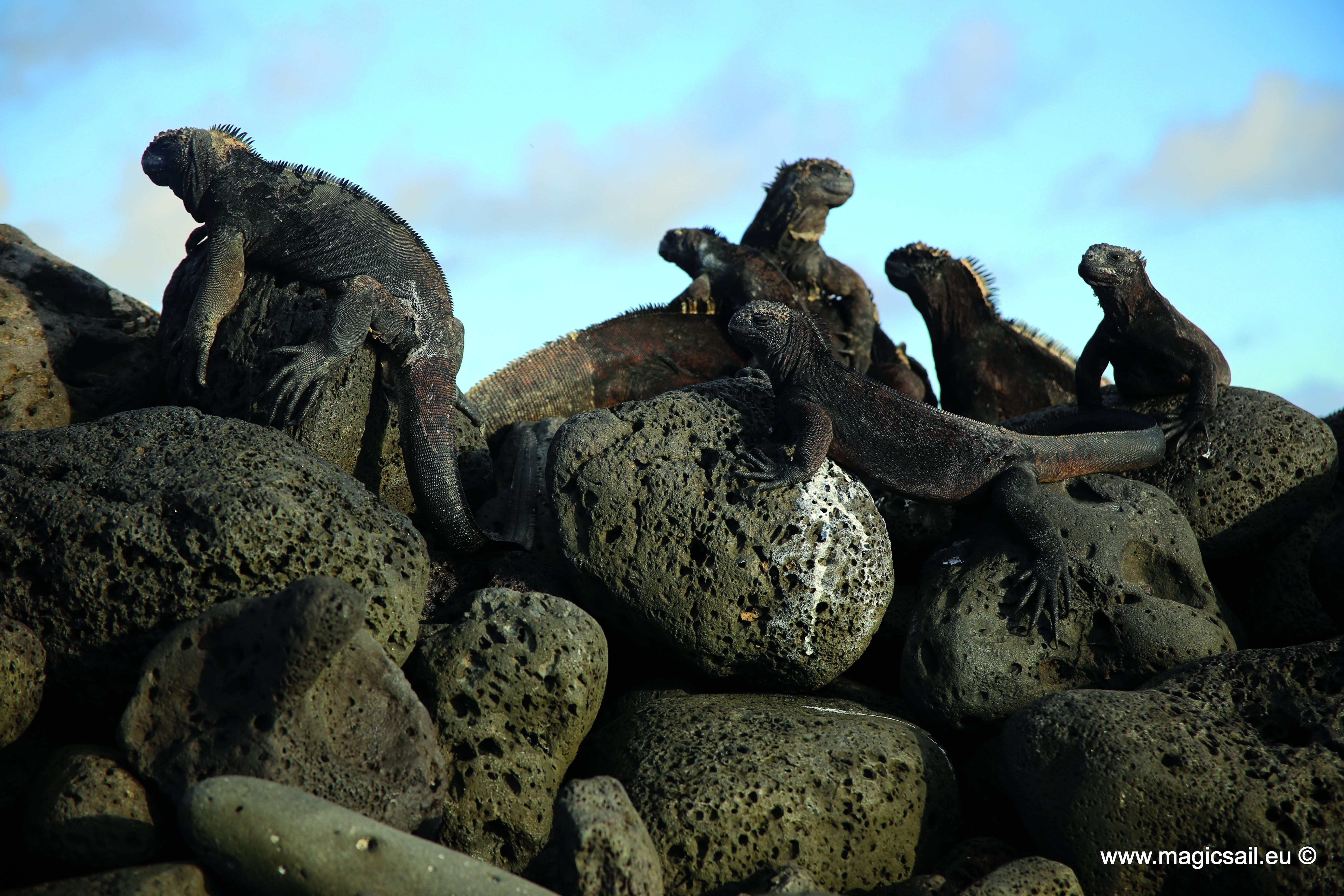
From there we went down to the San Blas, then after crossing the Panama Canal we came to the Galapagos continuing to French Polynesia: Marquesas, Tuamotu and Society Islands. After about three months, we left to complete the Pacific Ocean crossing via Suvarrow, Samoa, Tonga and eventually Opua in New Zealand. From there we returned for two weeks to Italy.” It was December 2015.
THE “BREAK” ON A FRANCHINI 41
“Upon our return to New Zealand, after doing about a month of yard work to refit the Magic and working to maintain other boats, we left for a cruise to Tonga and Fiji with a second return to New Zealand. In March 2016, we set out again for New Caledonia and Vanuatu, and in fall 2016, through the Torres Strait we reached Indonesia, where we sailed extensively between Bali and Flores.”
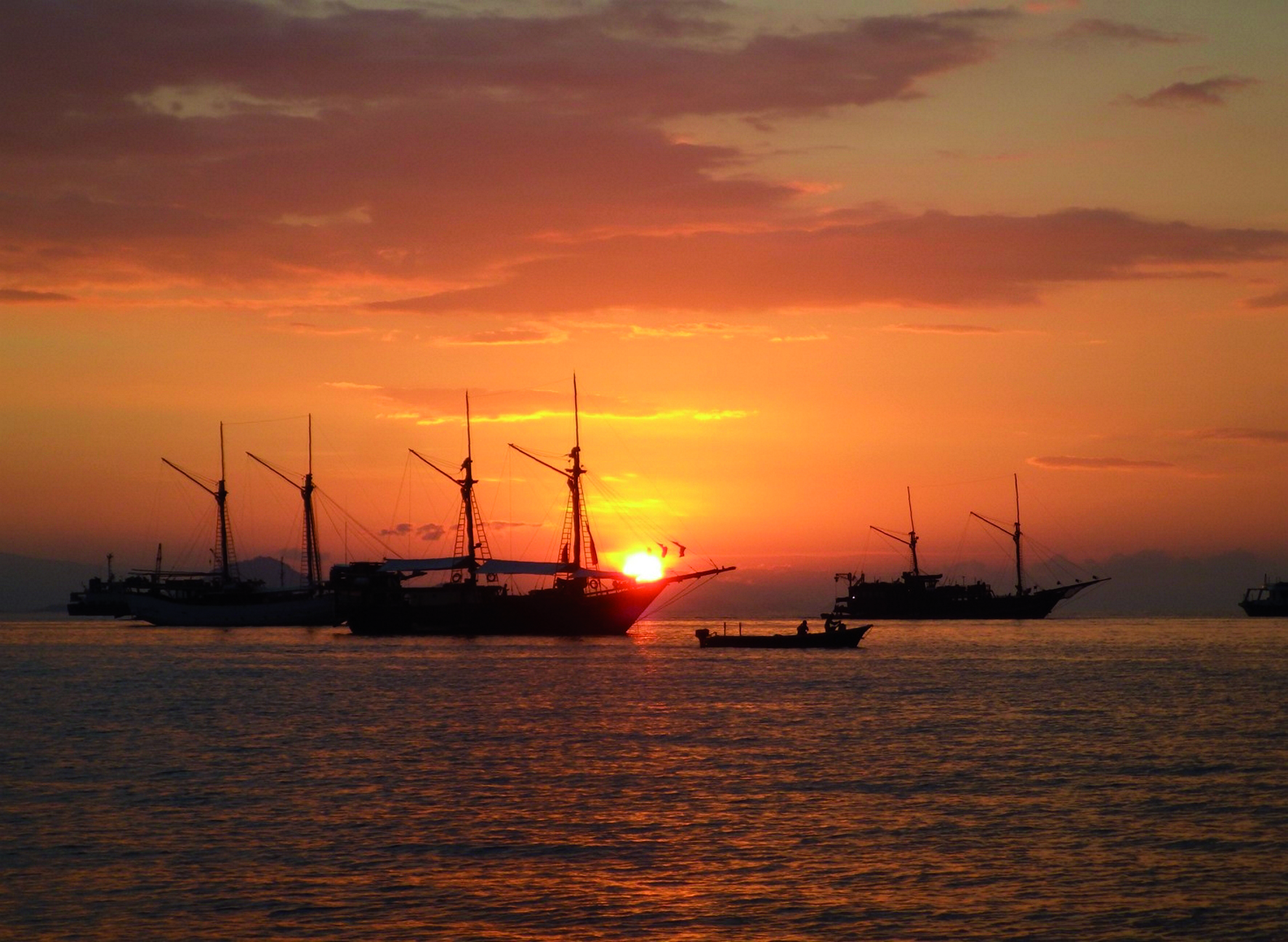 In November 2016, “we went to Malaysia to join the Dream Catcher, a Franchini 41 belonging to our friends Alberto and Ali, who needed a hand with some maintenance work and to return from around the world via the Red Sea. We embarked with them and sailed through North India and the Red Sea to Crete. it was an adventure, especially the dangerous sailing from Sri Lanka to Djibouti, the pirate route!”
 THE INDIAN AND THE RISE TO THE AZORES
Antonino continues, “After a second short visit to Italy from Greece we flew to Indonesia where we had left Magic for six months. In September 2017 we departed Bali for the South Indian crossing, calling at Cocos, Rodrigues, Mauritius, La Reunion, and reaching, after a technical stop south of Madagascar, Richards Bay in South Africa about 5,000 miles from departure. In February 2018, after a third visit to Italy, we returned to Richards Bay and began a long transfer in stages to Cape Town.
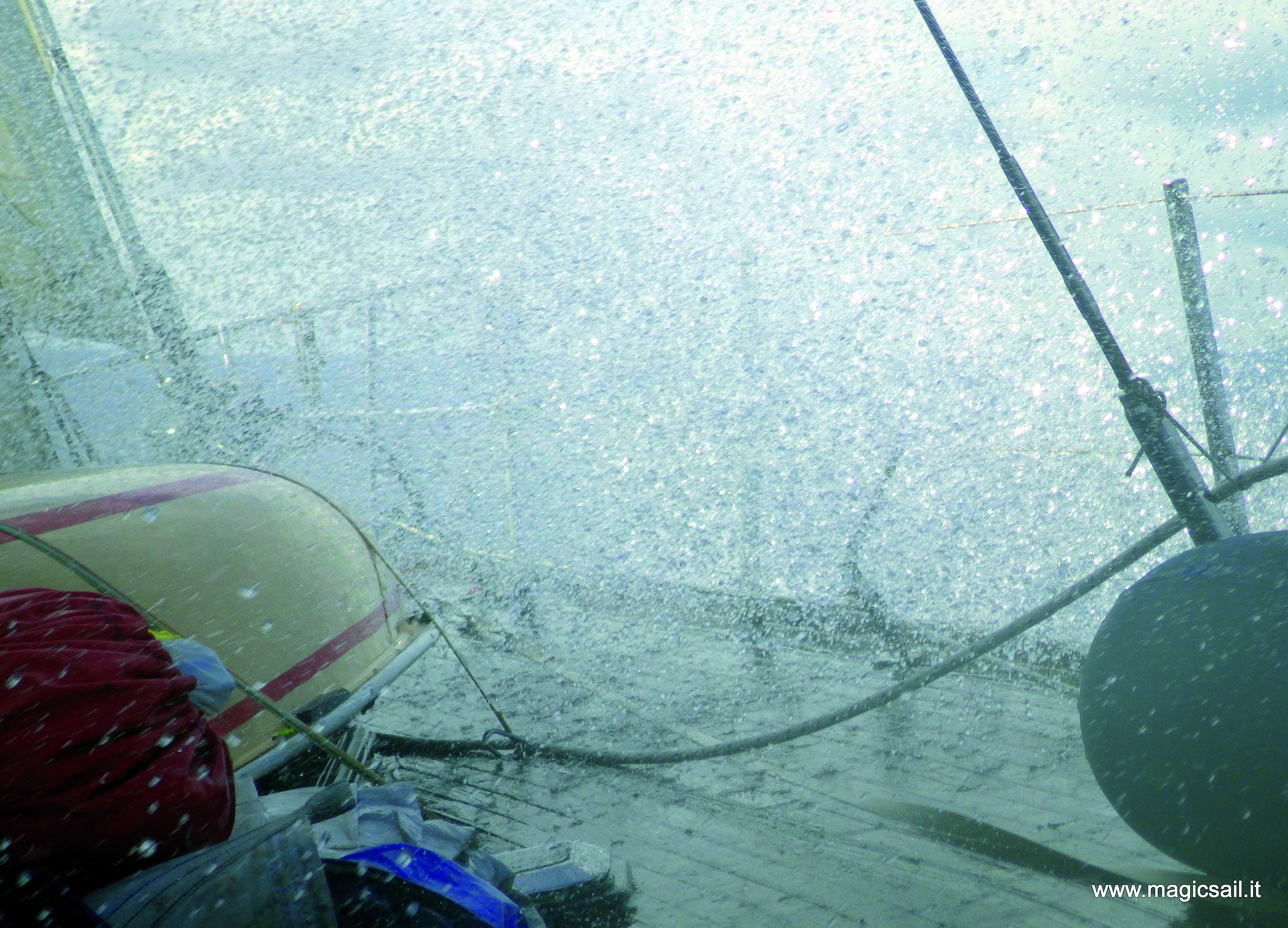
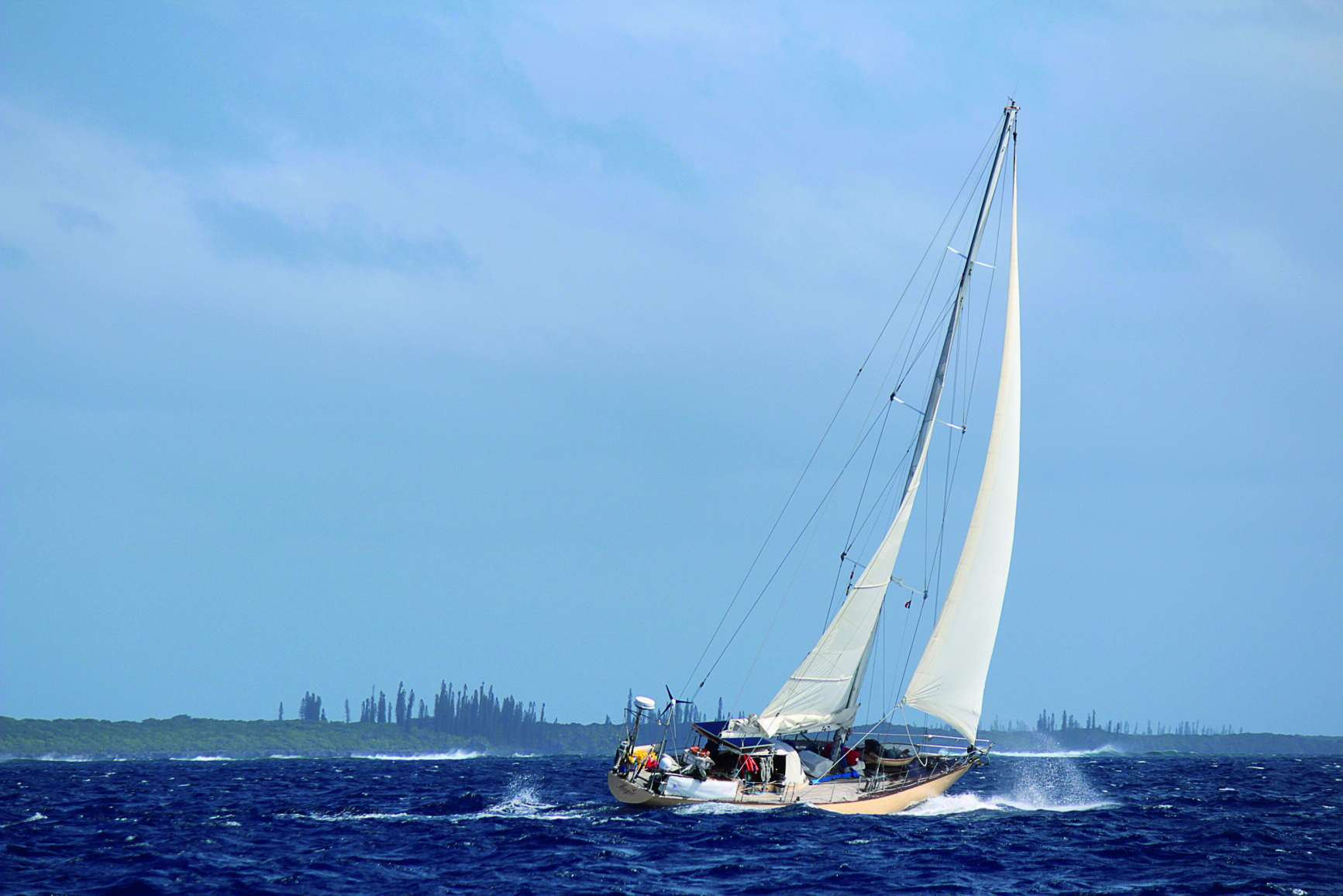
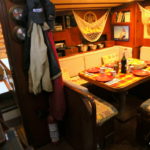
An interesting and challenging navigation for the complex meteorology of the East Coast of South Africa. From Cape Town we left in May for the last long route that took us to the Azores via St. Helena and Dakar in Senegal. The unusual crossing against the prevailing winds was slow and wet, after the first part in the trade wind from the SE, past the area of equatorial calms, we encountered the NE trade wind and sailed at least 1,500 miles upwind narrowly. The Magic performed very well because of the water lines suitable for this type of gait and the interior layout, which is more than comfortable.”
The three most aesthetically pleasing places seen by the couple on their trip are “some bays in the Balearic Islands, the atolls of the Tuamotu, and the Lau archipelago in Fiji.”
QUIET SAILING (ON A SUPERBOAT)
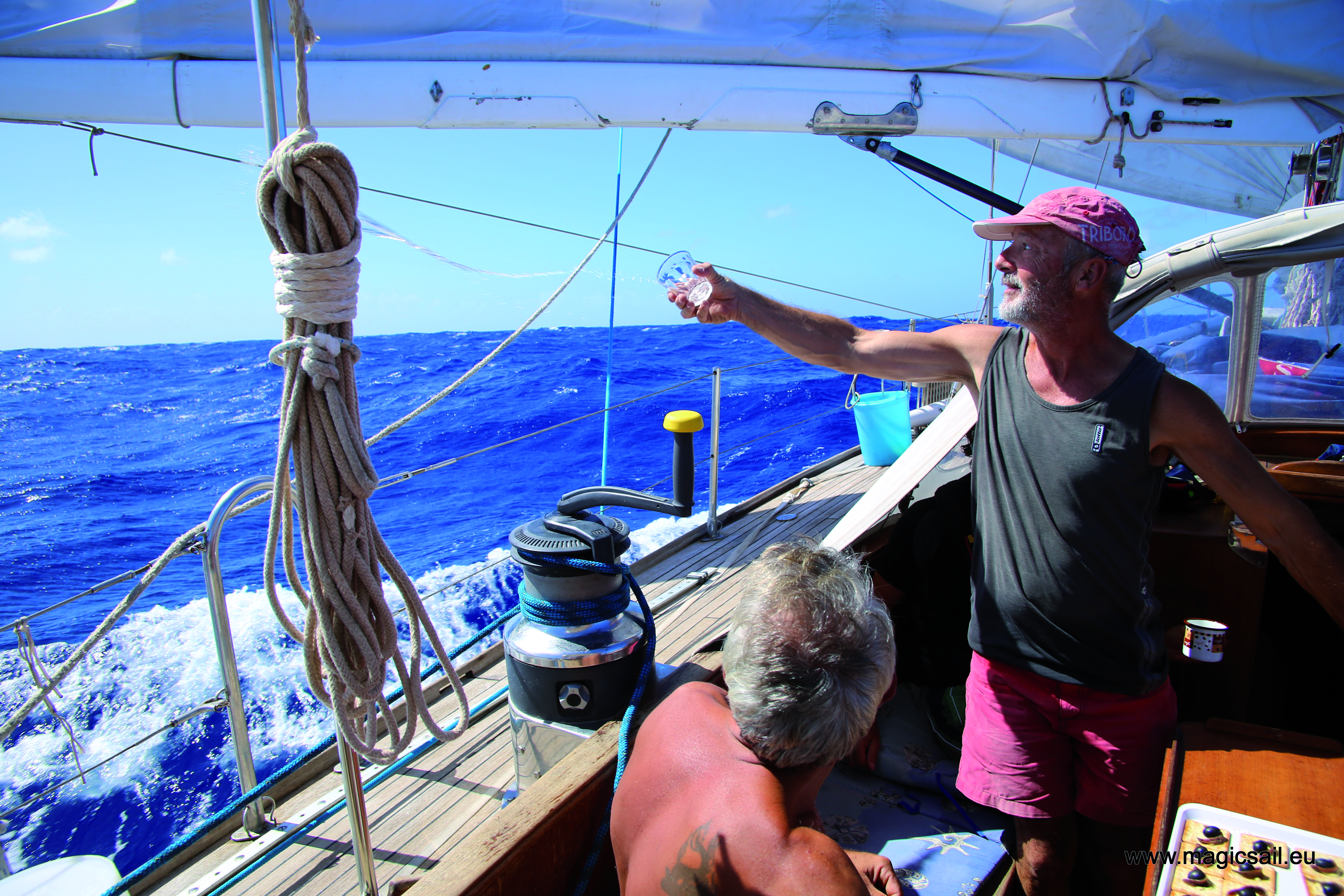
“Thanks to constant attention to routes and weather,” Antonino says, “and despite the 3-meter draft, we never ran aground and did not experience dangerous gales, sailing was often challenging, yet we always felt very safe on board. We sailed (using the old original sails apart from a foresail and gennaker made at the start in 2013) even with little wind, when the boat was making 3-4 knots, as by motor the Magic is rather slow.”
Smooth sailing, thanks to a superboat (solid, mast with three orders of spreaders, structural rigging, only 80 centimeters of freeboard). So quiet that when we asked Stefani to point out the most difficult moment of her incredible journey, imagining tales of storms and whales, she surprised us like this: “One of the most disheartening moments I experienced on board was when I thought I had seized the engine in Georgetown, Jamaica-actually the problem was the starter motor!”.
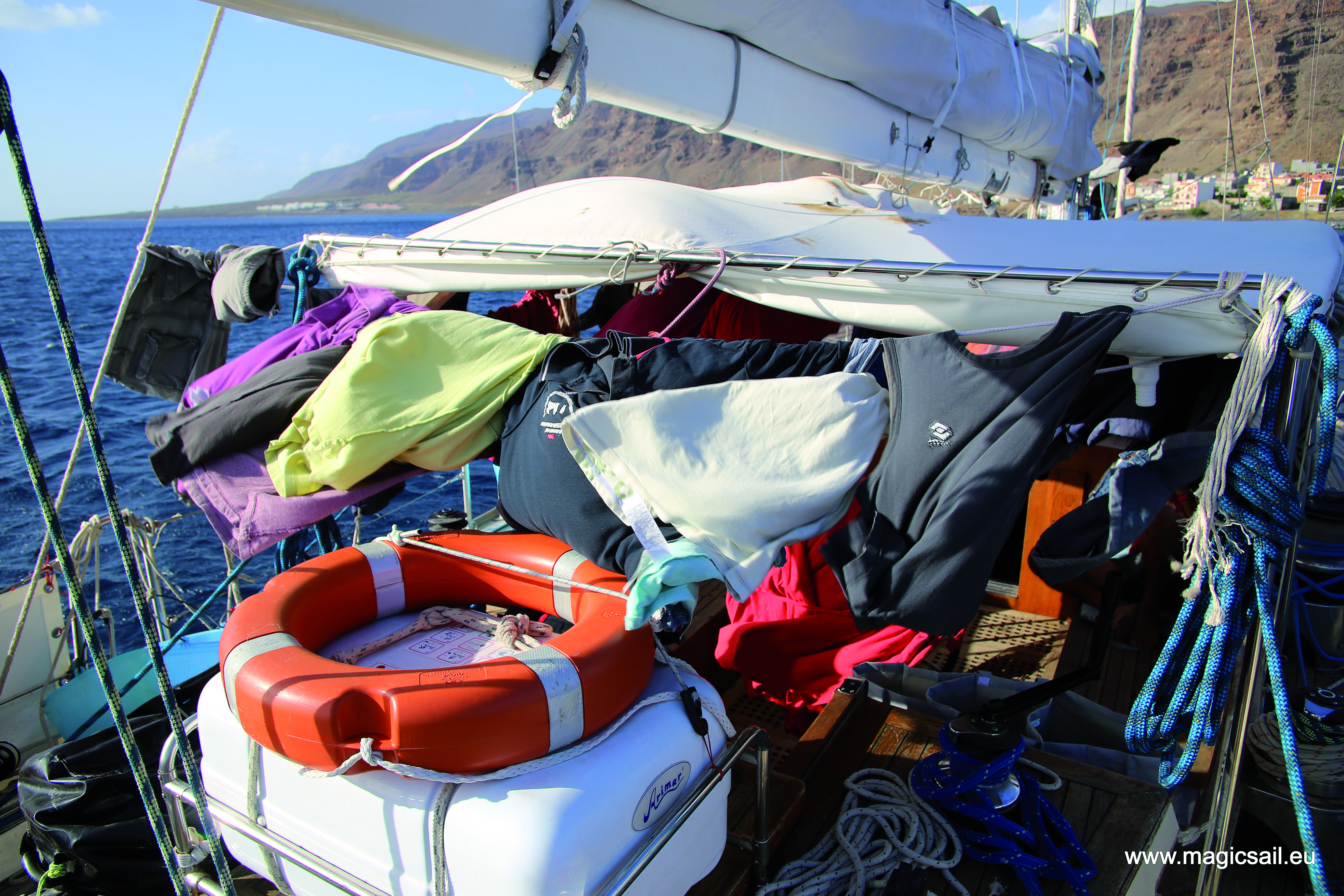 LIVING ON BOARD IS CHEAP BUT IT COSTS
Also very pragmatic is the answer to the opposite question, “The happiest moment? Not only those on arrival after difficult crossings, such as the Indian Ocean crossing arriving at Richards Bay in South Africa, but also when guests confirm the cruise and we get a little bit of money…”
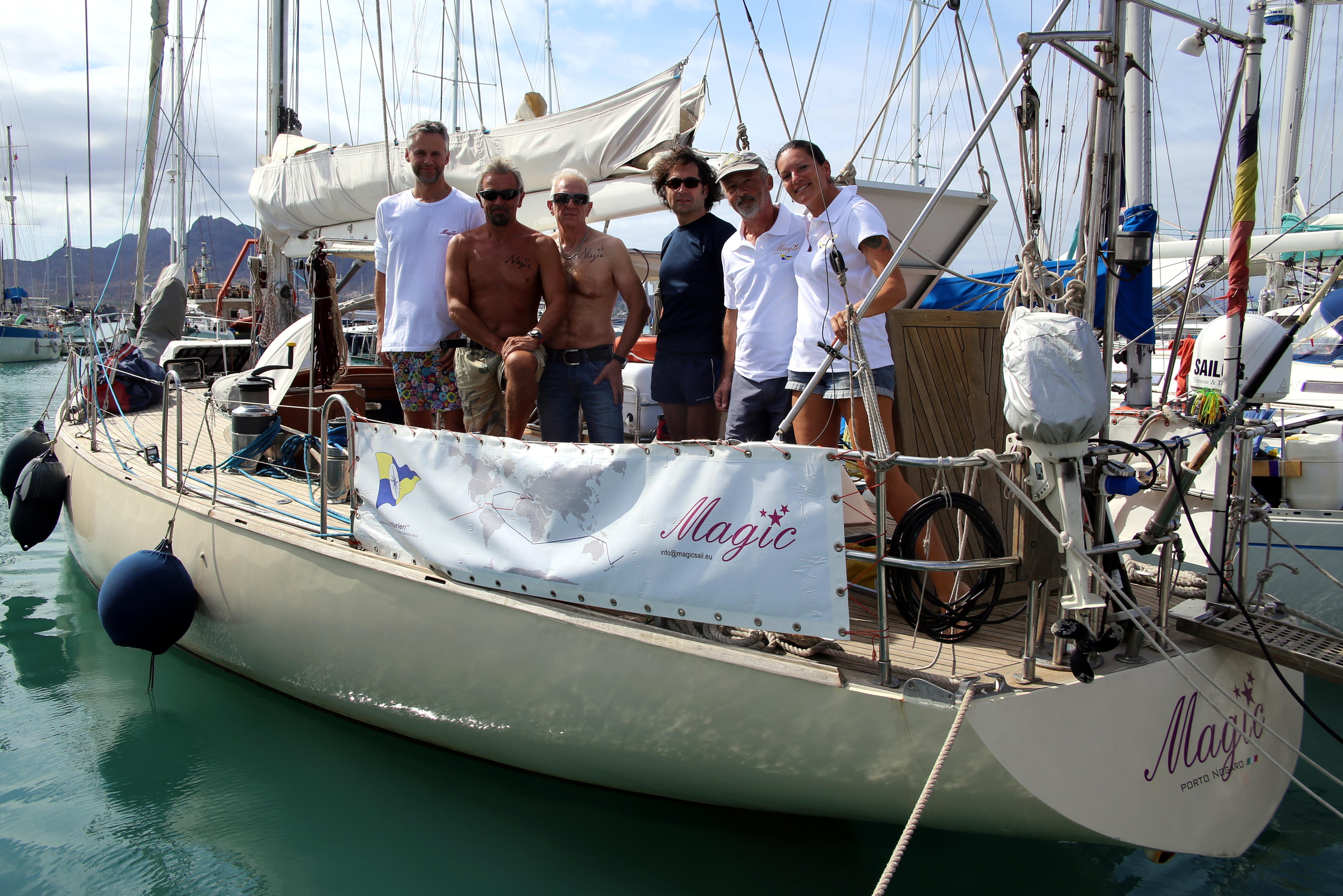 During the voyage, in order to feed the ship’s cash register, the two hosted members of ‘I Venturieri’ from Chioggia aboard the Magic (www.venturieri.org) and worked aboard other boats for electronic installations (Antoninus was an electronics technician before he sailed for a living) and ocean transfers.
“We realized that you can live on a boat, even with little or very little. Let’s say right away that a minimum amount of spending opportunity is essential, nowhere in the world do you live for free, that’s the reality, so something has to come in. We had the rent of a small apartment and often the help of our families, who took pity on two unfortunate people sailing around the world.” It should also be mentioned that Lilly had a very good job as a sales manager in a large manufacturing company, and by quitting, she was awarded severance pay.
TIME (FOR THEM) IS FREE
After the income, we come to the expenses: “The biggest expense item is the boat maintenance, an old 55-footer costs a lot and it is essential to personally provide everything, never needing paid help. That leaves hauling and launching and other expenses strictly related to the shipyard, but outside Europe they can be surprisingly low, of course by carefully searching for the best prices.
 Port fees in the countries we visited were negligible, ditto for insurance, we only did the mandatory minimum for all over the world. Diesel fuel is a major expense even though, on average, it is much cheaper than in Italy, so lots of sailing, even with little wind… Time (to us) costs nothing! We returned to Italy a few times, choosing the times when we could find really low-cost flights.”
What about the food? “As for food, we did not miss anything, but we maniacally sought the lowest prices and took advantage of local products. Even places known to be quite expensive, such as the Caribbean, French Polynesia, and New Caledonia, have proven to be more than affordable by choosing to buy the right products.
Of course, the kitchen, strictly on board, has always worked very well, very few paid excursions for tourists as well. Bit by bit, we adjusted our needs by finding alternative and inexpensive solutions, we looked for niches where we could be quite comfortable with what we had.”
 ANY BOAT IS GOOD IF YOU KNOW HOW TO CHOOSE IT
To close, we asked Stefani for some ‘tips’ for those who want to embark on long sailing. “Giving sound advice is difficult and following it even more difficult, however: learn to fend for yourself in doing any maintenance to your boat, never give up when faced with a problem, look for creative and original solutions. And finally, delete the words “I am not capable” from your vocabulary.
Perhaps you expected me to say which rig is better, how big the boat is, etc. But I think every boat is fine if the skipper is convinced, the mistake is not the boat but the one who makes the mistake in choosing it.”. And 5 years and 50,000 miles prove it: with the Magic, Antonino and Lilly have not gone wrong.
E.R.
Here is the link to the Magic’s website
DISCOVER ALL CRUISES AND ADVENTURES NEWS
ALL THE PHOTOS OF THE MAGIC TRIP

Check out the latest issue

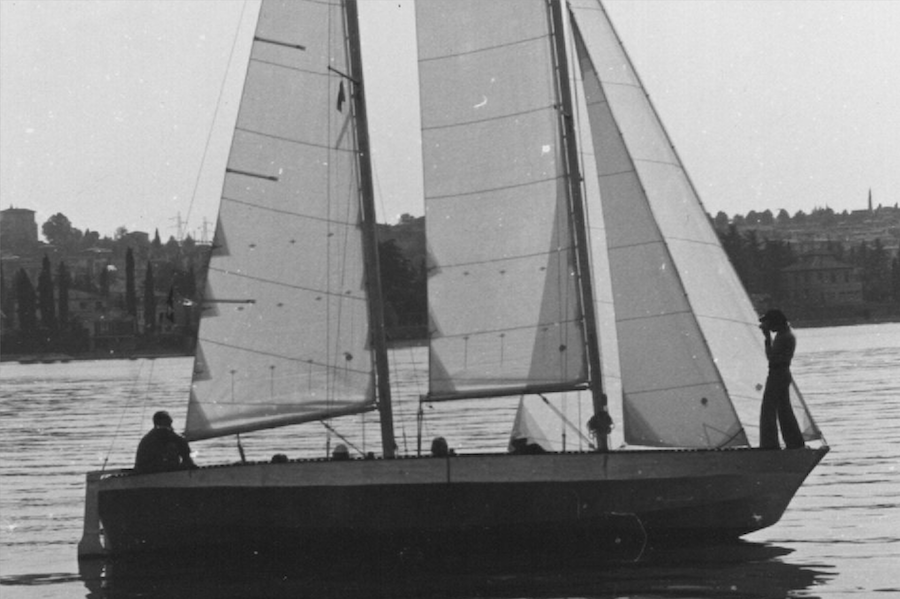
Old boat makes good board! The legendary Fraglia schooner has been “re-launched” after 50 years.
Desenzano, Lake Garda, home of the FVD, Fraglia Vela Desenzano. A Lake classic replicates its launch 50 years after the first time. It is the Fraglia schooner, a light alloy school schooner, the first in Italy to ever be built
Feel like boating? The captain of the Amerigo Vespucci will teach you!
Between October and November, training courses offered by the Yacht Club Cala dei Sardi are starting up again. They are aimed at those who want to get their boat license or increase their skills as offshore skippers, and the trainers
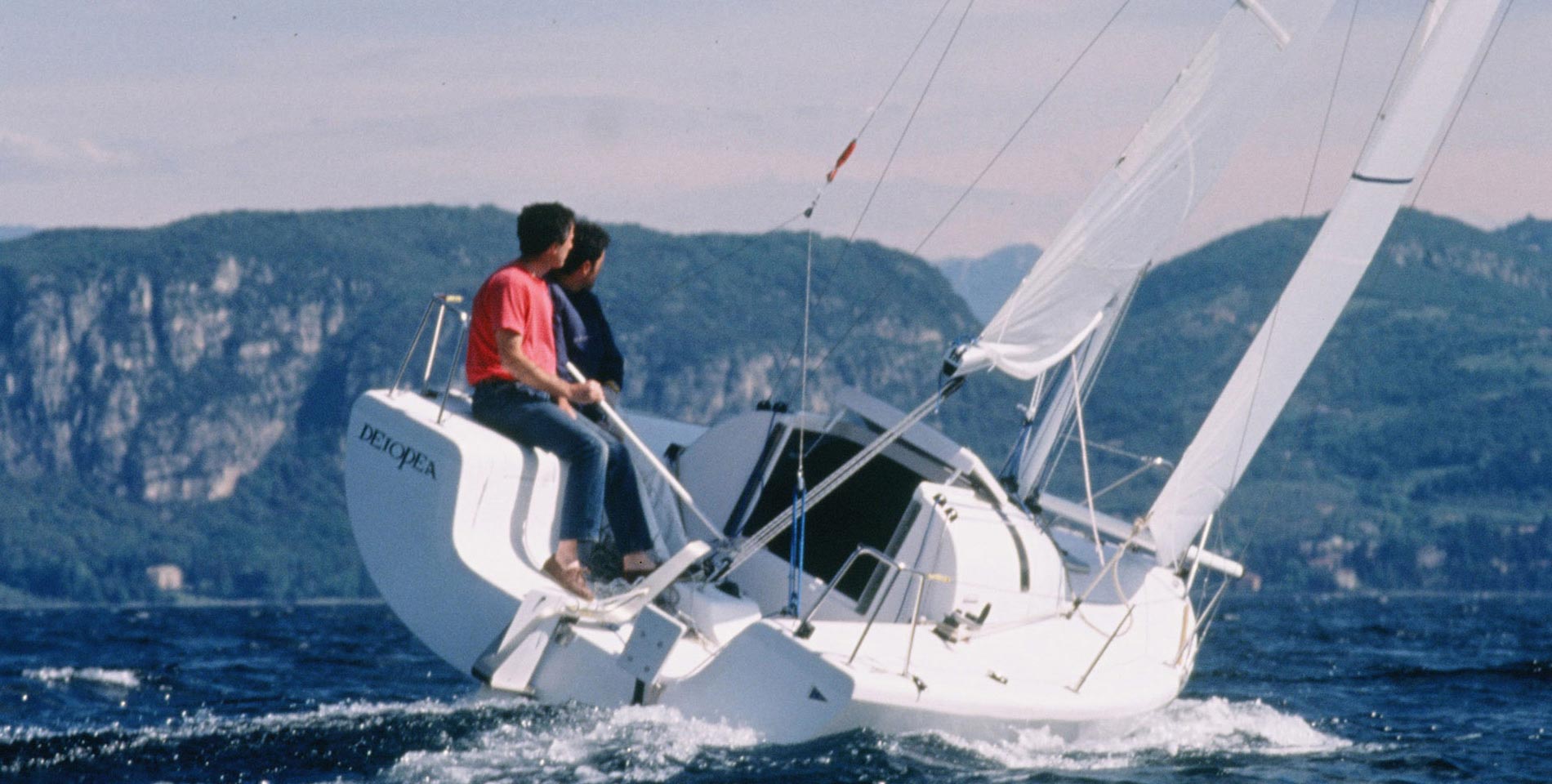
Classic Boat Cult | 6 meters overall: agile, compact and exceptional
Small, compact, exceptional. Three words to best describe 7 boats that, combined in size, we believe are absolute must-have gems-both for culture and for potential purchase. In fact, in this our review of the great Classic Boats of the past,
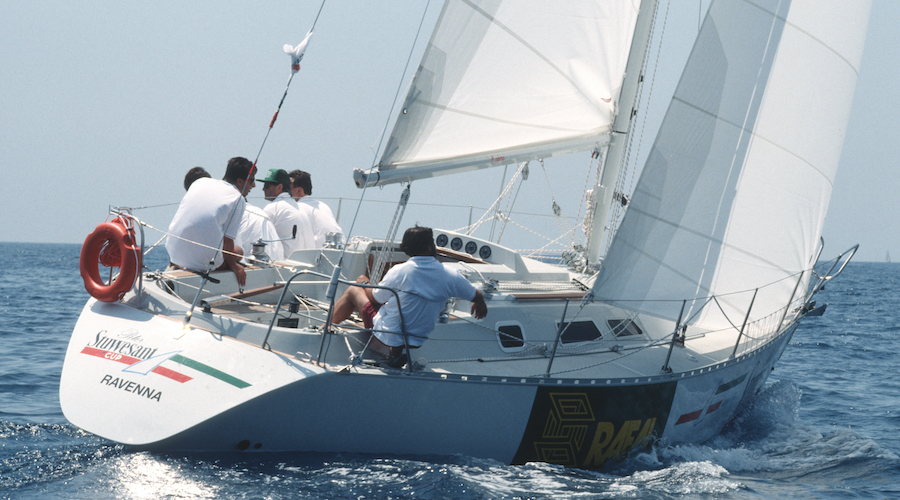
Classic Boat Club | Comet: 5 hulls celebrating Comar’s signature excellence
Forlì, 1961: Sipla, a small fiberglass Flying Junior manufacturer, is born. These are the dawn of large-scale production, and the new company soon becomes a pioneer in naval production in vtr. Growth is steady, small masterpieces such as Van de

