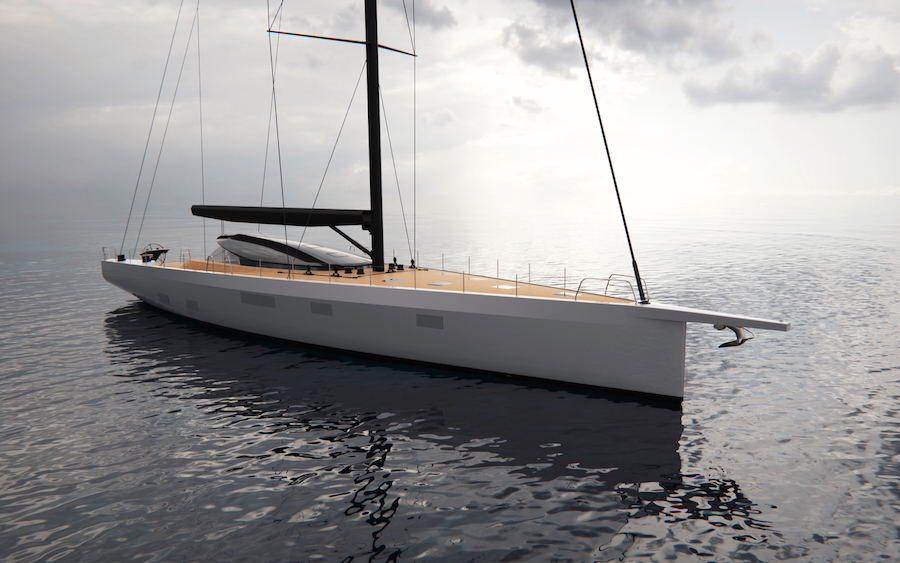
Nautor Swan has unveiled the new Swan Alloy 44, a 44-meter aluminum sailing supermaxi. The first example is scheduled for delivery in summer 2028, with the hull built in the Netherlands and completion in Viareggio. The first owner will be Massimo Perotti, president of Sanlorenzo, an Italian superyacht shipyard that acquired Nautor Swan for 80.9 million euros in August 2024.
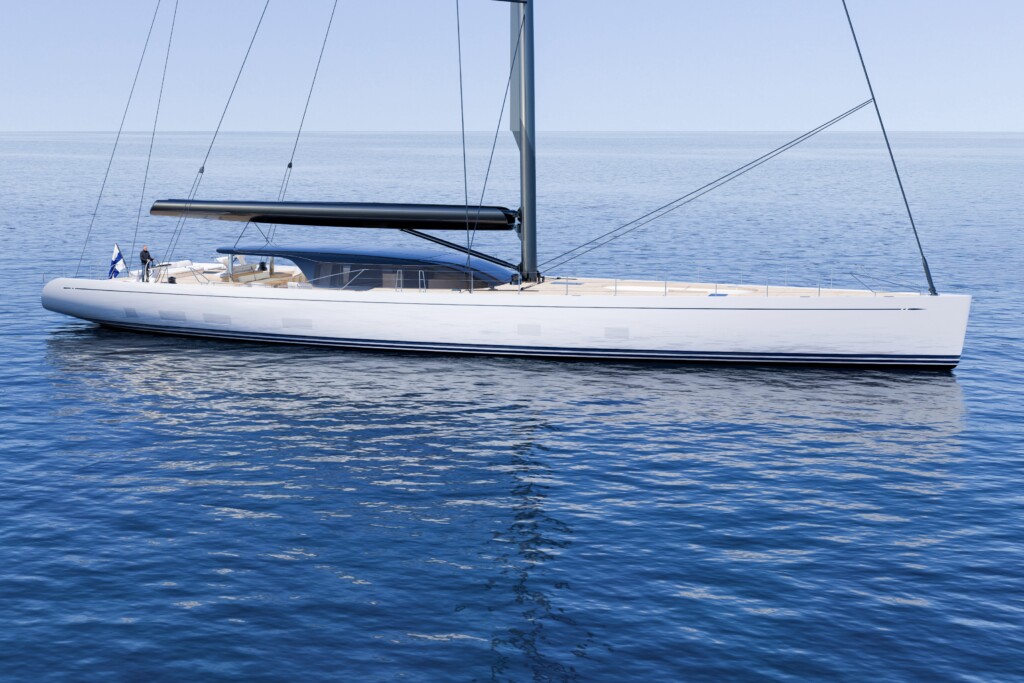
Alloy 44 is Nautor Swan’s first superyacht
The project’s debut took place at the Monaco Yacht Show, where Swan unveiled the first unit in the new Alloy line as a strategic step toward aluminum sailing superyachts. The first unit measures 43.5 meters overall and inaugurates a range that expands Swan’s Maxi offering with materials and construction processes typical of the superyacht segment. The initiative is part of the ongoing relaunch under Sanlorenzo ownership, which has accelerated investment, global sales network, and product development.
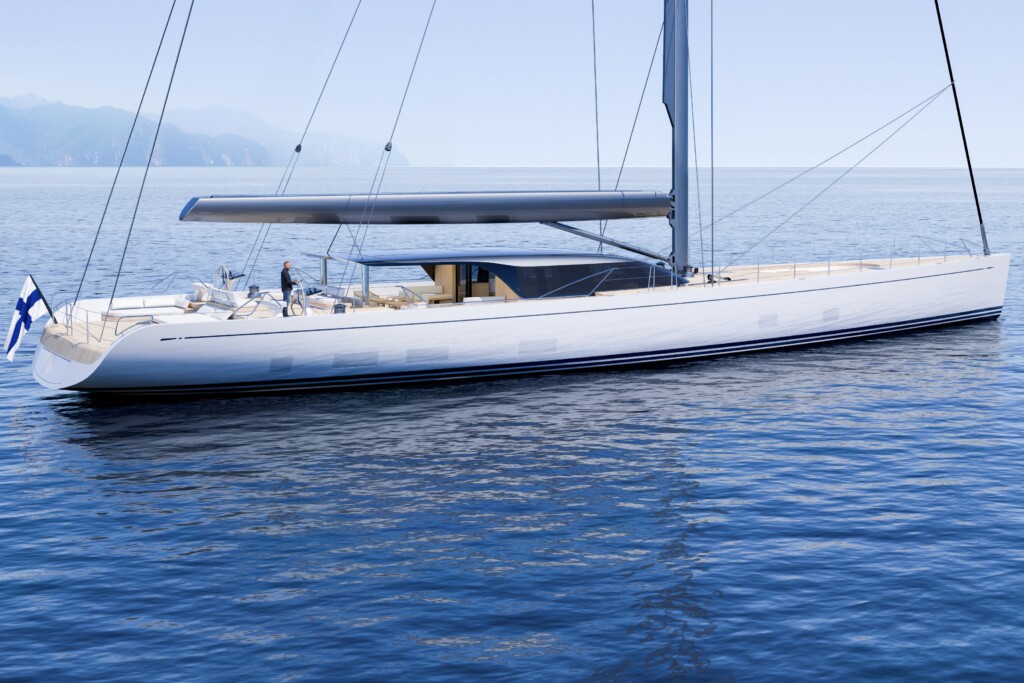
The hull, deck and superstructure will be built in the Netherlands, with completion and outfitting in Viareggio, Nautor Swan’s new Italian hub. The decision points to Dutch excellence in aluminum carpentry for superyachts, recognized for quality of workmanship and supply chain of suppliers. It is a “hybrid” approach that combines northern European supply chain and Italian expertise for the final fit-out.
Massimo Perotti has publicly stated that he will be the owner of the first Swan Alloy 44, with the aim of accompanying the launch of the new range and guiding its image in the market.
An innovative design by Malcolm McKeon
The project bears the signature of Malcolm McKeon Yacht Design, with naval architecture and styling geared toward combining performance, comfort and contemporary language.
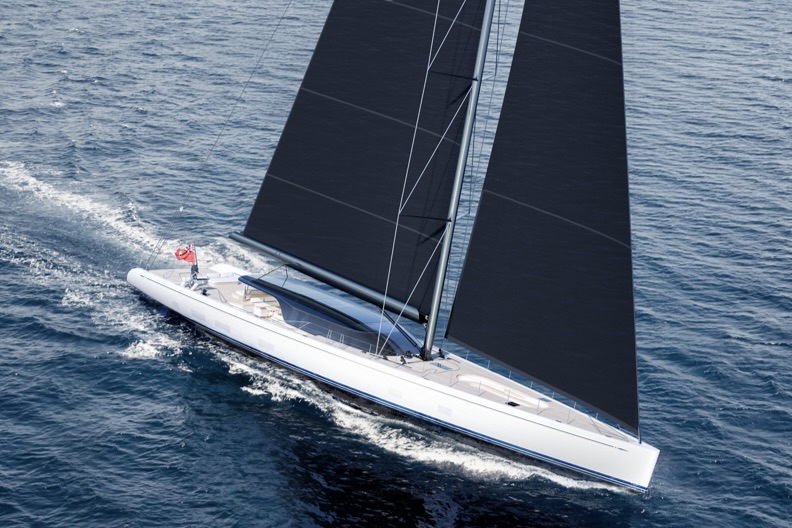
“Alloy gives us new freedom without losing the Swan silhouette, combining elegance in the lines, functionality in the details, and a sailing experience that appears naturally effortless,” said designer Malcolm McKeon.“The use of aluminum allows us greater flexibility in the layout of the interior, which has less rigid fixed points than composite boats.”
James Barbaro
Check out the latest issue

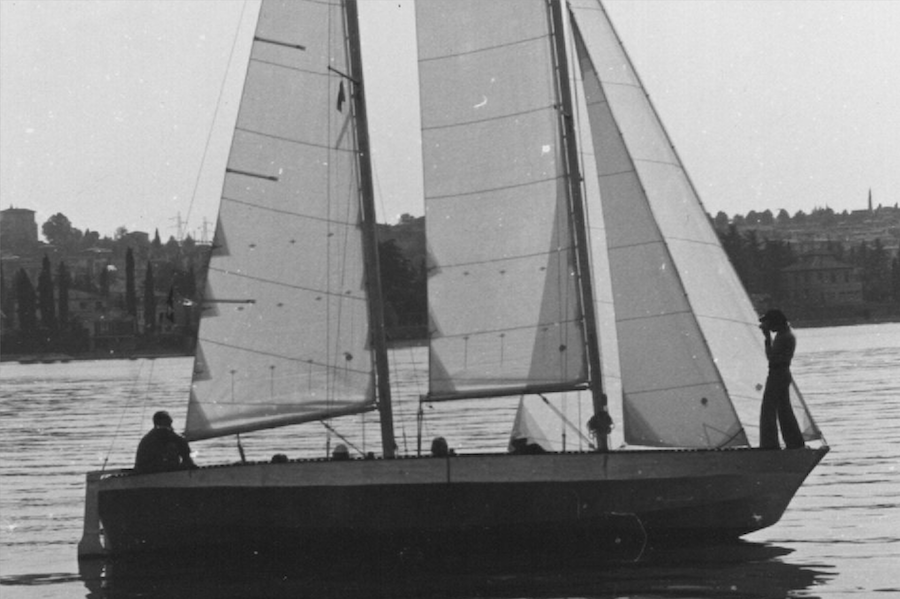
Old boat makes good board! The legendary Fraglia schooner has been “re-launched” after 50 years.
Desenzano, Lake Garda, home of the FVD, Fraglia Vela Desenzano. A Lake classic replicates its launch 50 years after the first time. It is the Fraglia schooner, a light alloy school schooner, the first in Italy to ever be built
VIDEO – Ubi Maior Italia, when a new company is born from a bit of madness
A boat ride in 45 knots and a pinch of madness: these are the ingredients of a story that speaks 100 percent the language of Made in Italy. A story that starts from the heart of Tuscany and has reached
VIDEO – Stem 50 (15.85 m), the 100% Italian aluminum bluewater
We can almost call it “bluewater mania,” because in this 2025 many novelties in sailing come from this type of boat: after the Bluewater 56, the CNB 62, comes a 100% made in Italy boat, which is also a first
Hooded Ark 100: the new super bluewater cruiser (30m) according to Farr and Micheletti
Until a few years ago, the word “bluewater,” identified those globetrotting boats that did not compromise on solidity and safety, sometimes even at the expense of performance, aesthetics, and ease of use. Today, thanks in part to technological advances in

