
What needs to change to make the Italian recreational boating industry more efficient and accessible to an ever-widening public? We have compiled a list of tasks, in ten points that our government should carry out. Specifically, the Minister for Civil Defense Nello Musumeci cha also the responsibility for Marine Policies, should seriously consider it. The solutions are there. It is enough to be willing to put them into practice
Ten 2025 tasks to improve Italian boating
Dear Minister of the Sea Nello Musumeci, listen to us, we have been working for you. There is a treasure, we will never tire of repeating it, that is worth billions and that our country has yet to figure out how to make the most of. it is nautical tourism, in all its forms. Although undoubted steps forward were taken in 2024 (nautical license, eco-incentives…) the world of boats (and of all those who enjoy boats, at every level) is still burdened, above all, by endemic vices. Beginning with a slow and complex bureaucracy, byzantine laws, asphyxiating obligations, excessive burdens, insufficient, expensive and elitist landings, constant sea controls, poor services.
So let’s come up with some ideas, suggestions (in some cases, tips) to improve the industry by making boating (and nautical tourism) more efficient and accessible to an ever-widening public. Theme by theme.
Why action must be taken now
Not least because, Minister, such action is increasingly urgent. In our country, inhabited by a population of about 60 million people, not only are barely an average of 19 boats per month registered (it must be said that there are a great many who have decommissioned the Italian flag precisely because of the suffocating bureaucracy it carries), but many of the boaters present are fleeing, since cancellations from the registers in 2023 were 3,667. A steady hemorrhage, that of the Italian recreational registers, which has been going on for 10 years, when the nautical fleet numbered 104,000 while it now numbers about 81,000.
1. Good examples from the regions
We do not necessarily need national laws to help the development of recreational boating. Virtuous examples also come from the regions. As did Friuli Venezia Giulia, which on November 21 approved “its own” law to boost the sector, allocating 2.4 million euros for the two-year period 2025-2026. These range from incentives for refitting boats (€3,000 for units up to 5 m in length, increased by €500 for each additional m, up to a maximum of €15,000), to the scrapping bonus (from €2,500 to €8,000 depending on the size of the boat), from funding for the transition to electric engines to support for chartering, and then resources for ports, for technological innovation, and for events dedicated to the development of boating. That’s good!
OUR PROPOSAL. That of Friuli Venezia Giulia (a Special Statute Region) is an initiative that should be taken as an example by other regions. Indeed, it shows that if there is a will and initiative, one can significantly affect the development of boating even at the local level.
2. Telematic registry
The establishment of the central recreational boating telematics system with its various branches (Atcn, Ucon, Sted) has actually made life easier for the yachtsman. But there is still a long way to go. In countries such as Spain, France, Belgium, and Great Britain online digital administration services, public portals, and mobile applications enable the yachtsman to carry out most paperwork independently from the Web or via app. Without intermediaries, counters, files, certificates to carry or fill out. The suffocating bureaucracy in Italy is the real obstacle.
OUR PROPOSAL. The digital transition of public administration is one of the pillars of the Italian “Pnrr” to which 25 percent of funds are allocated. It must also benefit the boating industry with the creation of a portal that allows the yachtsman to carry out administrative paperwork independently,also accessible via app. The right example? The one initiated by the Ministry of Enterprise and Made in Italy that allows people to apply for an Rtf license or Radio Operating License directly online.
3. Skipper now, now!
The new position of 2nd Class Recreational Navigation Officer despite being introduced by a law of 2023 and regulated by several implementing circulars still fails to take off.
Blocking the examinations that would allow the acquisition of the title of “professional skipper,” finally released from the merchant sector, now seems to be only a formal obstacle: the ban on enrollment in the “first aid (First Aid)” training course hitherto reserved for seafarers in the “Gente di Mare.”
Allowing access even to aspiring new officers (who are not among the seafarers) should be the Ministry of Health by a simple administrative act, just as the Department of Infrastructure has already done with the other training courses planned for the new skipper.
But this is not happening, despite the fact that protests and demands are now coming from every front, including government officials and Confindustria Nautica. The Newspaper of Sailing has long denounced this irresponsible behavior of bureaucrats in the Ministry of Health, and the Nautical Industries Association also points the finger at this dicastery, which is hindering the new title of professional skipper. It is not known whether consciously or simply out of indolence.
OUR PROPOSAL. Granted that it seems incomprehensible how the problem of access to training courses, for non-members of the Seafarers, was so underestimated when the rule was being drafted, what matters now is an awareness of the problem and the will to solve it. The right “push” can come especially from the Ministry of Infrastructure and Transport. Let it take action.
3. Marinas
It is a good time for tourist ports. The economic balance is growing for the fourth consecutive year (average 2%), permanent and transit berths are increasing, several landings are nearing completion (Palermo, Piombino, Pietra Ligure…). In addition, the Infractions Decree excluded port facilities dedicated to boating from the Bolkestein Directive, bringing certainty back to the sector. The sector is now pushing for a cadastral modification of marinas aimed at exempting them from the Imu tax, for targeted incentives for the redevelopment of existing facilities, and for the simplification of procedures for dredging.
However, a number of critical issues remain: the absence of national coordination on tourist ports, resulting in scattered settlements decided by regions and municipalities (where local interests can be very strong), often in competition with each other; an often unfortunate siting of new ports, with deleterious effects on the coastline and the need for continuous dredging; speculative use, with ever-increasing space devoted to shopping centers, parking lots and residential construction; berths reserved for ever-larger units; and the absence of quality criteria.
OUR PROPOSAL. Create a national steering committee to coordinate the work of regions and local authorities on tourist ports so as to avoid parochial competition or concentration and, conversely, avoid (through funding or relief) stretches of coastline that are too uncovered. Reserve a larger share of berths for small to medium-sized units. Making “system” by encouraging joint coordination (like Croatia). Establish a “quality” classification as is the case for hotels (stars), with an effective match between required rates and services offered.
5. Marine Protected Areas.
Our country has the largest network of marine protected areas (MPAs) in the Mediterranean Sea: there are 29 of them with a total area of more than 200,000 hectares at sea with about 700 kilometers of coastline to which must be added two submerged marine parks, 2 national parks with protection at sea and the International Marine Mammal Sanctuary (Cetacean Sanctuary).
It can be said that the “best” of our sea is under protection, but it is complicated to navigate it. Each reserve, although with common general rules, decides autonomously the areas usable for boating, the periods, the methods of access, the need for permits and any fees. A big mishmash where the rules are not easily understood or you have to “reconstruct” them by scrolling through decrees, resolutions and circulars.
Often then buoy fields or equipped mooring fields are lacking or insufficient and access or booking arrangements cumbersome.
OUR PROPOSAL. The best way to learn about (and appreciate) marine reserves is, precisely, from the sea. Therefore, it is necessary to balance the needs for the protection of a fragile environmental asset with low-impact nautical tourism. The latest amendments to the Nautical Code allow for buoy camps and equipped moorings in both general reserve (B) and partial reserve (C) areas, so there is a need for management bodies to take action in this regard. It would also be useful to create efficient and understandable online sites with up-to-date maps of moorings and the possibility of making reservations. Good also to deseasonalize the flows of boaters with ad hoc initiatives (subsidized rates, organization of shore excursions, etc…).
6. Italian flag or not?
The growth of boats abandoning the Italian flag to acquire a foreign one (+256% in three years) is a consequence deli high boat operating costs, excessive equipment, high bureaucracy, oppressive controls at sea, etc. It is difficult to curb the phenomenon without solving the problems. However, it is also necessary to warn those seeking easy landings. Individual nations (and the EU) are well aware of the “foreign flag” trend and are tightening the mesh.
Belgium, one of the latest countries (after France) to experience an abnormal boom in foreign shipowner registrations in its maritime registers, “forced” recently to change the rules by requiring residency of the boat owner. Now the latest desirable registry is the Polish one (partly the Slovenian one), with easy, quick and online registrations skyrocketing in just a few years from 2,000 to 77,000, which, however, also seem to have attracted unscrupulous people.
So much so that crimes (especially drug transportation) committed with Belgian-flagged boats are increased ending up alarming international organizations that have turned a beacon on boats sailing in the Atlantic under this flag. A further deterrent from reflagging could also come with the “Enhancement of the sea resource” bill approved by the Council of Ministers: for residents in Italy with boats flying a foreign flag (and sailing in Italian waters) there is a requirement to apply for a safety certificate if the vessel does not have such a certificate.
OUR PROPOSAL. more than proposals a suggestion. Carefully weigh the pros and cons of changing flags and, above all, keep abreast of regulatory developments in the industry, both in our country and the country of boat registration.
7. Boating licenses
One of the most important new features of the new Regulations implementing the Recreational Code launched last October was definitely the regulation of the new D1 boating license, the “patent” that allows from the age of 16 onward daytime navigation within 6 miles of the coast with vessels up to 10 meters (from the age of 18, with boats up to 12 meters) and with a maximum of 115 hp of power.
Simplified licensing set to breathe new life into the boating license market. What is likely to cause the opposite effect is the sting of the new mandatory “minimum” fees for all nautical licenses. Introduced in 2023 with the “Regulations Governing Boating Schools” had gone unnoticed, but they will go into effect in September 2025 and the consequence will be a generalized increase to the detriment of users and in defiance of the principle of free competition.
Suffice it to say that a course for the A license “unlimited from the coast” will not be able to cost less than 1,400 euros (including 5 one-hour outings), and for each additional practical outing you will have to shell out no less than 90 euros for an hour. Prices much higher (even double) than many offers currently on the market.
The same minimum fee schedule, to say the least, is not in place for driving schools (which often also conduct boating school activities). Double standard, double standard?
OUR PROPOSAL. Abolish the minimum fee schedule for boating schools. Alternatively, revise the fees downward. Speaking of boating licenses: as of Dec. 4, all citizens can enter their car license, health card and European disability card on their smartphones digitally, via the IO app. But there was no mention of boating licenses: they should be entered as soon as possible.
8. On-board equipment
With the revision of the Regulations for the Implementation of the Recreational Code, the list of safety equipment has lengthened again. The new entries are: automatic activation light for life jackets, hand sounder, day and night visual signal table, safety harness with umbilical safety line. In addition, there is the novelty of “recommended” equipment….
OUR PROPOSAL. Stop the continued growth of on-board equipment by rationalizing current ones; prevent “recommended” ones from becoming mandatory.
Italian boats have as mandatory equipment one of the most impressive (and expensive) first aid kits in the world. A kit consisting of 23 items with such unlikely accessories as 5 “plussoximeters” (instruments used to measure hemoglobin saturation), to which are added a phonendoscope, a sphygmomanometer and even a resuscitation mask. All mandatory from sailing more than 12 miles from the coast.
OUR PROPOSAL. Adapt the first aid kit to the actual needs (and capabilities) of the boater. Take any kit in use abroad as an example.
Life raft overhaul is one of the fixed costs burdening the boater and is among the most inconvenient tasks to handle. In our country for the liferaft there is an “ordinary” overhaul every 2 years and an extraordinary (more expensive) overhaul every 4. In France the overhaul of the same type of rafts (and by the same companies) is scheduled every 3 years plus a cylinder change only every 9 years. Why the (not insignificant) difference?
OUR PROPOSAL. Uniform the review of rafts to French criteria by lengthening review deadlines.
9. Vessels abroad
The problem with the navigation of Italian vessels abroad lies in the fact that a document certifying the boat’s nationality is generally required, and on this aspect, nations bordering us such as Slovenia, Croatia and Greece in particular have become strict. However, “our” boat, not being a compulsorily registered unit, does not have this documentation.
With an amendment to the Recreational Craft Code, it was thought to solve the issue by introducing a new document, the “Attestation for Italian recreational craft,” but this does not seem to have solved the problem. In fact, so far it has not been recognized as valid by the nations in question.
The new certificate, in effect, merely combines the already existing Declaration of Construction and Importation (DCI), a technical document issued by a business association (Confindustria Nautica), with a self-certification, all authenticated by a Telematic Desk of the Yachtsman (Sted). It therefore does not have the same value as an entry in the national maritime registers (now Atcn). The situation is stalled.
OUR PROPOSAL. The feeling is that forcing your hand on vessel identification could do damage: that is, you risk taking away the administrative “freedom” that makes it so cheap to operate and free of bureaucratic obligations. The way to allow free sailing in neighboring nations may then be through bilateral agreements, as has already happened with France, perhaps also using the new certificate. Otherwise, those who want to sail “without borders” can always decide to register the boat.
10. Controls at sea.
Those who put their bows out of a harbor are still almost mathematically certain to be stopped by authorities for inspection. Even if he or she is sailing under full sail or placidly stationary at anchor. Especially in summer. Raise your hand for those to whom this has never happened.
Curbing this hunt for boaters has not been helped by either the exclusive entrusting of sea control to the Port Authority Corps (remember before how many agencies could stop you? There was also the Forest Guard, which unbelievably carried out checks at sea with its means in some marine reserves, and not even the introduction of the Blue Seal, the sticker to be applied to the hull that is supposed to certify that a boat has already been checked by the competent authorities and thus avoid new checks. Some have estimated that recreational unit audits are about 40 times more frequent than those to cars.
The reason for this? Unknown. What is certain is that in the Coast Guard’s annual reports, the “monstrous” numbers of boats stopped at sea are displayed with a certain pride.Almost as if the boater is by definition a high-risk delinquent or a privileged subject to be raged against…
And it is unfortunate, not least because this maritime persecution breeds acrimony toward a body that actually does a difficult and valuable job of protecting safety at sea.
OUR PROPOSAL. Reduce routine Coast Guard inspections of vessels at sea, increasing where there is a need for it by increasing shoreline surveillance, where most of the infractions at sea actually take place.
Did we forget anything besides these 10 points to improve boating? Let us know with a comment or email us at sp******@***********re.it
Check out the latest issue

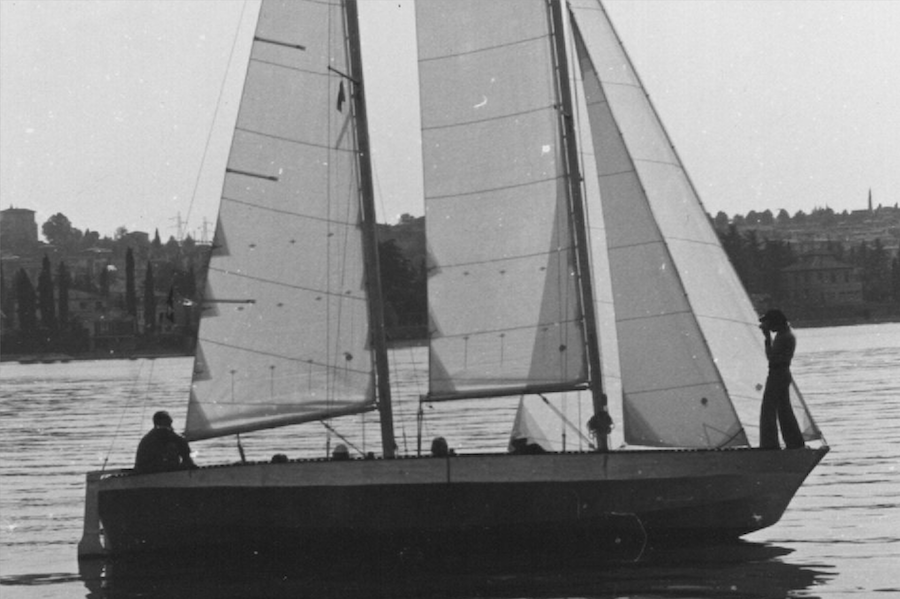
Old boat makes good board! The legendary Fraglia schooner has been “re-launched” after 50 years.
Desenzano, Lake Garda, home of the FVD, Fraglia Vela Desenzano. A Lake classic replicates its launch 50 years after the first time. It is the Fraglia schooner, a light alloy school schooner, the first in Italy to ever be built
VIDEO – Ubi Maior Italia, when a new company is born from a bit of madness
A boat ride in 45 knots and a pinch of madness: these are the ingredients of a story that speaks 100 percent the language of Made in Italy. A story that starts from the heart of Tuscany and has reached
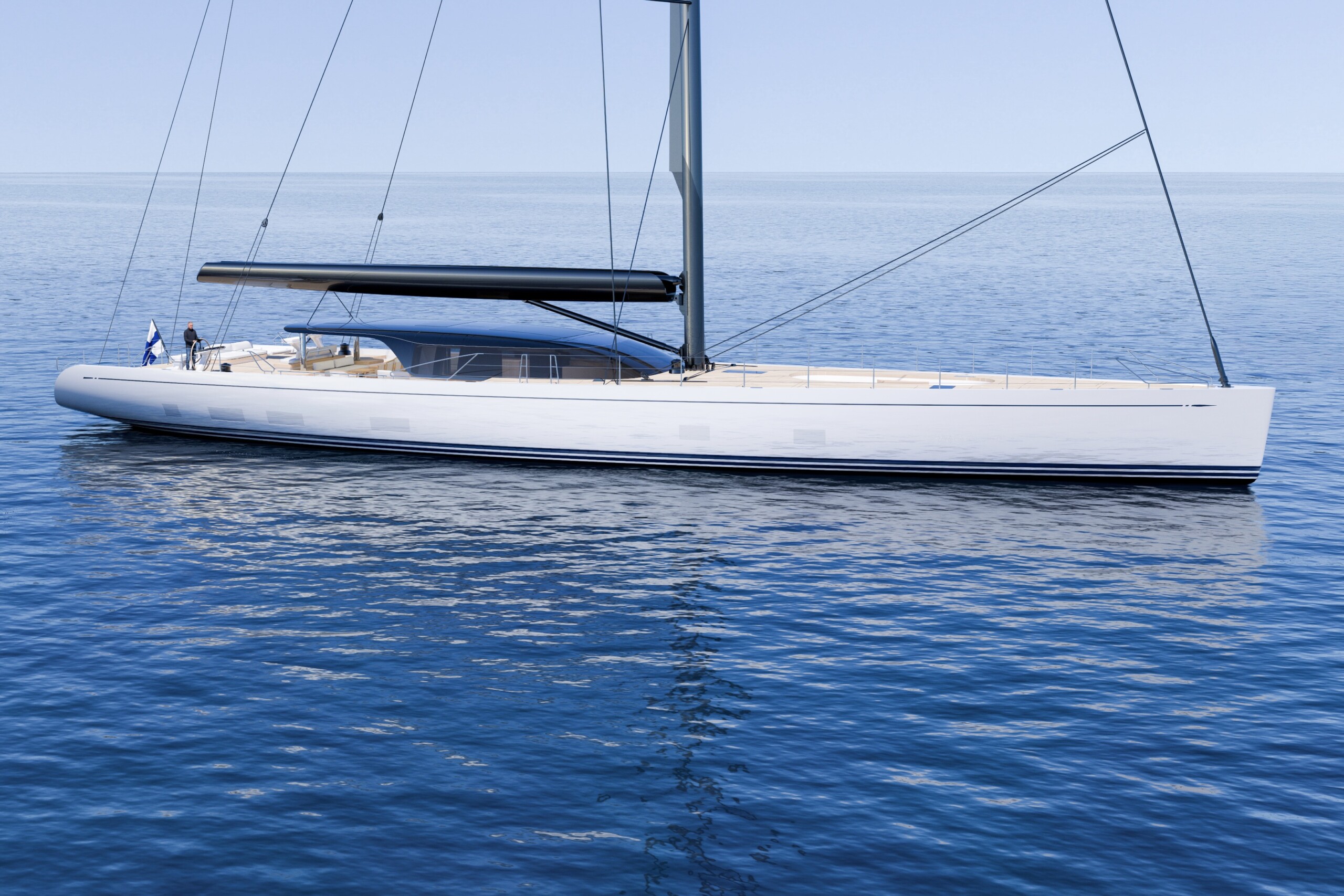
Swan Alloy 44: the new 44-meter aluminum supermaxi
Nautor Swan has unveiled the new Swan Alloy 44, a 44-meter aluminum sailing supermaxi. The first example is scheduled for delivery in summer 2028, with the hull built in the Netherlands and completion in Viareggio. The first owner will be
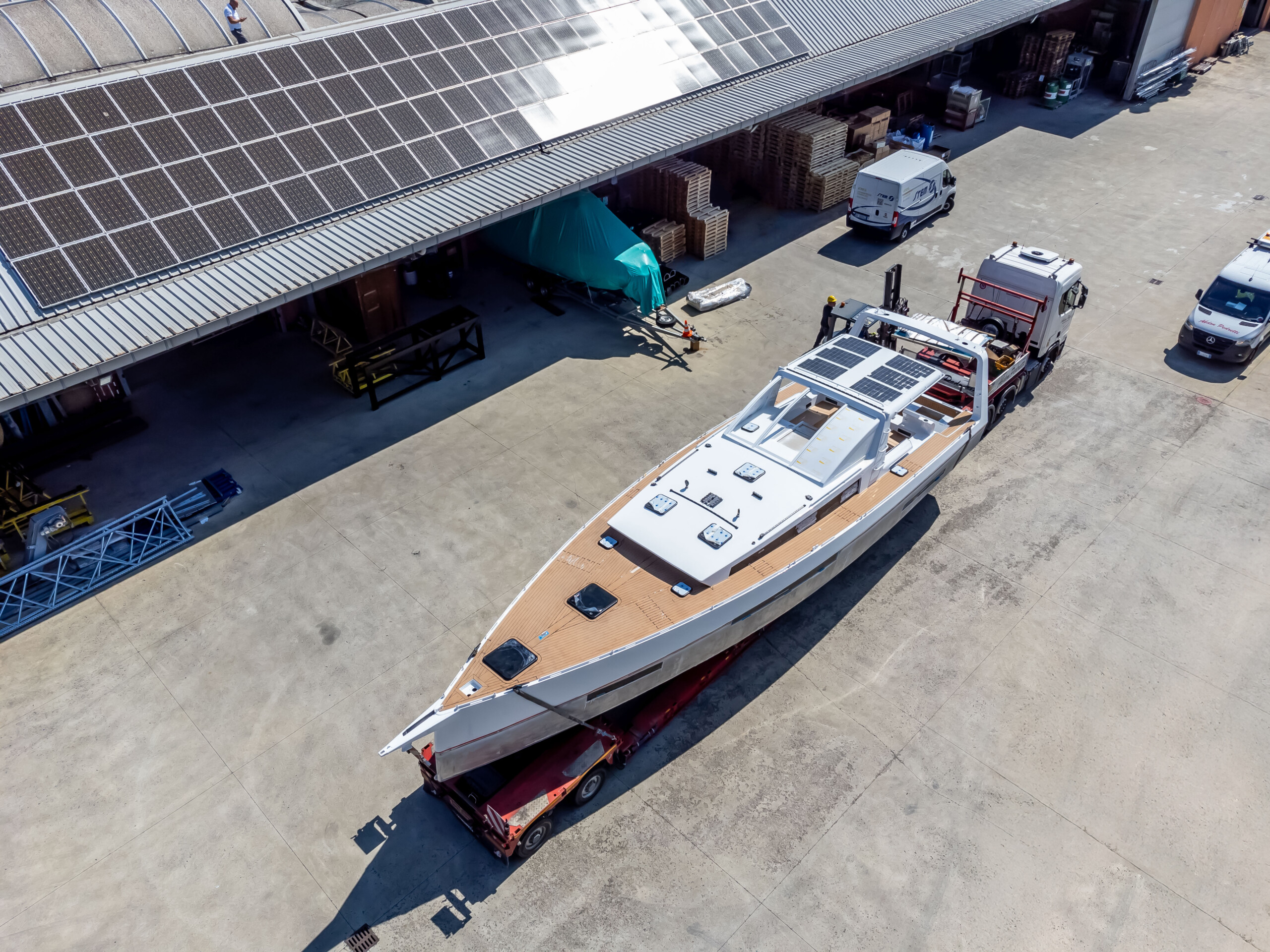
VIDEO – Stem 50 (15.85 m), the 100% Italian aluminum bluewater
We can almost call it “bluewater mania,” because in this 2025 many novelties in sailing come from this type of boat: after the Bluewater 56, the CNB 62, comes a 100% made in Italy boat, which is also a first

