Welcome to the special section “GdV 5th Years.” We are introducing you, day by day, An article from the archives of the Journal of Sailing, starting in 1975. A word of advice, get in the habit of starting your day with the most exciting sailing stories-it will be like being on a boat even if you are ashore.
When the myth of the Moro di Venezia was born.
Taken from the 1990 Journal of Sailing, Year 16, No. 3, April, p. 44/53.
A great report of the most striking launch in history, that of the Moor of Venice. Music by Morricone, set design by Zeffirelli, and Raul Gardini’s youngest child, Maria Speranza, serving as godmother. An epic and happy moment in Italian sailing. We were there.
When I’m innaMORO
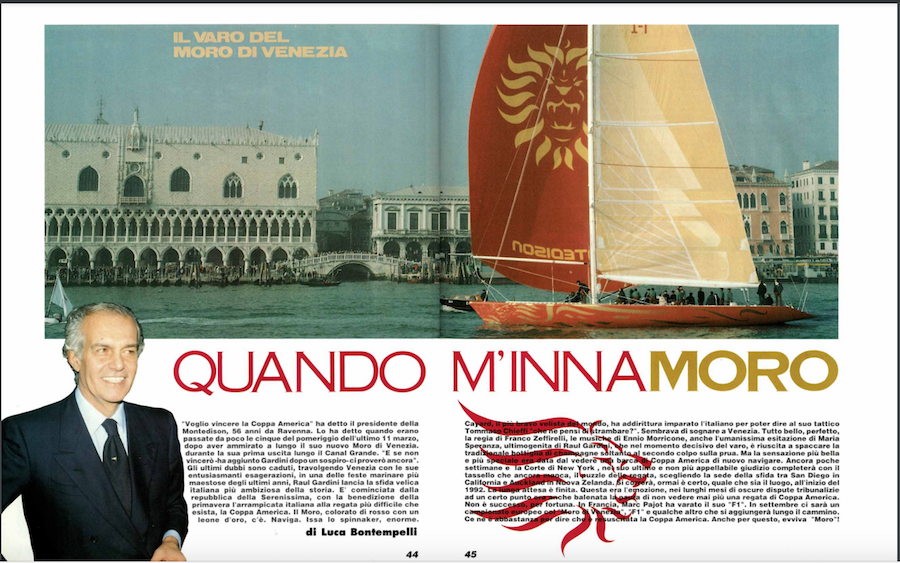
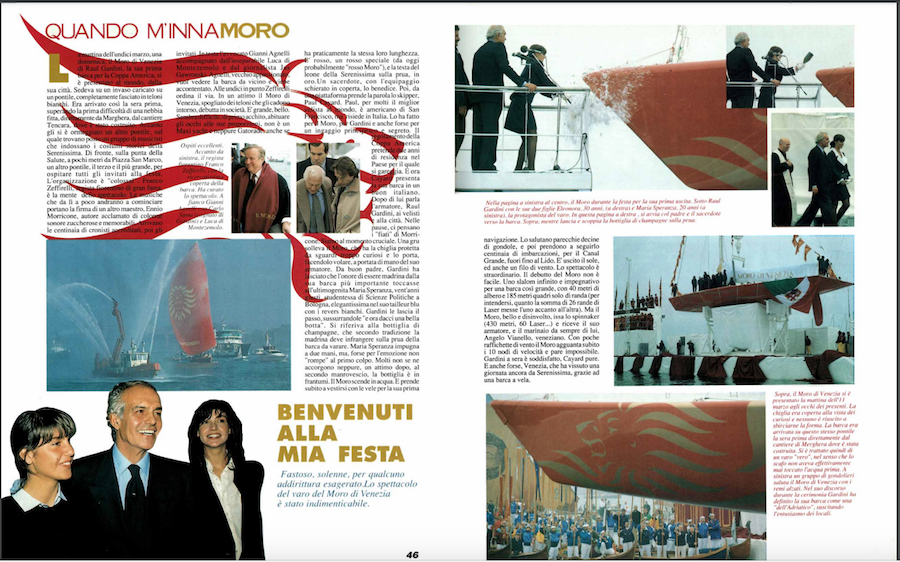
“I want to win the America’s Cup,” said the 56-year-old Montedison president from Ravenna. He said this when it was just after five o’clock in the afternoon last March 11, after admiring his new Moor of Venice at length during his first outing along the Grand Canal.“And if I don’t win,” Gardini added after a sigh, ” I will try again. The last doubts have fallen away, overwhelming Venice with his exciting exaggerations, in one of the most majestic maritime festivals in recent years, Raul Gardini launched the most ambitious Italian sailing challenge in history. It began from the republic of La Serenissima, with the blessing of spring, the Italian climb to the most difficult regatta in existence, the America’s Cup. II Moro, colored red with a golden lion, is there. She sails. Heave the spinnaker, huge.
Cayard, the best sailor in the world, even learned Italian so he could tell his tactician Tommaso Chieffi, “what do you think about jibing?” It was like dreaming in Venice. Everything was beautiful, perfect, the direction by Franco Zeffirelli, the music by Ennio Morricone, even the very human hesitation of Maria Speranza, Raul Gardini‘s last-born, if at the decisive moment of the launch, she only managed to smash the traditional bottle of champagne on the second stroke on the bow. But the best and most special feeling was given by seeing an America’s Cup boat sail again. Just a few more weeks and the New York Court, in its final and no longer appealable judgment will complete with the piece that is still missing, the puzzle of the regatta, choosing the venue for the challenge between San Diego in California and Auckland in New Zealand. It will be run, it is now certain, whatever the venue, in early 1992. The long wait is over. That was the excitement; in the long months of obscure court disputes at one point there had even flashed the fear that we would never see an America’s Cup regatta again. That did not happen, thankfully. In France, Pajot launched his “F1.” In September there will be a European championship with the “Moro di Venezia” and a few more to be added along the way. There is enough to say is the America’s Cup resurrected. For that, too, hurray for “Moro”!
On the morning of March eleventh, a Sunday, Raul Gardini‘s Moro di Venezia, his first America’s Cup boat, presented itself to the world from his city. He sat on a vessel loaded on a pontoon, completely wrapped in white tarpaulins. It had arrived that way the night before, overcoming the first difficulty of a dense fog, directly from Marghera, from the Tencara shipyard, where it was built. Next to it was moored another pontoon, on which a group of musicians wearing the historical costumes of the Serenissima found their place. Opposite, on the tip of Salute, a few meters from St. Mark’s Square, another pontoon, the third and largest, to accommodate all the party guests. The organization is “colossal’. Franco Zeffirelli, a renowned Florentine director, is the mastermind of the show. The music that is soon to begin bears the signature of another master, Ennio Morricone, acclaimed composer of sugary and memorable soundtracks. The hundreds of accredited reporters arrive, then the guests. In the lead is lawyer Gianni Agnelli, accompanied by the inseparable Luca di Montezemolo and journalist Jas Gawronski. Agnelli, an old enthusiast wants to see the boat up close and is granted. At eleven o’clock Zeffirelli orders the start. In a moment the Moor of Venice, stripped of the tarpaulins falling around it, makes its social debut. He is big, handsome. It seems difficult, at first glance, to accustom the eyes to its proportions. it is not a Maxi yacht or even Gatorade even though it is practically the same length as them. It is red, a special red (from today probably “Moro red”), and the head of the lion of the Serenissima on the prow, in gold. A priest, with the crew lined up on deck, blesses it. Then, from a platform the skipper takes the floor. Paul Cayard.
Paul, for many the best sailor in the world, is an American from San Francisco but resides in Italy. He has done so for Il Moro, for Gardini, and also perhaps for a secret princely engagement. America’s Cup regulations demand two years of residency in the country for which one competes. And now Cayard introduces his boat in good Italian. After him the owner, Raul Gardini, speaks to the sailors and the city. In the breaks, Morricone‘s “winds” take care of that. We are at the crucial moment. A crane lifts Il Moro, which has its keel protected from too curious gazes, and brings it, making it fly, within reach of its owner. Like a good father, Gardini let the honor of being godmother from his most important boat fall to his youngest daughter Maria Speranza, just 20 years old, a political science student in Bologna, very elegant in her blue suit with white lapels. Gardini let her off the hook, whispering, “and now give us a kick.” She was referring to the bottle of champagne, which according to tradition the godmother must smash on the prow of the boat to be launched. Maria Speranza grasps with two hands, but, perhaps due to excitement, does not “break” the first stroke. Many do not even notice, a moment later, on the second backhand, the bottle is shattered. The Moor goes down into the water. And he immediately takes to dressing with sails for his first sail. Several dozen gondolas greet him, and then hundreds of boats take to following him, down the Grand Canal, out to the Lido. The sun is out. and even a trickle of wind. The spectacle is extraordinary. The Moro’s debut is not easy. An endless and challenging slalom for such a big boat, with 40 meters of mast and 185 square meters of mainsail alone (to be clear, as much as the sum of 26 Laser mainsails put side by side). But the Moro, handsome and casual, hoists the spinnaker (430 meters, 60 Lasers…) and receives his owner, and his lifelong sailor, Angelo Vianello, from Venice. With a few gusts of wind, the Moor immediately grabs 10 knots of speed and seems impossible. Gardini in the evening is satisfied, Cayard as well. And also perhaps, Venice, which experienced a day still as a Serenissima, thanks to a sailboat.
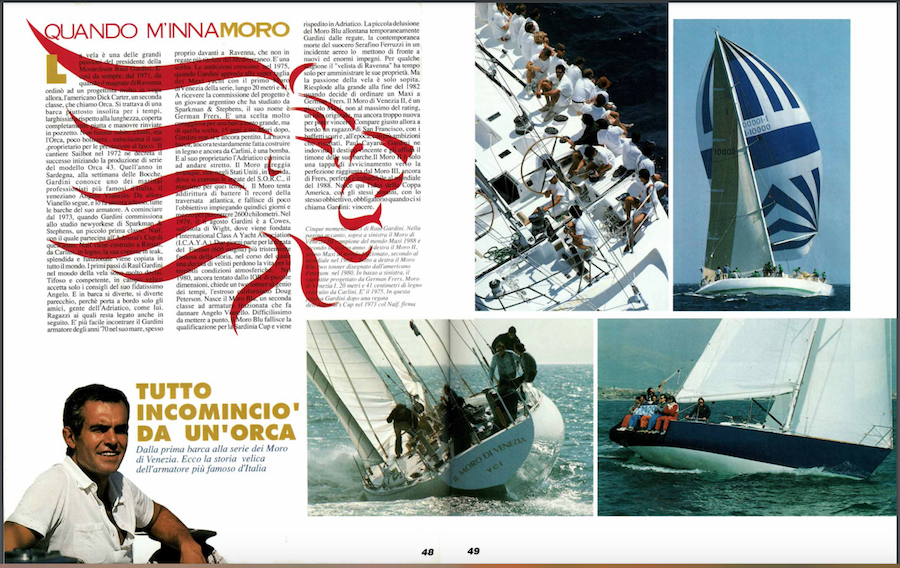
Sailing is one of the great passions of Montedison chairman Raul Gardini, It has been so ever since 1971, ever since the Ravenna magnate ordered from a designer very much in vogue at the time, the American Dick Carter, a second class, which he called Orca. It was a rather unusual boat for the times, very wide in relation to length, completely flat deck and deferred rigging in the cockpit. They were not immediate triumphs, but the little-bolínieraOrca thrilled her owner with her performance on the slack. The Sailbot shipyard in 1972 decreed her success by beginning mass production of the Orca 43 model. That year in Sardinia, at the Bocche week, Gardini meets one of Italy’s most famous professional sailors, the Venetian Angelo Vianello. Vianello follows, and still does now, all of his owner’s boats. Beginning in 1973, when Gardini commissions the New York firm of Sparkman & Stephens, a small first class, Naif, with which he participates in that year’sAdmiral’s Cup. Naif is built in Rimini, Italy, by Carlini, of wood, her teak deck, gorgeous and functional, is copied all over the world.
Raul Gardini ‘s first steps into the world of sailing are very decisive. Fanatic and knowledgeable, in sailing he accepts only the advice of his very trusted Angelo. And on the boat he has fun, a lot of fun, because he only takes friends on board, people from the Adriatic, like himself. Guys to whom he remains close later on. It is easier to meet the Gardini-owner of the 1970s in his sea, often right in front of Ravenna, than in more titled regattas in the Mediterranean. It’s a choice. Ambitions grew in 1975, when Gardini landed in the super size of Maxi yachts with the first Moro di Venezia of the series, 20 meters 41 long. Receiving the design commission is a young Argentine who studied at Sparkman & Stephens, his name is German Frers. It is a very brave choice for such a large boat, but of that choice, 15 years and three Moors later, Gardini still has no regrets. The new boat, still stubbornly made of wood and still by Carlini, is a bomb. And to its owner, the Adriatic begins to get tight. The Moro races everywhere, all the way to the United States, to Florida, where S.O.R.C. regattas are run, the ultimate for those times. The Moro even attempts to break the Atlantic crossing record, and narrowly fails the goal by taking fifteen and a half days to cover 2,600 kilometers. In 1979, on August 6, Gardini was in Cowes, on the Isle of Wight, where theInternational Class A Yacht Association (I.C.A.Y.A.) was founded. Two days later he left for the most infamous Fastnet race (605 miles) in history, in the course of which a dozen sailors lost their lives due to terrible weather conditions. In 1980, still tempted by the small IOR, he asks for a two-tonner from the genius of the times, the imaginative Californian Doug Peterson. The Blue Moor, a fractional-rigged second class that damned Angelo Vianello, was born. Difficult to fine-tune, the Moro Blu failed to qualify for the Sardinia Cup and was sent back to the Adriatic.
The minor disappointment of the Moro Blu temporarily distances Gardini from racing; the simultaneous death of his father-in-law Serafino Ferruzzi in an airplane accident puts him in front of huge new commitments. For a few seasons the “yachtsman from Ravenna” has time only to administer his estates. But the passion for sailing is only dormant. It re-explodes in a big way at the end of 1982 when he decides to order a Maxi from German Frers. The Moro di Venezia II, is a small Maxi, not top rated, an original idea, but still too new to win. Appearing just then on board is a young man from San Francisco, with a dark mustache and, at the time, with more ambition than results, Paul Cayard. Gardini guesses his winning destiny and entrusts him with the helm of his boats. The Moro II is only a stepping stone toward the perfection achieved by the Moro III, still by Frers, perfect and unbeatable at the 1988 world championship. Here was born the idea of the America’s Cup, with the same men, with the same goal, mandatory when one is called Gardini: to win.
They took to the water within a week of each other. First “F1,” in Setè, the French boat designed by Philippe Briand for the very ambitious Marc Pajot, French sailing star. Por il Moro, in Venice, designed by German Frers to launch Paul Cayard among the greatest sailors of all time. Let us make it clear at once that the similarities between “F1I” and the“Moro di Venezia” cease after noting the close date of their various. Indeed, if the group of Raul Gardini and Paul Cayard is sailing in gold and can profitably devote itself to the hunt for the world’s best brains, at home in France the situation is not as rosy. Marc Pajot, 37, reintroduces en bloc, the group that did so well in the 1987 America’s Cup with French Kiss. At his side is still peer Marc Bouet as tactician, co-helmsman and favorite adviser. Then Philippe Briand, 33 years old and exceptionally well known as an innovator, who was able to have the “F1” built at the Multiplast yard in Vannes with the technological backing of Dassault, a cutting-edge industry across the Alps, behind him. Now the boat is there, interesting (profoundly, even at a glance, different from the Moro), and following a training program at Setè. But the money is gone; in fact, to tell the truth, the money was never there. It is Marc Pajot’s Strategy of choice to rallest funds from sponsors so far rather cold toward him. The physical presence of the boat, objectively beautiful by the way, should convince them. Only then will we be able to see “F1” and “Moro” racing together . The date is for the end of September (the location is still uncertain) when the European championship of the new America’s Cup class to which the two boats belong will take place. Cayard has many months to train for the regatta. Also while waiting for the other challengers in the rest of Europe to take to the water, as of today anyway already seriously behind schedule.
Luca Bontempelli
Check out the latest issue

Michele Molino, nautical engineer with the sea in his vein
On the occasion of the 50th anniversary of the Journal of Sailing, the great excellences of the sailing world tell their stories and reveal their projects. In this column, discover all the companies and people who have made important contributions
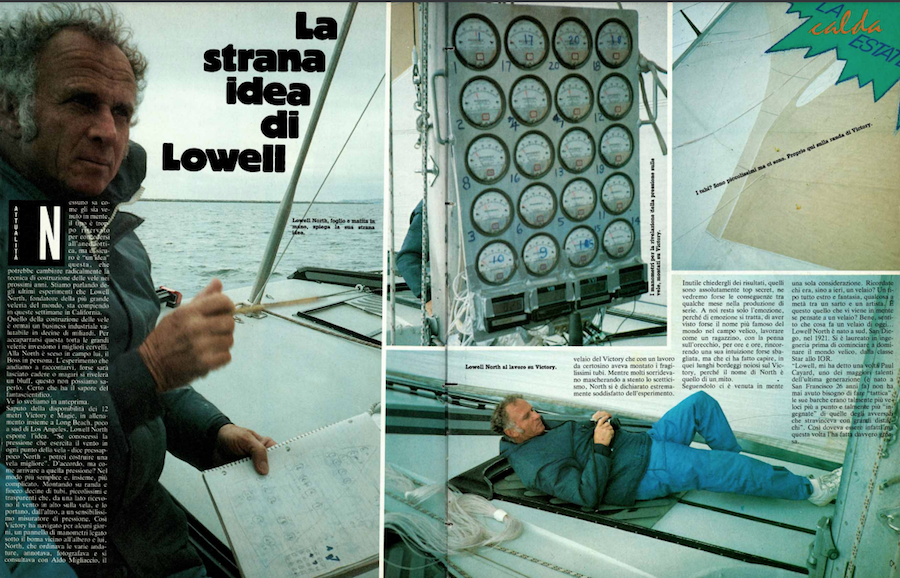
1985. The sails of the future are being born. The GdV is in, with Lowell North
Welcome to the special section “GdV 5th Years.” We are introducing you, day by day, An article from the archives of the Journal of Sailing, starting in 1975. A word of advice, get in the habit of starting your day
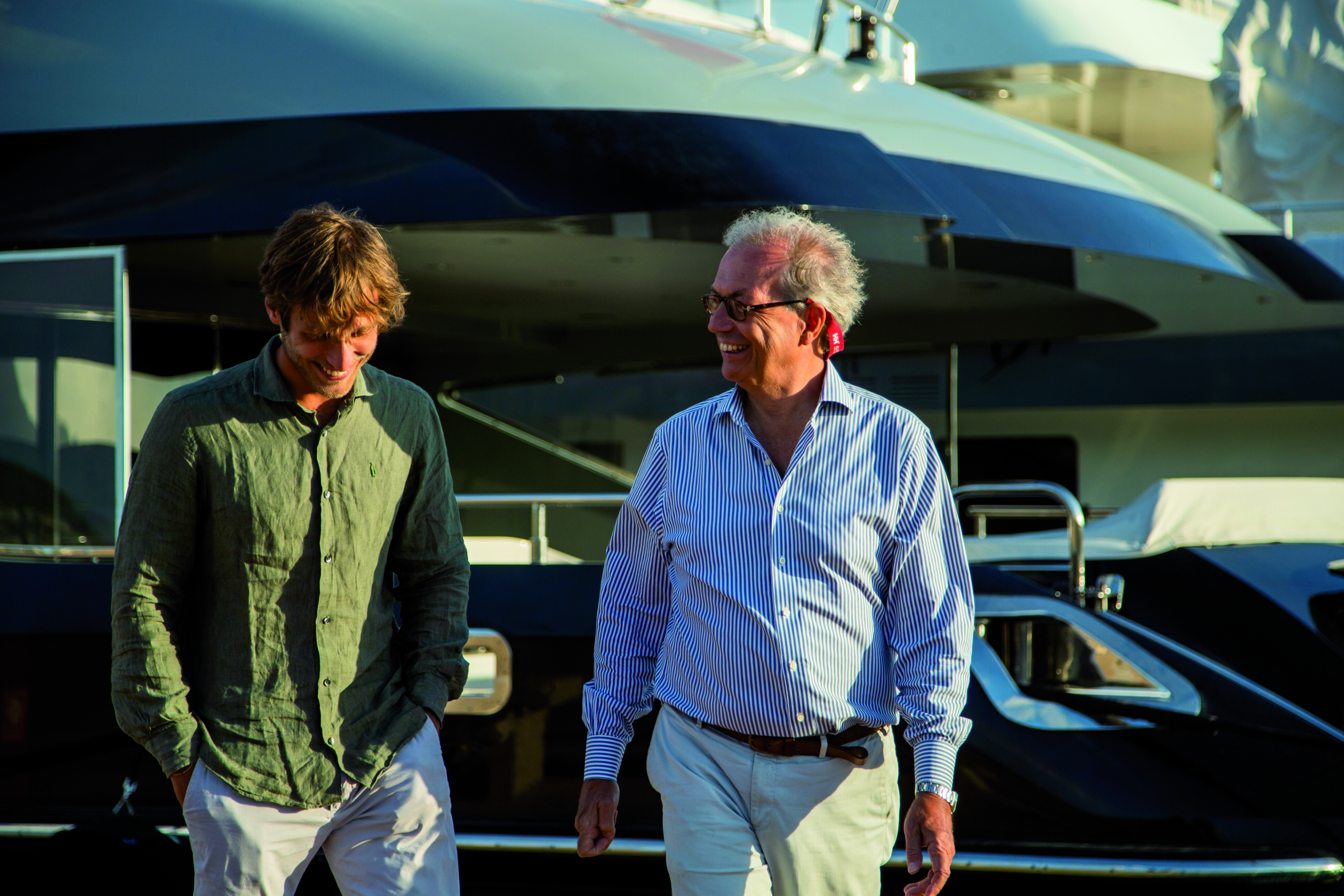
Marinedi, the integrated hospitality system
On the occasion of the 50th anniversary of the Journal of Sailing, the great excellences of the sailing world tell their stories and reveal their projects. In this column, discover all the companies and people who have made important contributions
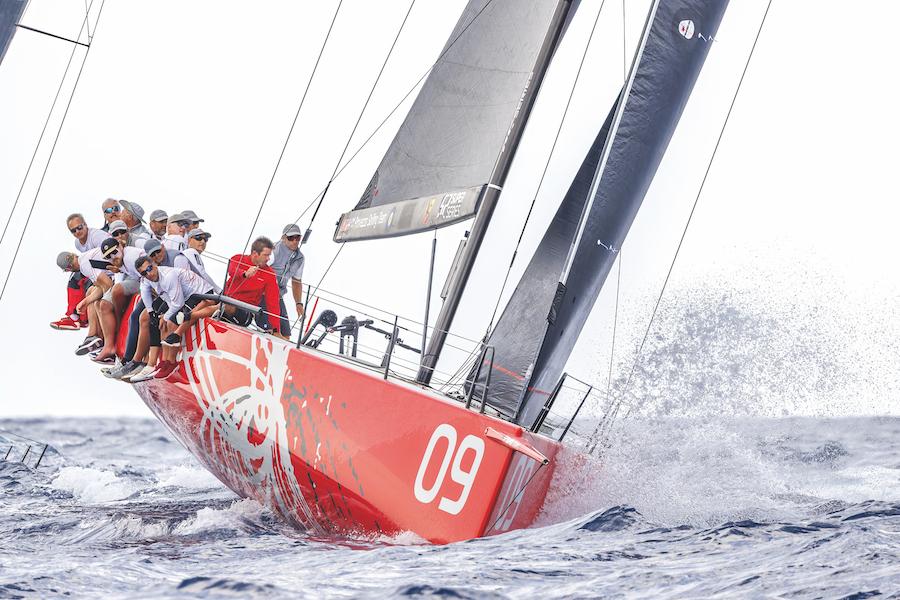
Naval revolution goes through Judel/Vrolijk study
On the occasion of the 50th anniversary of the Journal of Sailing, the great excellences of the sailing world tell their stories and reveal their projects. In this column, discover all the companies and people who have made important contributions

