On the occasion of the 50th anniversary of the Journal of Sailing, the great excellences of the sailing world tell their stories and reveal their projects. In this column, discover all the companies and people who have made important contributions to the multifaceted world of sailing, which enables us all to go to sea in all forms and contexts.
In this episode, we take you on a discovery of Giovanni Ceccarelli, a designer with a historic name, who has written important pages in the history of Italian sailing, from the America’s Cup to high-tech boats.
Ceccarelli, from father to son
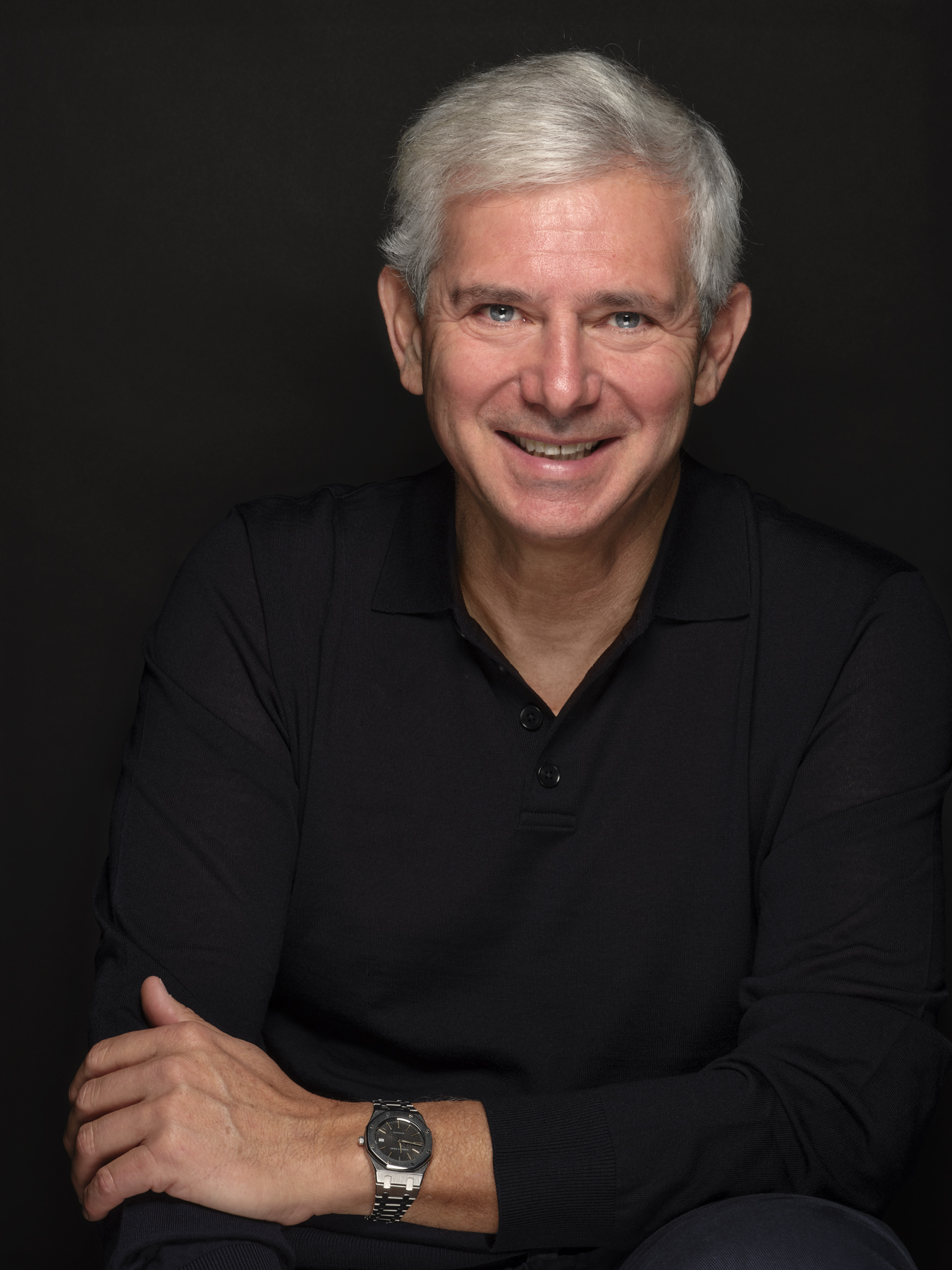
From father to son, the Ceccarelli name is a full part of the Italian sailing history of the last 50 years. First Epaminonda Ceccarelli, then Giovanni, but always with the same style, out of the chorus and never banal. And the Ceccarelli name is inextricably linked with Giornale della Vela, not only because we have talked on our pages about their boats, but because Epaminonda and Giovanni themselves have written in our magazine, first with Epaminonda’s Adriatico Selvaggio column, and then with some interviews signed Giovanni.
Giovanni Ceccarelli is now one of Italy’s leading performers in sailboat design: from sport cruisers, custom or semi-custom, modern classic, model sailboats, and powerboats, Ceccarelli’s design work spans a broad front, but we have rarely seen him, and will see him, make forays into the world of production boats.
A designer against the current in short, who has always wanted to characterize his boats in a distinctive way, not to make them go unnoticed or judge them similar to others. Today Ceccarelli collaborates with shipyards such as Neo Yachts, Maxi Dolphin, Mylius, Eleva Yachts and takes care of several one-off projects of classic boats, such as those carried out with Cantieri De Cesari and Cantiere Navale Cecchi, only on the sailboat front. A living reality, which has a lot of history behind it, but also the modern vision to go into the future.
When it all began
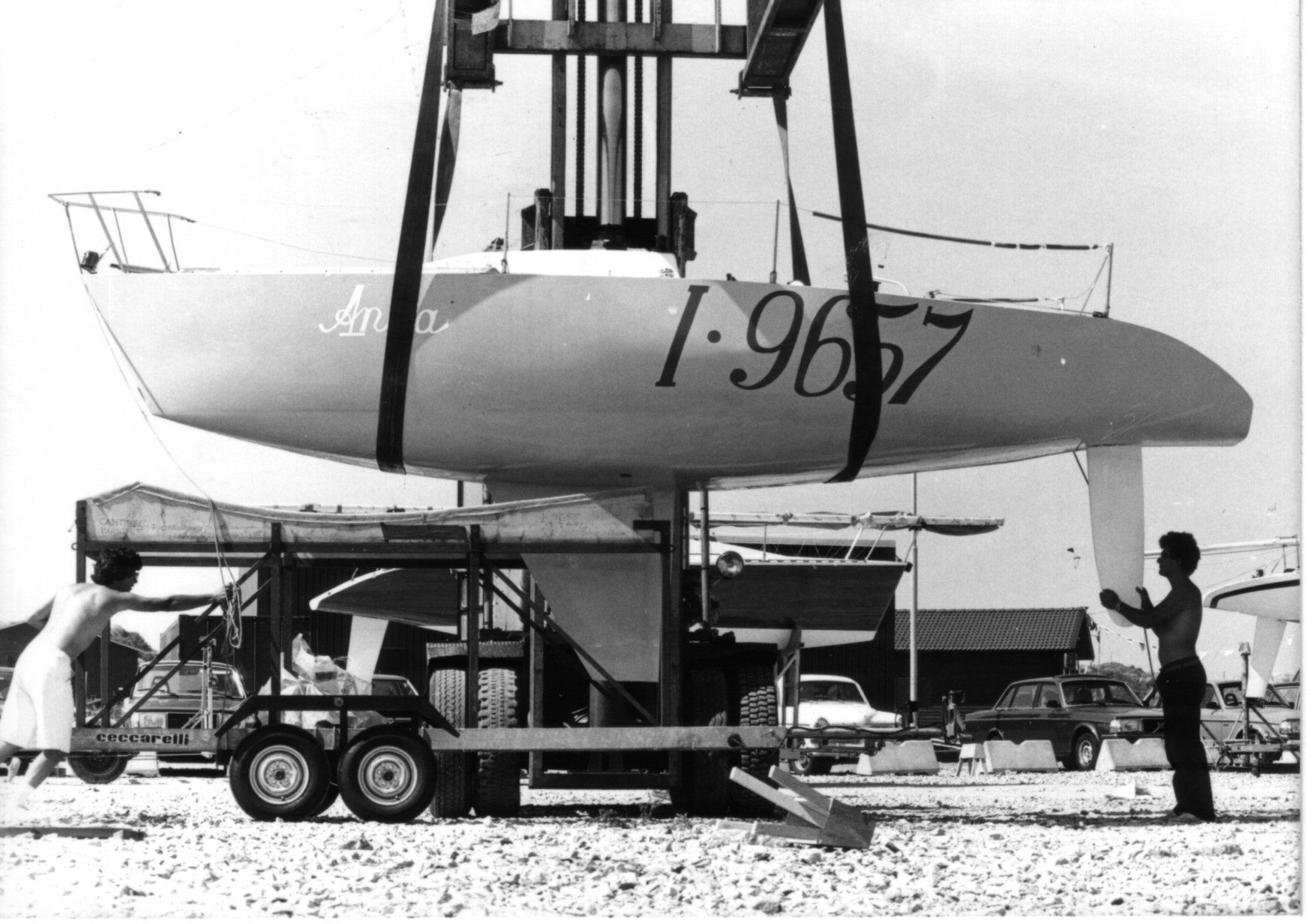
“The firm is founded by my father in the post-World War II era, the first boat was the 8-meter Malaguena in 1951,” Giovanni Ceccarelli tells us, “he allowed me to go boating as a young man and I formed. The dinghies, the first regattas, I grew up with boats until I got to the university route. In the meantime, my father carried on the design work in the nautical field, which I became passionate about. Anita is the first boat made by 4 hands with him, a laminated wood Mini Tonner built by the Fioravanti shipyard, which won the Italian Championship with Flavio Favini. The following year I won it at the helm with the second Anita (which, compared to the first one, which was a prototype, was mass-produced and was produced on Lake Iseo) the Italian sixth class championship.” Thus began a story of boats and family, which has come down to the present day with the works of Giovanni, one of the few Italian designers who can also boast of extensive experience in the America’s Cup.
The IOR period was very productive for the emerging Giovanni Ceccarelli, who established himself as a designer of racing boats and one-off designs. But it was in the IMS era that his fame finally exploded, with many winning designs, most notably that of the ILC 25 and 30 classes, with the designs becoming almost unbeatable. “I owe a lot to Vasco Vascotto about that period,” Ceccarelli recalls, “he helmed many of my boats and made me win so many world championships, since the times in ILC 25 and 30. With Vasco then there was also the Tuttatrieste period, which was equally important. On the ILCs we used to win against Farr , Vrolijk, Botin, the greats in short.” Not forgetting then that the 1990s were also those of Dimore del Garda, the Class Libera del Garda signed Ceccarelli that won the legendary 100 Miglia in 1993.
Challenges in the America’s Cup
The successes he garnered helped him enter the ranks of great sailing, with the doors of the America’s Cup opening, meaning the elite of world designers. And if there is one thing that has undoubtedly distinguished Giovanni Ceccarelli’s work, it is the willingness to embrace challenges, such as the America’s Cup first, or the recovery of the Concordia later.
“I got the call from Vincenzo Onorato at the end of the America’s Cup in 2000,” Ceccarelli recalls, “with the proposal to become the main designer of the Mascalzone Latino Cup team. We already had a friendship because I had designed a mini tonner for him, and he wanted to do a 100 percent Italian challenge. It was a learning campaign, we had very little time to design and test the boat, for many of us it was the first America’s Cup. But within a short time we were able to put together a challenge from scratch and go to New Zealand in 2003. The result was what it was, we only beat the French, the boat was noticed in the choices though. Then the Italian +39 challenge was born on the Garda ahead of the Valencia Cup. The campaign had Luca Devoti as the key man, and I was coming in with experience.
The ambitions were there, we also made a very innovative boat, with great synergies between me and Luca Devoti. +39’s boat in Valencia was the narrowest at the waterline and on deck, it had the mast that upwind sailed with 5 degrees of rake, today a common thing but at the time an anticipation. A very long torpedo, 8 meters, many extreme solutions. Unfortunately there were budget problems, the campaign remained a bit lame, when we dismasted we didn’t have a spare mast. It was the beginning of a complicated journey, in the chase, we won many races and the boat was fast and interesting but we stopped before what we hoped for.”
The post Cup
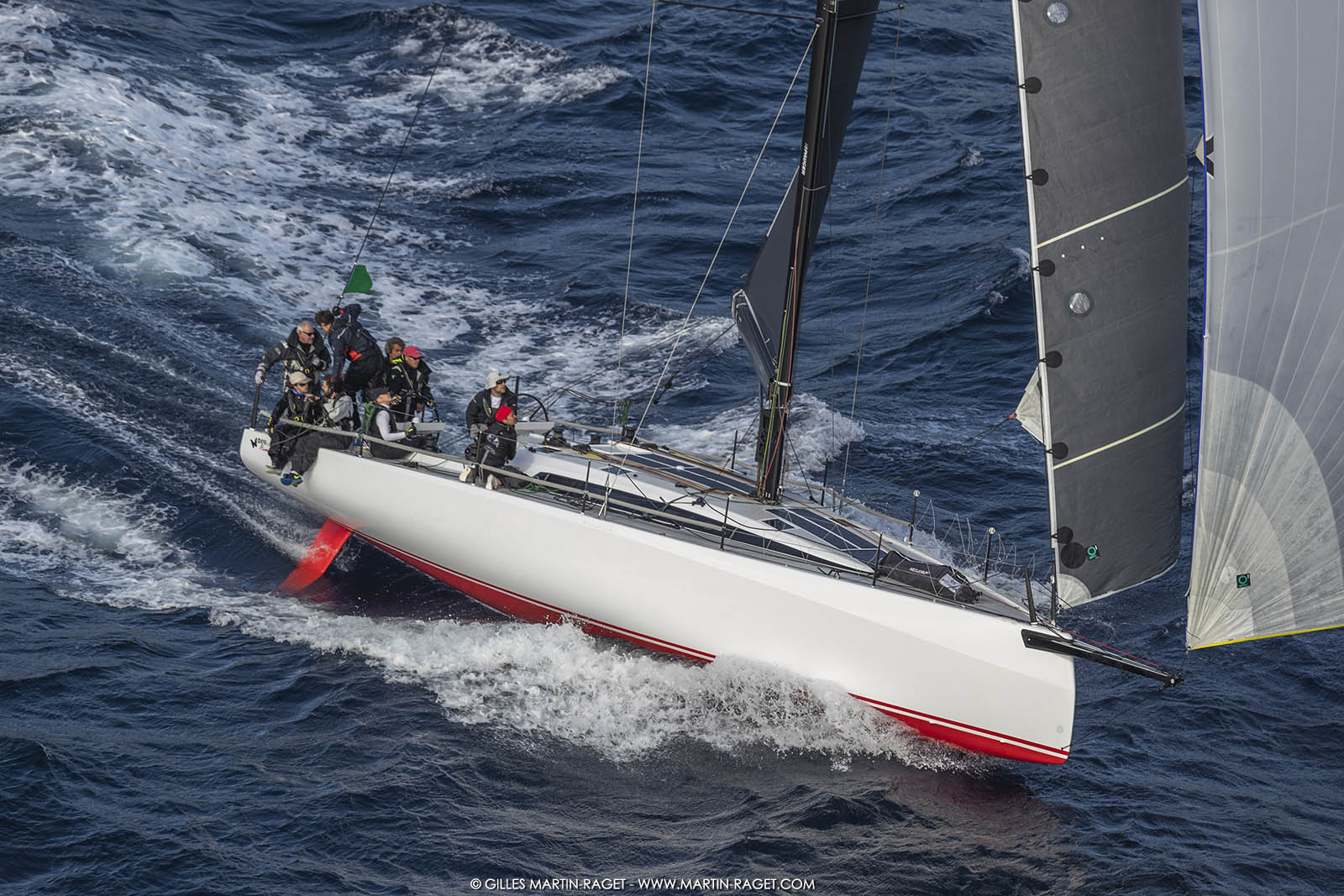
“After that Cup was over, I wanted to go back to doing my own work, because the America’s Cup absorbs you 100 percent, and I had kind of lost the regular boat line,” he says. “I had continued making powerboats though, which I had been designing for several years by then. There also came an opportunity to work in F1 but I declined it. And post-Cup came the Azuree with the Turkish shipyard Sirena Marine, an evolution of the custom boat I had made for Pierpaolo Ballerini, boats that were a good sales success, among the few true series boats I designed.” This is just the beginning of Studio Ceccarelli’s new post-Cup life.
In fact, this was followed by the start of a collaboration with Neo Yachts in 2013, with the Neo 400, the first boat of a successful partnership that continues today. “The Neo fascinated me because Paolo Semeraro, also an engineer and founder of the shipyard, had a concept that I really liked: to make innovative sport cruisers, made in Italy, built in carbon.”
And speaking of challenges, on this topic is Ceccarelli’s philosophy: “It’s part of life’s choices, I had 10 years dedicated to the Cup, 3 years to the recovery of the Costa Concordia, I always preferred to do what I liked, maybe even giving up easier paths. The Costa Concordia period was very stimulating, together with two other Italian engineers and a great technical team we developed the ship recovery project, and it is a choice I would make again even if it was not easy,” he explains.

In addition to design, Studio Ceccarelli offers all design engineering services, an important aspect when there is custom yachts to be made. “The designer who signs the yacht Must have an overall vision of the project , know how to master it But collaborating with all the other technicians for the success of the product final, and that is what I have done with my boats. Even with the Maxi Dolphin 78, Corsara, which is a one off, one of my largest boats to date, designed on the basis of an owner’s need: large volumes, wide leaving without obstacles and steps , a marine and performance hull. And the goal is to raise the bar beyond 80 feet in the future.” But there is something else, surprisingly, in Giovanni’s work: “With the same care I also followed the radio-controlled boats part, which is a very special aspect of my work, where I won several World and national championships. If you ask me what boat I have today I have a series of model sailboats,” he smiles.
“I also like to mention my current collaboration with Mylius and the Gandini Family. I have already made a motor shuttle for them, but now I am engaged in sailing with the new Mylius 60GL under construction , will have a design That will not go unnoticed,” he reveals.
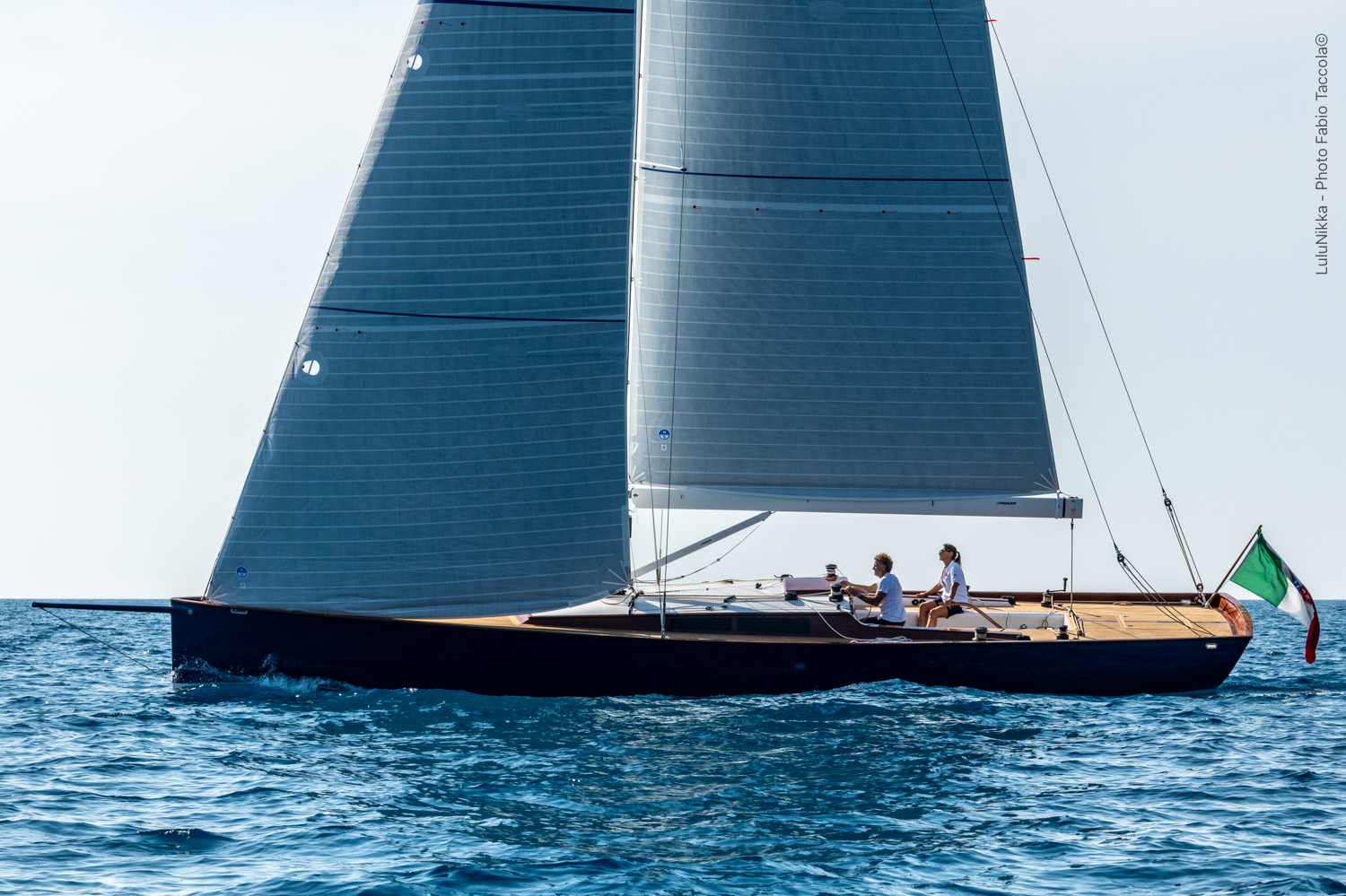
Also in Ceccarelli’s today is work with modern classics,Golfo Mistico and Lulunikka, two boats built of wood, with a precise and unmistakable style as his boats often are. “Projects that always fascinate me, me who was trained on boats of the past, rediscovering certain lines in a modern key is always interesting. I like to work with different materials, from modern carbon to wood. And I don’t forget the boats of yesteryear, for example the EC 26, the VI class designed by my father that today is back sailing thanks to Carmelo Cassiopea and whose return to the water I followed.”
Giovanni Ceccarelli is a designer who could be described as outside the lines for his philosophy, suspended between classic lines and modern forms, between racing boats and high-tech cruisers, without forgetting the many collaborations with the world of motor boatbuilding, but with a consistency that has remained true to itself, that of designing non-trivial boats. And finally there is still a thought about the America’s Cup, one of her loves: “The Cup in Naples is an opportunity to grow Italian sailing and get young people excited about it, a topic the latter of which I care about since with my work I have also gone to universities to teach design with students. Foil and young people represent the future of a part of sailing. For the rest we will have to have new ideas, for example on how to return to making 10-11 meter cruising boats with more affordable prices.” A story to continue writing.
50 years of the GdV: an opportunity not to be missed. Also for your brand
To celebrate its 50th anniversary, Il Giornale della Vela is organizing the largest communication campaign in its history, which will reach a total audience of 2,000,000 “sea lovers” interested in the world of sailing.
How? Deploying all its communication channels: magazine (paper+digital), websites, E-mail marketing, social (facebook/instagram). The certainty is that 2 million interested people will be reached to whom you can tell your company’s story.
Why you’d better embark with us
The Newspaper of Sailing proposes that all companies interested in the boating target audience tell their story, just as the GdV tells its own. Don’t worry, our journalists are on hand to help you produce attractive and effective text and images to reach two million “sea lovers.”
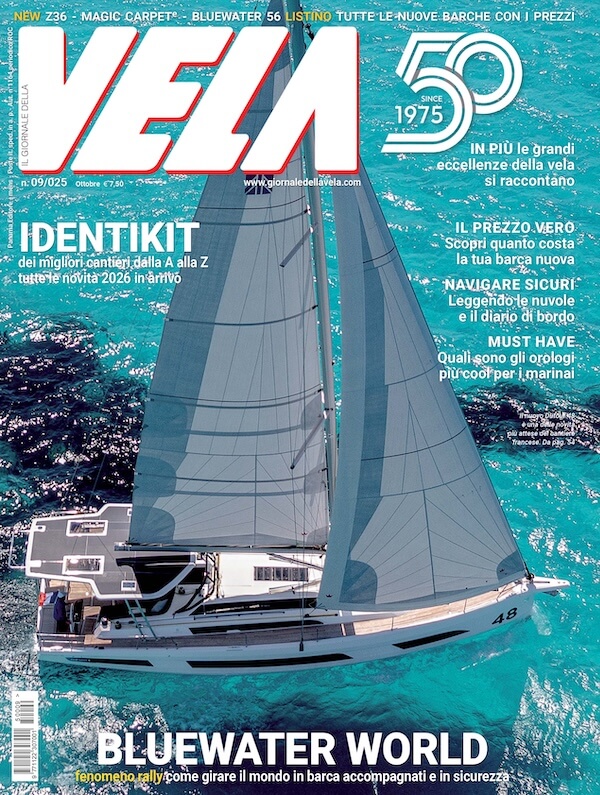
Check out the latest issue

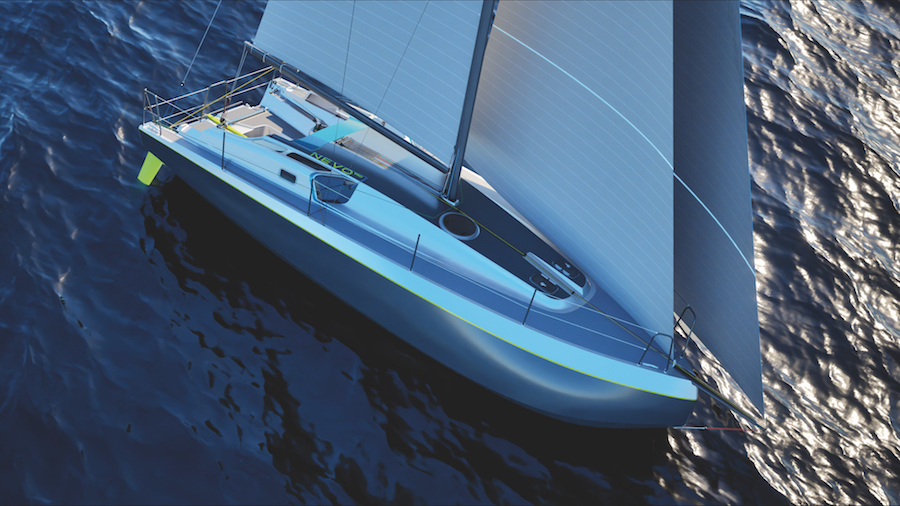
Michele Molino, nautical engineer with the sea in his vein
On the occasion of the 50th anniversary of the Journal of Sailing, the great excellences of the sailing world tell their stories and reveal their projects. In this column, discover all the companies and people who have made important contributions
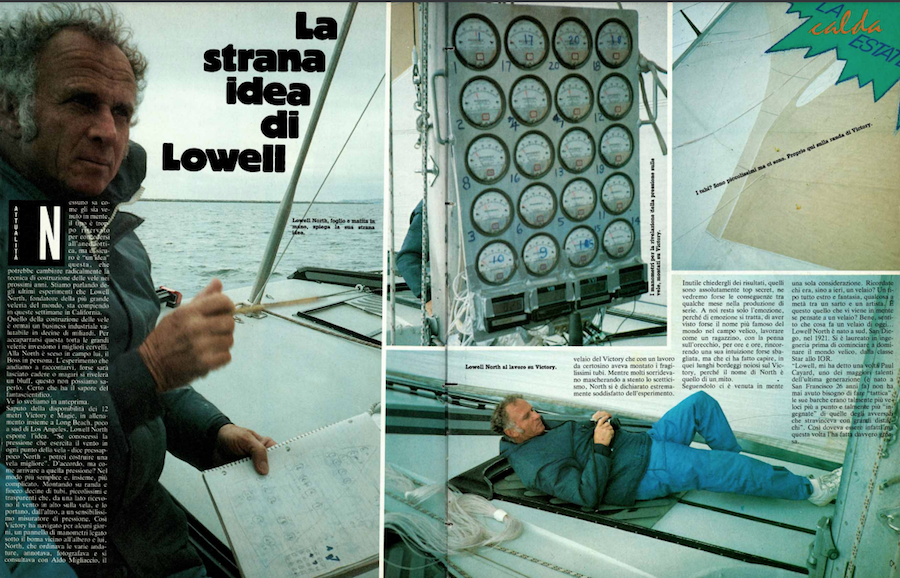
1985. The sails of the future are being born. The GdV is in, with Lowell North
Welcome to the special section “GdV 5th Years.” We are introducing you, day by day, An article from the archives of the Journal of Sailing, starting in 1975. A word of advice, get in the habit of starting your day
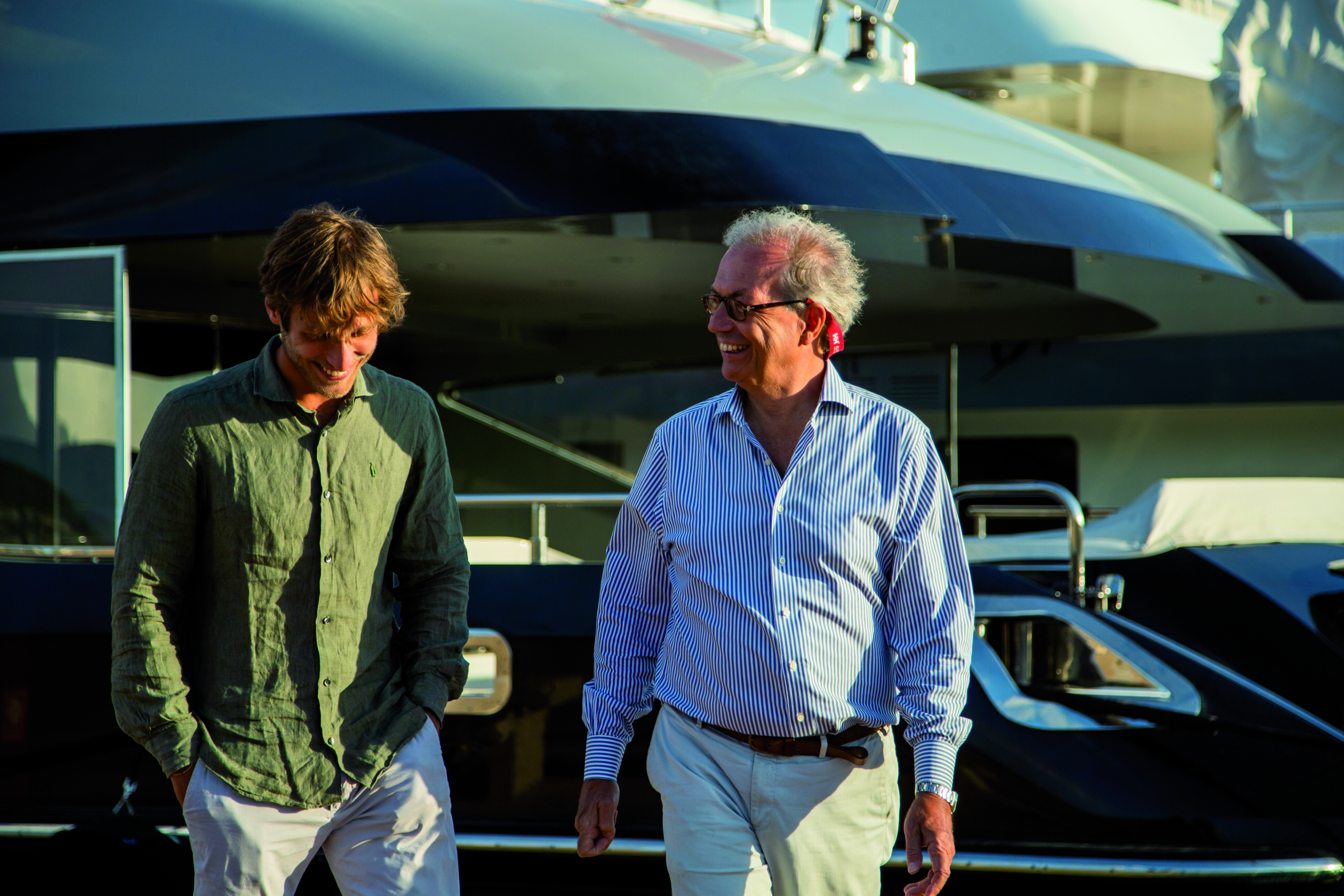
Marinedi, the integrated hospitality system
On the occasion of the 50th anniversary of the Journal of Sailing, the great excellences of the sailing world tell their stories and reveal their projects. In this column, discover all the companies and people who have made important contributions
Naval revolution goes through Judel/Vrolijk study
On the occasion of the 50th anniversary of the Journal of Sailing, the great excellences of the sailing world tell their stories and reveal their projects. In this column, discover all the companies and people who have made important contributions

