
Welcome to the special section “GdV 5th Years.” We are introducing you, day by day, An article from the archives of the Journal of Sailing, starting in 1975. A word of advice, get in the habit of starting your day with the most exciting sailing stories-it will be like being on a boat even if you are ashore.
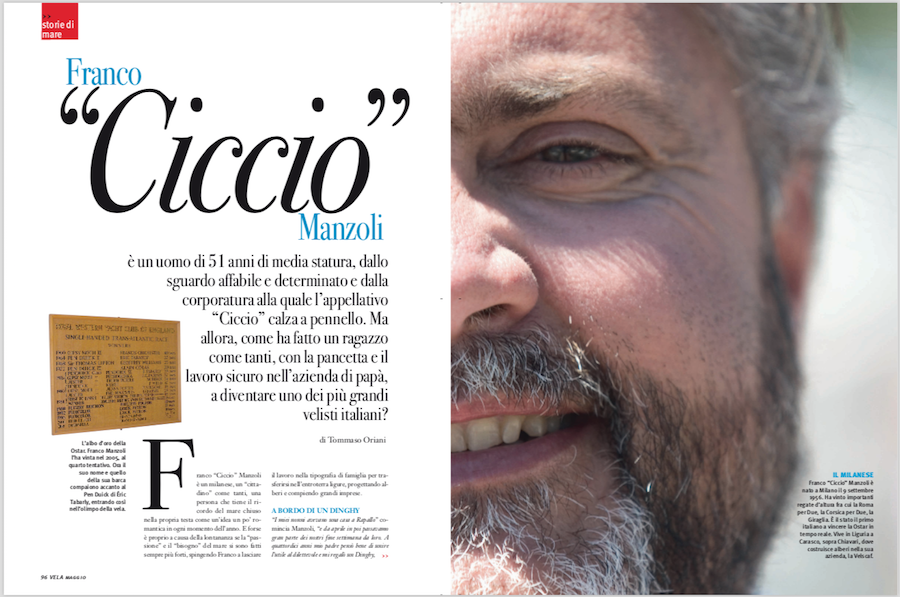
Ciccio Manzoli Story
Taken from the 2008 Journal of Sailing. Year 34, Issue 4, May, pp. 96-103.
Ciccio Manzoli ‘s story is an example for all. It is the triumph of normality, perseverance and application that leads to achievement. It is a living testimony that want is power.
He is a 51-year-old man of medium height, with an affable and determined look and build to which the appellation “Ciccio” Manzoli fits like a glove. But then, how did an ordinary guy with a potbelly and a secure job in Dad’s company become one of Italy’s greatest sailors?
Franco “Ciccio” Manzoli is a Milanese, a “citizen” like many, a person who keeps the memory of the sea locked in his head as a somewhat romantic idea at all times of the year. And perhaps it is precisely because of the distance if the “passion” and the “need” of the sea grew stronger and stronger, prompting Franco to leave his job in the family print shop and move to the Ligurian hinterland, designing trees and accomplishing great feats.
Aboard a Dinghy
“My grandparents had a house in Rapallo,” Manzoli begins, “and from April onward we spent most of our weekends at their place. When I was fourteen, my father thought well of combining the useful with the delightful and gave me a Dinghy, but since neither he nor anyone in my family was a sailor, he decided to equip it with an outboard motor.” Try now to close your eyes and imagine young “Fatty” on his motorized 12-footer, the Lampuga II, from the Patrone shipyards, sold by Guido Carbone and kept at the Bristol baths, frolicking around the Gulf of Tigullio-isn’t that an ideal beginning for a story like ours? These are the formative years for the young Milanese, with the Lampuga IIhe in fact takes part in his first regattas and, more importantly, begins to “know” the sea, falling more and more in love with it. “I was around all day, sometimes it even happened that the wind would run out and my parents would come to pick me up in the middle of the sea.” Young Manzoli is getting the hang of it, sailing with Ettore Savorelli and Giancarla Mursia on the Rai Reva, a 15-meter ketch that was in Giannutri; at 17 he was an instructor in Caprera, and at 20 he participated in the Mini Ton Cup in Cala Galera. The time really came for the first boat. “Boat not really,” Franco adds. “We bought a minitonner shell (about 7 meters long, ed.) from Vallicelli and then completed it with my brother Maurizio in the garage.” However, we must not forget that the saying “no one is born learned” is always valid, and while even our young boy seems set for a great sailing career, there is no shortage of unforeseen events, as he tells us in this tragicomic episode; “It was late afternoon, and I was aboard Santarelli’s S9, a wooden 9-meter, and as we left the Rapallo harbor we were capsized by a wave, only to end up stranded on the beach like a whale. Looking back, the paradox was all in the name of that boat ‘Rosso di Sera’….”
Things are getting serious
It is 1981, Franco is 25 years old and he and Maurizio buy the fifth class half tonner “Watch out for those two” (designed by Fontana, Maletto and Navone). For a change, it is a shell that will be prepared by the two brothers for theAthens Half Tonner Cup selections held the following year. The Manzolis qualify for the world championship. “It was a good performance, given also our limited financial resources. We reached Athens by sea and returned to Rapallo by sea and returned to Rapallo only thanks to a radiogoniometer good only for listening to soccer games on Sundays.” It is time for an indiscreet question, but one that will be of interest, I think, to readers: “Where did you find the money needed for the regattas? For young people like you, the costs of competitive sailing at that level….” “It was not easy” – Franco recalls -. “we saved on everything to start with, then worked in the printing shop. Grandma also made us Bots in her name, which we sold almost immediately to finance ourselves, and finally, at Christmas, we would ask friends and relatives for items for the boat, hoping that Santa Claus would also be a lover of sailing… ” . Setting aside the problem of money, which is moreover not new to young people, let us return to Manzoli‘s story: so we are at the end of the Half Tonner championship and Franco is noticed by a French shipowner who offers him his first ocean crossing, with a transalpine boat and crew; departure from the Canary Islands and arrival in Martinique. The ocean, an endless sea, the end of the world for the ancients, what emotions it can arouse in a boy crossing it for the first time. “The boat was equipped with the latest technology and it was so big that it looked like a ship, I feel more excitement thinking about the Mediterranean, where on nice north wind days I can look at Corsica from the Ligurian coast, thinking about how small the sea around us is. One particular memory I have, though, is that of the captain, a fussy person, very fussy, nicknamed ‘Pa con sa,’ not like that, because nothing was ever right with him.” On his return from the expedition, Ciccio Manzoli met Captain Salata, a legendary sailor and owner of a company, Velscaf, specializing in mast production. That was the turning point; he took over the commander’s company and in ’83 moved to Carasco to start the new business.
The Ganbare
The Ganbare (11 meters short) is a legendary boat, a One Tonner designed by Doug Peterson in 1973 and considered by many to be the progenitor of the modern generation of offshore racing boats. Her story is now legend, moral winner in ’73 of the One Ton Cup (champion became the famous Straulino with Hydra), he is disqualified for turning the wrong way around the buoy in Reale Bay in front of Asinara. Shortly thereafter he is sold to Giorgio Carriero, also owner of the very strong first class IOR Mandrake, who years later “parked” it in the Castagnola shipyards in Lavagna, until, in 1988, Mr. Castagnola, needing to renovate the shed that houses it, sold the famous boat at a favorable price to Maurizio Manzoli (as long as he paid him for the long parking space) who – Ciccio Manzoli tells us – took the “jewel” to Chiavari to repair it (or redo it, since it was in desperate condition). The Ganbare thus returned in splendid shape thanks to the Ciccio Manzoli ‘s care and in a short time became the “terror of Tigullio,” winning, with Franco, Maurizio and a group of friends aboard, most of the regattas he competed in:“She was really a great boat, especially upwind.”
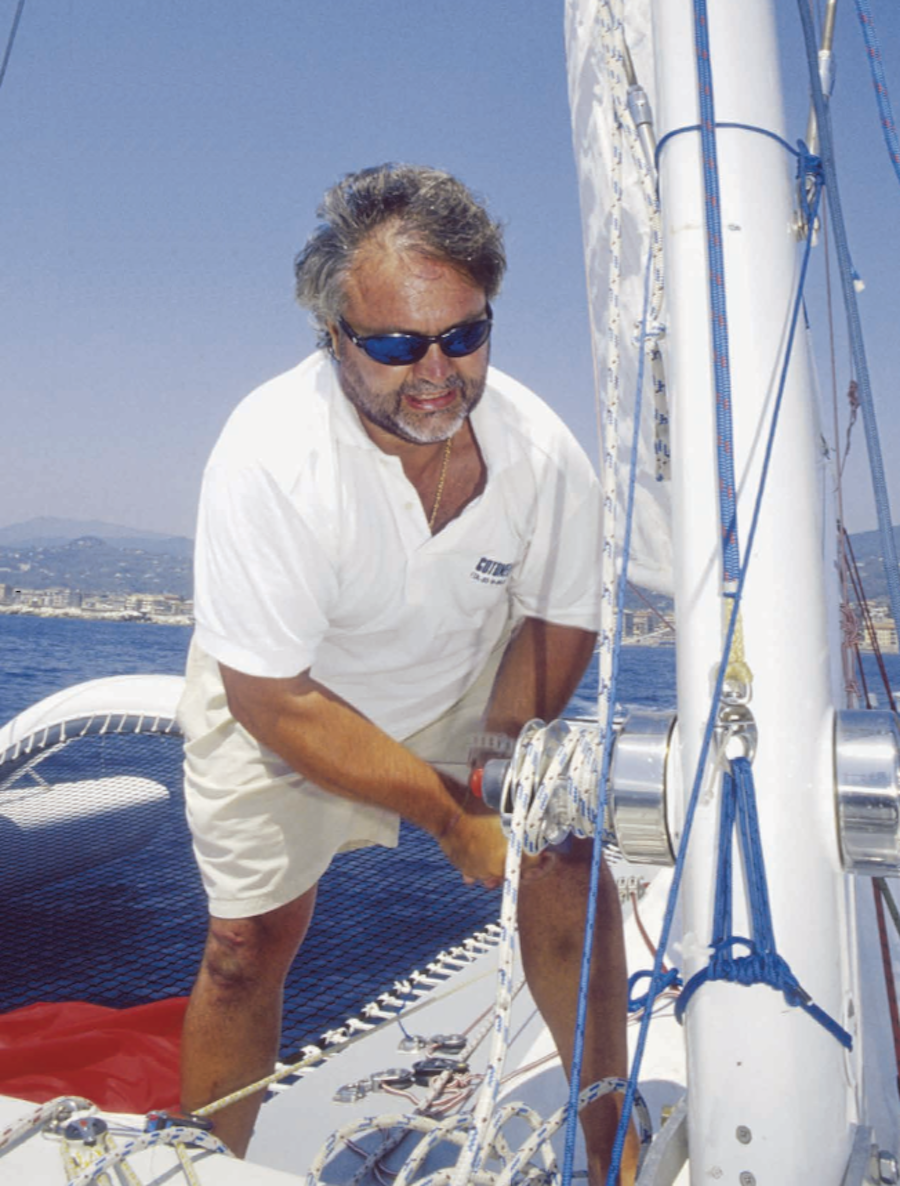
Ciccio Manzoli. Fat the Loner
It is 1992 and Franco comes into contact with Franco Malingri who, eager to try his hand at the Ostar (the world’s most famous solo transatlantic race, ed.), wanted to propose to a sponsor the creation of an Italian team to participate in the striking and important offshore race. The series of boats will be called Moana 27 and will be entrusted to our country’s most talented sailors. The ‘deal does not go through, however, and Malingri has to give up his ambitious project, selling the series of boats. One of them is bought by Franco who, though at his first experience, and having a series boat of only 9 meters, manages to place third in his class. “The coolest thing was just huddling in the cockpit eating pasta and beans thinking that what I was doing was so cool. Since it was so cool and I certainly wasn’t sailing in gold,” Ciccio continued, “I decided to turn back as cheaply as I could, turned the bow and pointed for home.” In ’96 Franco tried again with the boat Adventure 30 placing fourth and noticing something that struck him, “among the waves I saw a 28-foot multihull spinning like lightning. I decided to contact Malingri to design one for the next edition. Unfortunately, the class was suppressed and I sold the catamaran.”
Ciccio Manzoli. The Cotonella Adventure
It is time to bring in the last major character in this tale, Leonardo Servi, a man with a big soul, given also the name of his boat, Mahatma, who decided to embark on Franco’s new adventure eager to participate in the 2000 Ostar, his third consecutive, putting in the hull of the new boat, while Ciccio would take care of the mast and tuning. Things do not go as planned, and after only four days Manzoli is forced to retire. I purposely did not premise that Leonardo worked for the footwear company Cotonella, but now it comes in handy to say so, since it was through his contacts with the underwear company that Franco obtained sponsorship for the next Ostar. Manzoli ‘s story seems well suited to a movie script, and particularly to the writing of a play, and, as in any self-respecting comedy, there is no shortage of unexpected events. One out of all: at the time of the design of the Cotonella, Franco could not find any firm capable of helping him, they were all too busy, so he relied on the proverbial art of making do, dear to every Italian, and designed and built the trimaran himself, with the invaluable help of a drawing program lent to him by Maletto (a well-known designer) and to the collaboration of Francesco Mura (builder and sailmaker). It is 2003 and the multihull is ready. For the first time, Fatty has everything under control and has the time he needs to train.
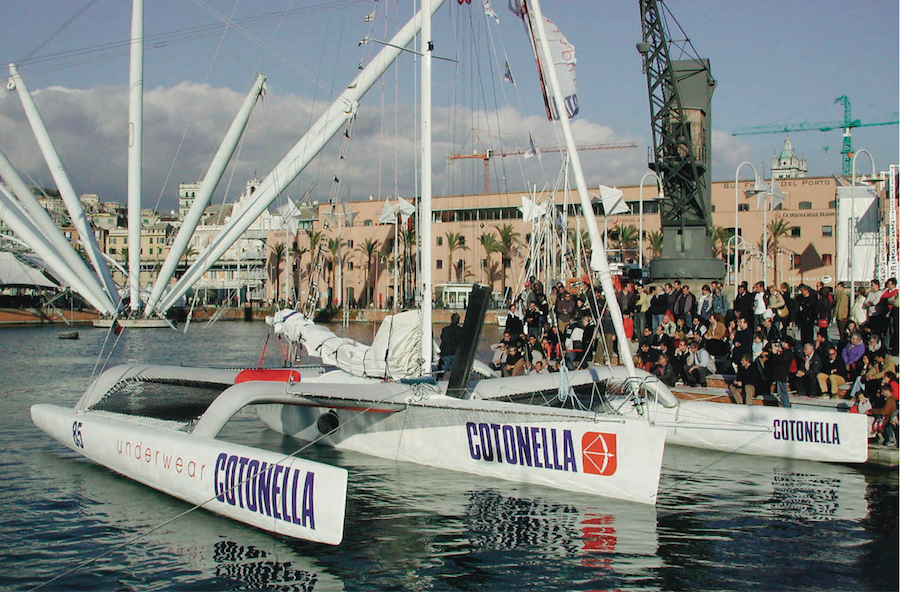
On May 29, 2005 from the British port of Plymouth the twelfth edition of the Ostar finally starts. At noon the sails are hoisted that will push the daredevil participants all the way to the U.S. coast at Newport. The regatta is immediately exciting and full of twists and turns, after only a few days of sailing many competitors are forced to retire due to decidedly adverse weather conditions, among them three of Franco’s opponents, first Britain’s Ross Hobson, then France’s Anne Caseneuve and French-American Etienne Giroire are out of the race. At this point there were three left to vie for the lead, Roger Langevin on the fifty-footer Branec IV, Pierre Antoine on the 43-footer Spirit, and Franco Manzoli, who put up a tight fight with an ending worthy of our movie: the June 14 Cotonella incurs a delay from Langevin more than 200 miles, a delay that is reduced in twenty-four hours to less than two miles thanks to the tactical choice of keeping further north where a cooler wind blows. Manzoli is first. He arrived in Newport at 8:41 a.m. on June 16, after 17 days of racing as the overall winner of the Ostar-Original Singlehanded Trans Atlantic Race-born in 1960 out of a bet between the celebrated Sir Francis Chichester and Colonel Blondie Hasler. It is rightly regarded as the most prestigious of solo regattas. On the fourth attempt Manzoli succeeded in capturing the much-chased chimera. The happy ending is finally written.
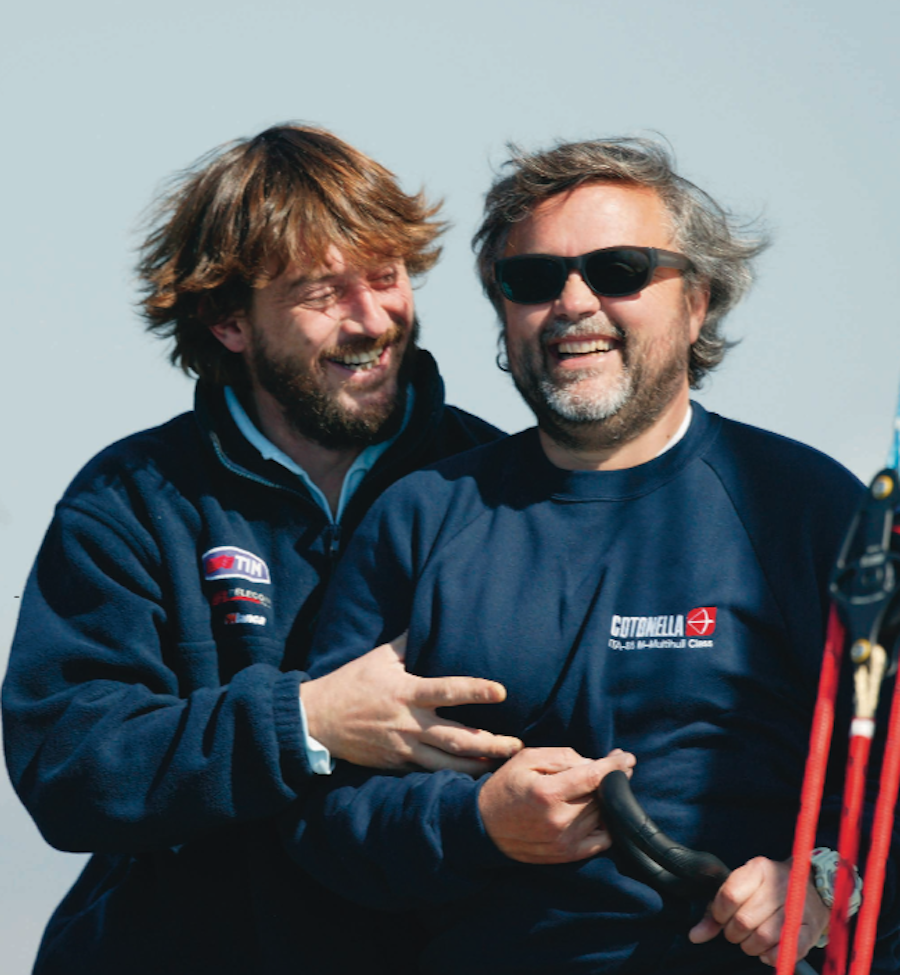
The after
Now what? What awaits our young 50-year-old, what plans will he have on his mind? “I’ve been fortunate enough to have my fondest dreams come true, but if I have to think of a missing experience I think of the Vendèe Globe and Cape Horn….” Cape Horn! You go, dear Ciccio, you’ve earned it and besides it’s been a while since an Italian has doubled it. We will follow you with affection. Good wind!
Tommaso Oriani
Check out the latest issue

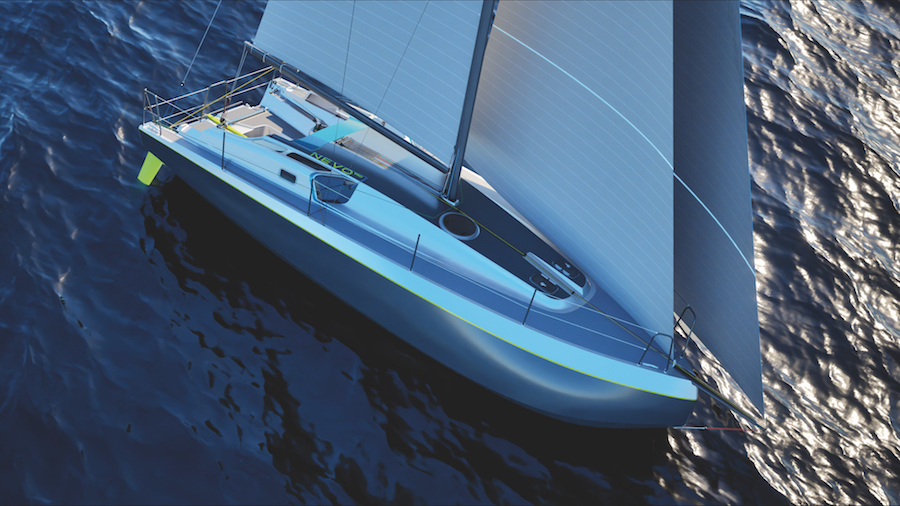
Michele Molino, nautical engineer with the sea in his vein
On the occasion of the 50th anniversary of the Journal of Sailing, the great excellences of the sailing world tell their stories and reveal their projects. In this column, discover all the companies and people who have made important contributions
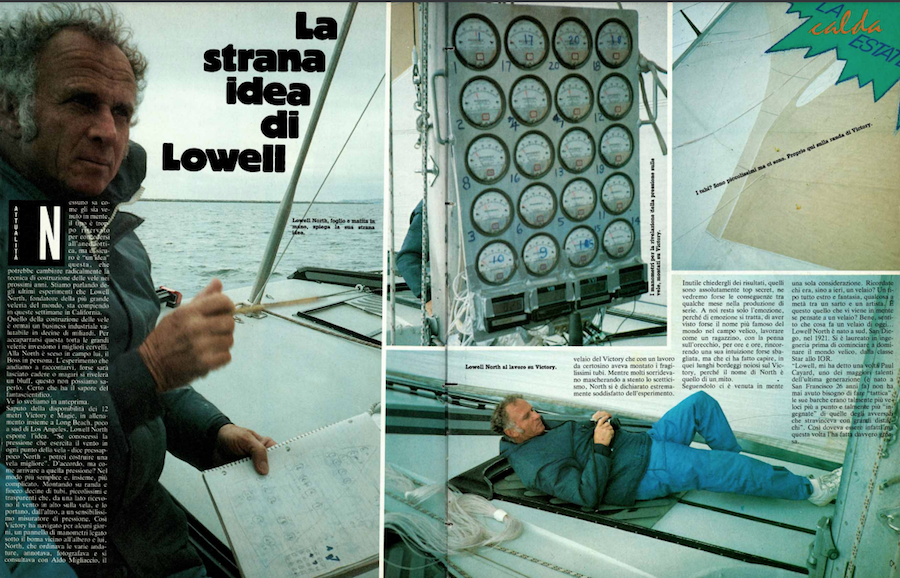
1985. The sails of the future are being born. The GdV is in, with Lowell North
Welcome to the special section “GdV 5th Years.” We are introducing you, day by day, An article from the archives of the Journal of Sailing, starting in 1975. A word of advice, get in the habit of starting your day
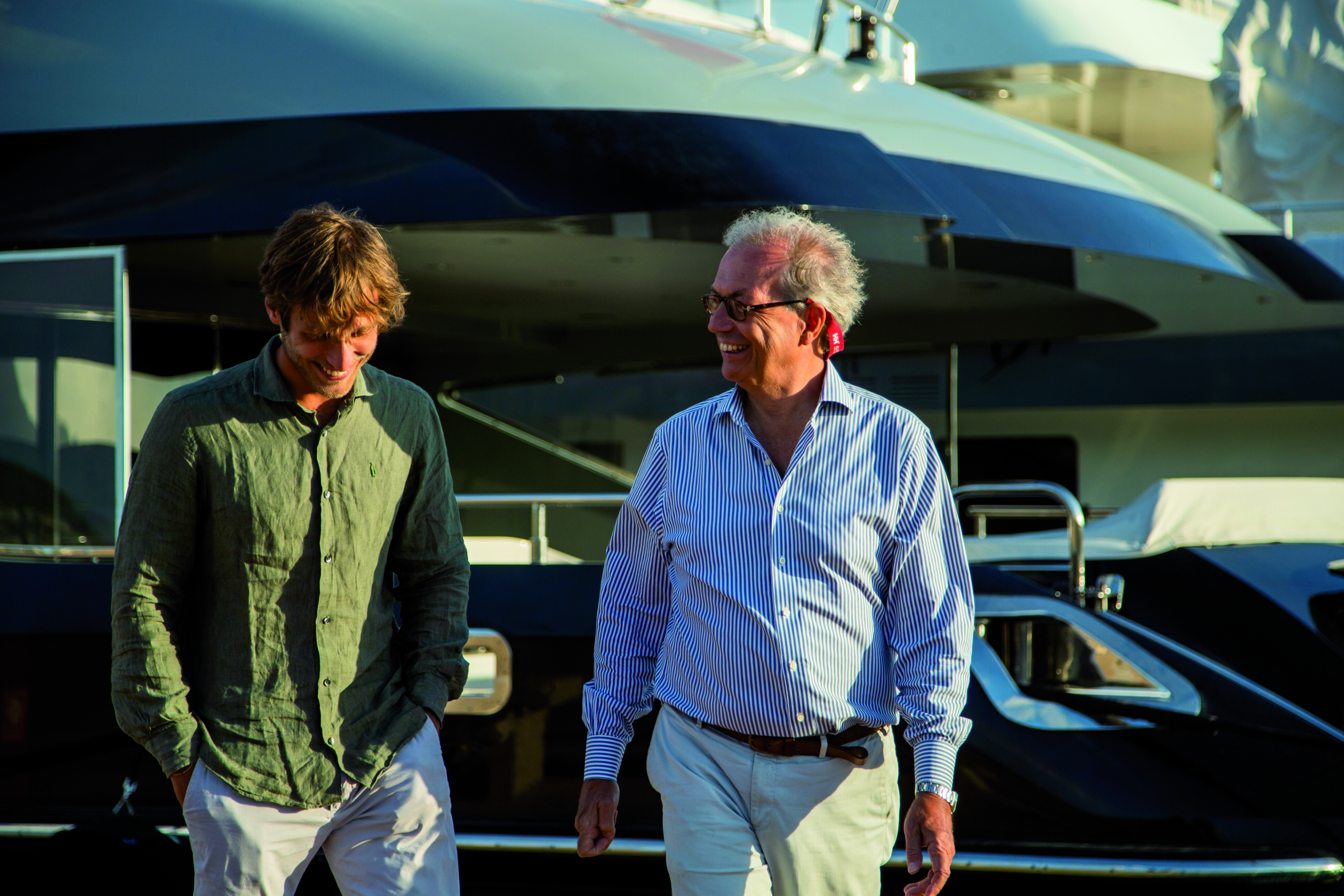
Marinedi, the integrated hospitality system
On the occasion of the 50th anniversary of the Journal of Sailing, the great excellences of the sailing world tell their stories and reveal their projects. In this column, discover all the companies and people who have made important contributions
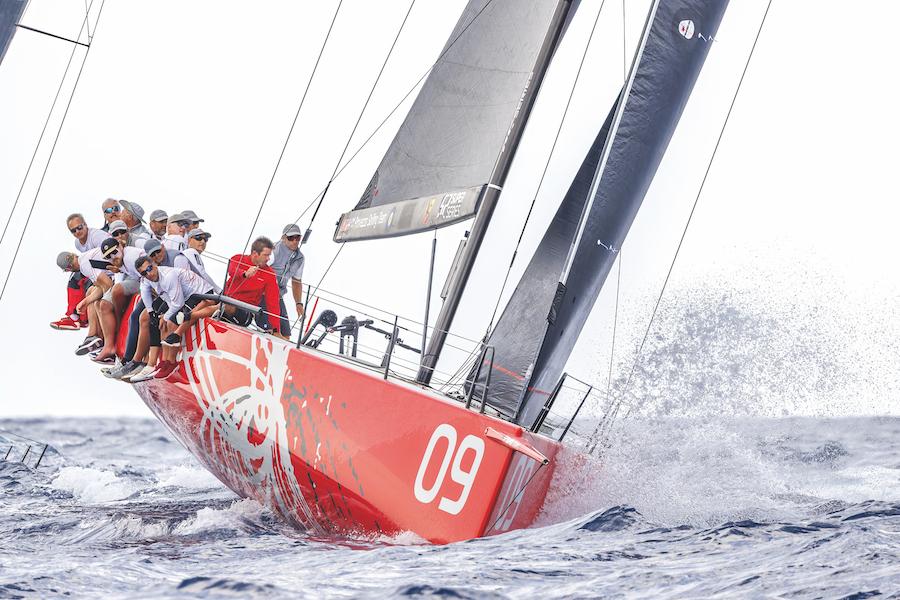
Naval revolution goes through Judel/Vrolijk study
On the occasion of the 50th anniversary of the Journal of Sailing, the great excellences of the sailing world tell their stories and reveal their projects. In this column, discover all the companies and people who have made important contributions

