
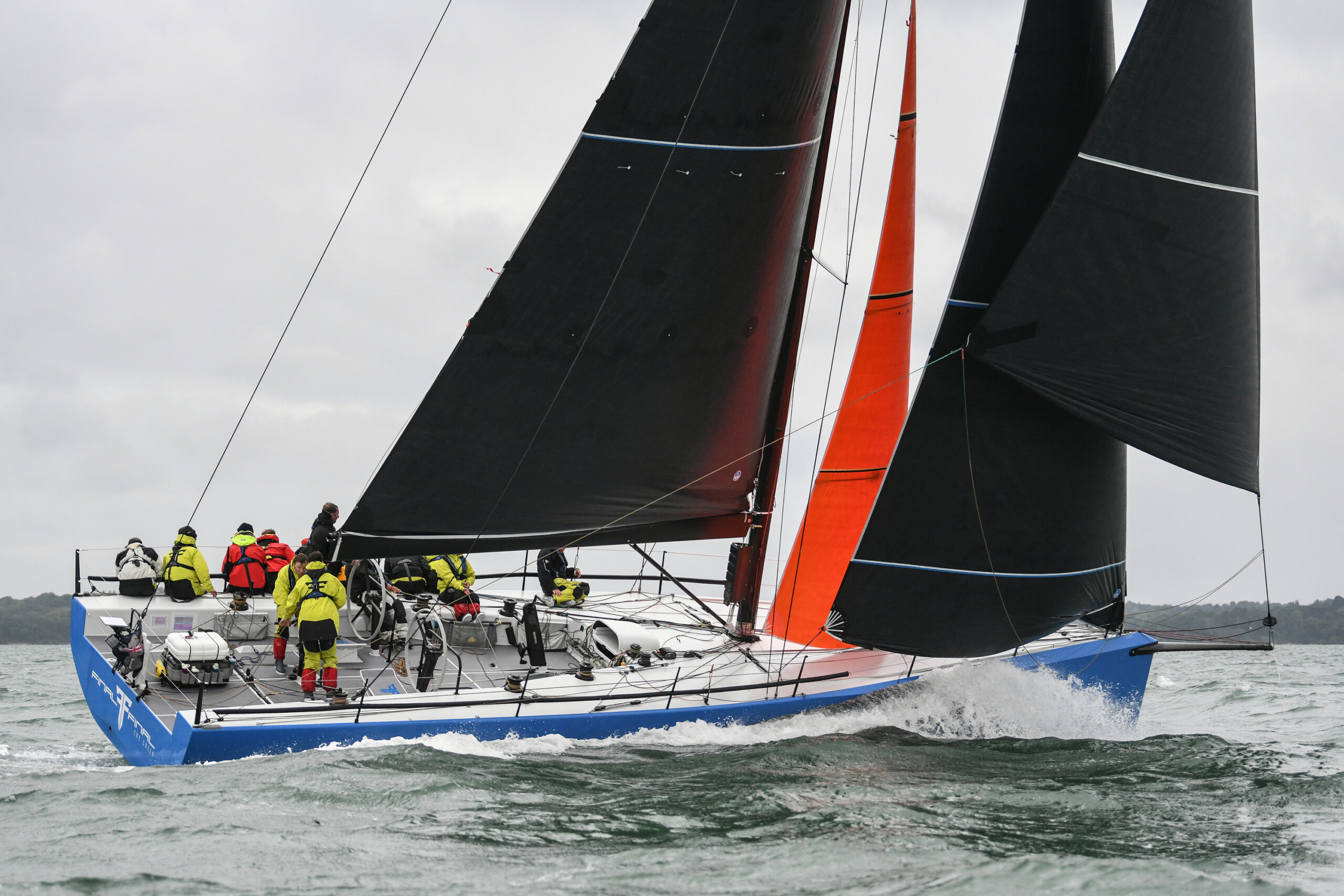
Take a look at the photo above of John Desmond’s TP52 Final Final. This is the Admiral’s Cup. But how many sails do these boats have? Are we back in the clipper era, one might wonder. . At the bow, at the head of the long delphiniera, is the “flying sail.” Next, going aft, is the traditional jib, in orange the “genoa staysail” (which then reminds us of the classic tormentor or a foresail) and the mainsail.
Why so many sails?
But… why so many sails? We asked the most beloved professor of sailors on the web Elio Somaschini* to explain it to us, in simple words As always, com his Italo-Brazilian and his sketches, Somaschini tells you starting with biplanes. And you will understand why rigging multiple sails pays off, only at certain angles and wind strengths. Have a good lesson!
A bit of history
At the dawn of the last century, man was taking the first steps to succeed in flying with objects heavier than air. It was an age of adventurers, mad aviators risking their lives with every attempt to succeed in flight. In this research environment World War I broke out, and the airplane began to become more valuable every day. Initially it was used for reconnaissance by air, but soon combat began.
Immediately a few things began to become clear to those who flew or designed aircraft. First, the greater the area of the wing, the greater the elevation force, what we nowadays call “lift.”
Two wings better than one? Not really…
The problem is that at that time there were no materials to make longer wings. Airplanes were made of wood, steel tubing and painted fabric, and the best engines had powers around 80 horsepower. So the solution was to put two wings, one on top of the other, on each side of the plane. Thus biplanes were born. Some designers put three wings, and created the triplanes.
Reading the history of the great aviators of that era is truly splendid. In Italy, with a biplane of French design (a SPAD VII ) our hero Francesco Baracca managed to shoot down no less than 34 enemy planes. These heroic deeds were so important that a young boy who dreamed high, when he made his own firm to manufacture racing cars, decided to use as a symbol the Prancing Horse that Baracca had drawn in his plane. This boy was Enzo Ferrari.
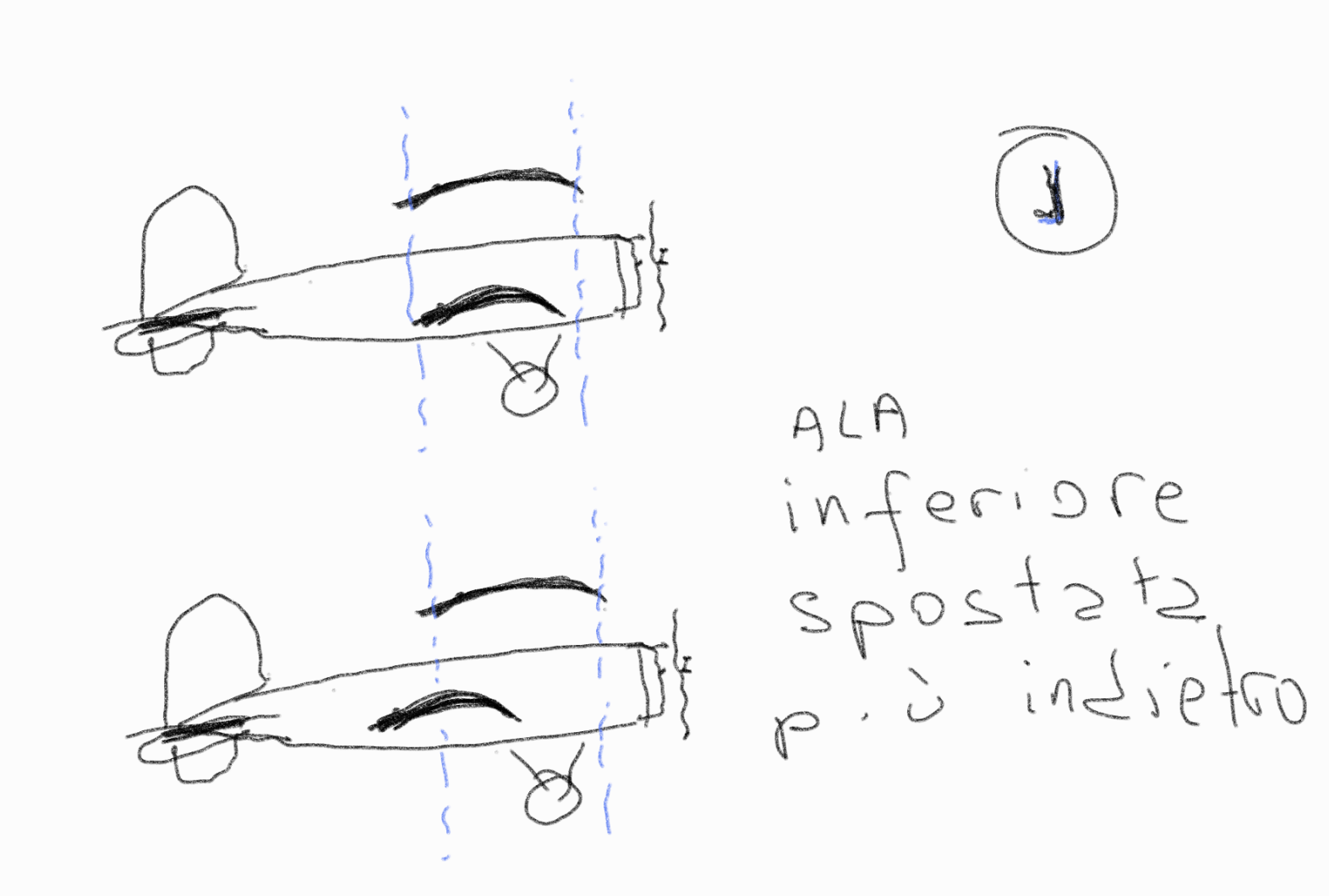
However, not everything is so easy. Right away, airplane designers realized that doubling the number of wings did not double the weight-carrying capacity, that is, it did not double the lift. Then they discovered that if the upper wings were put a little further forward than the lower wings, it improved somewhat (fig. 1).
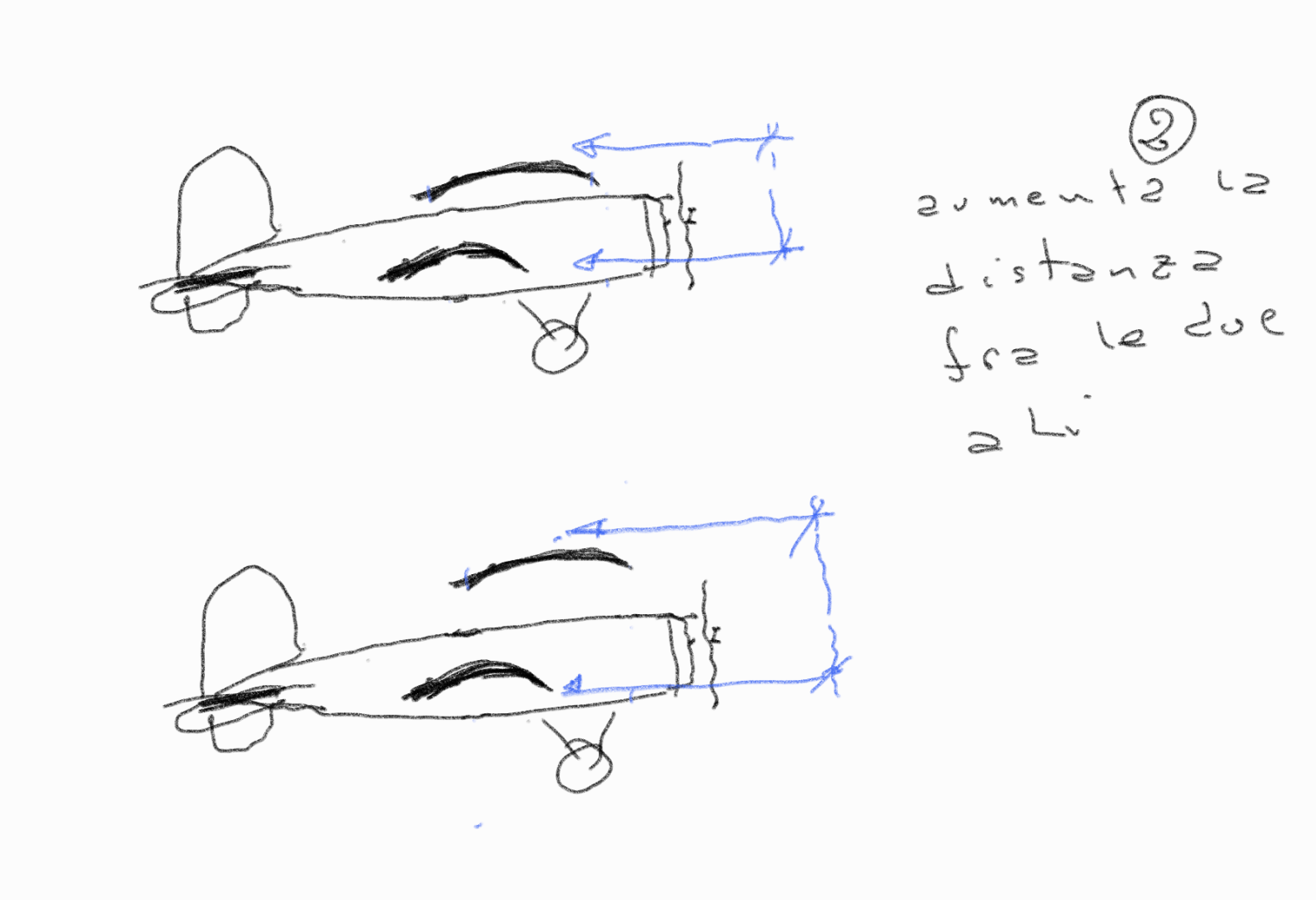
In addition, the greater the vertical distance separating the wings, the greater the lift (Fig. 2).
Why was this happening? No one knew the real reason: Prandtl, called “the Father of Aerodynamics,” would not solve these problems until 1931. But we fortunately are in 2025, then we can together easily understand what is happening.

From wings to foils
Let us think of a finished, that is, real wing (fig. 3). We know that by slicing it, like cutting a salami, we have the famous foils, i.e., the wing profile at that point where the slice was cut.
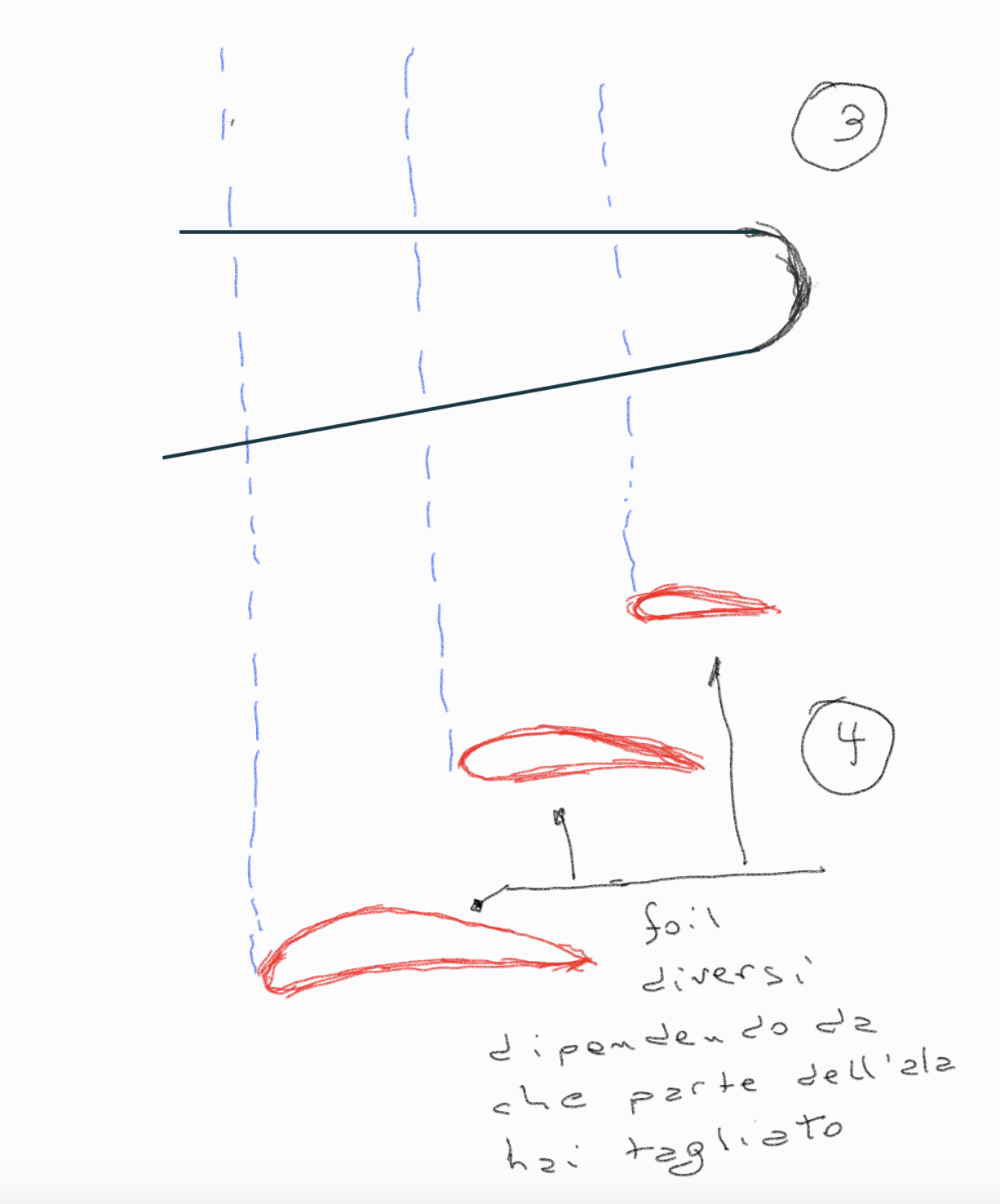
We also know that foils are not equal along the wings. That is, the airfoil can change in proportion and shape if we cut the wing near the tip, in the middle or near the airplane structure (Fig. 4).
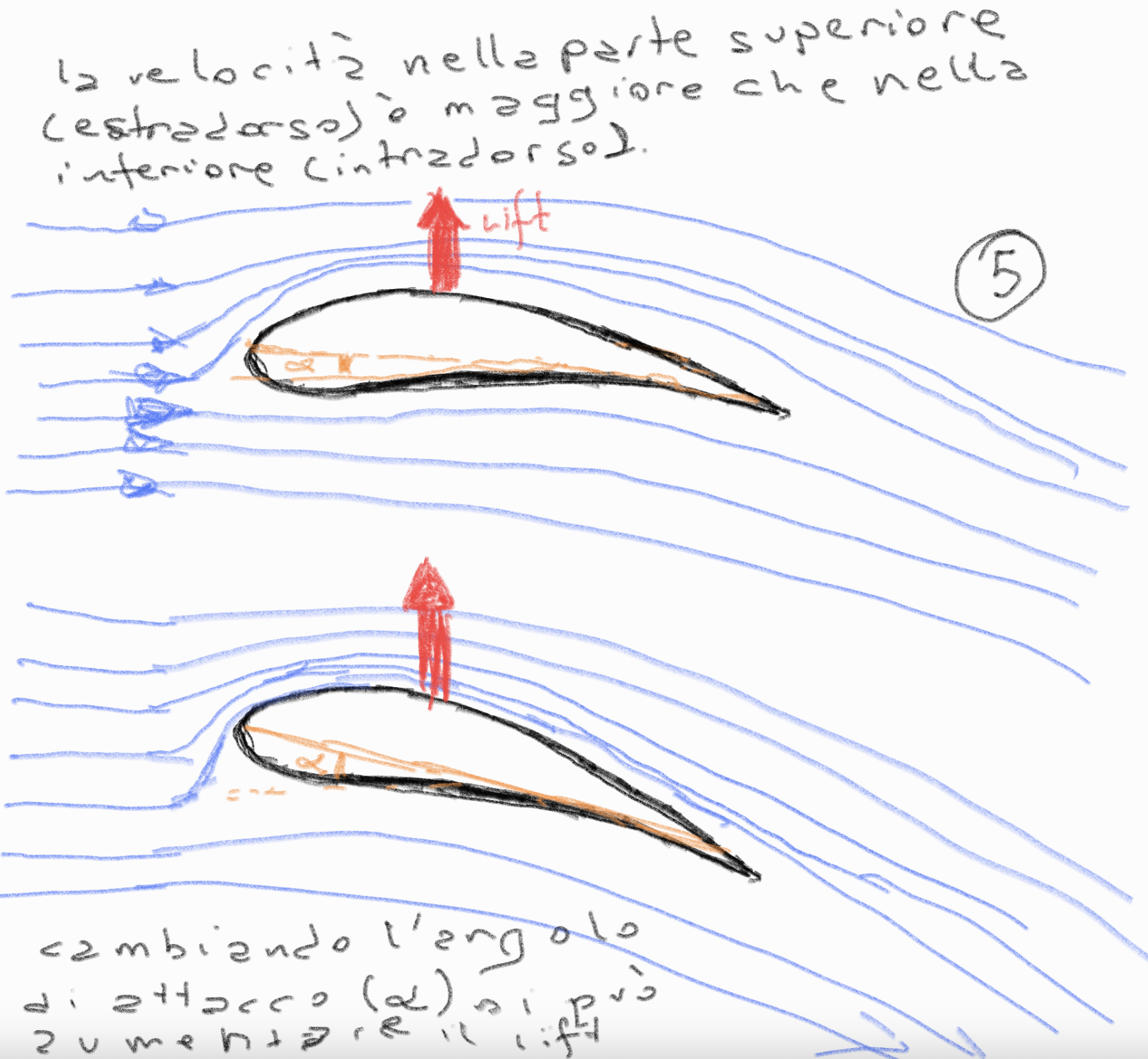
And finally, today we also know that to create lift, it is necessary for the air velocity at the top of the wing to be greater than the velocity at the bottom, and the greater the difference in velocity, the greater the lift (see Figure 5).
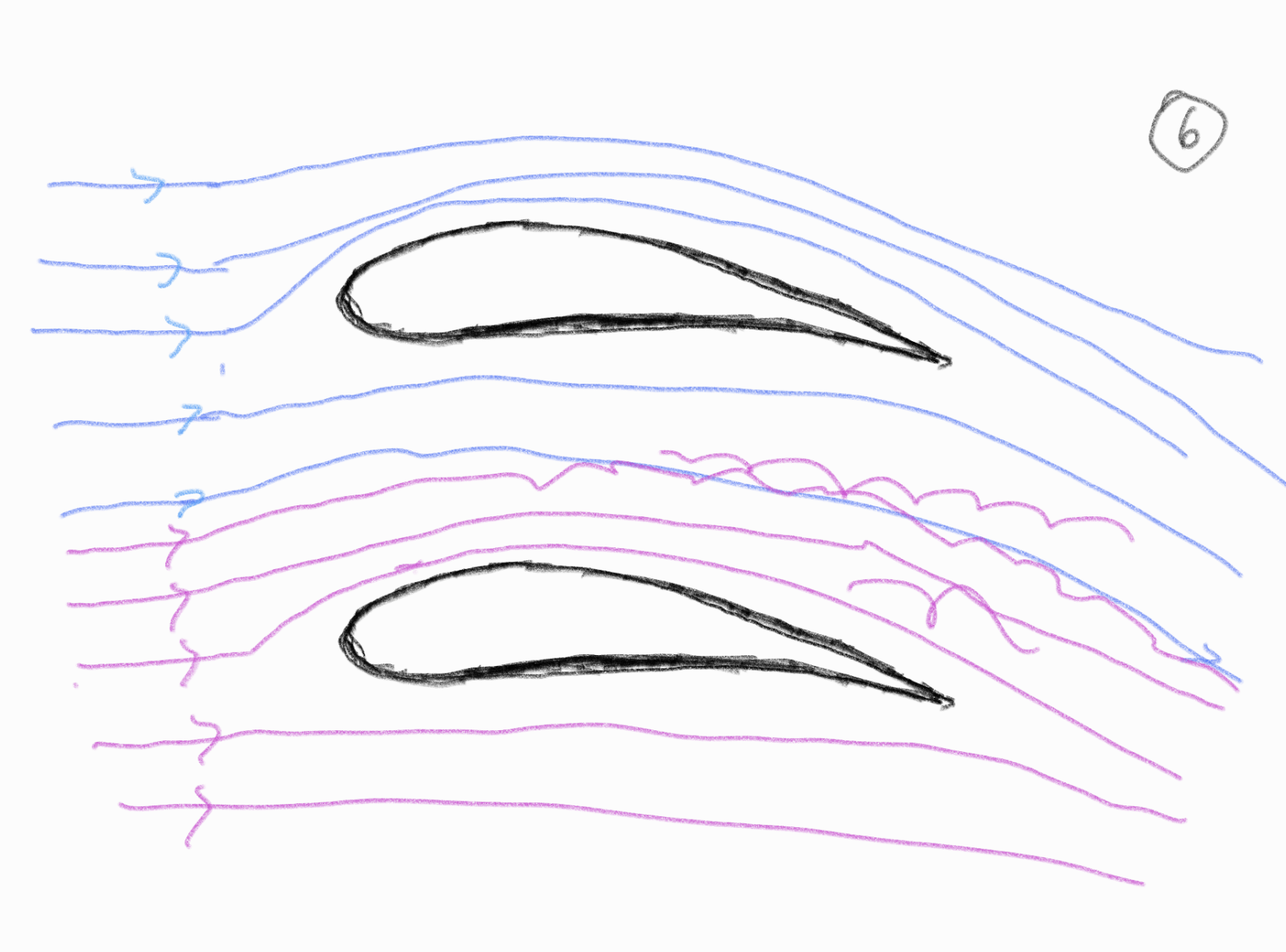
If we now put a second wing under the first, the high-speed air from the lower one will produce interference in the one under the upper wing and can accelerate this air, decreasing the difference and thus the lift. That is why the two wings had to be as far apart as possible (fig. 6).
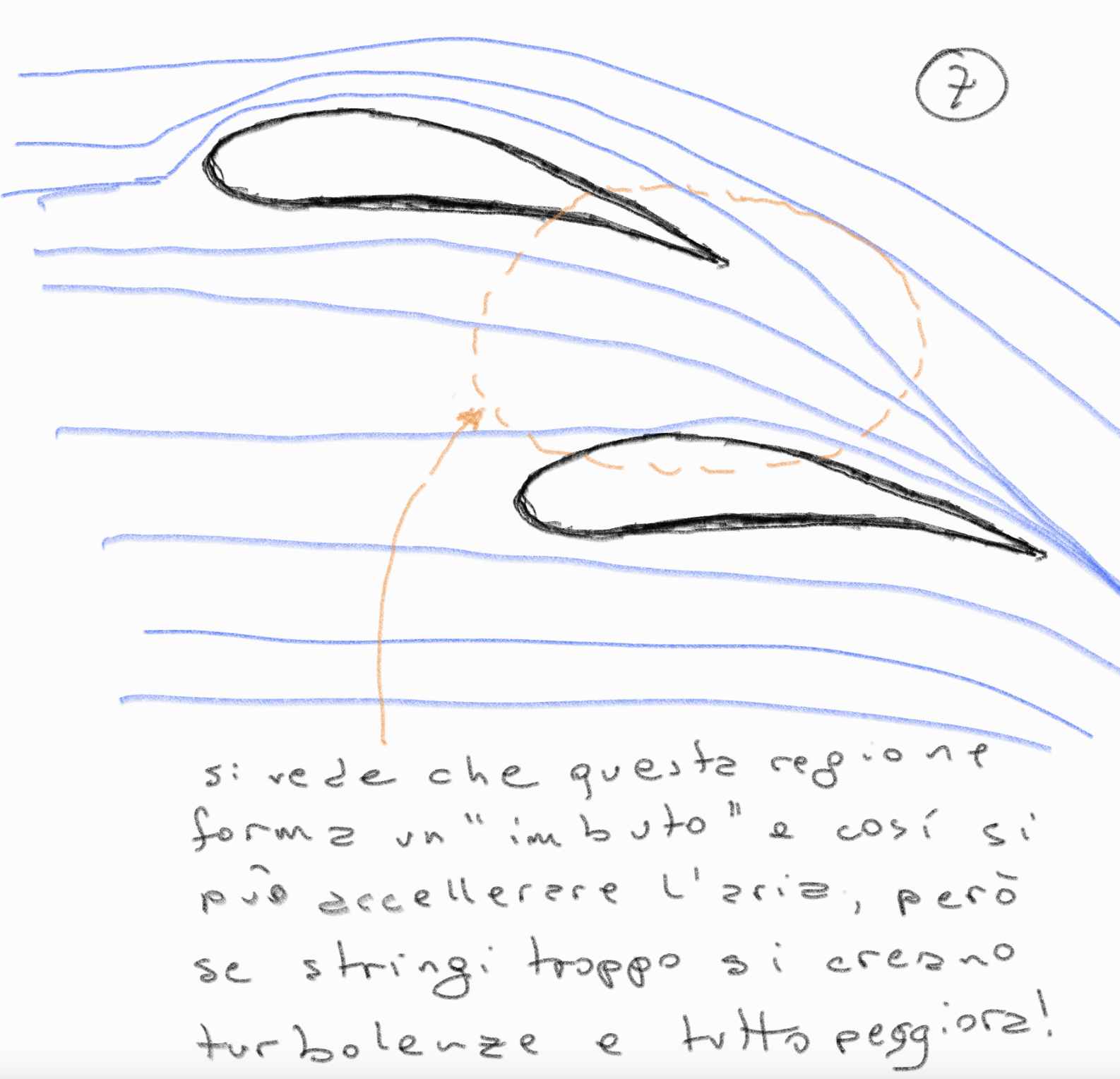
When air leaves a wing, it does so by moving tilted downward, and then, by moving the lower wing back a little bit you can use this flow to help this same wing (fig. 7).
NACA (National Advisory Committee for Aeronautics), in an academic paper done in the 1930s had measured the lift of the wings of the Red Baron triplane. It found that the upper wing was responsible for more than 60 percent of the total lift. This proves that overlapping wings is not a solution in general.
Because these boats are full of sails
But-you may be wondering, “What is someone who writes about World War I aircraft doing in a sailing magazine?”
Well, the answer is simple: they showed me pictures of 50-foot boats, at the Admiral’s Cup, that mounted Fliyng Jib, Jib, mini staysail and mainsail all at the same time!!!!
It sounds crazy, but-if they are doing it by doing it, which they are good at, how to explain it?
If you look at the figures I sketched on the biplane profiles, you will notice that the wind flow corresponds to what, for a sailboat, would be a narrow windward.
We know that when the wind travels through an airfoil, the lift increases by increasing the angle of incidence as long as the air flows are laminar. After the flows come off, there is a mess and the so-called stalemate comes.
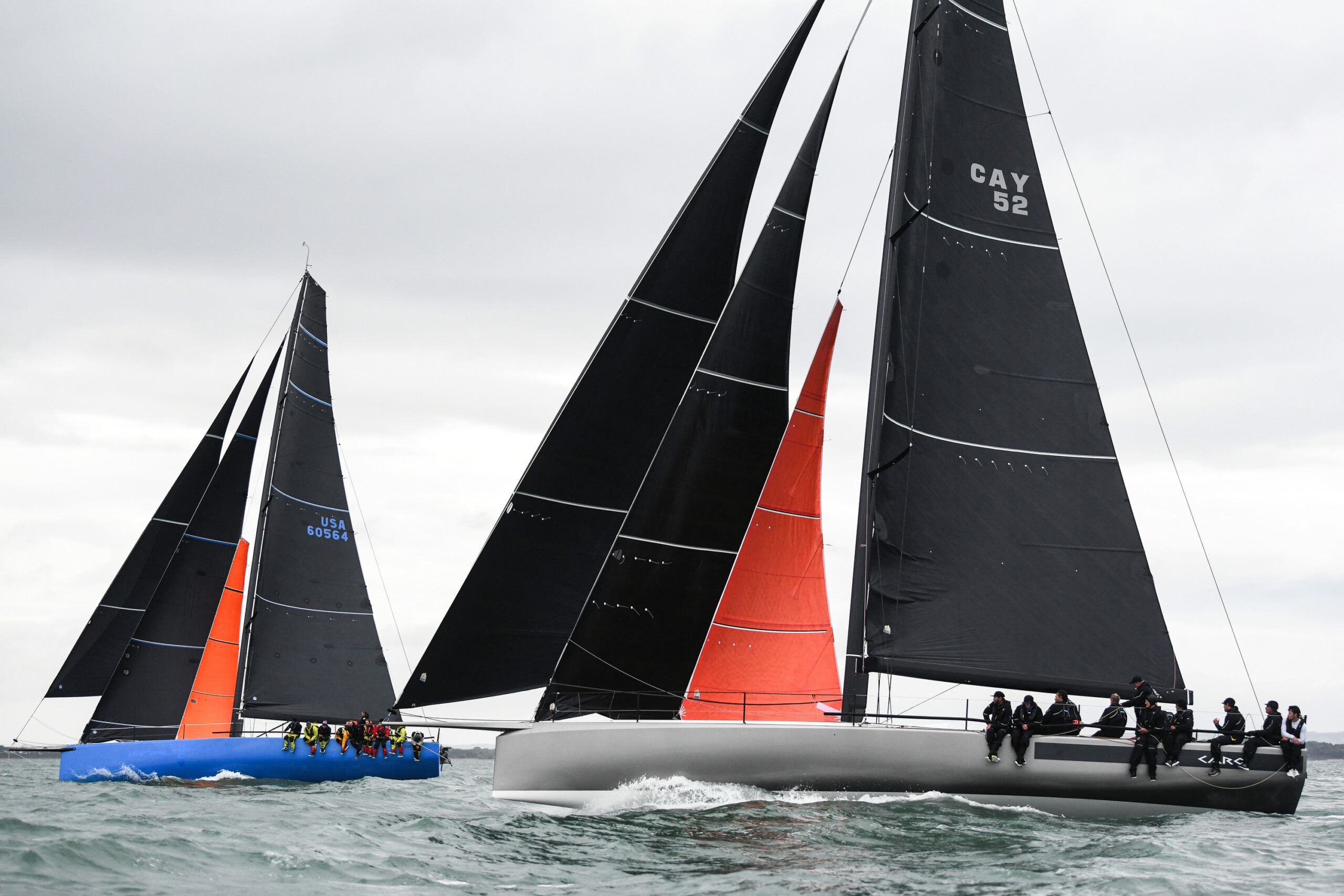
So, if we put on the one hand the sum of the lifts generated by each sail and on the other hand the sum of the drag and interference generated by all these sails we find that a small gain can exist only in certain wind regimes and inside of sailing angles with rather wide apparent wind. Do not forget that resistance to motion also depends on the surface area over which the fluid moves, i.e., more surface area = more drag (resistance). More sails therefore means more surface area and therefore more drag.
The crews at Admiral’s are not the last ones standing. They know this and they play on the edge because all it takes is one small mistake and gains fade away. They are professionals, moreover among the best so they know how to change sails accurately and in what range. It’s hard to do that!
Our sailboat is also a biplane
Ah, before you ask, the answer is yes. Our little sailboat for mere mortals is also a biplane, where the upper wing is the genoa and the lower wing is the mainsail.
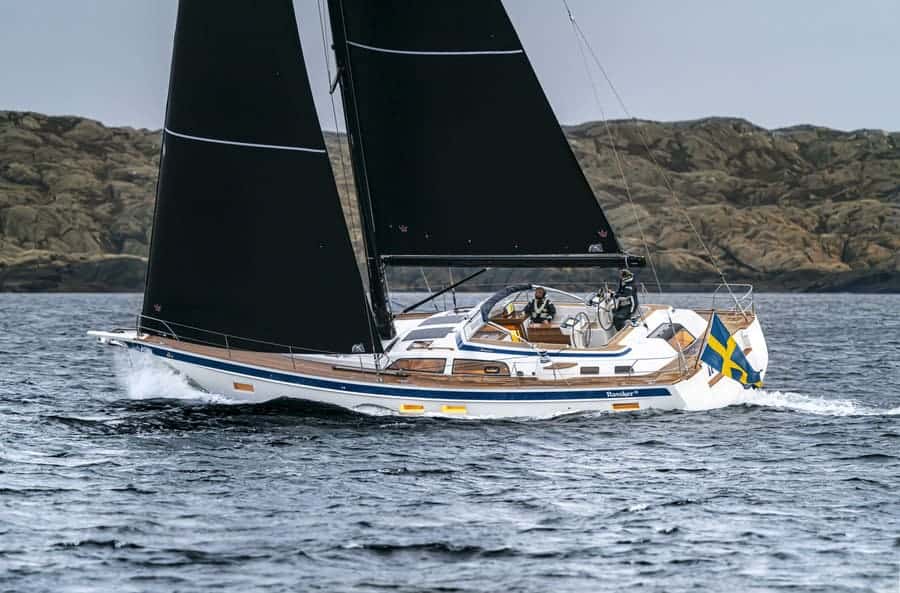
However, the function of our upper wing is very much to accelerate the flow of air in the upper part of the lower wing (the mainsail) and with that increase the speed difference on the mainsail and increase the “lift”-thus we go faster! This is the reason why, when we sail, we must always fine-tune the channel formed between genoa and mainsail.
The genoa will accelerate the wind on the outside of the mainsail if the channel is wide enough. If it is too narrow you will see that the mainsail, near the mast, will make creases. Then you will have to open the channel. In short, this is the pleasure of turning physics into poetry! What fun it is to make our little boat fly!
Elio Somaschini
 *Who is the web’s most beloved sailing prof.
Physicist, sailor, sailor(he sailed around the world for 20 years without instruments, only with a watch). Elio Somaschini, discovered by the Journal of Sailing, has quickly become one of the most followed “popularizers” on the web. His secret? He has a gift for making complex concepts simple and understandable to everyone by applying physical principles to practice. Elio makes you understand why you are doing something.
Would you like to personally contact Elio Somaschini to learn more about boating physics? Do you want to a ver it on board, or for a transfer? Write to him at cr****@***il.com
The “best of” his lectures:
- Your cruising boat already has foils
- Because your sails carry
- How to tell if your sails are properly adjusted by touching the rudder
- How to change the shape of sails to make the most of them
- Orienteering at sea using hands and a watch
- Navigate without tools and always know where you are
Check out the latest issue

5 out-of-the-box ideas seen at the Genoa Boat Show for “sailing” without a boat
The Genoa Boat Show , for a few days, was transformed into a microcosm. A place where size does not matter (not only for boats) and where figures take on relative meaning. Those who live by the sea know

3 accessories to see if you visit the Genoa Boat Show
At the Genoa Boat Show, there is more than just the boat scene; on the contrary, the real surprises often come from the world of accessories, which are increasingly innovative and ready to transform the experience of those who go
Schenker launches Qube, the new “cube” watermaker that fits every boat
Qube, the new proposal by Schenker Watermakers, arrives: a reverse osmosis watermaker designed to meet the needs of those looking for high performance and minimal footprint. After the great success of the Zen line, characterized by ultra-flat shapes and intelligent
This boat generator is 100% electric and Italian. Here’s how it works
VOLTAB is the first 100% electric and 100% made in Italy portable generator that completely changes the energy management on board your boat. Made entirely in Italy with recycled materials and cutting-edge technological solutions, VOLTAB combines sustainability, efficiency and freedom

