
Welcome to the special section “GdV 5th Years.” We are introducing you, day by day, An article from the archives of the Journal of Sailing, starting in 1975. A word of advice, get in the habit of starting your day with the most exciting sailing stories-it will be like being on a boat even if you are ashore.
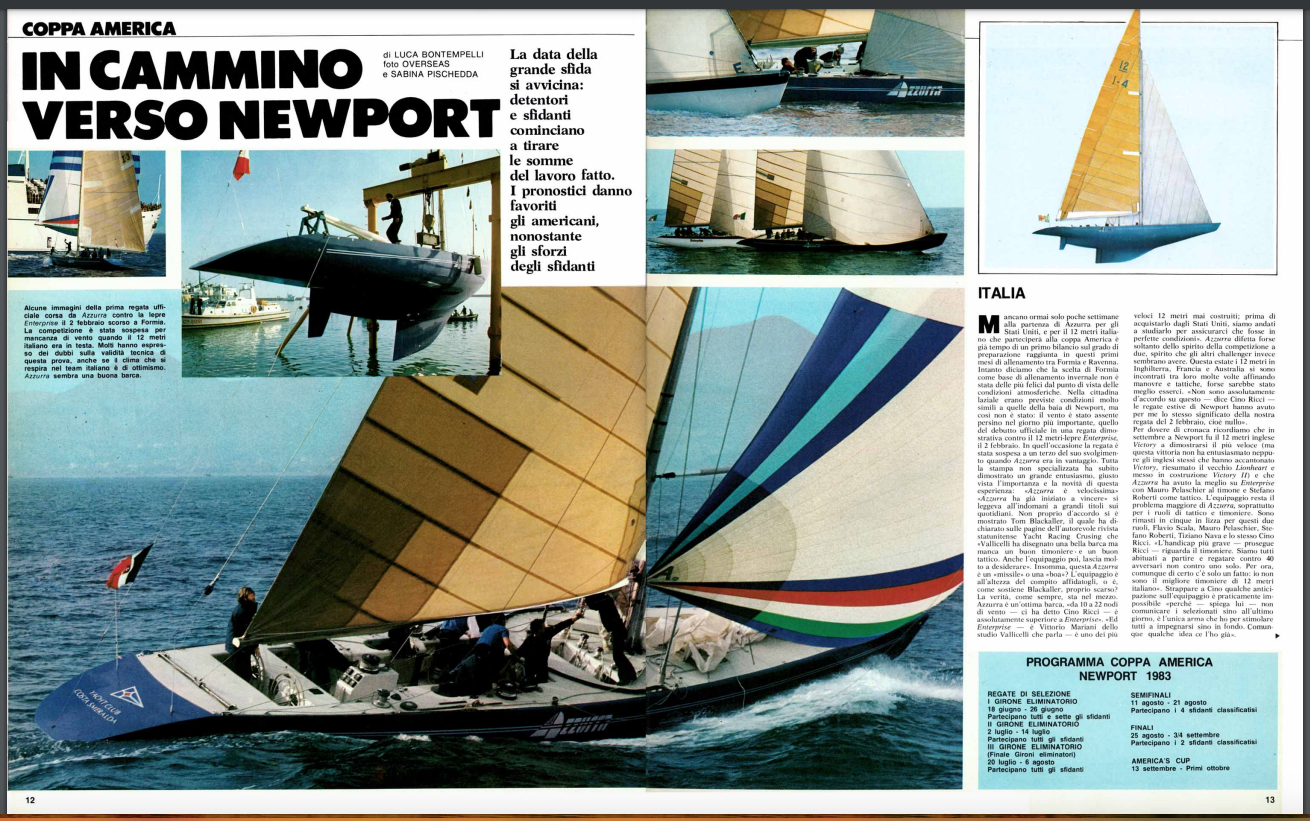
Is Azure a missile or a buoy?
Taken from the 1983 Journal of Sailing, Year 8, No. 2 March-April, pp. 12-17.
This is how the great helmsman Tom Blackaller comments on Azzurra. No one knows how the Italian boat that is participating in the America’s Cup for the first time will perform. In this feature a close look at all the boats of the golden age of the 12-meter SI, the fascinating boats of that time that would compete in Newport a few months later.
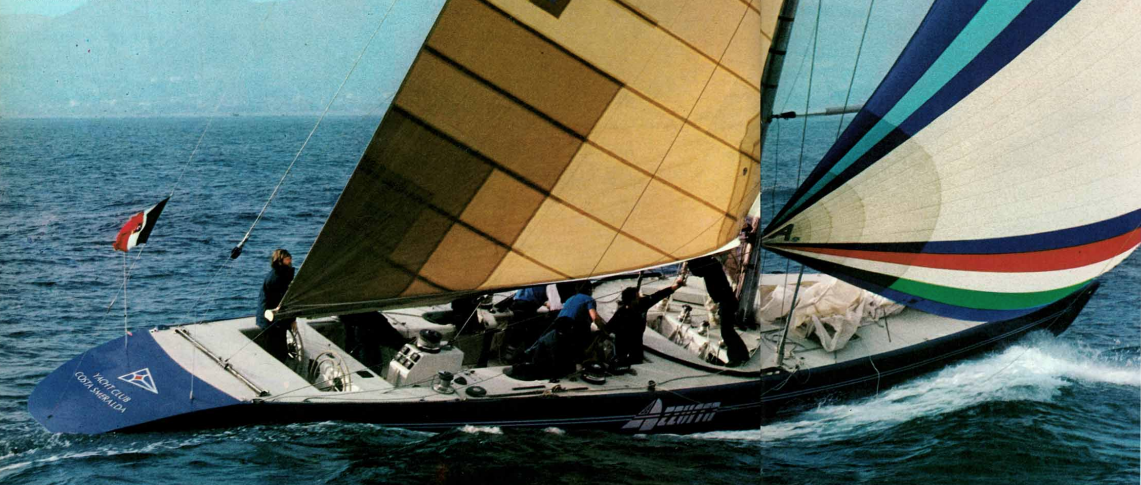
On the road to Newport
The date of the big challenge is approaching: holders and challengers are beginning to draw the balance of the work done. The oddsmakers give the Americans as favorites, despite the efforts of the challengers.
The Italian challenge
We are now only a few weeks away from the departure of Azzurra for the United States, and for the Italian 12-meter that will participate in the America’s Cup, and already it is time for a first balance sheet on the degree of preparation achieved in these first months of training between Formia and Ravenna. Meanwhile, let us say that the choice of Formia as a winter training base was not the happiest from the point of view of weather conditions. Conditions in the Latium town were expected to be very similar to those in Newport Bay, but this was not the case: the wind was absent even on the most important day, that of the official debut in a demonstration regatta against the 12-meter-lepre Enterprise, on February 2. On that occasion, the regatta was suspended a third of the way through when Azzurra was ahead. All the non-specialized press immediately showed great enthusiasm, right given the importance and novelty of this experience: “Azzurra
very fast,” one read in the aftermath in big headlines in newspapers. Not quite in agreement was Tom Blackaller, who stated in the pages of the influential U.S. magazine Yacht Racing Crusing that “Vallicelli has designed a nice boat but it lacks a good helmsman and tactician. The crew then, too, leaves a lot to be desired.”. In short, this Azzurra is a “missile” or a “buoy”?
Is the crew up to the task entrusted to them, or is it, as Blackaller claims, just poor? The truth, as always, lies in the middle. Azzurra is an excellent boat, “from 10 to 22 knots of wind,” Cino Ricci told us, ” she is absolutely superior to Enterprise. “And Enterprise,” is Vittorio Marianiof Vallicelli Studio speaking, ” is one of the fastest 12-meter boats ever built; before we bought it from the United States, we went to study it to make sure it was in perfect condition.Azzurra lacks perhaps only the spirit of two-man competition, a spirit that other challengers seem to have instead. This summer the 12-meters in England, France and Australia have met each other many times refining maneuvers and tactics, perhaps it would have been better to be there. “I absolutely disagree with this,” says Cino Ricci, ” the summer regattas in Newport had the same meaning for me as our February 2 regatta, which is nil. For the sake of the record, we recall that in September in Newport it was the British 12-meter Victory that proved to be the fastest (but this victory did not excite even the British themselves, who shelved Victory, exhumed the old Lionheart and put under construction Victory II) and that Azure got the better of Enterprise with Mauro Pelaschier at the helm and Stefano Roberti as tactician. Crew remains the biggest problem of Azzurra, especially for the roles of tactician and helmsman. There are five left in the running for these two roles, Flavio Scala, Mauro Pelaschier, Stefano Roberti, Tiziano Nava, and Cino Ricci himself. “The most serious handicap,” Ricci continued. Is about the helmsman. We are all used to starting and racing against 40 opponents not just one. For now, however for sure there is only one fact: I am not the best Italian 12-meter coxswain.” . Snatching some anticipation from Cino about the crew is practically impossible “because,” he explains, “it’s not possible. not communicate the selected ones until the last day, it is the only weapon I have to stimulate everyone to commit to the end. However, I already have some ideas.” .
Who will be in charge of the American defense?
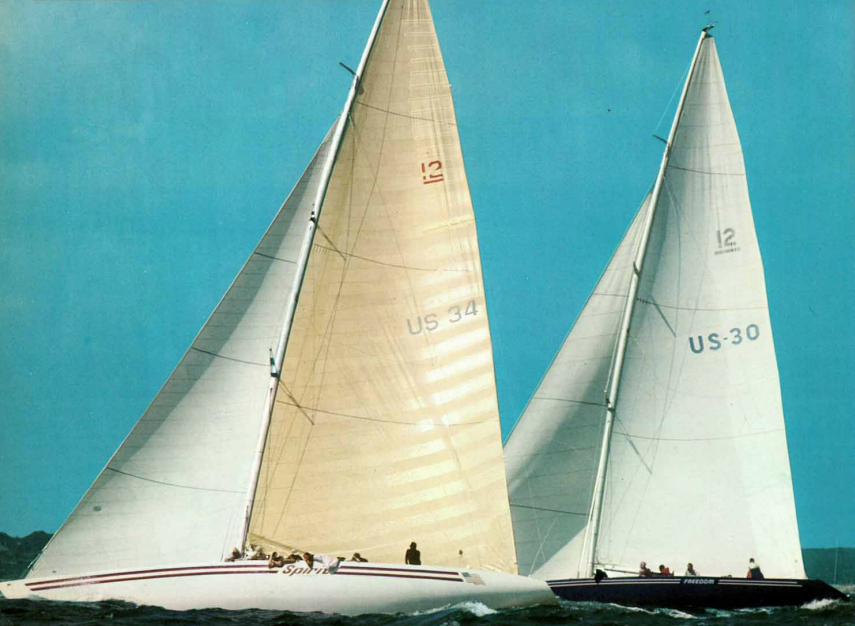
Open fight between Tom Blackaller and Dennis Conner for the role of defender: the former, who uses the glorious Courageus winner of the Trophy in 1974 and 1977, is fine-tuning his new boat, christened with much superstition Defender. It is a new design by David Pedrick, an architect who made his debut in the 12-meter world only three years la with the Clipper. On the occasion of the American eliminations, Pedrick’s boat , Clipper, had surprised everyone with its countercurrent solutions: short, light and relatively lightly sailed, with an elusive stern, it was more tied to the dictates of the lor than to those in use in the metric classes. “Unfortunately, ” says Tom Blackaller, who was co-skipper with the very young Russel Long, “it was a bit of a shock. then we had little time to train. Dennis Conner, on the other hand, had devoted two years of his life to Freedom, and of course he was the fastest.” , On the opposite front Dennis Conner is working, as his usual, very meticulously: shelving the project of Valentijn Magic, he has focused his efforts on comparisons between Freedom e Spirit of America, the latest project from Sparkman and Stephens‘ studio. “We wanted to look for something new,” Conner said. and so Spirit has a very machined stern and a brand new concept trim. The best boat still remains Freedom, though.” . Not content with what it has achieved so far, Conner’s union launched last January a new “twelve,” still designed by Valentijn, christened Liberty. In this succession of new boats, who do American bookmakers give as the favorite?
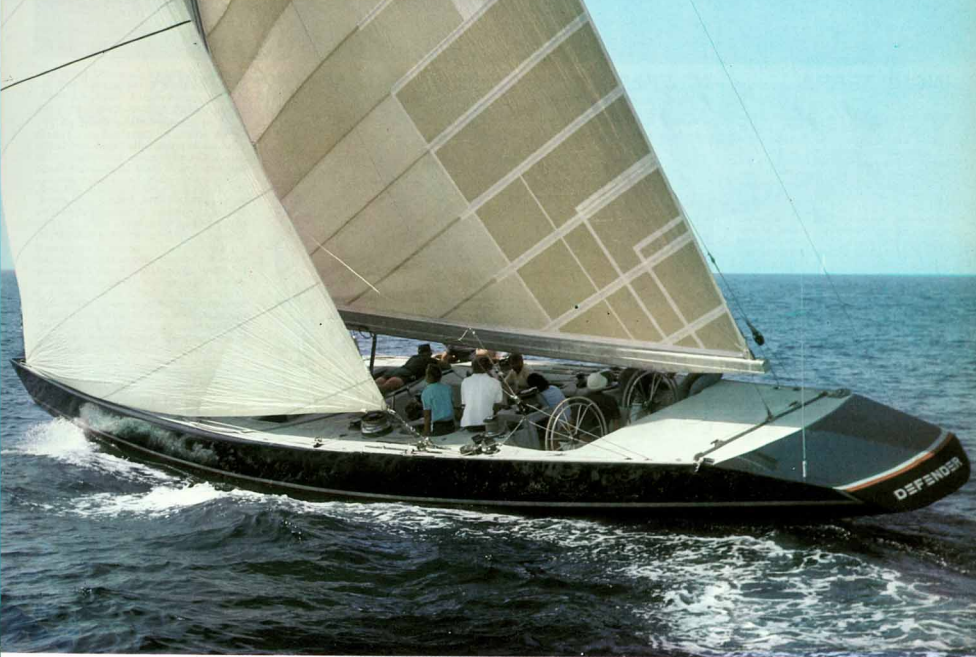
“If it is true that money is the basis of success in this regatta,” Blackaller said. I can go home right away, too. Conner has a union behind him that is willing to do anything, while I am backed by popular subscription. Our budget is limited, however, I feel I represent America.” . As for the boat’s performance, however, Blackaller is satisfied “In some conditions,” he said, “the Courageus is even faster. Then again, you can’t expect everything from a Twelve: if you gain on one side you lose on the other. However, Defender on the whole seems more complete to me.” .
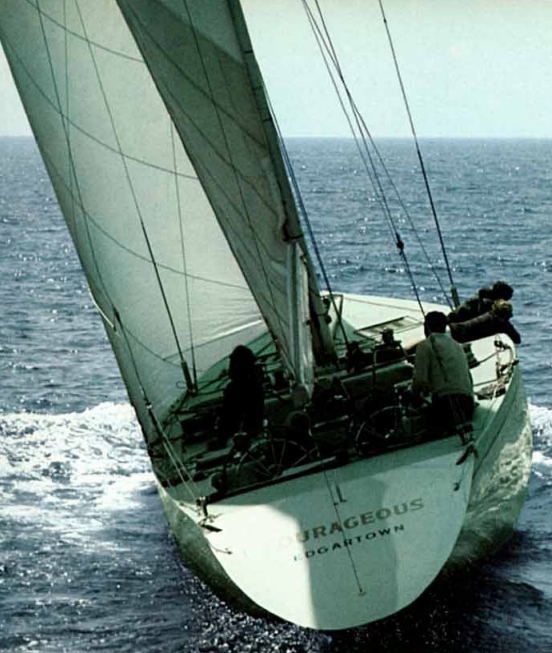
The deployment of forces in Conner, however, seems more convincing: American experts are virtually all convinced that in Newport waters, defending the Star Spangled Banner, will still go one of the boats of the Freedom. Not least because among four boats, Freedom, Spirit, Liberty e Magic, the winning horse has to come out.
The uncertainty of the British
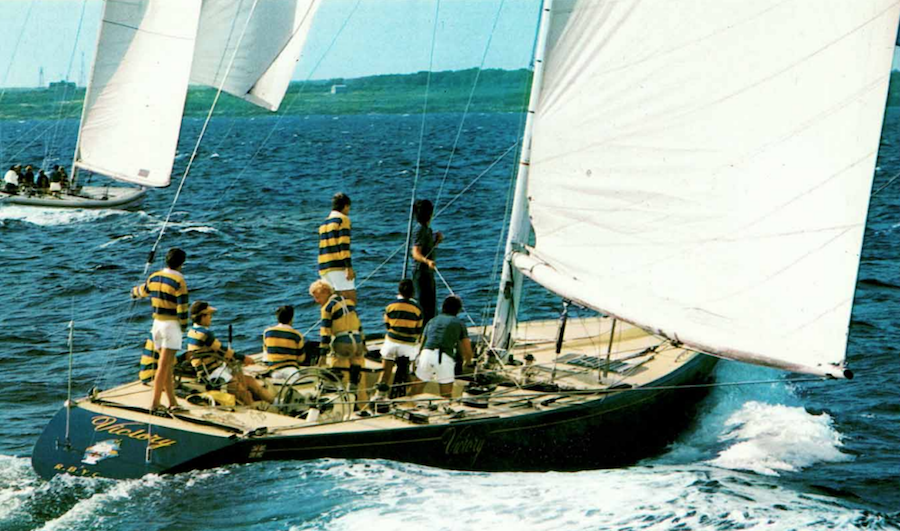
Of all the unions involved in the 1983 America’s Cup, England’s is the only one that has not defined which 12-meter will represent it in summer Newport. After the 1980 cup, the British acquired Australia, one of the fastest 12s designed by Ben Lexcen and Johan Valentijn, and entrusted the construction of their hull to one of the rising stars of world design-Ed Dubois. The venture was born under all good auspices also because it had behind it the financial empire of multibillionaire Peter De Savary, boss and sponsor of the entire organization. However, not everything went as planned. Ed Dubois designed Victory, which despite winning against all the other challengers (excluding Azzurra who was not present) the summer regattas, did not impress much in the way of speed. Problems later arose between the union and designer Dubois, who was unwilling to make major changes on his hull, so much so that on October 29 Peter De Savary announced at a press conference that construction of a new 12-meter Victory II. Abandoned as designer Ed Dubois, with Victory II the British returned to lan Howelett, who had already designed Lionheart in the last edition of the cup, when the cross-Channel sailors were eliminated in the first round by the French. But the real cold shower for the British came just a few weeks ago, when construction of the new Victory was halted in the United States. In fact, the America’s Cup rules require each union to provide for the construction of its own hull within its own country. Thus, if the situation is not resolved, the British will find themselves at the start of the selections with a 12-meter, Victory, in which they no longer believe, and with the old Lionheart who does not seem to have what it takes. For coxswain and tactician Phil Crebbin and Harold Cudmoreseem to have to give way to Rodney Pattison and Laurie Smith.
Canada’s first time
By late November Canada I, the design by Dave Kirby, former designer of the Laser, with which Canada attempts the America’s Cup adventure for the first time, was ready. A troubled adventure, as union funding shortages forced the launching to be delayed until January. Previously, training had taken place with two chartered hulls: Intrepid, the Sparkman and Stephens winner in 1967 and later purchased as a hare by the French, and Clipper, David Pedrick ‘s first work with which Blackaller had attempted to wrest the defender’s role from compatriot Conner in 1980. Skipper of Canada I should be former FD world champion Mc Laughin. Now the boat has moved to Newport and is continuing training together with France III. The Canadians’ main problem, however, remains budgets. “From the accounts done,” said Cedric Gyles, current director of the operation, ” the final budget will be around two and a half million dollars,” about three and a half billion liras.
France’s problems
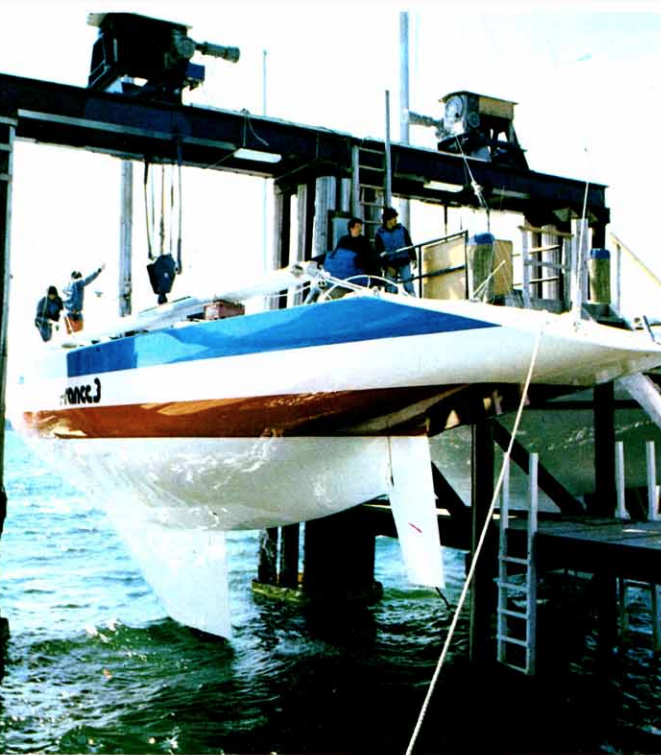
For the French, too, the first hurdle to overcome was money. After four challenges Baron Bich surrendered the entire organization, and for the transalpines trouble began. In trouble over the past few months, they thought of displaying the boat around major cities, thus appealing to typical French nationalism, and managed to raise the necessary funds. The boat is the old France III which Dennis Conner, in 1980, had judged outstanding. It is a design by John Valentijn, an evolution of Australia. Last year it was modified to designs by Jacques Faroux who changed its keel. The boat is currently in Newport and training with Canada I. The skipper is Bruno Troublé, who has been joined for this new attempt by Patrick Haegli.
Beware of Australia
Australia has been getting serious about the America’s Cup this year; three syndicates and three new boats are preparing for the trip to Newport, and one of them even hides a few little secrets in its keel, so much so that we were unable to photograph it.
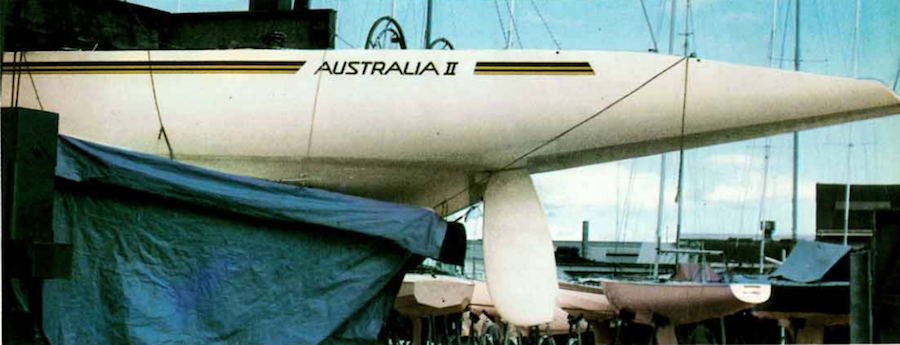
Let’s see, boat by boat, what secret weapons Australians want to use in the coming summer. Alan Bond ‘s syndicate has entrusted the design of the new boat Australia II, to Ben Lexcen, and it is in this design that the architect who became famous with Ginko e Guia III, when he was still called Bob Miller, did the most experimentation. Bulb and trim of this hull are in fact still top secret to all. Skipper of the twelve is John Bertrand, fourth in the Kingstone Olympics on the Finn. For now, despite the revolutionary hull (at least that is how it is supposed to be). Australia has proven to be very fast and already with a satisfactory tune-up; out of 27 races raced vs. Challenge it has won 24, albeit by a narrow margin. Now the keel of Australia has been shifted 17.5 centimeters toward the bow. “But the major research work,” said John Bertrand. Will be done on the sails. We use North, Hood, and Sobstad, and new cuts are being studied for kevlar and mylar genoas “. Identical as dead work and deck, but with a traditional keel is Challange 12, by the same architect and carried by John Savage.
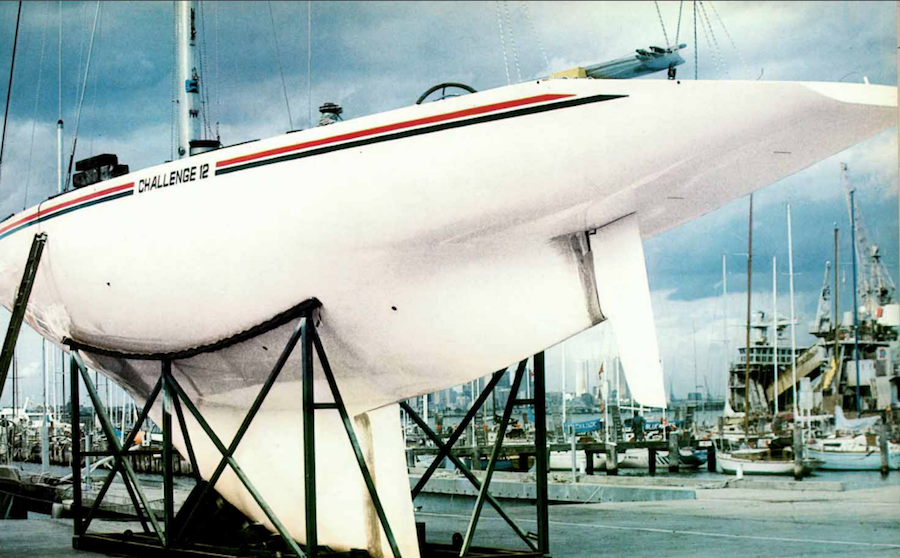
Unfortunately, however, the Victoriaunion is in monetary trouble and so the boat is in danger of passing, lock, stock and barrel, under Australia’s third union, the Sydney union. The latter, meanwhile, is fine-tuning its new boat, using the old one as a hare Grete Both boats are designed by Alan Payne and the official skipper and lan Murray, six-time Australian 18-foot world champion.
Luca Bontempelli
Check out the latest issue

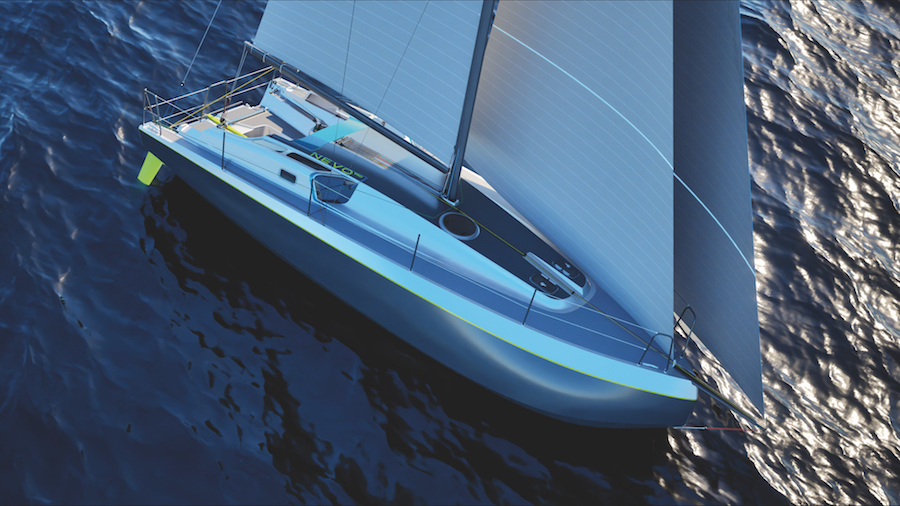
Michele Molino, nautical engineer with the sea in his vein
On the occasion of the 50th anniversary of the Journal of Sailing, the great excellences of the sailing world tell their stories and reveal their projects. In this column, discover all the companies and people who have made important contributions
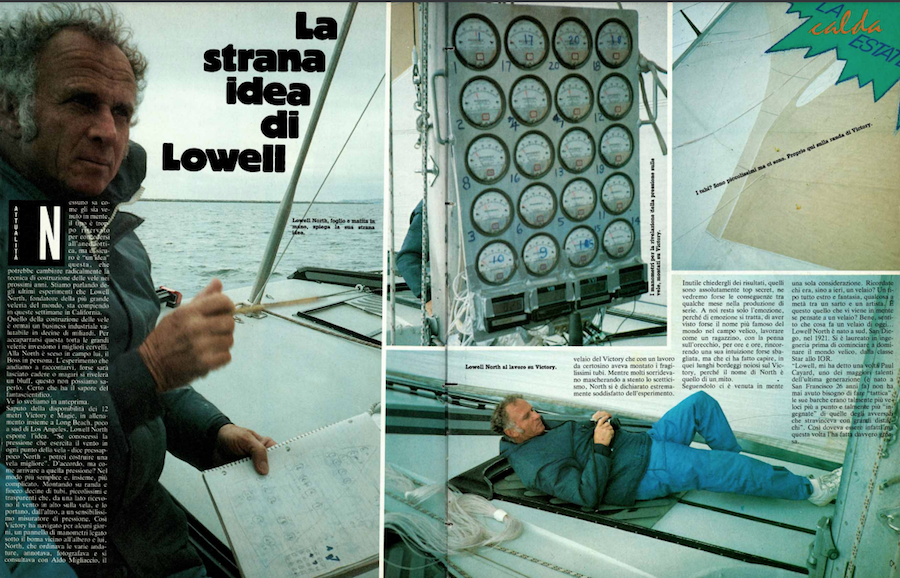
1985. The sails of the future are being born. The GdV is in, with Lowell North
Welcome to the special section “GdV 5th Years.” We are introducing you, day by day, An article from the archives of the Journal of Sailing, starting in 1975. A word of advice, get in the habit of starting your day
Marinedi, the integrated hospitality system
On the occasion of the 50th anniversary of the Journal of Sailing, the great excellences of the sailing world tell their stories and reveal their projects. In this column, discover all the companies and people who have made important contributions
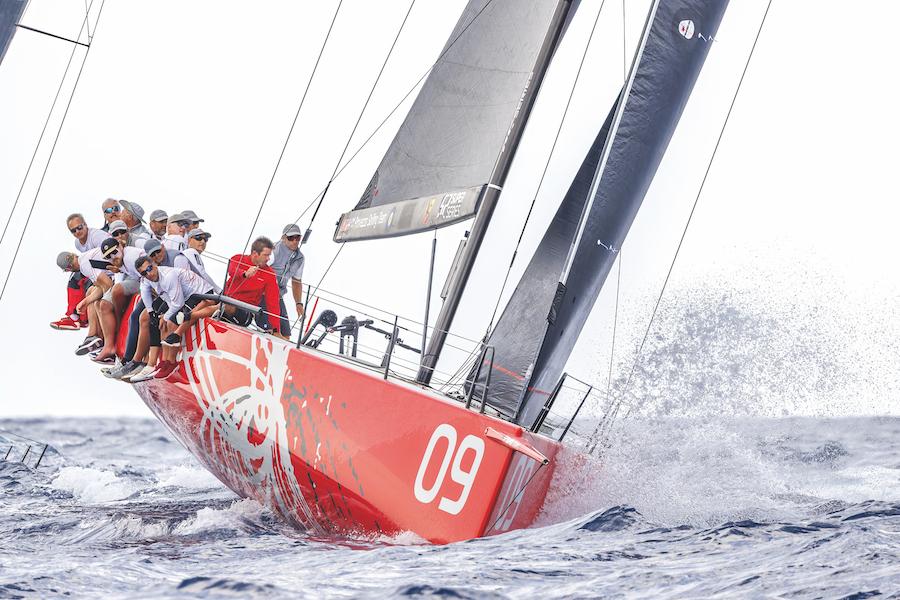
Naval revolution goes through Judel/Vrolijk study
On the occasion of the 50th anniversary of the Journal of Sailing, the great excellences of the sailing world tell their stories and reveal their projects. In this column, discover all the companies and people who have made important contributions

