Welcome to the special section “GdV 5th Years.” We are introducing you, day by day, An article from the archives of the Journal of Sailing, starting in 1975. A word of advice, get in the habit of starting your day with the most exciting sailing stories-it will be like being on a boat even if you are ashore.
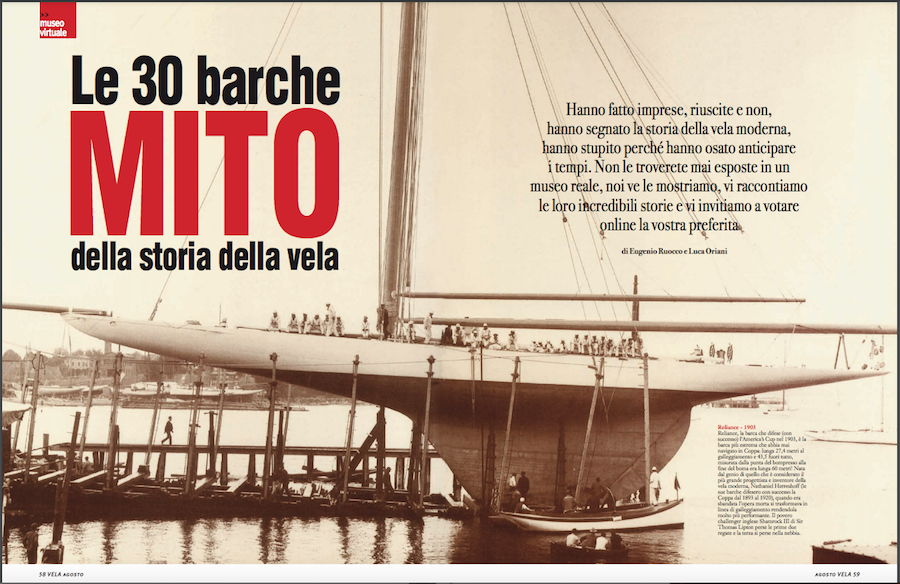
The 30 myth boats in sailing history
Taken from the 2017 Journal of Sailing, Year 43, No. 07, August, pp. 58-67.
They have accomplished feats, successful and unsuccessful, they have marked the history of modern sailing, they have amazed because they dared to be ahead of their time. You will never find them on display in a museum, we show them to you and tell you their incredible stories. These are the 30 myth boats of sailing.
They did feats, successful and unsuccessful, marked the history of modern sailing, amazed because they dared to be ahead of their time. You will never find them on display in a real museum, we show them to you, tell you their incredible stories, and invite you to vote online for your favorite.
RELIANCE – 1903.
Reliance, the boat that defended (successfully) the America’s Cup in 1903, is the most extreme boat that has ever sailed in the Cup: 27.4 meters long at the waterline and 43.5 overall, measured from the tip of the bowsprit to the end of the boom it was 60 meters long! Born from the genius of what is considered the greatest designer and inventor of modern sailing, Nathaniel Herreshoff (his boats successfully defended the Cup from 1893 to 1920), when heeled the deadwork turned into a waterline making it much better performing. The poor British challenger Shamrock III owned by Sir Thomas Lipton lost the first two races and the third was lost in the fog. (Pictured above, Reliance)
IDEC II – 2009.
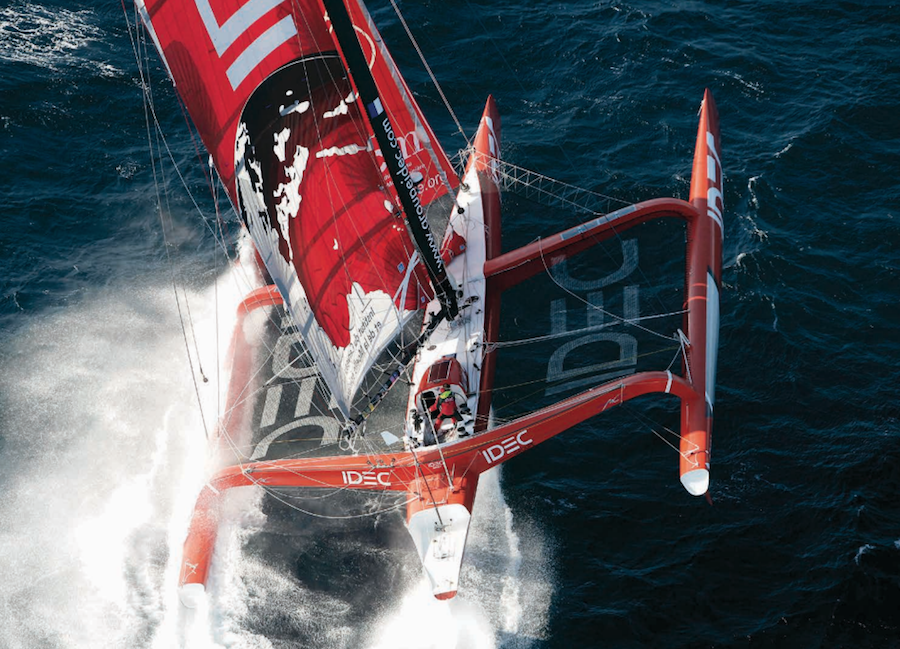
The trimaran IDEC II, under the command of Francis Joyon, kicked off the era of ocean records on maxitrimarans. In 2004 on IDEC I Joyon had set the record on the world tour; in 2005 Ellen MacArthur broke it. Joyon did not lose heart and in 2008 launched this 29.70-meter-long and 16.50-meter-wide superbolide, with which he shattered the record by circumnavigating the globe in 57 days at an average of nearly 20 knots. In 2015 IDEC passed to China’s Guo Chuan, who found death in the Pacific in 2016.
L’HÉRÉTIQUE – 1952.
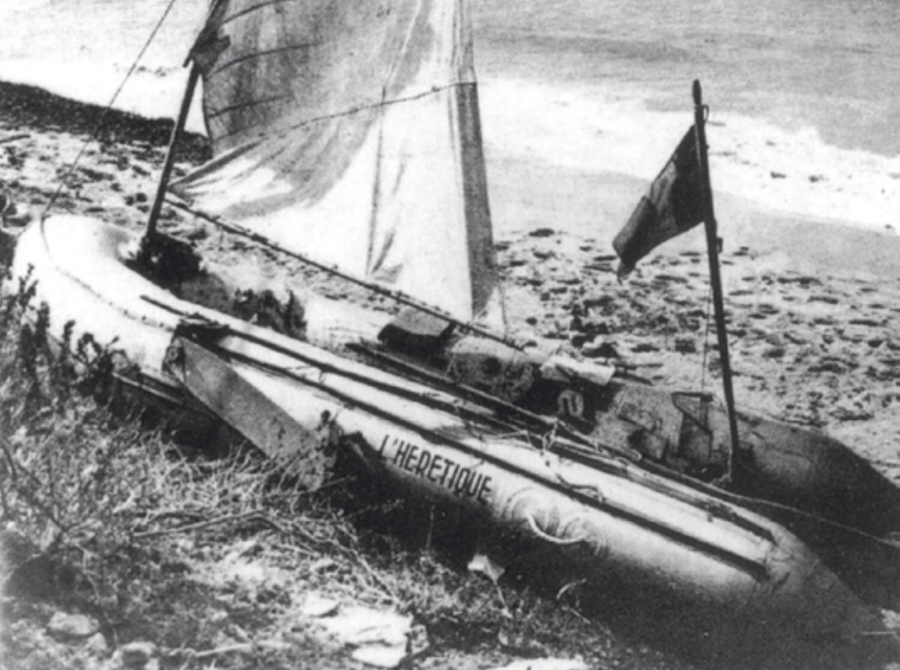
Everyone said, “He’s crazy,” when in 1952 French biologist Alain Bombard set out on an Atlantic crossing in a four-and-a-half-meter Zodiac sailing dinghy, theHérétique, without provisions. He wanted to prove that castaways die from psychological causes and not from lack of food and water. He succeeded, landing in Barbados (from Tangier) after 65 days adrift, during which he fed on plankton and drank seawater, calculated not to risk dying.
BRITISH STEEL – 1971.
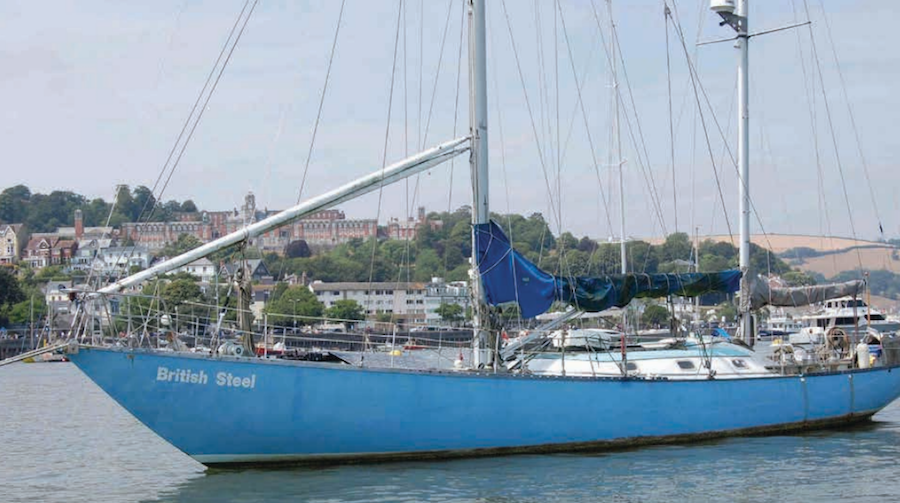
On the 18-meter ketch British Steel Scotsman Chay Blyth became the first person in the world, in 1971, to circumnavigate the globe solo non-stop westward against prevailing winds. For the time, the steel boat designed by Robert Clark was cutting-edge, designed for solo sailing and with futuristic electronics.
AMERICA – 1851.
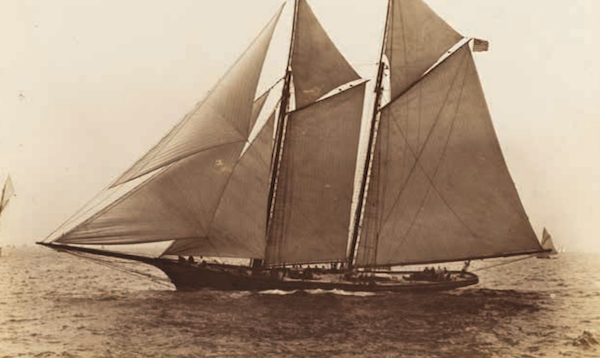
With this 29-meter schooner (plus five bowsprit), America began the saga of the world’s most famous regatta: designed by George Steers, she snatched the Hundred Guineas Cup (which has since been called the America’s Cup) from the British in 1851. His secrets? A sharp bow, low freeboard, and simple sail plan with no mainsail. The maximum beam was 6.85 meters.
CLUB MEDITERRANEAN – 1976.
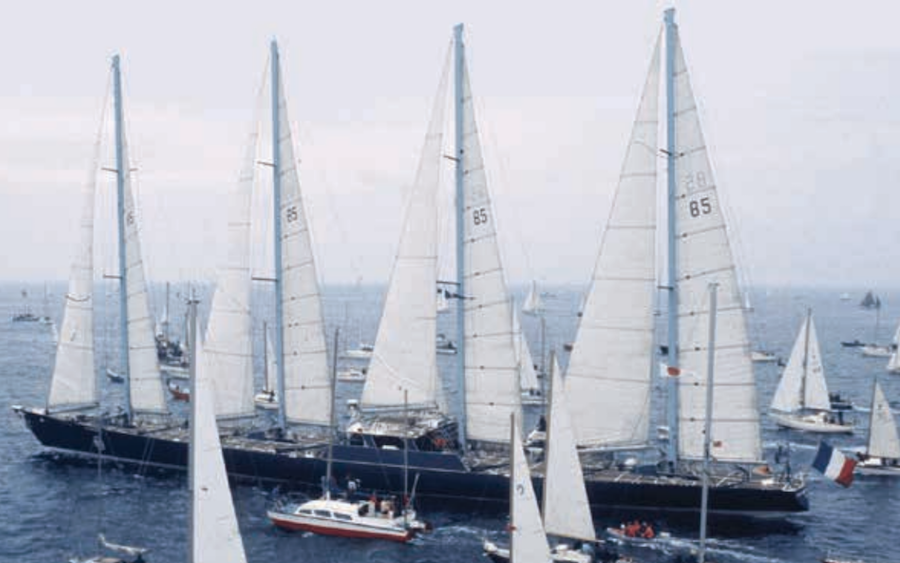
At the 1976 Ostar, everyone was stunned when Alain Colas showed up with Club Méditerranée: that is, 72 meters of boat (the largest that ever participated in an ocean race), 1000 square meters of sails, 280 tons of weight and four masts. Much ado about nothing: Colas will finish fifth, 7 hours and 28 minutes.
RAINBOW – 1934.
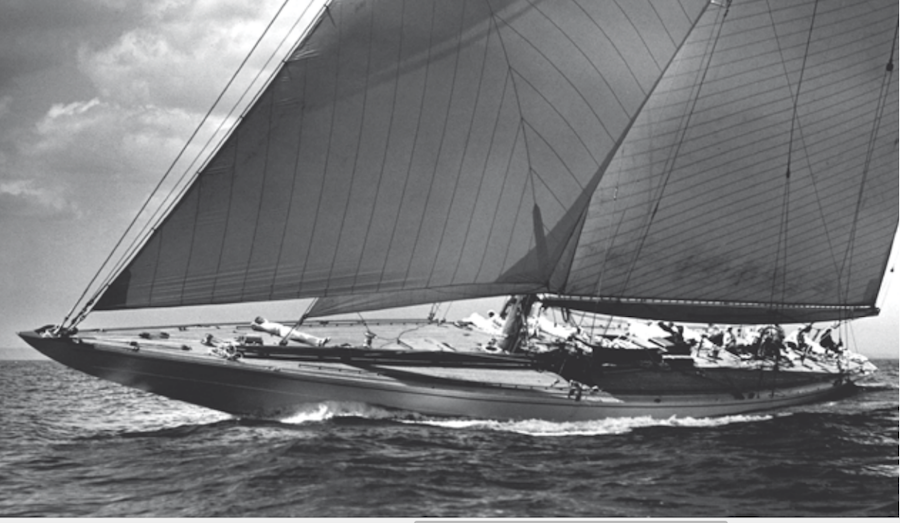
Designed by W. Sterling Burgess and built at the Herreshoff shipyards in Bristol, the Rainbow was one of the iconic boats of the J-Class epic: on this stunning 39.96-meter boat Harold Vanderbilt defended the Cup in a comeback in 1934 against theEndeavour of the British tycoon T.O.M.Sopwith.
PAUL RICARD – 1980.
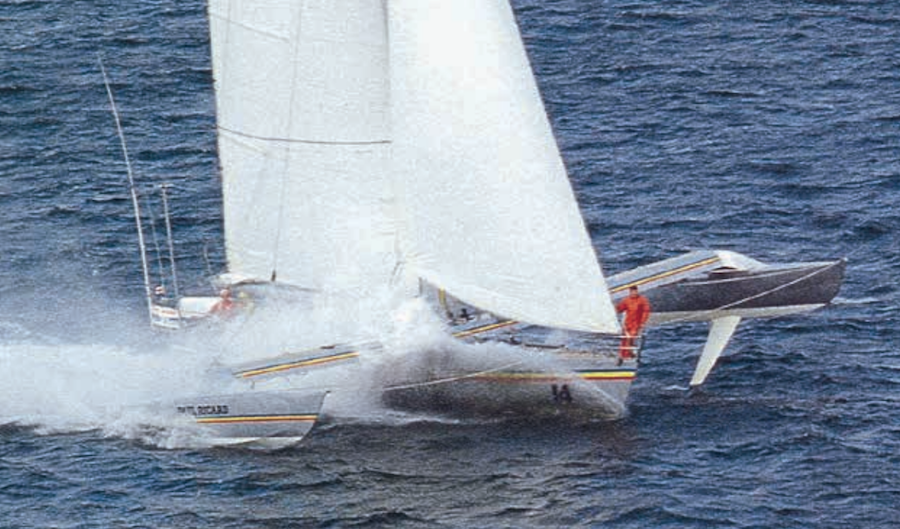
There had already been experiments but foils on a sailboat became famous with Eric Tabarly and his flying trimaran Paul Ricard: an aluminum monster, 16.50 meters to break all records. After countless breakages, he succeeded in winning the Atlantic crossing record in 1980. The path is marked: a path that will lead to the America’s Cup of our day!
KON TIKI – 1947.
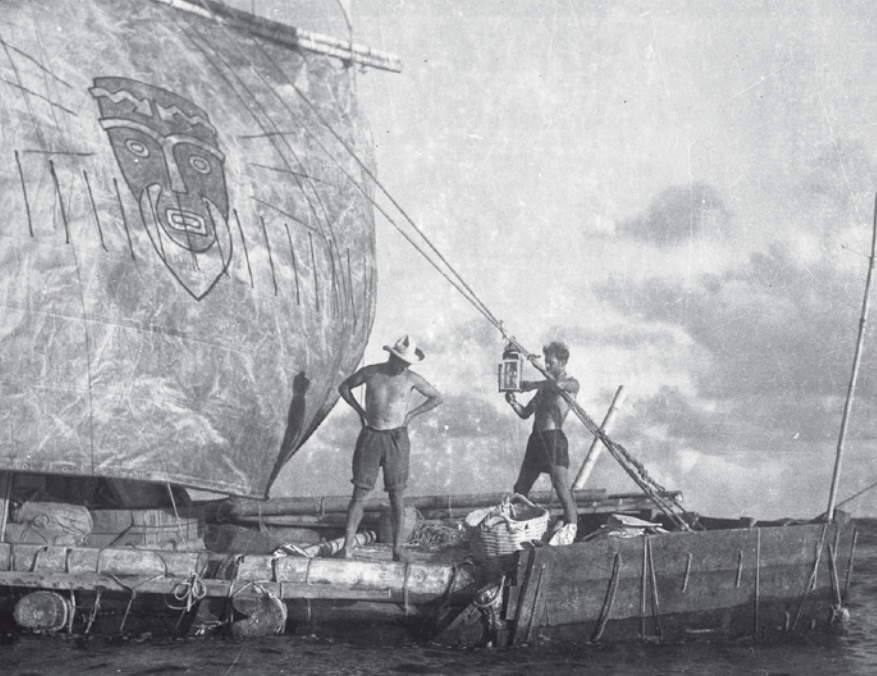
. Sul Kon Tiki, an Inca-inspired balsa wood raft (13.7 m long), Norwegian explorer Thor Heyerdahl sailed from Peru and landed in Polynesia: it was the first major media feat, apt to prove that the colonization of Polynesia could have occurred, in pre-Columbian times, by South American peoples.
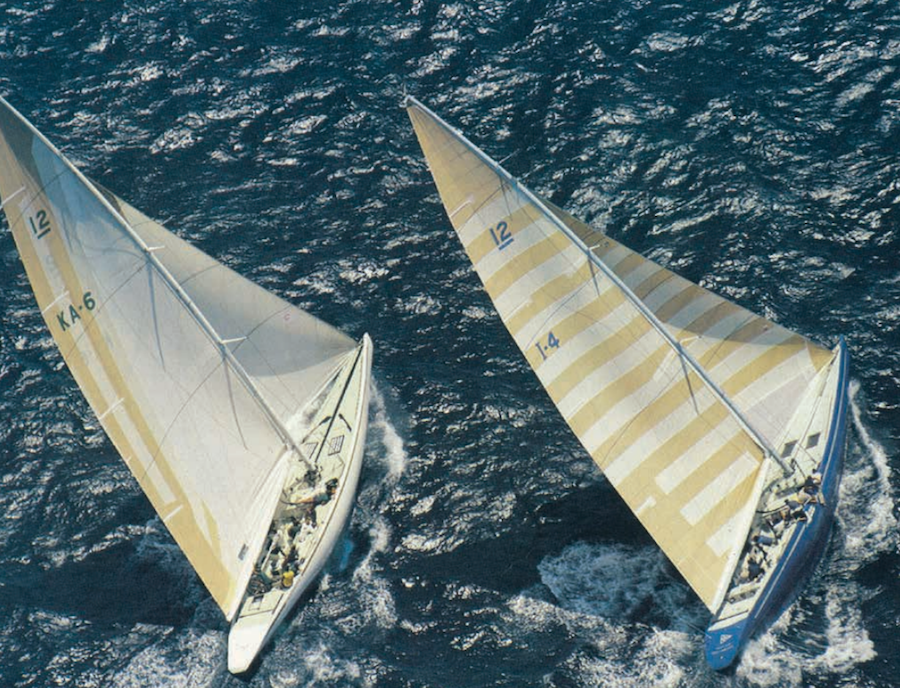
AZZURRA – 1983 / AUSTRALIA II – 1983.
Length: 19.98 meters. Width: 3.81. Name: Azure. Distinguishing marks: the boat with which Italy made its first America’s Cup entry. Designed by Andrea Vallicelli, Vittorio Mariani, Nicola Sironi and Patrizia Ferri, she made it all the way to the semifinals of the Louis Vuitton Cup and delivered the likes of sailors Cino Ricci and Mauro Pelaschier to stardom. In the photo, she is engaged in the match-race (won) against the big surprise of 1983, Australia II (19.21 x 3.64 m), helmed by John Bertrand and designed by Ben Lexcen: the boat that won the America’s Cup by snatching it from the Americans after 132 years! Its highly effective keel equipped with “flaps” was the focus of furious and endless controversy.
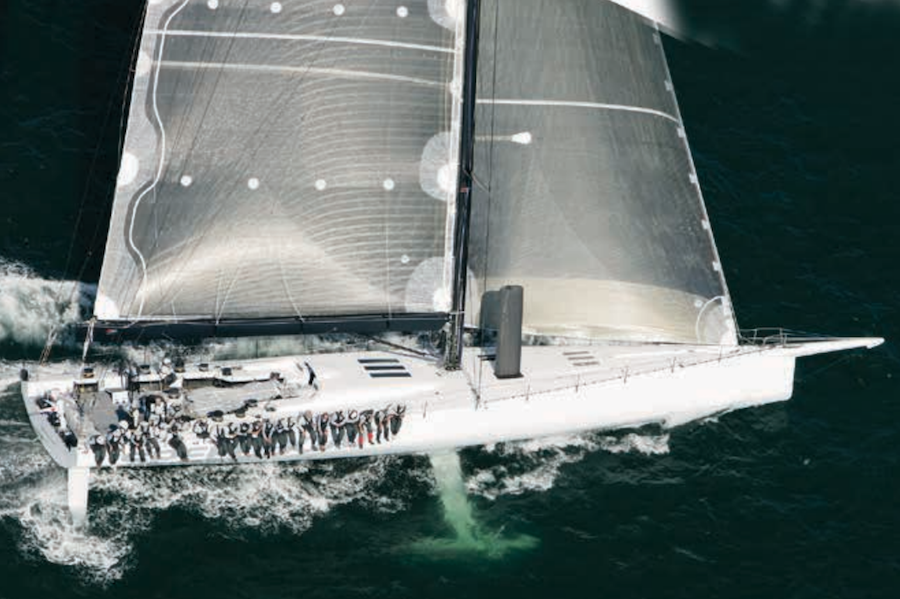
SPEEDBOAT – 2010.
One of the earliest examples of uncompromising speedboats capable of breaking ocean records, Speedboat (now called Rambler) is a 100-foot (30 x 7.35 m) designed by the brilliant Argentine designer Juan Kouyoumdjian. The hull, equipped with edges, was modeled after ABN Amro I and II, winners of the 2005-06 Volvo Ocean race. He won the Transatlantic Race in 2011 and resoundingly scuffed the Fastnet that same year.
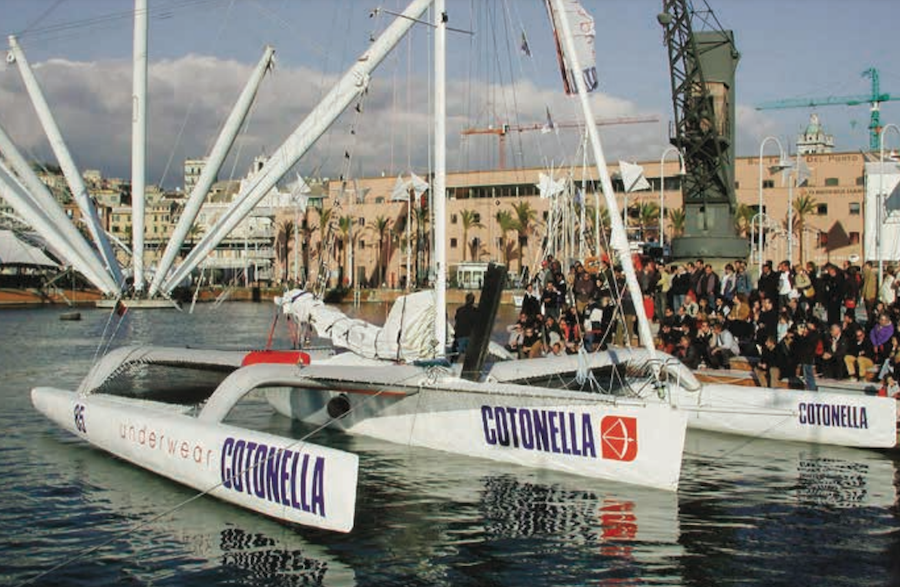
COTONELLA – 2005.
Stop the presses! An Italian won the Ostar, in defiance of the British and French: his name is Franco “Ciccio” Manzoli, then 49, playful face. On his fourth attempt, he triumphed in the toughest and most famous of ocean races: how did he do it? Self-building a very fast trimaran 14 meters long and nearly 12 meters wide, Cotonella Tri, with the invaluable help of a drawing program lent to him by Claudio Maletto and the collaboration of sailmaker Francesco Mura.
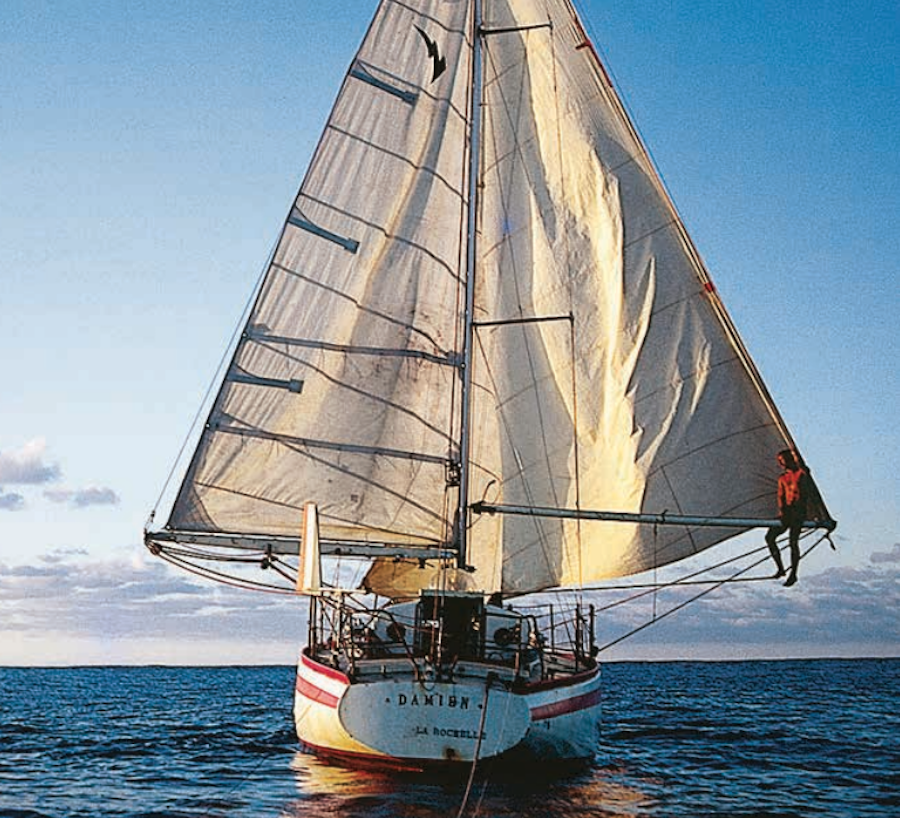
DAMIEN – 1969.
Salpa, to find peace with yourself. In pure 1968 spirit, Gerard Janichon and Jerome Poncet embarked on the Damien, a ten-meter self-built sloop, for a four-year round-the-world voyage. From the ice to the equator, they were among the first to prove that with daring, sacrifice, and unscrupulousness, dreams can be realized. The boat was declared a national monument.
MORO DI VENEZIA – 1992.
San Diego, 1992. After the thrill of Azzurra’s exploits in 1983, with the Moor of Venice of Raul Gardini, Italy completely lost its head for the America’s Cup. For the first time an Italian boat (22.90-meter IACC, designed by German Frers, skippered by the “mustache” Paul Cayard) had reached the finals against the Americans.
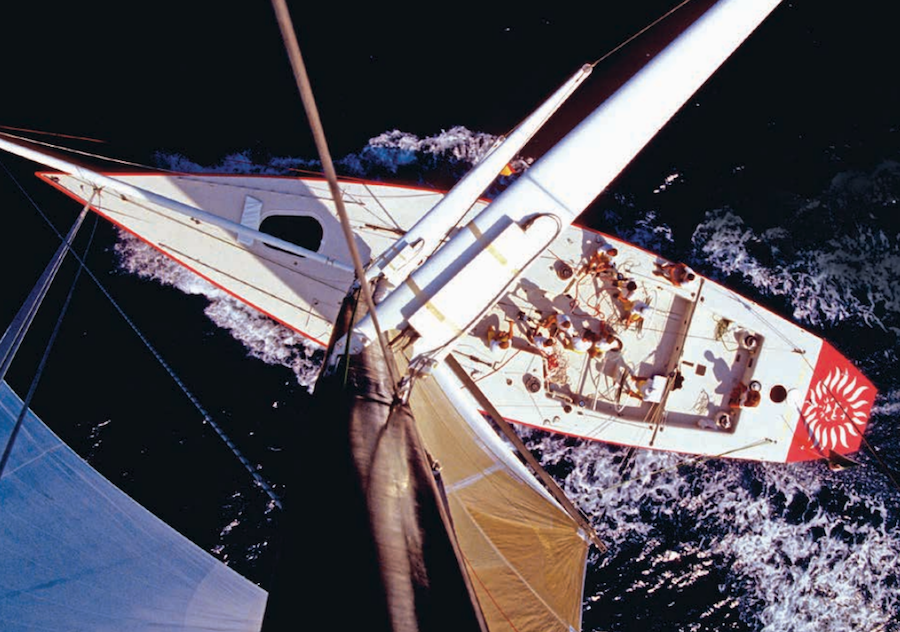
SUHAILI – 1968.
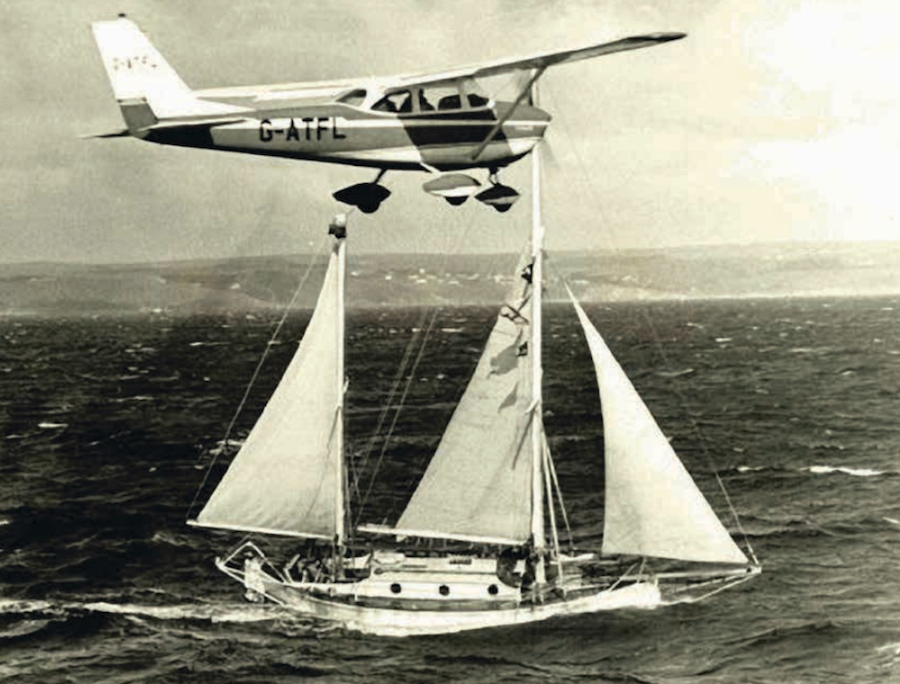
The story of Suhaili is as fascinating as the feat he performed. He was born in 1963 in Bombay, India. The design of this two-masted vessel only 9.88 meters (13.40 with bowsprit and aft structure) just 3.37 meters wide is by William Atkins. What is incredible is that the design of Suhaili dates back to 1923 and was inspired by Norwegian rescue boats designed by Colin Archer. In 1965 Robin Knox Johnston, until then a naval officer, left India aboard Suhaili and reached England. In 1968 he set off for the Round the World (Golden Globe) and won becoming the first boat in history to circumnavigate the globe non-stop.
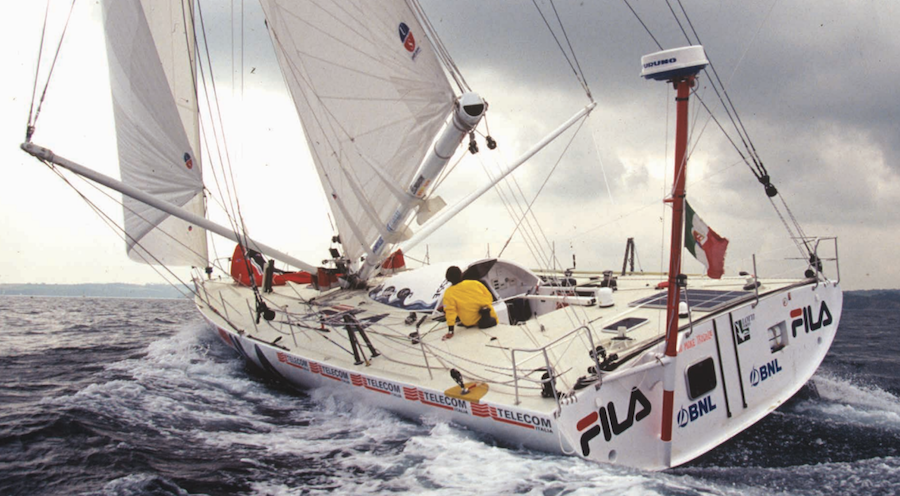
FILA – 1998.
Even today, Giovanni Soldini remains the only Italian to have won a solo round-the-world race. He succeeded with the Open 60 Row (18.28 x 5.80 m), designed by Finot Conq in 1997, triumphing at Around Alone 1998/99. Soldini gained fame for winning and rescuing Isabelle Autissier during the third stage, from Auckland (New Zealand) to Punta del Este (Uruguay). And he became the most famous Italian sailor in history.
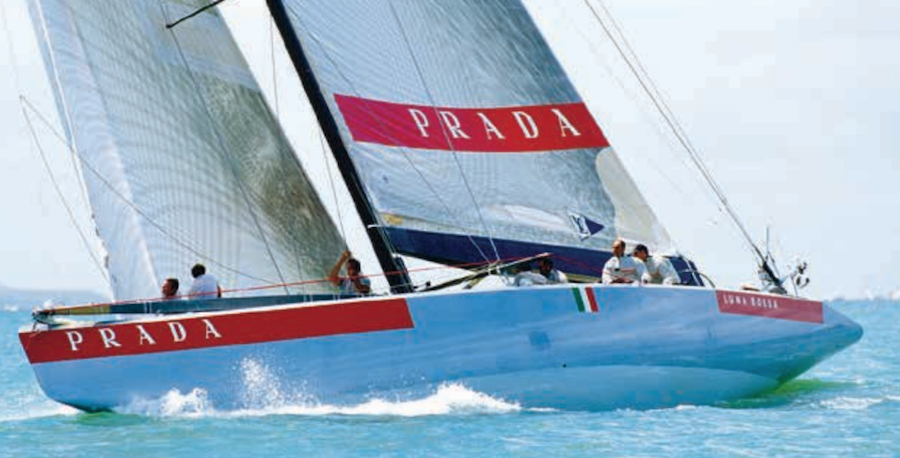
RED MOON – 2000.
How many sleepless nights. First to rejoice at every victory the “Silver Bullett,” designed by German Frers and Doug Peterson, earned against the Americans in the Louis Vuitton Cup final. Then to despair when Russell Coutts and Peter Blake on Black Magic were thrashing us 5-0 in the Cup challenge. Luna Rossa by Patrizio Bertelli gave us adrenaline rushes. 23.8 meters long, its mast measured 32.5 meters. What a sight to see tactician Michele Ivaldi climb over it….
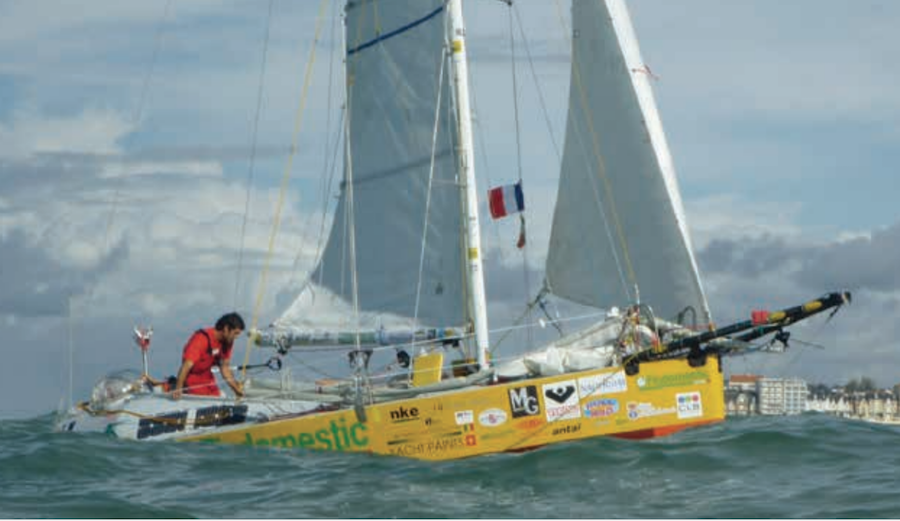
FINDOMESTIC – 2009.
Said Alessandro Di Benedetto before successfully embarking on his solo round-the-world voyage on a modified Mini 6.50 Findomestic: “My feet are not on a classic 18-meter Vendée Globe boat, but on a three times smaller boat that will become the first under 30-footer and the smallest in the world, for as long as there is memory, to have completed the circumnavigation.” So it was.
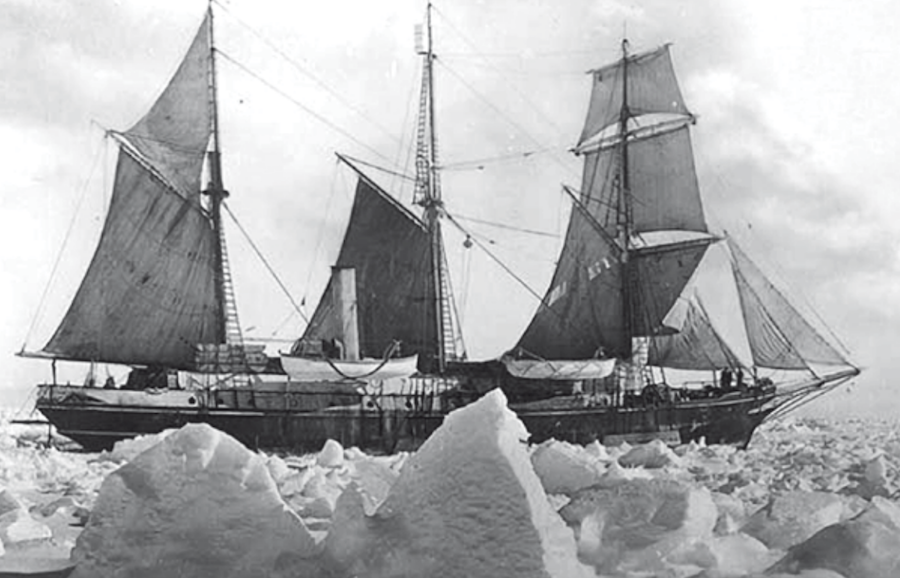
ENDURANCE – 1914.
THEEndurance, which was crushed in the ice of the South Pole, is the symbolic boat of the feat that consigned Ernest Shackleton to history: once the explorer realized that the 44-meter sailing ship was doomed, he left his men there and embarked on a 7-meter lifeboat, among the ice, to South Georgia, where he reached rescue. With them he returned to his own, rescuing them all. Hero!
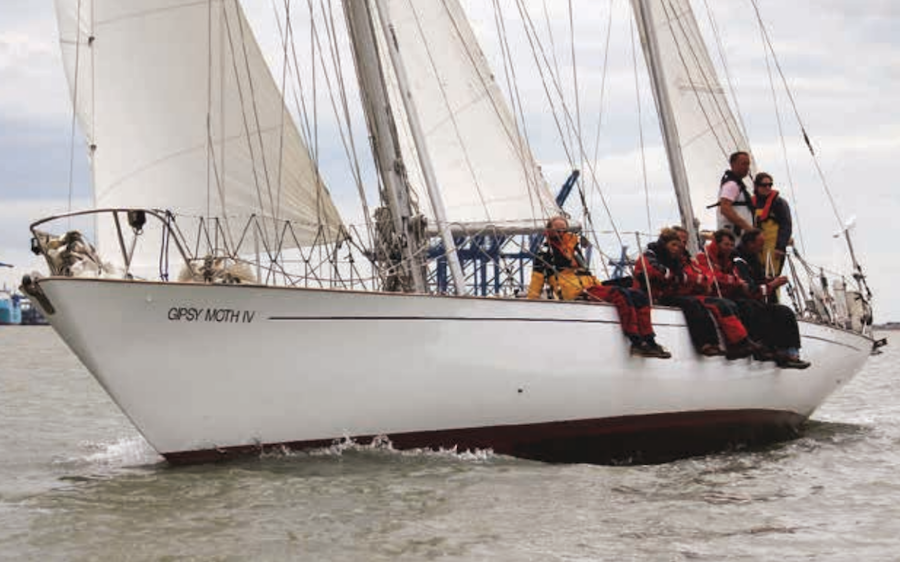
GIPSY MOTH IV – 1966.
The Gipsy Moth IV is the monument boat in which 65-year-old Sir Francis Chichester undertook the solo round-the-world sailing trip, breaking the previous record by nine months and one day. The 16-foot ketch, designed by John Illingworth and Angus Primrose and built by Camper & Nicholson, set sail in 1966 from the Solent and returned after 29,630 miles and 226 days, with one stop in Sydney.
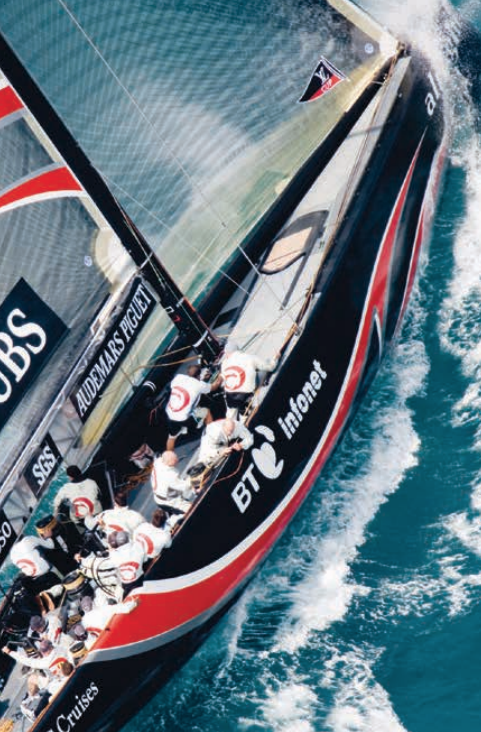
ALINGHI – 2003.
Who would have thought that the America’s Cup would end up in Switzerland! Ernesto Bertarelli and his Alinghi took home the old jug in 2003: the first time a European syndicate had succeeded. The boat, roughly 25 meters long and 3.4 meters wide, was designed in close collaboration with the Lausanne Polytechnic Institute, based on new mathematical models that could improve sailing performance.
By Eugenio Ruocco and Luca Oriani.
Check out the latest issue

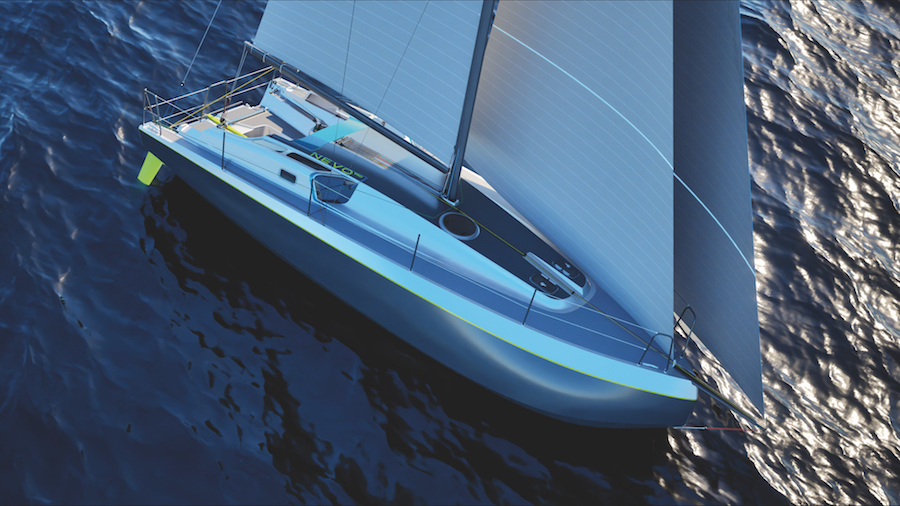
Michele Molino, nautical engineer with the sea in his vein
On the occasion of the 50th anniversary of the Journal of Sailing, the great excellences of the sailing world tell their stories and reveal their projects. In this column, discover all the companies and people who have made important contributions
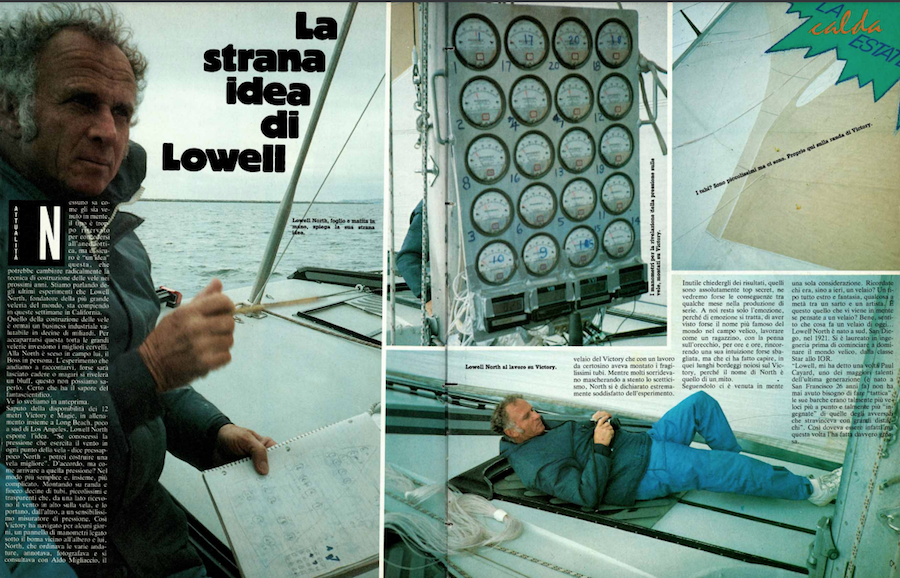
1985. The sails of the future are being born. The GdV is in, with Lowell North
Welcome to the special section “GdV 5th Years.” We are introducing you, day by day, An article from the archives of the Journal of Sailing, starting in 1975. A word of advice, get in the habit of starting your day
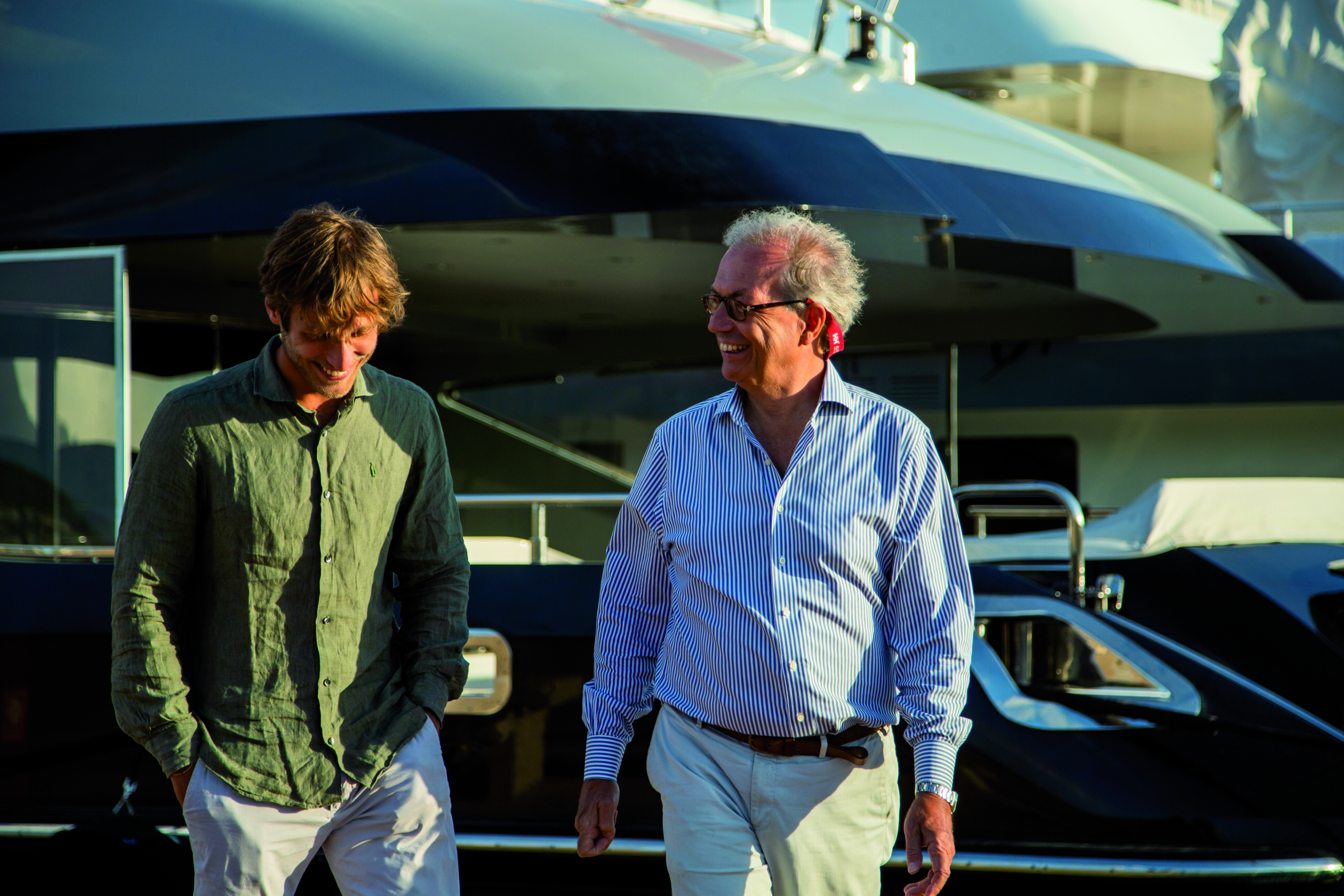
Marinedi, the integrated hospitality system
On the occasion of the 50th anniversary of the Journal of Sailing, the great excellences of the sailing world tell their stories and reveal their projects. In this column, discover all the companies and people who have made important contributions
Naval revolution goes through Judel/Vrolijk study
On the occasion of the 50th anniversary of the Journal of Sailing, the great excellences of the sailing world tell their stories and reveal their projects. In this column, discover all the companies and people who have made important contributions

