
Welcome to the special section “GdV 5th Years.” We are introducing you, day by day, An article from the archives of the Journal of Sailing, starting in 1975. A word of advice, get in the habit of starting your day with the most exciting sailing stories-it will be like being on a boat even if you are ashore.
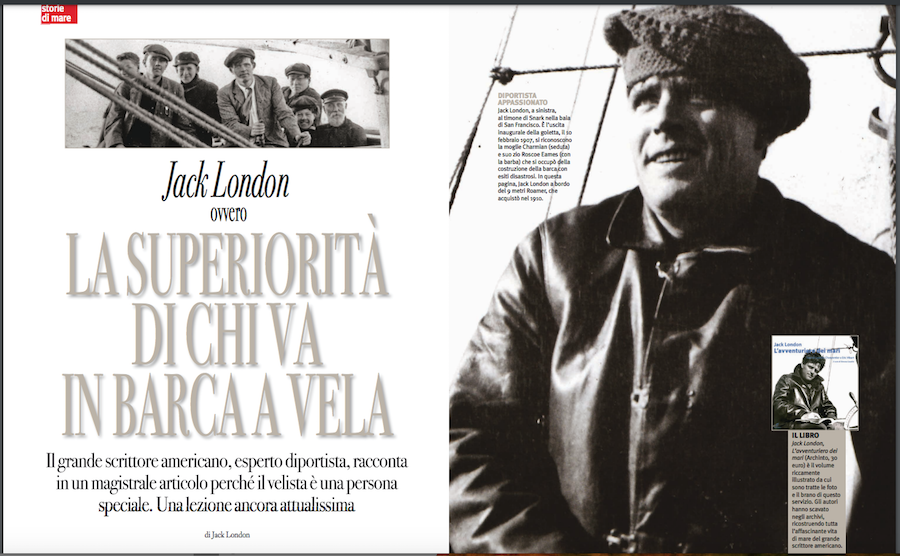
Jack London, or the superiority of the sailor
Taken from the 2009 Journal of Sailing, Year 35, No. 1, February, pp. 78-83.
The great American writer writes for the Journal of Sailing! As an experienced yachtsman, he tells in a masterful article why the yachtsman is a special person, A lesson still highly relevant today, not to be missed.

The great American writer and experienced yachtsman tells in a masterful article why the yachtsman is a special person. A lesson still very relevant today!
Aboard the Roamer (Drifter), the 9-meter yawl he had purchased in 1910, after the tumultuous experience of Pacific sailings with the schooner Snark, Jack London decides to describe what it means to him to be a “sailor, to free myself from the flat banality of the everyday, to dream a free life in the world of men….” He drafts an article titled “ The joys of small boat sailing” published in England in the trade magazine Yachting Monthly in August 1912. Its relevance, amazingly, is still intact 100 years later. It is a true praise of the yachtsman, of those who go to sea by sailboat. Written by a true master of the art of writing, who was also a great sailor and sailor.
Sailors are born, not made
Sailors are born, not made. By “sailor,” I do not mean one of those drab, insignificant individuals one encounters these days on the forecastle of ships, on the open sea, but I mean a man who takes possession of that mass of wood, steel, ropes and canvas and transports it at will over the sea surfaces. And, whatever the captains and petty officers of large vessels may say, the yachtsman is a true sailor. He knows, he must know how to make the wind carry the boat from one point to another. He must not ignore anything about tides, currents, eddies, shoals, buoys in canals, day and night signs. He must continually monitor the changing weather and develop an instinctive familiarity with his medium… He needs to heave it into the wind at the right time to facilitate the turn and relaunch it on the other edge without stopping it or making it lean too far. A longtime sailor today no longer needs to know all these things. In fact, he ignores them all! Cocks, hoists, polishes the deck, paints and removes rust where required. But he knows nothing, and little cares. Place him aboard a small boat and you get to see how clueless he is. He would be more comfortable on the back of a horse! I will never forget my astonishment as a boy the first time I met one of these curious creatures. It was, in this specific case, a British sailor, a deserter. I was then 12 years old and owned a 14-foot, pontooned, drift boat, which I had learned to maneuver on my own. I used to look at this guy like he was a god, when he would tell me about exotic countries and characters, about feats and windstorms, hair-raising stuff. One day I took him for a ride with me. I hoisted the sail, somewhat intimidated, like the modest amateur sailor I was, and off we went. I was convinced that I had brought along a man with an unerring eye, who knew more about the sea than I ever could. After applying myself just a little to the maneuver, I left him tiller and sheet.
The call of the sea
I sat on the middle bench of the boat and stood there, open-mouthed, ready to finally discover what real sailing was all about . Well, I was really amazed when I realized what a “real” seaman aboard a small boat was actually worth. He was not able to adjust the sail in the different gaits, we risked capsizing several times upwind because he jibed like god only knows. He didn’t know what the drift was for, or even that in carrying winds it is best to sit in the middle of the boat and not on the edge. On the way back, he even crashed into the pier causing the bow to crash and the base of the mast to blow off…. Consequently, I can safely say that one can travel a lifetime aboard a ship without knowing what it really means to sail. I heard the call of the sea at the age of 12. By fifteen, I was already a captain and owner of a pirate sloop with which I was hoarding oysters. At sixteen, I traveled aboard hulls rigged as schooners, fished salmon with Greek fishermen on the Sacramento River, and even earned a sailor’s position in the Coast Guard lookouts. I was a good sailor, although I had never gone beyond San Francisco Bay or the rivers that flow into it, and I had never yet sailed the open sea. Then, when I turned seventeen, I embarked as a sailor aboard a three-masted ship that sailed on a seven-month voyage, round trip, to the Pacific. As my fellow travelers did not fail to point out to me, I had had some nerve…. It did not take me more than a couple of minutes to learn the names and functions of certain tops I did not know. It was simple. I wasn’t doing things blindly.
Making your bones with recreational boating
As a boater, I had learned the whys and wherefores of maneuvers. Of course, I had to learn how to steer with a compass – for which it took me a little more than half a minute – but, going upwind, I was doing much better than most of my companions, because I had basically been sailing this way all along. A quarter of an hour of apprenticeship was enough for me to know every wind trajectory by heart…. The bottom line is that a true sailor makes his or her bones much better by recreational sailing. Once a man has gone to sea school, he never leaves it. The salt soaks into his bone marrow, into the air he breathes, and he will hear the call of the sea until the end of his days. In later years I discovered simpler systems to earn a living. I have given up bow castles, but I always go back to the sea…. From the point of view of pleasure, there is nothing in common between a ship hit by a gale in the open sea and a yacht caught in bad weather in a protected bay. If it’s about pleasure and excitement give me the yacht! Things happen very quickly and there are always a few of you at the maneuvers–and they are tiring maneuvers, as boaters well know! I was tossed around by a typhoon off the coast of Japan while working two shifts on watch, yet I certainly came out less exhausted than when I had to fight for two hours trying to reduce the headsail of a nine-meter sloop or haul two anchors from a mooring exposed to a furious southeast wind. One has as many surprises and mishaps aboard a small boat in three days as one has on an ocean-going ship in a whole year. I still remember the first outing I made once with a 30-foot boat I had just purchased. In the space of only six days we suffered two gales…. And, in between gales, we had a brief interval of flat calm each time… in the middle of a gale, we had to retrieve the lifeboat drifting in the waves…. full of water, it had broken the lines with which we were towing it. Before we had time to realize that we were almost dead from fatigue, we tamed the boat at the cost of enormous efforts….
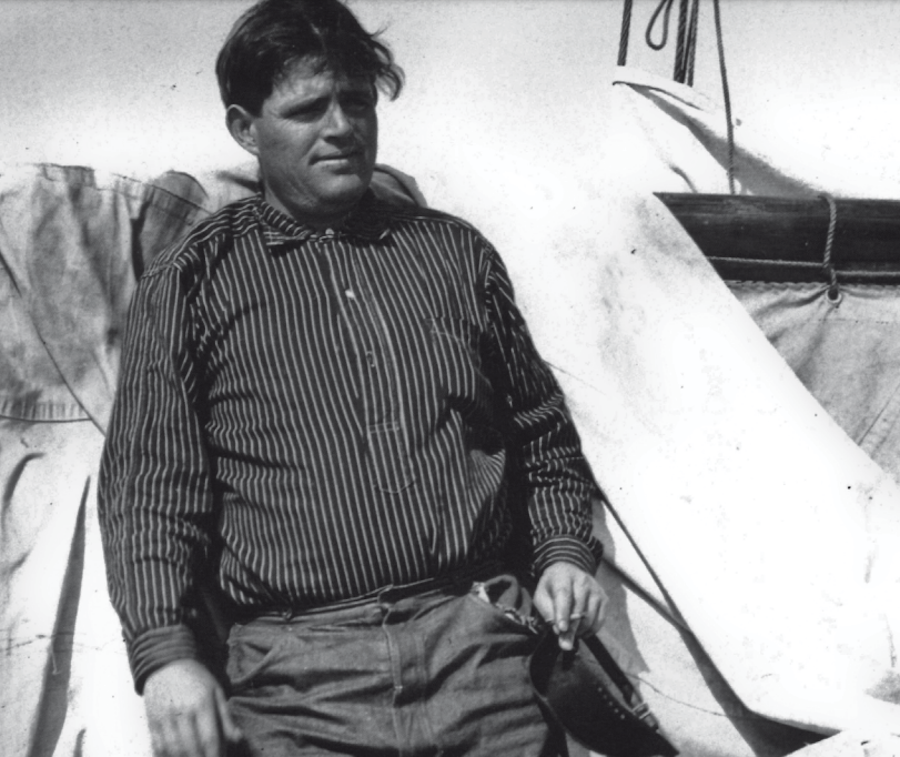
The fine art of maneuvering a sailing ship
What satisfaction then, in remembering those moments, with what joy you tell them to your skipper friends, members of the big boating family! … I prefer a sailboat to a motor boat, and I am convinced that the maneuvering of a sailboat is a more refined, more difficult, more energetic art than that of a motor boat…. The same cannot be said for the sailboat. It certainly takes more skill, more intelligence and much more experience. And there is no better school in the world, for the young teenager as for the mature man. If the boy is very young, give him a stable little boat. He will do the rest himself. It is useless to try to teach them anything. Within a short time he will be able to hoist a sail and steer by himself. Then he will start talking about keels, drifts, and will want to take a blanket with him so he can spend the night on board. Do not fear for him. It will undoubtedly encounter risks and misadventures. But remember that domestic accidents are no less numerous than those that occur on the water. More kids are killed by overheated houses than by boats, large or small. On the other hand, sailing has helped transform many young people into solid, self-reliant adults more than cricket or dance lessons have. Besides, if you are a sailor for a day, you stay a sailor all your life. The taste of salt is never forgotten. A sailor is never too old not to give in to the temptation to embark on a new adventure in the wind and waves…
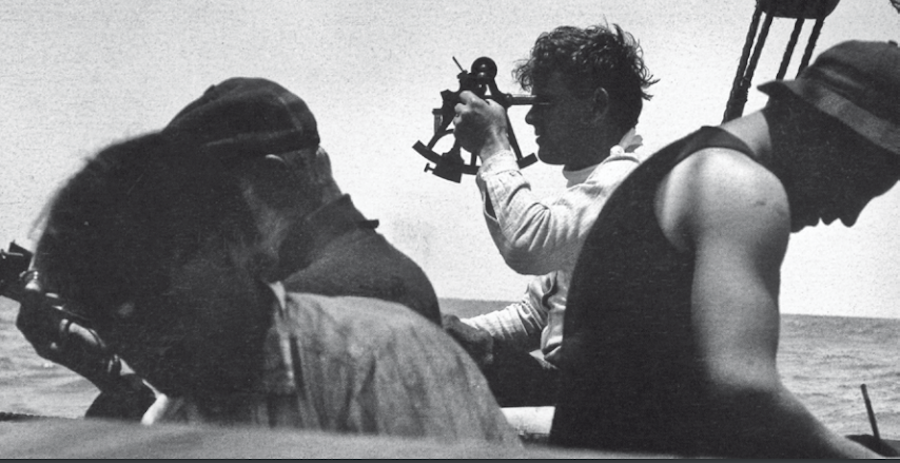
The great sailor Jack London
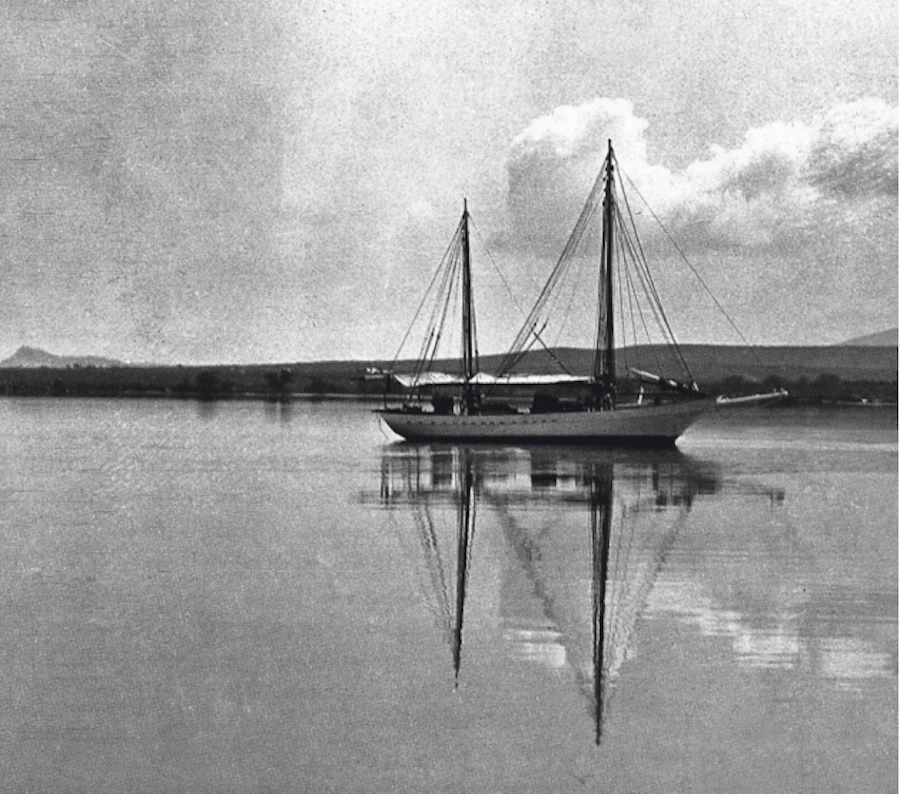
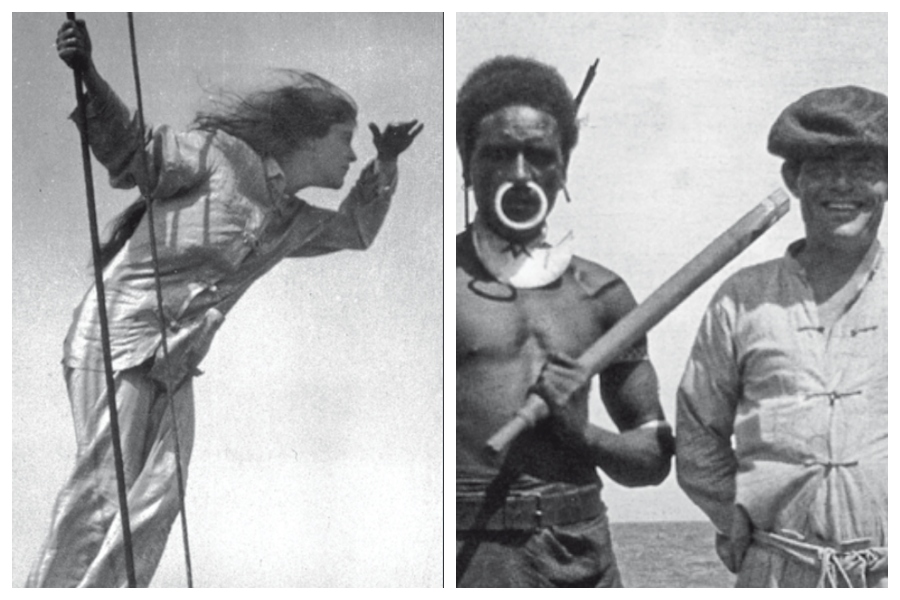
Jack London was born on January 12, 1876, in San Francisco. At the age of 12, he was able to purchase his first 5-meter drift boat, with which he frolicked around San Francisco Bay poaching mussels and sea truffles. He manages to leave the miserable job in a pickle cannery to which his mother had forced him, thanks to a loan offered to him by his black wet nurse. Buy Razzle Dazze (the Baldoria) a sloop with which, at age 15, he became the king of the bay’s oyster poachers. He loses his boat in a fight between gangs of thugs. But he doesn’t stop going to sea. Switch to the side of the law and become a fisheries guard. At age 17, he boarded a three-masted seal hunter and left the Gulf of San Francisco for the first time. At 21, he resumed the sea to reach Canada in search of gold, sailing through the ice. He became a successful writer, and with the proceeds of “Call of the Forest,” in 1903, he bought a small boat, which he named Spray in honor of that of history’s first solo sailor, Joshua Slocum. Then, at the age of 30, he realized the great dream of his life and had the schooner built Snark with which he will sail around the Pacific for two years. London’s other great sailing is aboard the four-masted Dirigo which takes him from Baltimore to Seattle via Cape Horn. The latest boat he owns is the Roamer, a 9-meter cutter where he sailed, exploring every nook and cranny of the great San Francisco Bay, until his death in 1916 at only forty years of age.
by Jack London
Check out the latest issue

Michele Molino, nautical engineer with the sea in his vein
On the occasion of the 50th anniversary of the Journal of Sailing, the great excellences of the sailing world tell their stories and reveal their projects. In this column, discover all the companies and people who have made important contributions
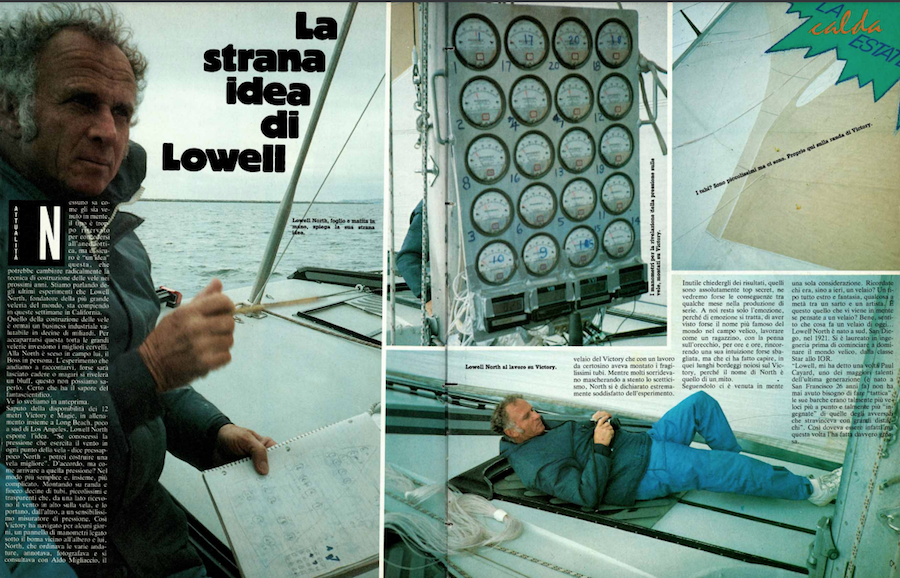
1985. The sails of the future are being born. The GdV is in, with Lowell North
Welcome to the special section “GdV 5th Years.” We are introducing you, day by day, An article from the archives of the Journal of Sailing, starting in 1975. A word of advice, get in the habit of starting your day
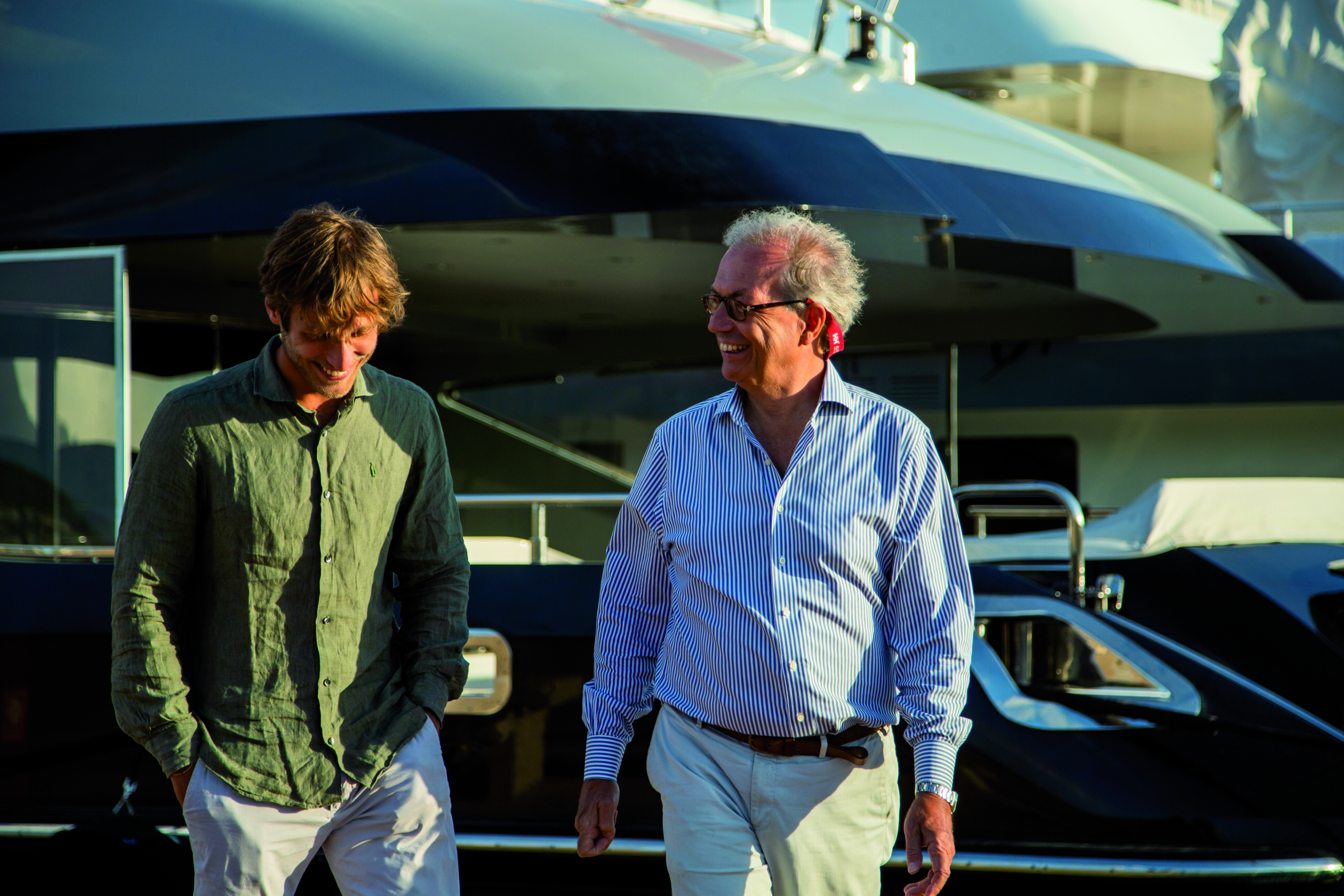
Marinedi, the integrated hospitality system
On the occasion of the 50th anniversary of the Journal of Sailing, the great excellences of the sailing world tell their stories and reveal their projects. In this column, discover all the companies and people who have made important contributions
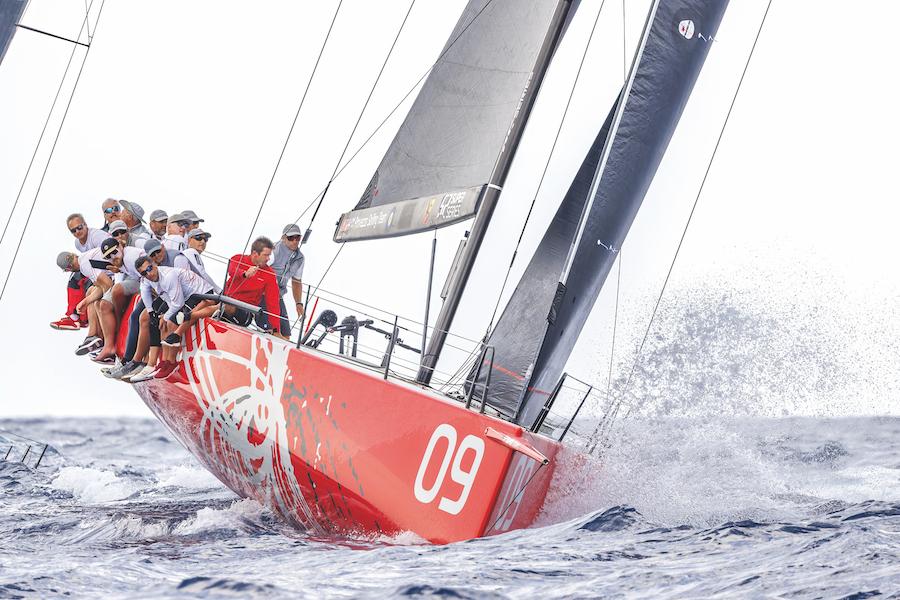
Naval revolution goes through Judel/Vrolijk study
On the occasion of the 50th anniversary of the Journal of Sailing, the great excellences of the sailing world tell their stories and reveal their projects. In this column, discover all the companies and people who have made important contributions

