
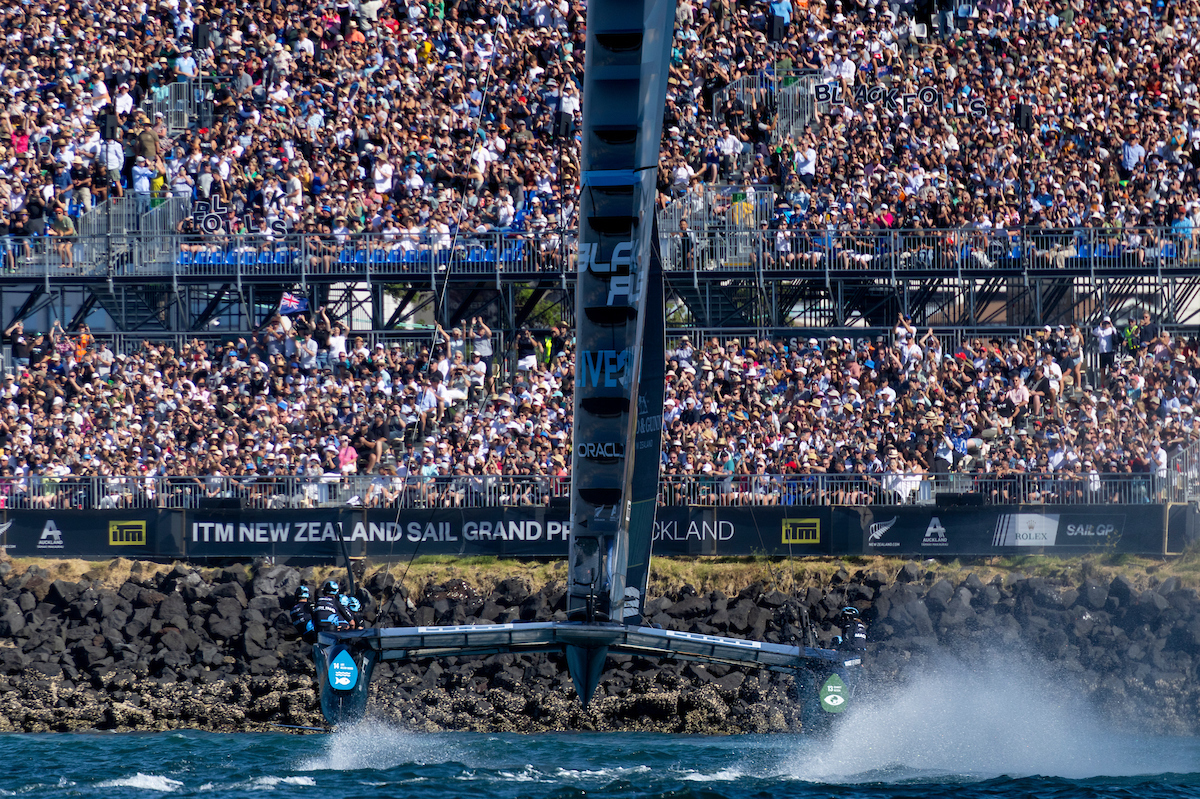
The “total vacuum” surrounding the next America’s Cup (about which nothing is yet known) versus the growing success of the SailGP format, which not surprisingly attracts the strongest sailors from America’s Cup and beyond and fills the waterfront grandstands with stadium cheers. Attention America’s Cup, history and heritage are not enough to survive. Our opinion.
America’s Cup vs SailGP
It was last October 19 when Emirates Team New Zealand victoriously crossed the finish line in the last race of the 37th America’s Cup. The Barcelona edition that was coming to a close had certainly not been the peak of popularity for the world’s oldest sports trophy, but it was the expectations for the future, for the next edition that were promising.
The number of teams was to grow, thanks in part to the possibility of being able to buy packages of existing boats and start from there and not from scratch, like the pioneers of Ineos, Luna Rossa, American Magic and precisely the Kiwis. In fact, the Swiss and French had already arrived in Barcelona on this basis to join the group, beginning to broaden the participation base, a key aspect of keeping the trophy alive and, above all, the media interest.
What’s wrong with the America’s Cup
But in just a few months some of the Cup’s once granitic and load-bearing certainties have crumbled. It started with the splitting of the Ineos team from Sir Ben Ainslie, who challenged the Challenger of Record role eventually awarded to the multiple medal-winning British sailor, cutting out James Ratcliffe, his billions and his Mercedes Formula 1 team engineers. Ben Ainslie thus has on his shoulders the burden of representing in front of the defender each and every team that will want to try the challenge, but at the same time he has to rebuild a team, a budget, sponsors, all over again despite the two campaigns he just completed on his compatriot entrepreneur’s boat.

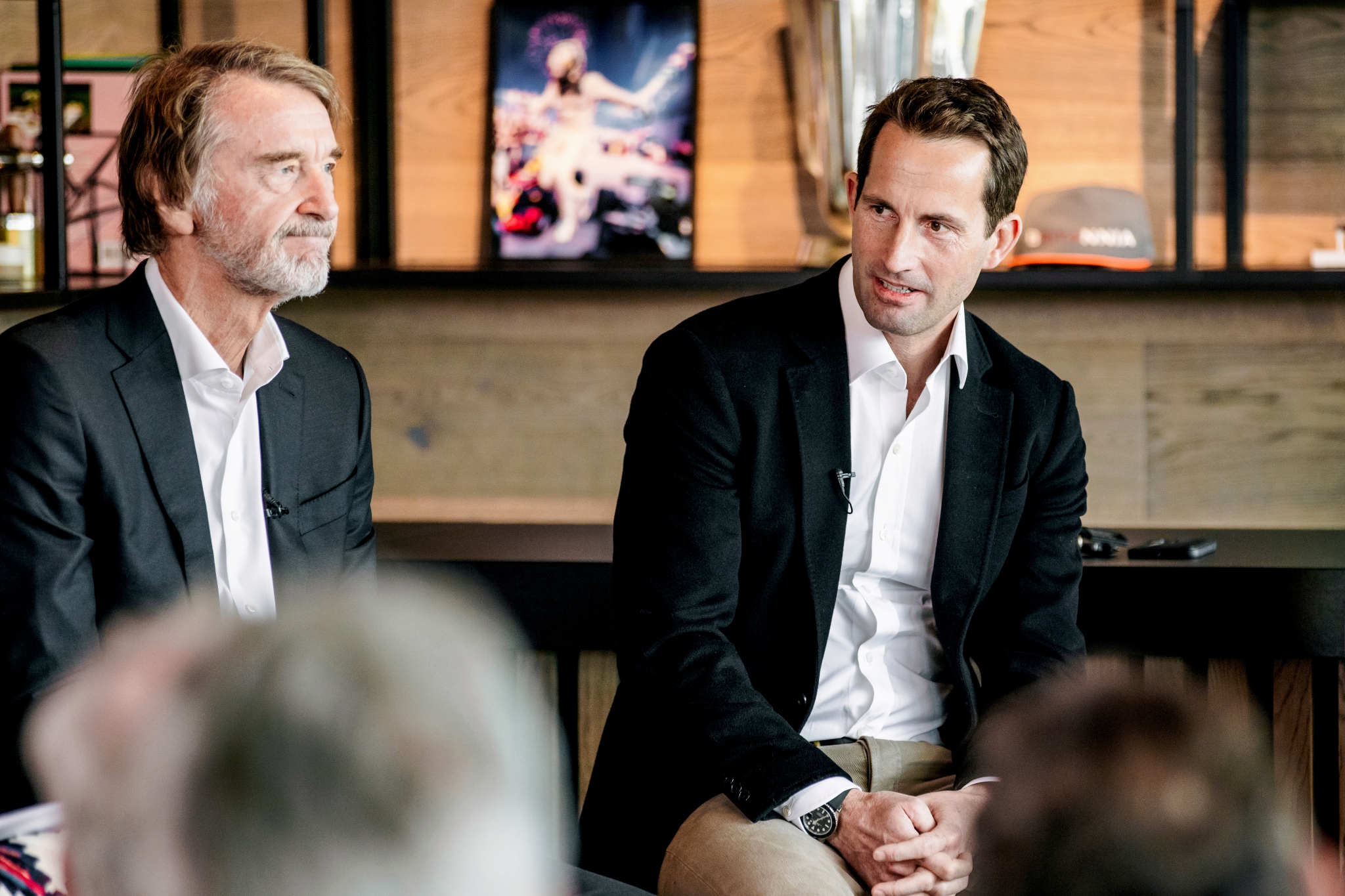
Added to this is the news a few days ago in which the city of Auckland has in fact officially rejected the prospect of hosting the Cup in its waters again, despite the fact that the Team bearing its colors has won it again. The America’s Cup currently has no date, no location, no challenger representative.
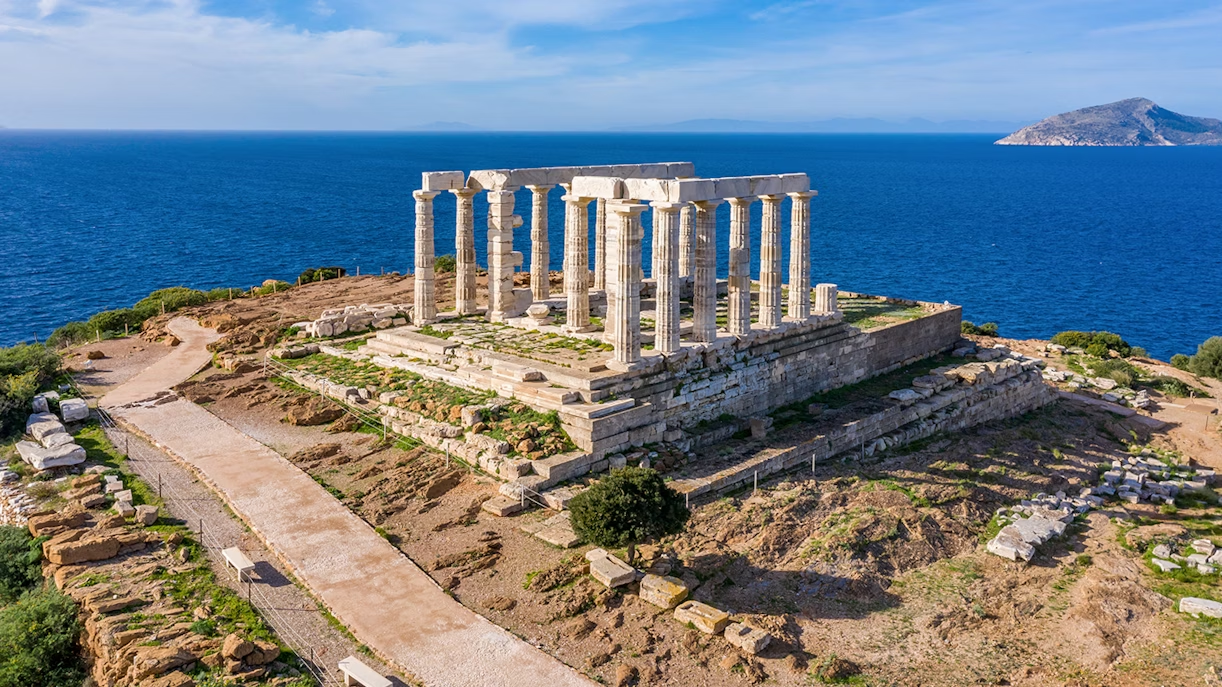
And some doubts about its viability arise if the capital city of the nation that at this time most represents excellence in the historic trophy does not want to invest again to host its regattas and at the same time the European city that stood in for it in the last edition (Barcelona precisely) has accompanied Grant Dalton and his people to the door, albeit with a smile.
The America’s Cup has been a rich man’s game for years, but the most famous entrepreneurial personalities who participated in it were certainly not naïve enough to invest millions just for personal whim. Just ask Sir Thomas Lipton who used America’s Cup campaigns to open up the U.S. market for his tea, or Baron Bich. Or ring our Patrizio Bertelli’s doorbell and Prada headquarters.
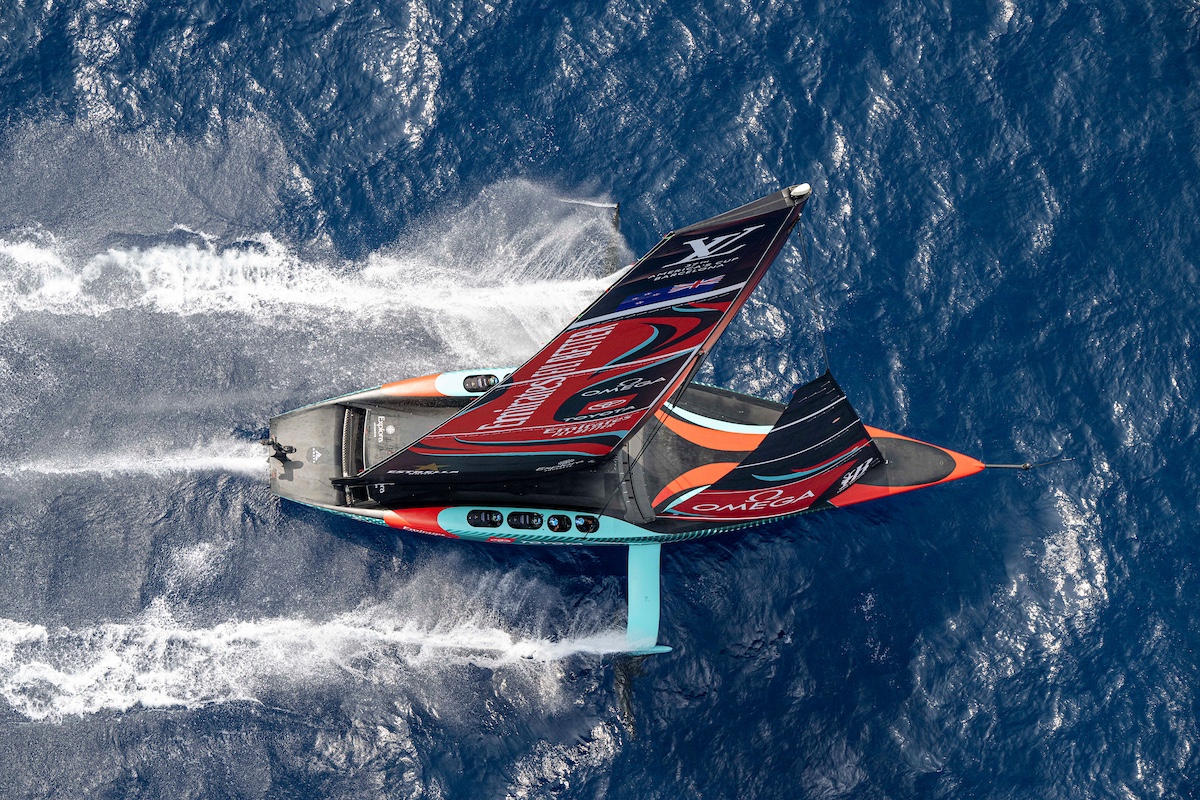
Today’s world, however, moves fast, and an event like the Cup, currently stateless, needs anything but what is happening. Beyond the recent (bad) news, the communicative silence is deafening (the problem is, of course, that there is little to communicate), and the “treasure trove” built with the Barcelona edition is being quickly squandered. For example, the huge show and audience success of the Youth America’s Cup with the AC40s could have been ridden and carried on, but for that, in the modern world we need communication professionals and not just sailors.
The real America’s Cup competitor is the SailGP
The perfect counterbalance to the Cup right now is the SailGP Circuit, which, not surprisingly, is also eventually gathering all the strongest sailors of the moment. The management of the Circuit is completely different, it is young, it is current, and after a lot of hard work the fruits for (lo and behold) Russell Coutts are finally coming, and in quantity.
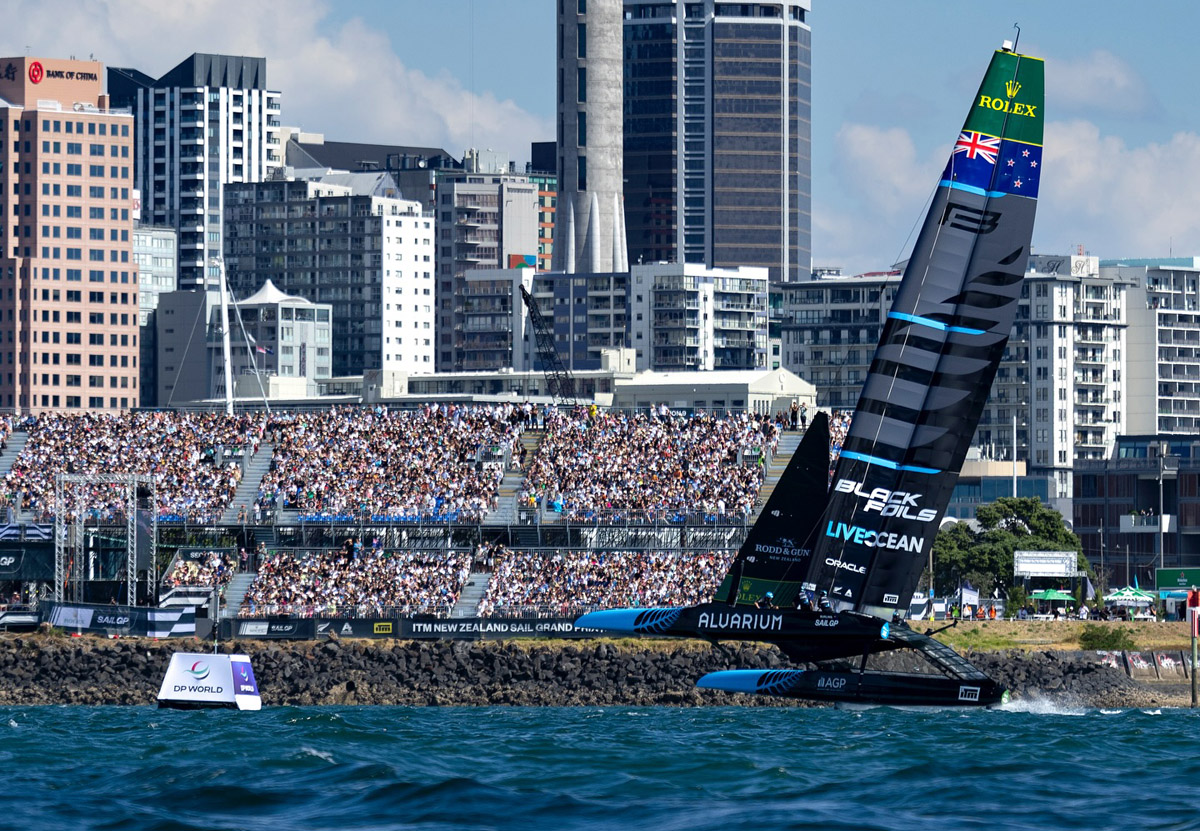
Let’s start with a new and modern communication strategy that uses social media effectively, with the distribution of content that increasingly tends to go viral, including spectacular clips, incidents (there are those too, it would be hypocritical not to admit that they are part of the show), even videos of the live commentators exalted in double windows, which build up what is precisely a show and which, however much it may turn the noses of purists, sells well, is popular, works.
Why SailGP is working
Nothing is left to chance; rather, as Tom Halls, SVP of Social for SailGP, reports, the audience is segmented into three categories (curious, casual and core) and “targeted” meticulously. The result? The circuit is becoming more and more well-known and broadcast, however much it also goes against some of the historical tenets of sailing. The first point is clearly the boats and their maneuverability. As spectacular as speed is, maneuverability remains a key issue in making racing interesting, and the catamarans, though greatly improved in recent years, remain problematic in this respect, forcing the various traverse starts and whatever else abnormal we see in Circuit events.
It is clear that the same formula on boats such as the previously mentioned AC40s would become a “Formula 2” of sailing that “keeps the audience warm” while waiting for the so-called main event with the big sisters, but at the moment there is no hope of any kind of permeability between the two realities, for more than obvious personal reasons. Moreover, it is quite likely that the scuffles, accidents, and falls overboard that happen in the catamarans represent such an element of the spectacle that one does not want to give it up.
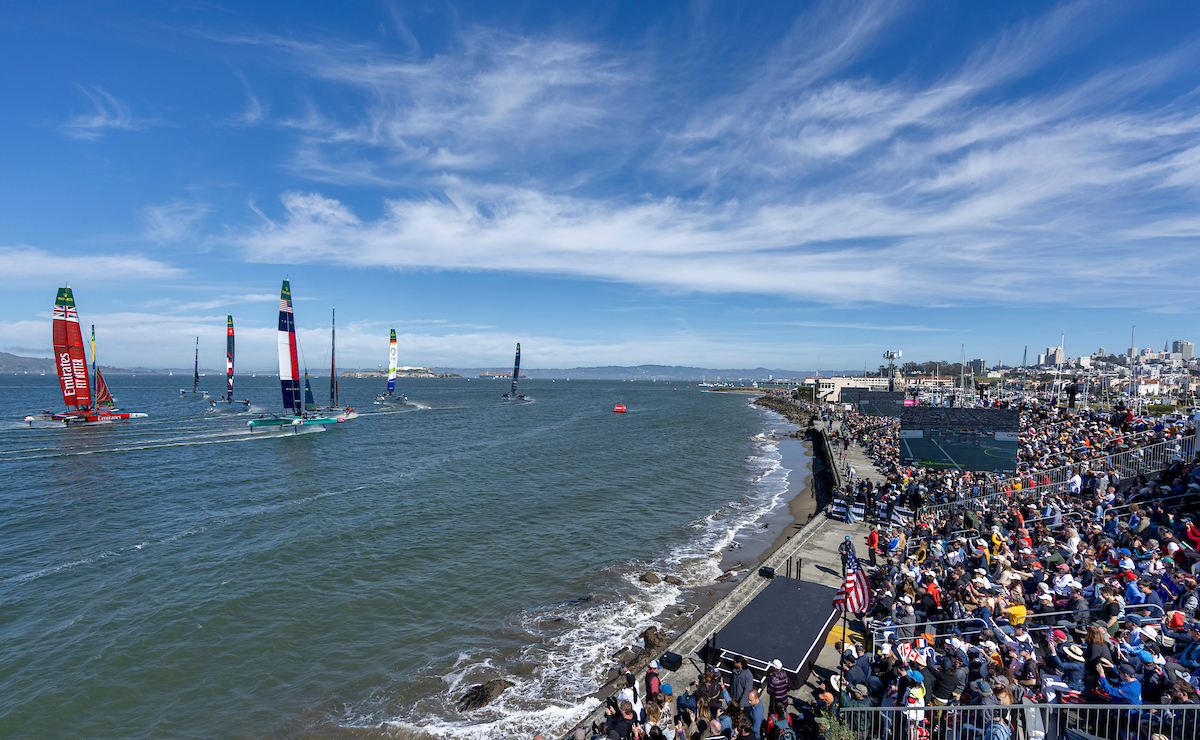
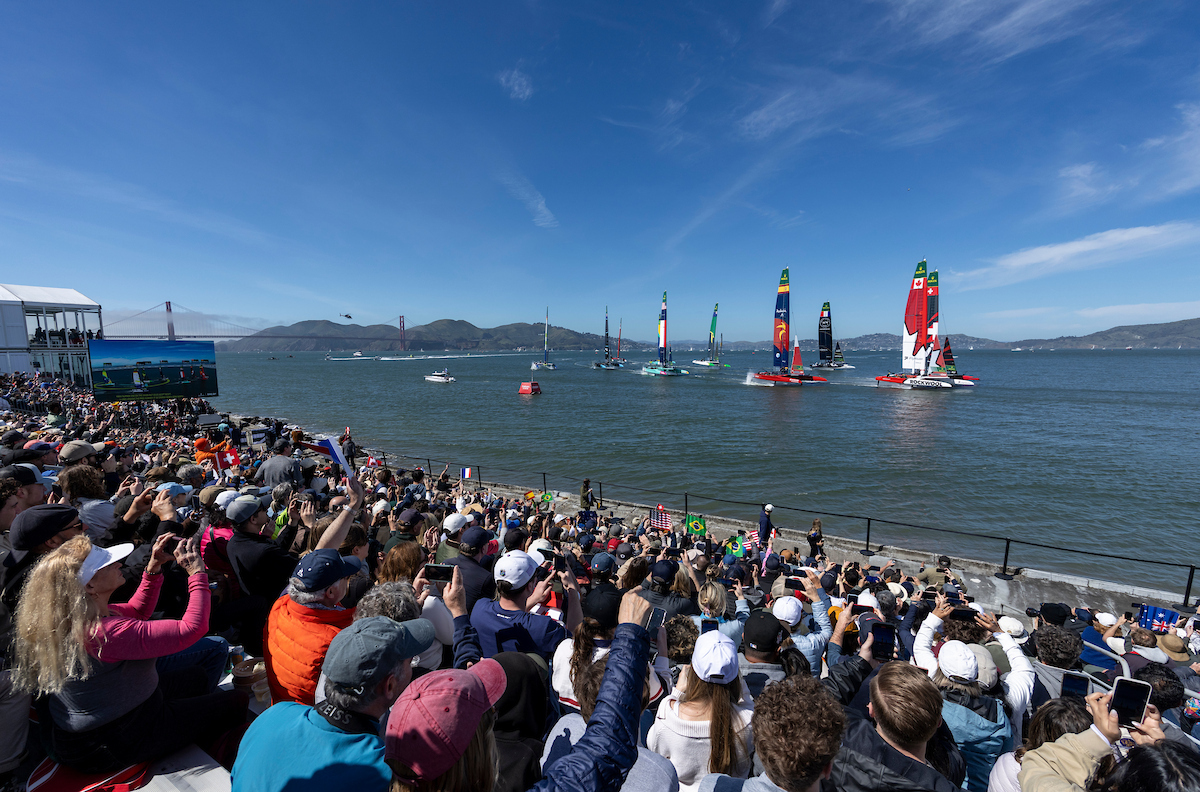
What happens, however, is that the on-site audience fills the grandstands, with the boats passing within a few meters of the dock, and patience if the wind a few meters from the shore is little and unstable, everything is aimed at the ability to intercept a generalist audience, not necessarily sailors, because the numbers at that point can grow decidedly exponential. To give some reference, season 4 of the circuit, last year, totaled an impressive 1.4 billion video views on social media, increasing by something like five times over the previous year, and in the U.S. the final event in Spain was watched by 1.8 million viewers, an all-time record.
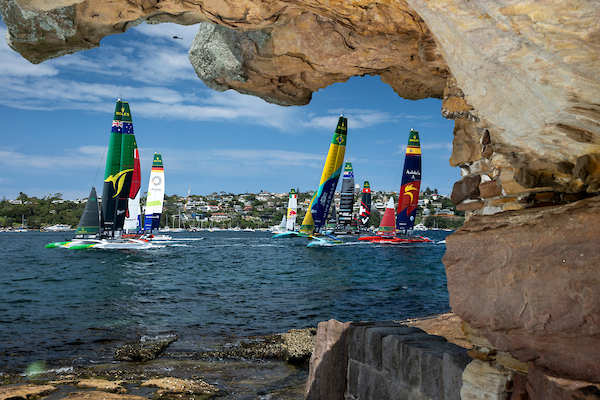
After all, intuiting the SailGP circuit’s level of pursuit of generalist audiences can be guessed simply by the fact that the teams directly represent nations and not private investors. But not only that, the circuit has adapted to modern standards with initiatives such as the Women’s Pathway and, most importantly, with a horizontal structure where all teams use the same boat, promoting competition, reducing barriers to entry partly through the ongoing incentive to share data among teams.
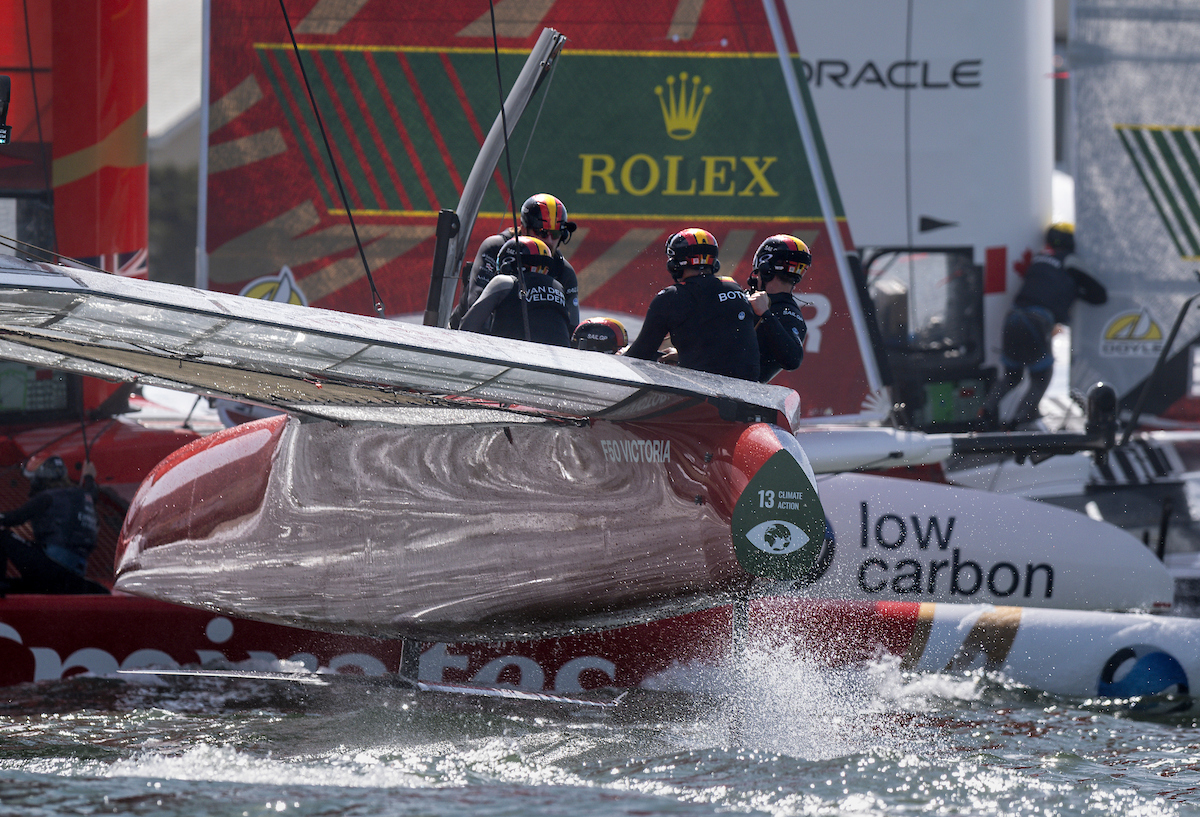
Is creating sailmakers right? In our opinion, yes.
Is all this fair? Clearly this can be debated, and there is no one answer: sailing purists will say that this is all rubbish that attracts a “stadium” audience, but to that statement it can be answered that the involvement of a wider audience makes sailing more popular on the one hand, and allows for the creation of a flywheel on everything sailing is about, as well as ensuring that events of such magnitude exist at all, instead of being in trouble as the America’s Cup is right now.
The Formula 1 example
There is another “circus” in the world that has just gone down such a path, led by an Italian. Formula 1 and its Ceo Stefano Domenicali. After its purchase by the giant Liberty Media and the investiture of the brilliant Imola executive, the top motorsport series has quickly reinvented itself with canons absolutely similar to what we see in SailGP.
Social media has become a must, Netflix has set up the highly followed series Drive To Survive, now in its seventh season, audiences, especially among young people, have grown by leaps and bounds, and those who have not been able to keep up have ended up in crisis, with Grand Prix on historic but no longer adequate circuits disappearing from the calendar.
Not all that glitters is gold, of course, especially in Formula 1 with its huge interests that also lead it to race in countries where human rights are not respected, but one can hardly say that the product that Domenicali has literally reinvented, taking a reality that was in serious danger of entering a major downward spiral and taking it to the highest commercial peak ever seen, is not successful. The audience is immense, the following enormous, and everything about Formula 1 has returned to gold after having gone through a “lead” period in the second half of the 1910s.
We say it again: not everything is necessarily good, extreme commercialization brings with it many negative aspects, but the total vacuum around the historic boast of all who ply the sea, the America’s Cup, is also not good for sailing.
Federico Albano
Check out the latest issue

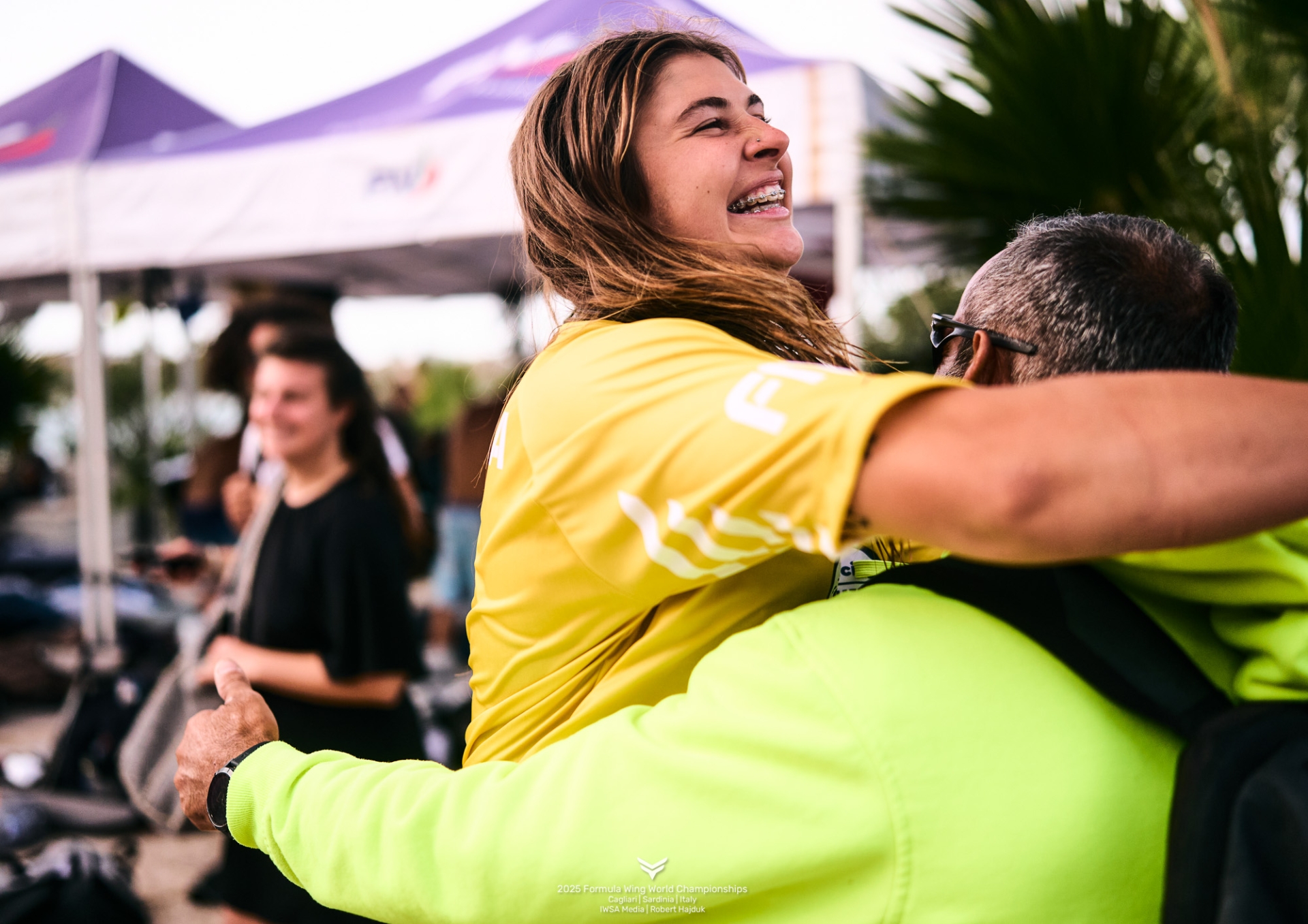
Winning a world championship in your own land is a crazy thrill. Right Magdalena?
Winning a sailing rainbow title is a huge satisfaction. Winning it in one’s own land is even more so. Maddalena Spanu, born in 2006, from Cagliari (but living in Oristano), is the first women’s Formula Wing world champion in history.
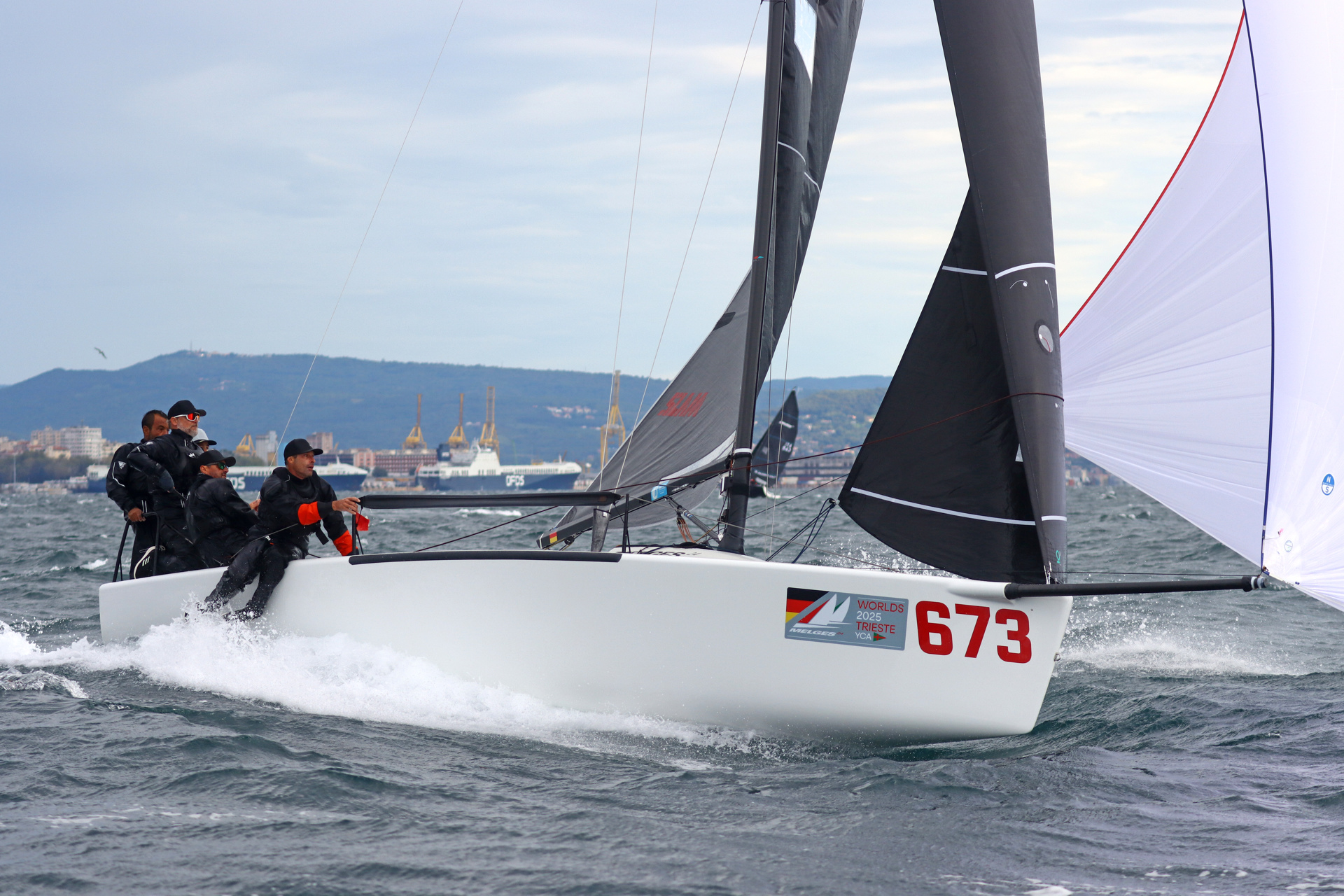
Monotype gathering more than 70 boats at the Worlds after 30 years
Can you find the perfect, and long-lived, racing boat in just 7.32 meters in length? You sure can, especially if the boat in question is called a Melges 24, and proving it, yet another confirmation, was the class World Championship
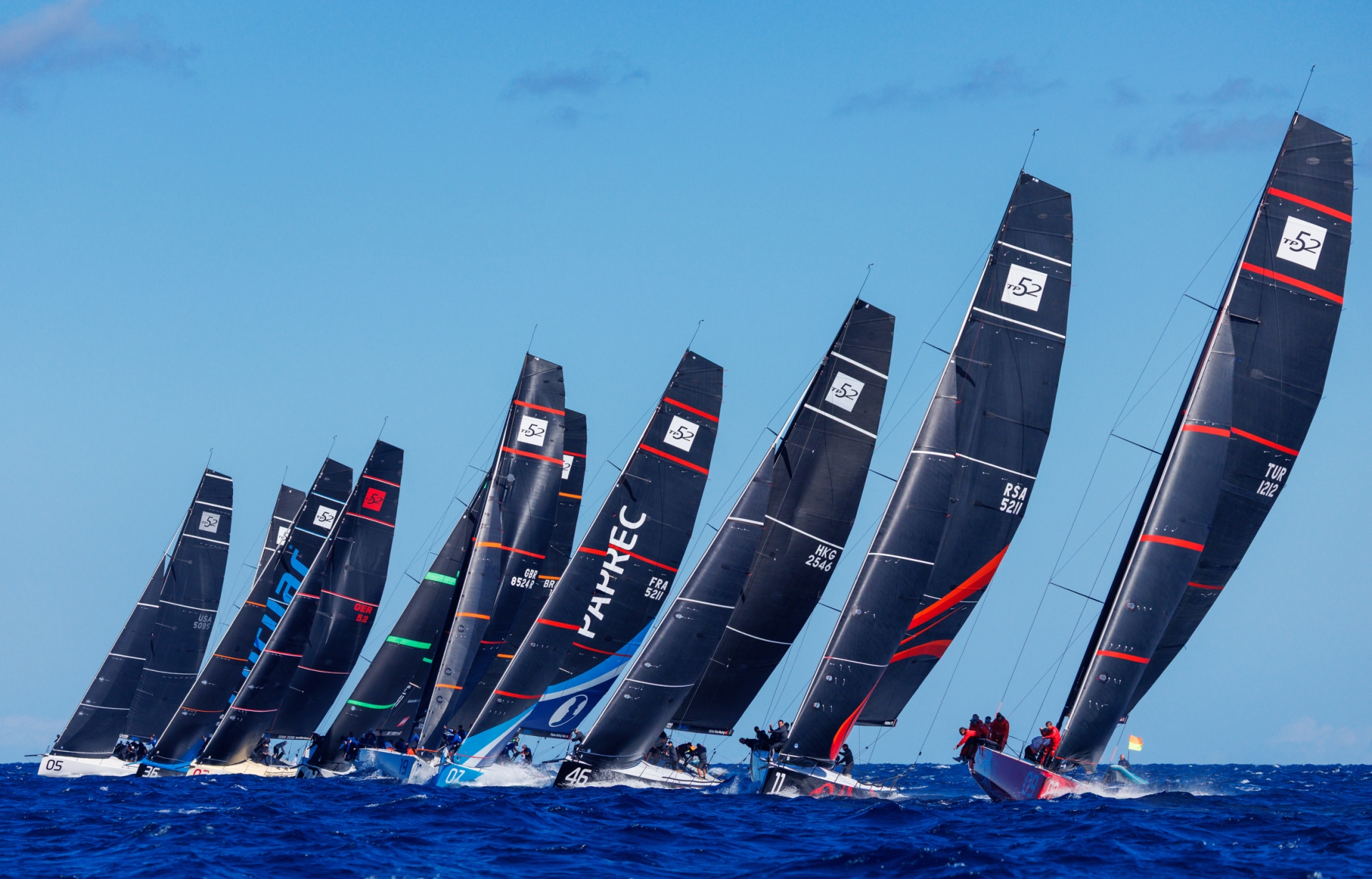
The 2025 52 Super Series season comes to a close: here’s how it went in Porto Cervo
The 52 Super Series-Porto Cervo-Range Rover Sailing Week, which was held Sept. 22-27 in Porto Cervo, in the waters in front of the Yacht Club Costa Smeralda and which closed the club’s 2025 sports season, has come to an end.
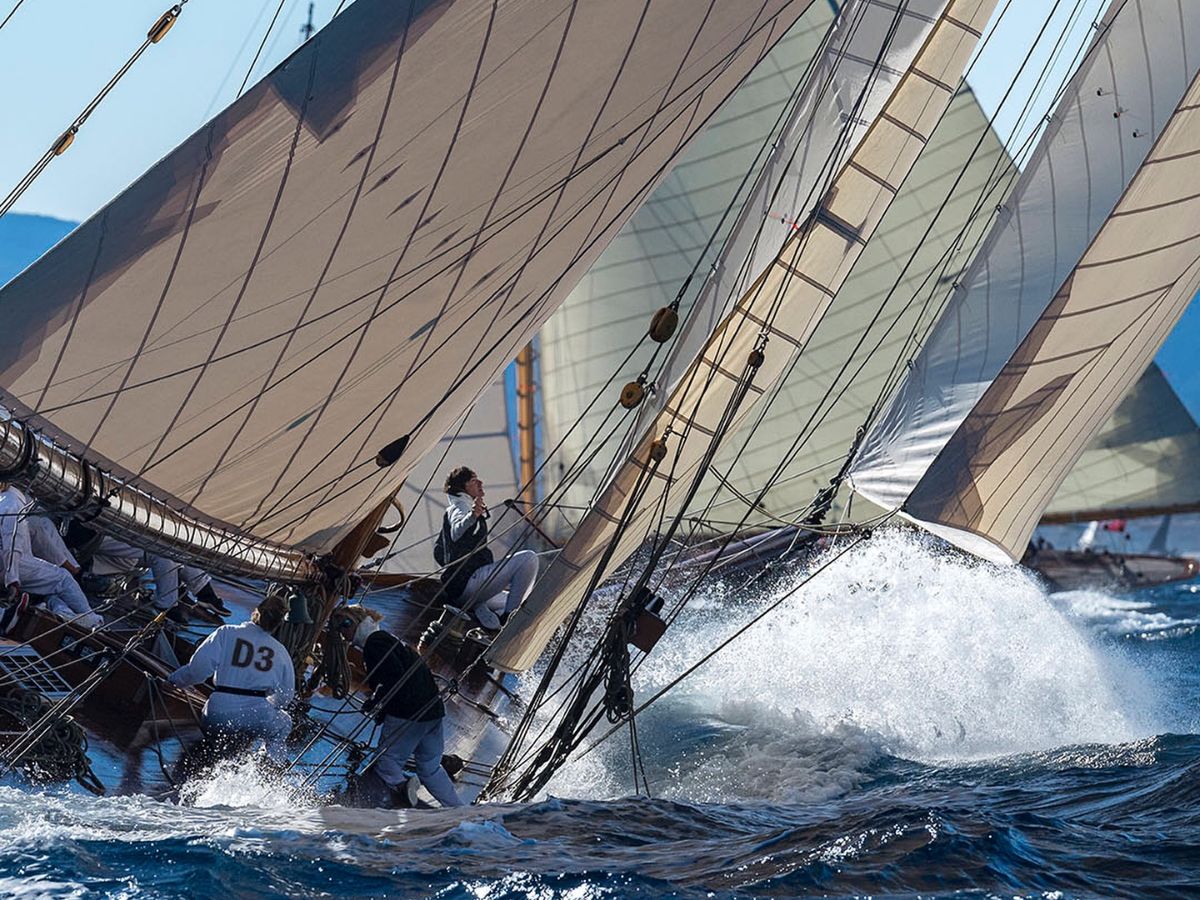
Les Voiles de St. Tropez 2025: vintage boats, maxi yachts and modern hulls for an exceptional edition
From September 27 to October 5, 2025, the Gulf of St. Tropez will welcome more than 240 yachts, including 70 units over 20 meters. Between traditional, modern and maxis, this 27th edition of Les Voiles de Saint-Tropez promises to be

