
Welcome to the special section “GdV 5th Years.” We are introducing you, day by day, An article from the archives of the Journal of Sailing, starting in 1975. A word of advice, get in the habit of starting your day with the most exciting sailing stories-it will be like being on a boat even if you are ashore.
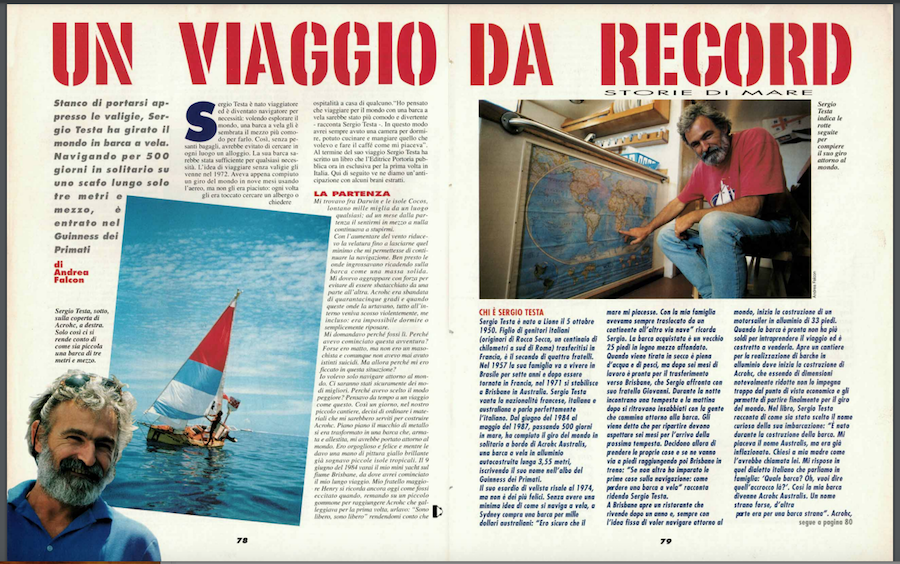
Sailing around the world in a three-meter boat
Taken from the 1996 Journal of Sailing, Year 22, No. 6, June, p. 78/81.
He sailed for 500 days solo in an eight-foot boat, entering the Guinness Book of World Records. The story of Sergio Testa who wanted to travel the world but did not want to take his luggage with him. Thus was born the record-breaking trip with a microboat.
A record-breaking journey
Tired of lugging around suitcases, Sergio Testa sailed around the world. Sailing for 500 days solo on a hull only three and a half meters long. he entered the Guinness Book of World Records.
Sergio Testa was born a traveler and became a sailor out of necessity: wanting to explore the world, a sailboat seemed to him the most comfortable means of doing so. Thus, without heavy luggage, he would have avoided searching every place for accommodation. His boat would be sufficient for any need. The idea of traveling without luggage came to him in 1972. He had just completed a round-the-world trip in nine months using an airplane, but he did not like it: each time he had to look for a hotel or ask for hospitality at someone’s house. “I thought traveling around the world with a sailboat would be more comfortable and fun,” says Sergio Testa, ” That way I would always have a room to sleep, could cook and eat what I wanted, and make coffee the way I liked. At the end of his journey Sergio Testa wrote a book thatEditrice Portoria is now publishing exclusively for the first time in Italy. Below we give you a preview of it with some excerpts.
The departure
I was between Darwin and the Cocos Islands, a thousand miles away from anywhere; a month after leaving, the feeling of being in the middle of nowhere continued to amaze me. As the wind increased I reduced the sail until I left that minimum that would allow me to continue sailing. Soon the waves were swelling, falling back on the boat like a solid mass. I had to hold on tightly to avoid being tossed from side to side. Acrohc was heeled forty-five degrees, and when these waves hit it, the whole interior was shaken violently including me: it was impossible to sleep or simply rest. I wondered why I was there. Why had I started this adventure? Maybe I was crazy, but I was not a masochist and had never been suicidal anyway. But then why had I gotten myself into this situation?
I just wanted to sail around the world. Surely there must have been better ways. Why had I chosen the worst way? I had been thinking about a trip like this for a long time. So one day, in our little shipyard, I decided to order the materials I would need to build Acrohc. Slowly the pile of metal had turned into a boat that, rigged and outfitted, would take me around the world.
I was proud and happy and as I gave her a coat of bright yellow paint I was already dreaming of small tropical islands. On June 19, 1984, I launched my mini-yacht on the Brisbane River, from where I would begin my long journey, My older brother Henry still remembers how excited I was when, paddling in a small dinghy to reach Acrohc floating for the first time I shouted, “I’m free, I’m free,” realizing that my new home was not attached to anything and that I was free to roam. Only close family and a few friends were present at the launch. Only they knew that I wanted to sail around the world and set a new record for going around the world in the smallest vessel.
Fire on board!
Sailing from Reunion to Madagascar, Sergio Testa runs into a dangerous accident: The weather and water were calm. Perfect situation to cook me pancakes, I told myself. I mixed the batter and ate them as I cooked them. The spirit in the stove was running out and I needed to top it up. I should have turned off the flame but the griddle would have cooled, so I poured the spirit into the tank with a spout I had built especially for it. I had done this operation before, but on this occasion a wave hit Acrohc and I spilled some of the spirit. I saw the flame leap in a thousandth of a second up toward the bottle, which exploded in my hands, spilling burning alcohol all over me and all around. The hatch was open and as I flew out to dive into the water, I heard the crackle of my beard burning. I dived to the bow and, still in the air, turned to resurface, grab onto the boat and hoist myself aboard. As I was back in the boat I remember forcing myself not to panic. I hit the head of the fire extinguisher with such force that it almost slipped out of my hand. It didn’t take long to put out the fire, but because there was still a lot of smoke I sprayed a second time.
I was wet and cold and hot at the same time. I could not enter the cabin because it was too hot inside. Despite my burnt skin I felt cold. The pain was unbearable. I could not sit on the hatchway that was hot. So I stood in the bow on the deck where it had not been touched by the fire. Later the cabin cooled and I was able to go inside and pick up a towel and some sunburn ointment. I was tempted to throw I’S.O.S.. then I wondered, how would the rescuers help me? They would give me ointments and painkillers that I had already taken. If I called for help, the rescuers would not arrive for a day or two, and perhaps they would take me from Acrohc and abandon it. In addition to damaging her, I also could not leave her. I understood how I had come close to death and how stupid I had been. I had no one to blame but myself, and I understood why many sailors sail alone; if the fire had been caused by someone else, I would have thrown him overboard.
Beached!
Arriving in Cape Town, he failed to enter the harbor because of too much wind and ended up on a beach a few kilometers to the north: The wind was blowing about fifty knots and I had to go upwind to enter the harbor. I had no choice but to go against the wind and, if it increased, reduce sail. By dint of reducing I had just enough left to keep my position. Then the wind came up to sixty knots and was increasing. It was the fourth night I had gone without sleep. I was really tired and it was cold, but at least I was in the middle of the bay. We would go off one side for a couple of miles, tack before we went against the rocks, and set off again on the other side. I wouldn’t get close to the harbor, but that way I wouldn’t get pushed out of the bay either. An hour would pass before we tacked again, so I rested my head on a pillow and closed my eyes. By then the wind had reached seventy knots and was increasing. Acrohc had heeled more than forty-five degrees, and I could not reduce the sail any further or there would be nothing left; I had to hold the bare minimum to keep going. After six hours of struggle the harbor was still more than a mile away, and I was barely holding position. I came again, sat down comfortably, put a blanket on me, rested my head on the pillow and closed my eyes I said to myself, “Hey you, you’re sleeping. Who checks the rocks?. And I replied, “No, I’m not sleeping-I’m just resting my eyes. I’m so tired. See, I’m awake…”
At four o’clock in the morning there was a thunderous shot. Then Acrohc turned sideways and through the porthole I saw the sand coming toward us. We landed with a dull thump. The next wave pushed us onto the beach, and when I opened the hatch, which was now to the side, another wave hit us and pushed us even higher. The tide was going out and soon Acrohc was on the beach out of reach of the waves. I didn’t bother getting out. I closed the hatch, put a pillow under my head, and fell back asleep on the kitchenette!
It was a hellish day, not only for me, but for Cape Town itself. Often, during the summer months, it is hit by a wind called the “Southeaster” that reaches sixty knots. It gave its best that day and was renamed “Black Southeaster. “ It blew at eighty knots, something that had not happened in years, and left spectacular damage. Broken windows, uprooted trees, overturned cars, and several yachts broke their moorings. A dumb fell on fourteen cars, and people flew without wings that day!
The arrival
After almost three years on the road, Sergio Testa returns to Brisbane. He started out in anonymity and has now become famous, and there are many people waiting for him: Acrohc and I stood on the start-finish line completing the round-the-world circle. I did not celebrate. At this point it had all begun, we were alone, just as we would be for so long at sea. I grabbed the flashlight, pulled the lanyard, and nothing happened. I stared at it in disbelief, it had to light up, for years I had dreamed of this moment! As I held the flashlight in my hand and began to curse it, it lit. The thick, orange smoke began to come out and the wind carried it away as it had done three years before. Now I was happy. I wanted to stop there and leave Acrohc where it belonged. I wanted to drill a hole in her bottom and let her sink peacefully into her element. I didn’t, though, and we continued peacefully up the river.
It was a rainy Saturday morning. There were a lot of people waiting for us, and a brass band was playing: because of the confusion I did not even hear it. The Navy cadets were lined up to greet our arrival and my family was there. The mayor gave me the official salute and invited me to make a speech. Then there was the press conference. After the ceremony I toasted Acrohc together with my family members. When I left, two hours later, Acrohc looked sad. Many people were admiring her, but no one understood what she had been to me.
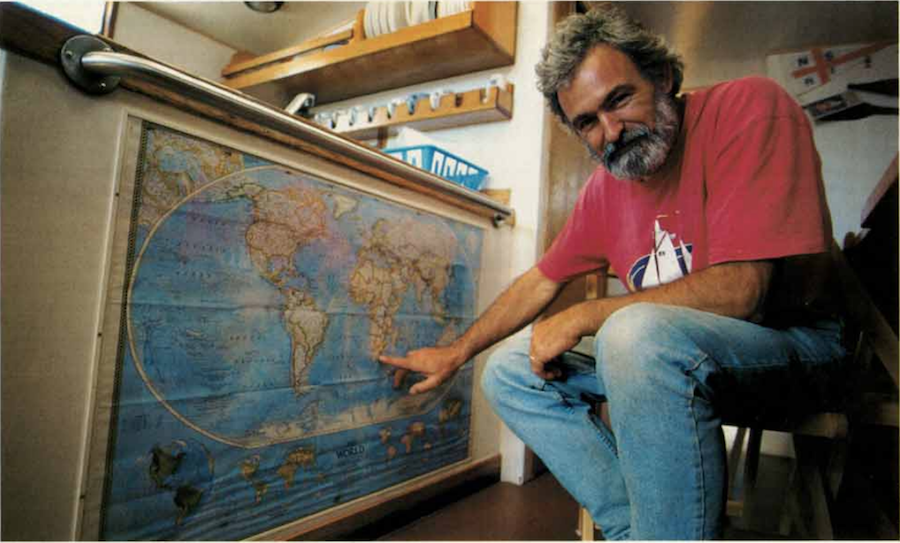
Who is Sergio Testa
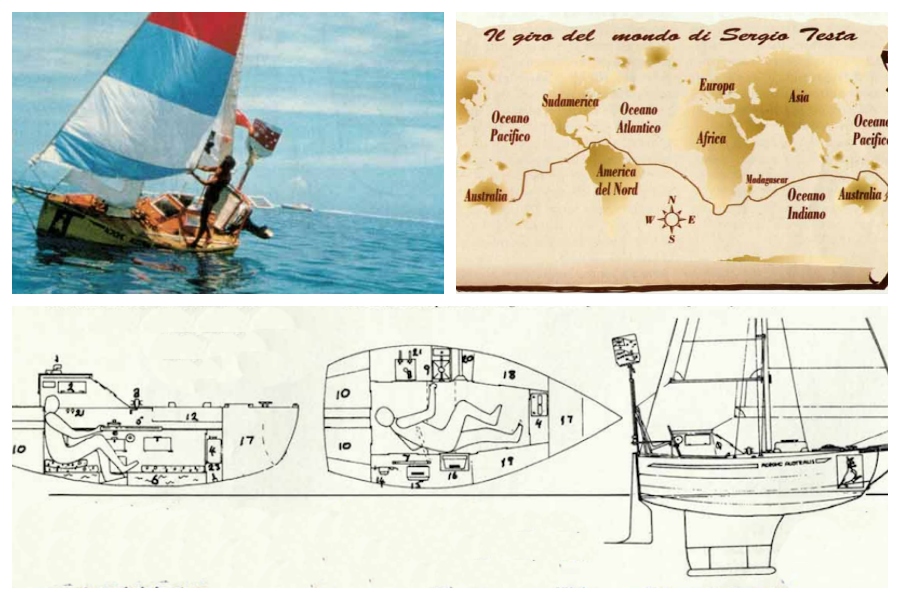
Sergio Testa was born in Lyon on October 5, 1950. The son of Italian parents (originally from Rocca Secca, a hundred kilometers south of Rome) who moved to France, he is the second of four siblings. In 1957 his family went to live in Brazil for seven years, and after returning to France, they settled in Brisbane, Australia, in 1971. Sergio Testa boasts French, Italian and Australian nationality and speaks perfect Italian. From June 1984 to May 1987, spending 500 days at sea, he sailed solo around the world aboard Acrohc Australis, a 3.55-meter-long self-built aluminum sailboat, entering his name in the Guinness Book of World Records. His sailing debut was in 1974, but it was not the happiest. Without having a clue about sailing, he bought a boat in Sydney for a thousand Australian dollars: “I was sure I liked the sea. With my family we had always moved from one continent to another by boat,” Sergio recalls. The boat purchased is an old 25-foot wooden boat that is half sunk. When it is hauled out it is full of water and fish, but after six months of work it is ready for the move to Brisbane, which Sergio tackles with his brother John. During the night they encounter a storm and the next morning find themselves silted up with people walking around the boat. They are told that to leave again they must wait six months for the next storm to arrive. They then decide to pack up their belongings and leave on foot, eventually reaching Brisbane by train. “If nothing else, I learned the first things about sailing: how to lose a sailboat,” laughs Sergio Testa. In Brisbane he opened a restaurant that he resold after a year and, still with the fixed idea of wanting to sail around the world, he began building a 33-foot aluminum motorsailer. When the boat is ready he no longer has the money to undertake the voyage and is forced to sell it. He opens an aluminum boatyard where he begins construction of Acrohc, which, being considerably smaller in size, does not put too much financial strain on him and allows him to finally set off around the world. In the book, Sergio Testa tells how the curious name of his boat was chosen: “It was born during the construction of the boat. I liked the name Australis, but it was already overused. I asked my mother what she was going to call it. She answered me in that Italian dialect we speak in the family, ‘What boat? Oh, you mean that contraption there?’ So my boat became Acrohc Australis. A name
Strange perhaps, on the other hand it was for a strange boat.” Acrohc, three and a half meters long, has no cockpit; Testa faced cyclones and storms, and having the hull only half a meter of freeboard, he was almost always in the cabin with the hatch closed. Acrohc ‘s average speed was three knots.
Andrea Falcon
Check out the latest issue

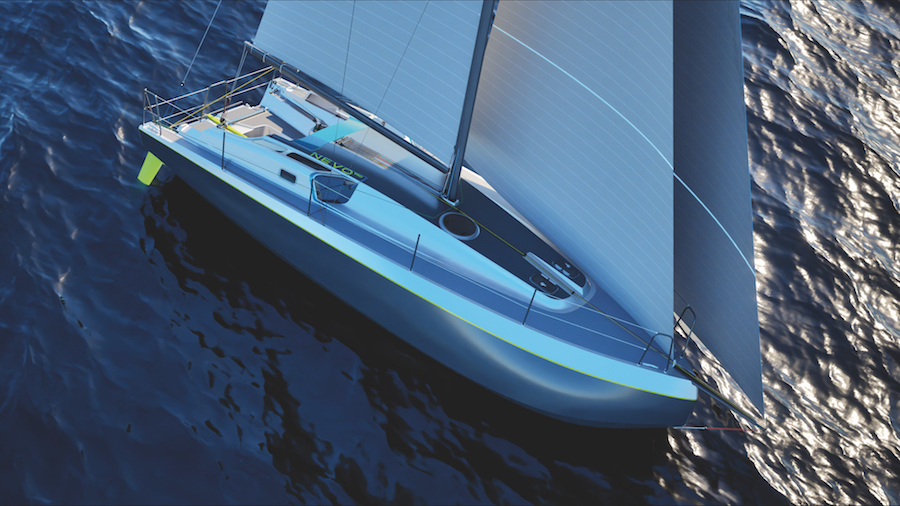
Michele Molino, nautical engineer with the sea in his vein
On the occasion of the 50th anniversary of the Journal of Sailing, the great excellences of the sailing world tell their stories and reveal their projects. In this column, discover all the companies and people who have made important contributions
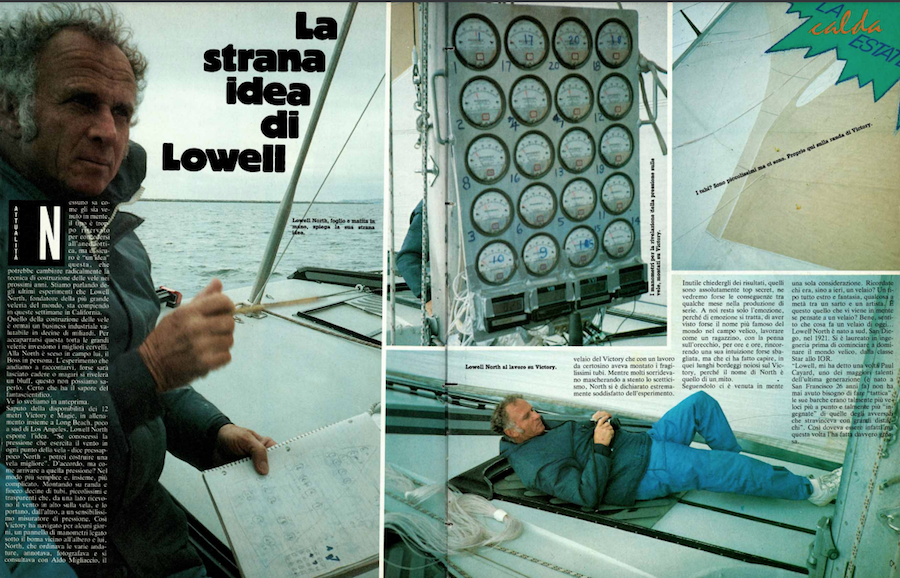
1985. The sails of the future are being born. The GdV is in, with Lowell North
Welcome to the special section “GdV 5th Years.” We are introducing you, day by day, An article from the archives of the Journal of Sailing, starting in 1975. A word of advice, get in the habit of starting your day
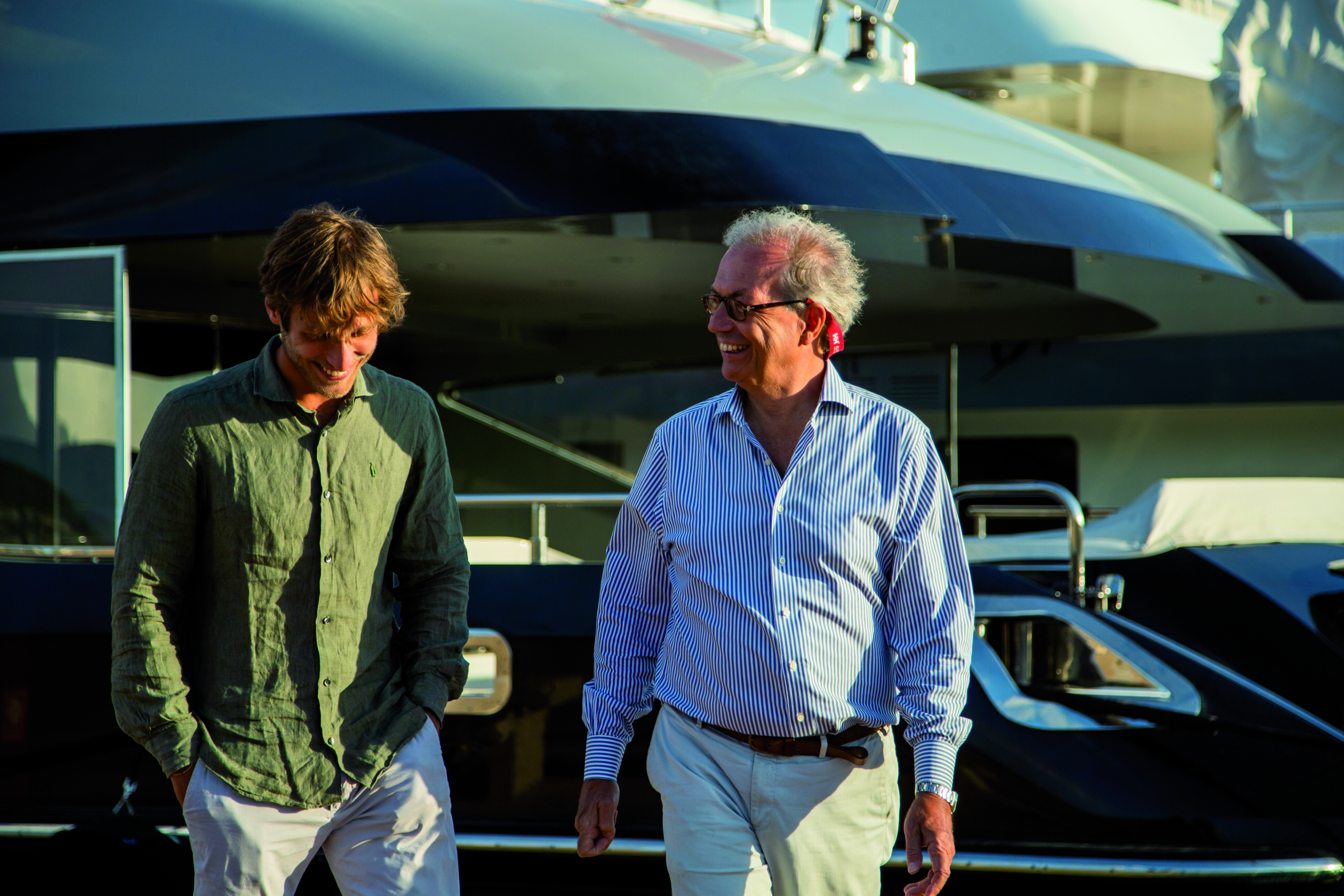
Marinedi, the integrated hospitality system
On the occasion of the 50th anniversary of the Journal of Sailing, the great excellences of the sailing world tell their stories and reveal their projects. In this column, discover all the companies and people who have made important contributions
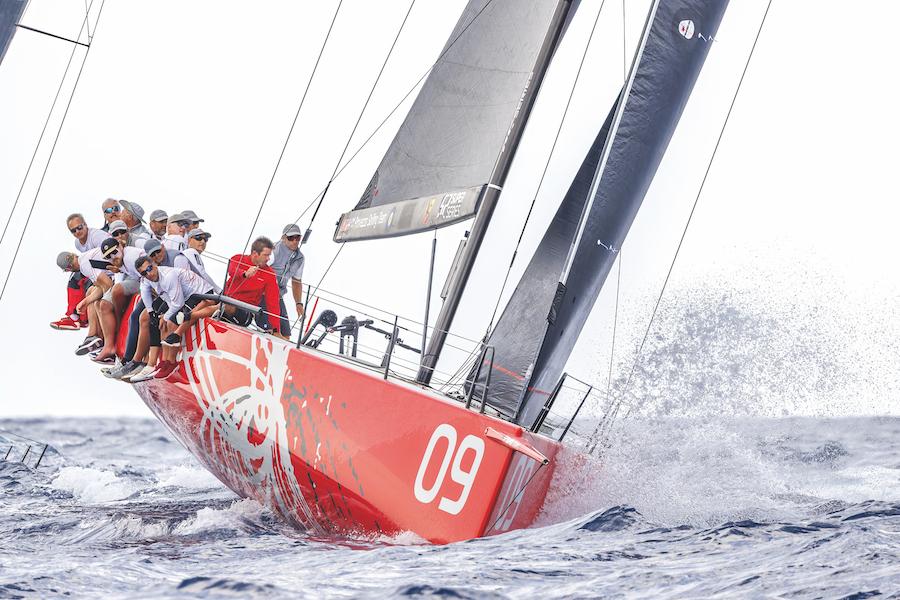
Naval revolution goes through Judel/Vrolijk study
On the occasion of the 50th anniversary of the Journal of Sailing, the great excellences of the sailing world tell their stories and reveal their projects. In this column, discover all the companies and people who have made important contributions

