
Welcome to the special section “GdV 5th Years.” We are introducing you, day by day, An article from the archives of the Journal of Sailing, starting in 1975. A word of advice, get in the habit of starting your day with the most exciting sailing stories-it will be like being on a boat even if you are ashore.
Weld: Ostar record
Taken from the 1980 Journal of Sailing, Year 6, No. 7, July-August, pp. 6-11.
Multihulls arrive at Ostar, the solo transatlantic with 152 starters, boats of all kinds. A 15-meter trimaran led by an unknown 66-year-old American, Phil Weld, surprisingly won. How did the “old man” beat the holy monsters?
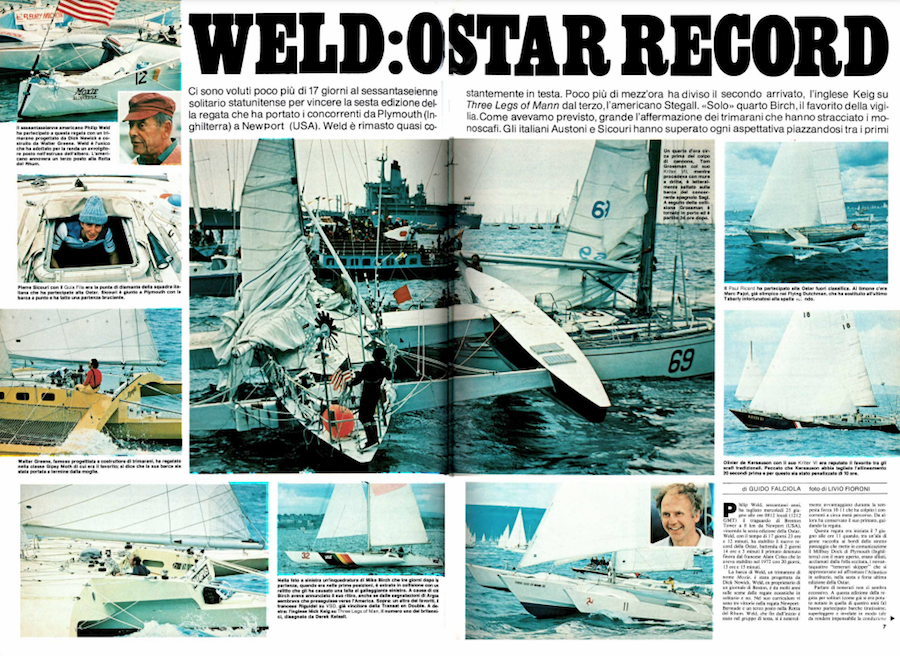
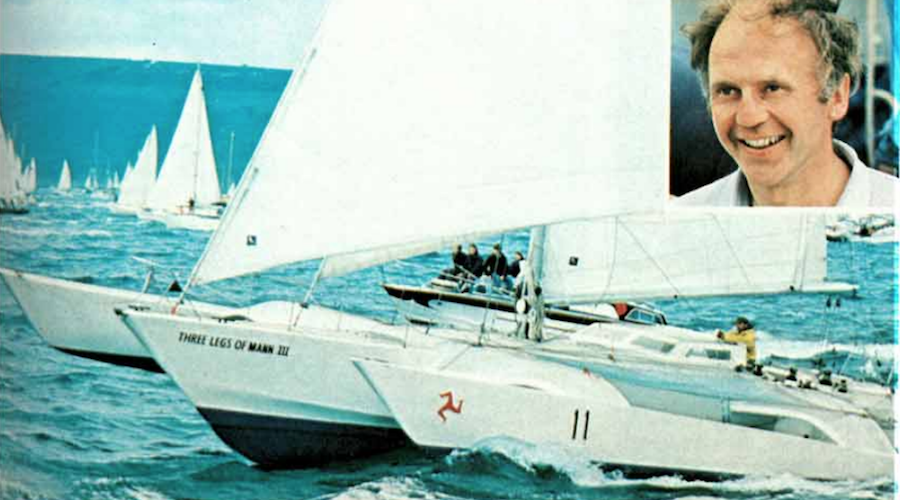
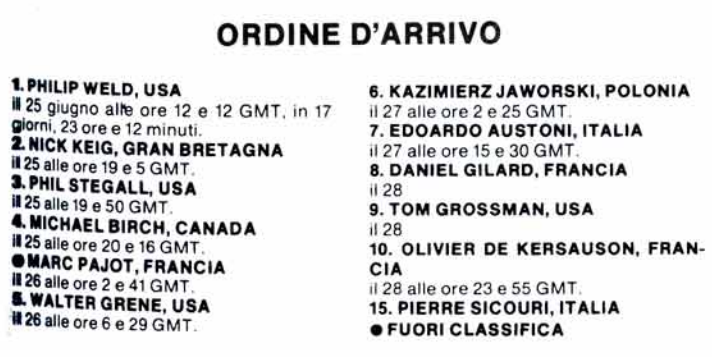
It took the 66-year-old lone U.S. sailor just over 17 days to win the sixth edition of the regatta that took competitors from Plymouth, England, to Newport, USA. Weld remained almost constantly in the lead. A little more than half an hour separated the second-place finisher, Britain’s Keig on Three Legs of Mann from third, the American Stegall. “Only” fourth was Birch, the eve’s favorite. As we predicted, great was the affirmation of the trimarans who tore up the monohulls. Italians Austoni and Sicouri exceeded all expectations by placing among the first.
Goes Philip Weld’s Moxie the new record
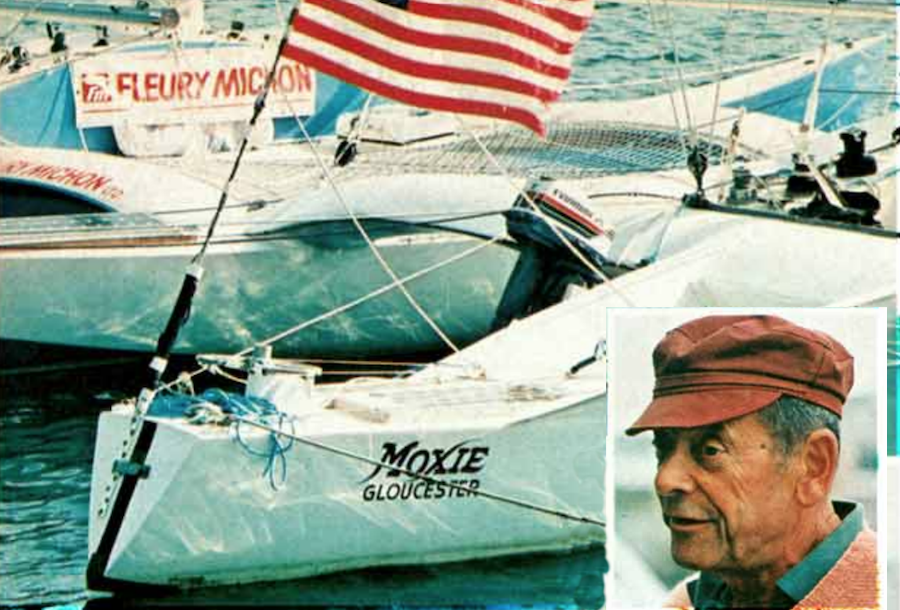
Sixty-six-year-old Philip Weld crossed the finish line at Brenton Tower, 8 km from Newport, USA, on Wednesday, June 25, at 8:12 a.m. local time (12:12 a.m. GMT), winning the sixth edition of the Ostar. Weld, with a time of 17 days 23 hours and 12 minutes, set a new Ostar record, beating by 2 days 14 hours and 3 minutes the record held so far by Frenchman Alain Colas, who set it in 1972 with 20 days, 13 hours and 15 minutes. Weld’s boat, a trimaran named Moxie, was designed by Dick Newick. Weld, a former Boston newspaper owner, has been on the scenes of solo and non-solo ocean racing for many years. His resume includes three victories in the Newport- Bermuda regatta and a third place in the Rhum Route. Weld, who was in the lead group from the start, gained a significant advantage during the force 10-11 storm that hit the competitors about halfway through. He has maintained his lead ever since, leading the regatta. This regatta had begun on June 7 at 11 a.m. when, among a wing of people gathered at the edge of the narrow passage that connects Millbay Dock in Plymouth, England, with the open sea, the ninety-four “daredevil skippers” who were about to face the Atlantic solo, in the sixth and perhaps final edition of the Ostar, had paraded, cheered by the excited crowd. To speak of daredevils does not seem excessive. This edition of the solo regatta (as was already evident in the one four years ago) featured boats that were pulled, super-light and sailed in such a way as to make it unthinkable for one person to sail them without great risks. But risks are part of the game.
A regatta that could disappear
For the first time in the history of this regatta, the British were not outnumbered: this record was held by the Americans with twenty-two competitors as opposed to the eighteen Anglo-Saxons and twelve French. Partly because of the interest in this regatta, one noticed the great enthusiasm of the French who had flocked to the start, while the British did not seem much involved in the event. There were a great many journalists and photographers who came from France, and there was also a Radio Europe station broadcasting live from the dock interviews and roundtables at all hours of the day. At one of these very roundtables there had been talk of the possibility that this was the last edition of the Ostar. Indeed, an international law prohibits the sailing of any vessel in which it is not possible to maintain a man on watch on deck around the clock. In spite of this, however, many are convinced that by adopting more and more up-to-date and sophisticated systems (as the solitaire detection system called “Argos” was supposed to be on the eve of this regatta) these regattas can survive. We say should have been since all the Argos system (consisting of a signal transmitter mounted on all the competitors’ boats and an artificial satellite of the Tiros N series that receives and encodes by sending back to shore the impulses sent out by each boat at the reckoning has exposed many technical shortcomings, causing most of the competitors to lose track.
A challenging regatta that involves adequate preparations
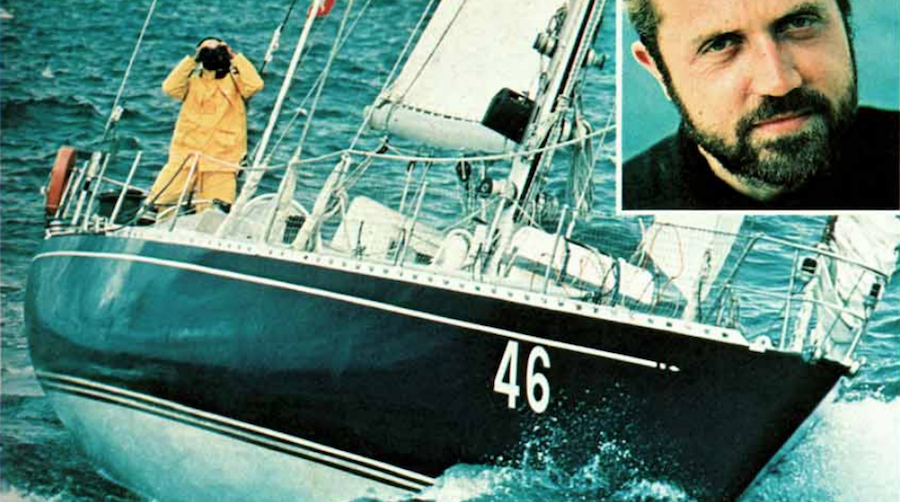
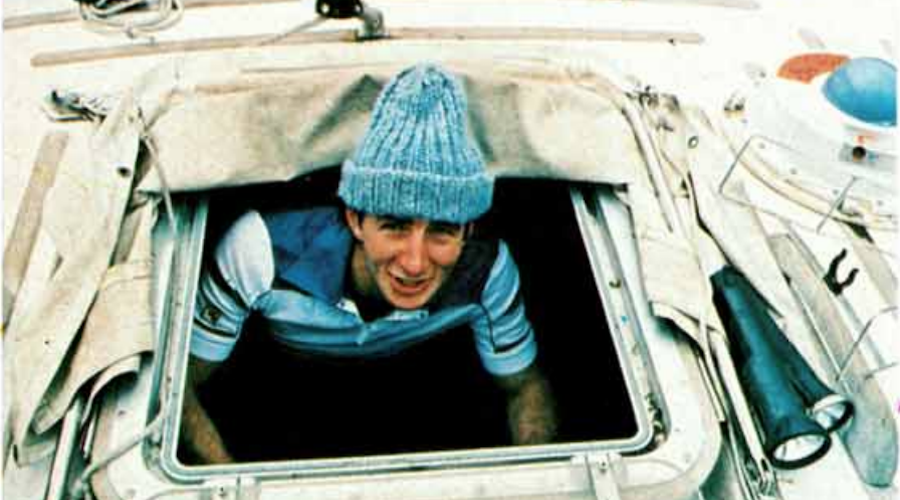
What one has to wonder is whether all the skippers entered in this challenging regatta prepare adequately. In fact, many hulls such as the Chica Boba of Edoardo Austoni or the Guia Fila of Pierre Sicouri and generally the boats of all the favorites, have arrived in England already perfectly tuned, but we have also seen skippers assemble key parts of their boat’s equipment the night before the start. One example that applies to all is that of 22-year-old Frenchwoman Florence Arthaud who, a few hours before the start, changed all the rigging, mounted the forestay swivel, and installed a new automatic windvane steering system. Result: as soon as she left port, hoisted the mainsail, at the first gust of wind the mast collapsed, ending up on top of a speedboat that was following her boat, the Miss Doubonnet. The disaster was caused by the rigging’s turnbuckles that had a different pitch than the old ones.
The three most admired boats
The boats that attracted the most interest in Plymouth were three. Two, Paul Ricard e Gautier II, were out of the race and participated “on the side,” without ranking. Paul Ricard only showed up at Millbay Docks the day before the start and remained moored to a buoy away from the crowd until the start. The boat, after the forced retirement of Eric Tabarlydue to a shoulder injury, was entrusted to Pajot, the “art son” of the great French sailor. Pajot when interviewed about what chances he had of placing on a boat that with Tabarly at the helm was given as the favorite, responded by saying that to win, the boat is not enough, but the man-boat combination is necessary. Paul Ricard‘s hull, refurbished after the Transat en Double, has been greatly simplified in its essential parts: it no longer has a movable support structure for the side hulls, the wing mast has been replaced with a traditional one, the side hulls have been redone with a more streamlined design, and the two side foils are now fixed incidence. Another admired boat, also off the leaderboard, was Gautier II, whose skipper and designer is Frenchman Terlain. Terlain‘s catamaran, most unusual in line, attracted attention especially for the system of joining the two hulls with the central cabin. Six generously sized tubes were used in pairs. A system comparable to “silent block” was used at the hulls’ attachment points: a rubber band used to decrease material fatigue. The designer-skipper, Terlain when asked what he thought of his own boat said, “It’s the biggest dud of the year, everyone looks at it in port, but once it’s sailed it will be a nail.” We don’t know if he was joking or not, however the mediocre result he got confirmed his predictions. Both the Paul Ricard and the Gautier II, as noted. participated out of the rankings, as the helmsmen were unable to complete the 500-mile qualification required of the rules. Another particularly interesting boat was the trimaran Kriter VII by American Tom Grossman, one of the latest designs by Dick Newick, the American wizard of polyhulls. Most interesting is the system by which it was built. It is a mixed fiberglass and carbon fiber structure with aluminum stiffening struts. Thanks to this system, the trimaran (which is 17.06 meters long) has a weight of only 4570 kilograms and a sail area of 105 square meters. Tom Grossman, unfortunately, was the victim at the start of an accident that caused damage to his starboard hull, forcing him to return to port to repair the leak and depart about 24 hours late. Nevertheless, the American resumed the race with grit and by mid-race was already among the leaders.
So much trouble for Italians
Racing for the top positions were Italians Pierre Sicouri and Edoardo Austoni, who certainly of all the participants had the two best boats. In the regatta both had very serious problems. Austoni about halfway through, while working on the mainsail halyard winch, broke the upper phalanges of two fingers and was forced to stay at the cape for a full two days. He then resumed racing after managing to cast his two fingers. Austoni, a doctor at San Carlo Hospital in Milan, was then able to rejoin the fight for the top positions. Sicouri, on the other hand, fell with his Guia Fila in the hollow of a wave, smashed three bow frames and a bulkhead of the boat. He remedied the damage with fiberglass and aluminum struts and managed to keep the boat trim, but of course his sailing was more cautious. His placing was still good.
The results of the major classes
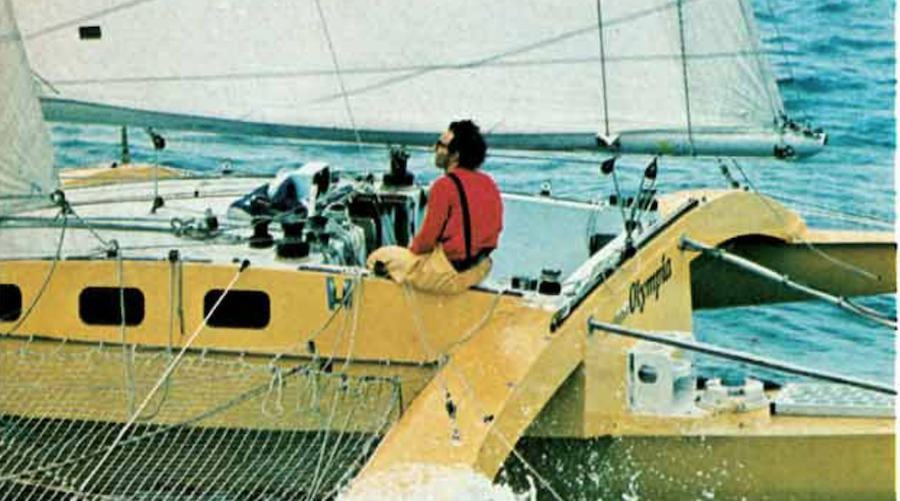
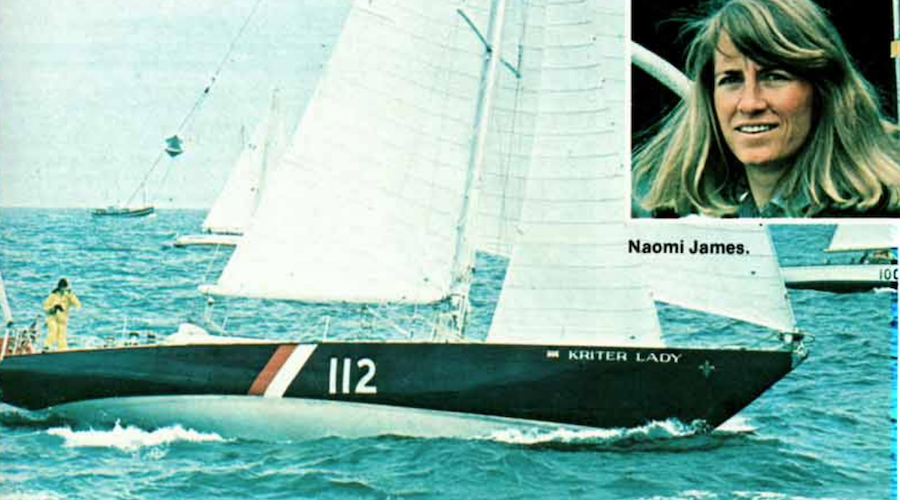
In the Pen Duick class (boats with a maximum length of 17.06 meters), as far as monohulls are concerned, the favorites on the eve of the start were France’s Olivier de Kersauson on his tried-and-true Kriter VI and Poland’s Kazimieres Jaworski on the new Spaniel II. The predictions came true in part. In fact, the Pole led about half of the race in the very first positions and then gradually lost ground. In the Gipsy Moth class (maximum length 13.41 meters), the most pulled trimaran was Hydrofolie, sailed by Frenchman Labbé, the only hull participating in this regatta with variable angle foils. Another favorite that did not disappoint was U.S. navigator-designer Walter Greene on the trimaran Chausettes Olympia. We also mention Englishman Robert James, husband of Naomi James also participating in this regatta in the Pen Duick class, at the helm of a monohull. James took part in the Ostar on a Newick-designed production trimaran, the same as the one in which Michel Birch arrived 24 hours after Tabarly at the 1976 Ostar.
Among the small ones also Giampolo Venturin
The smallest class participating in the solo transatlantic is the Jester, with a maximum limit of 9.75 meters. In this class, too, the domination of polyhulls and in particular Frenchman Alain Veyron‘s Cat Marine, an 8.5-meter-long trimaran that weighs only 650 kilograms and has a sail area of 74 square meters, was foretold from the start. In this class also raced an Italian, Giampolo Venturin a from Milan, with his Cecco otto, Jupiterpluvio. The 8-meter-long boat is strictly standard and had been meticulously prepared over the past two years. For Venturin this was his first experience sailing outside the Strait of Gibraltar.
Text by Guido Falciola. Photo by Livio Fioroni
Check out the latest issue

Michele Molino, nautical engineer with the sea in his vein
On the occasion of the 50th anniversary of the Journal of Sailing, the great excellences of the sailing world tell their stories and reveal their projects. In this column, discover all the companies and people who have made important contributions
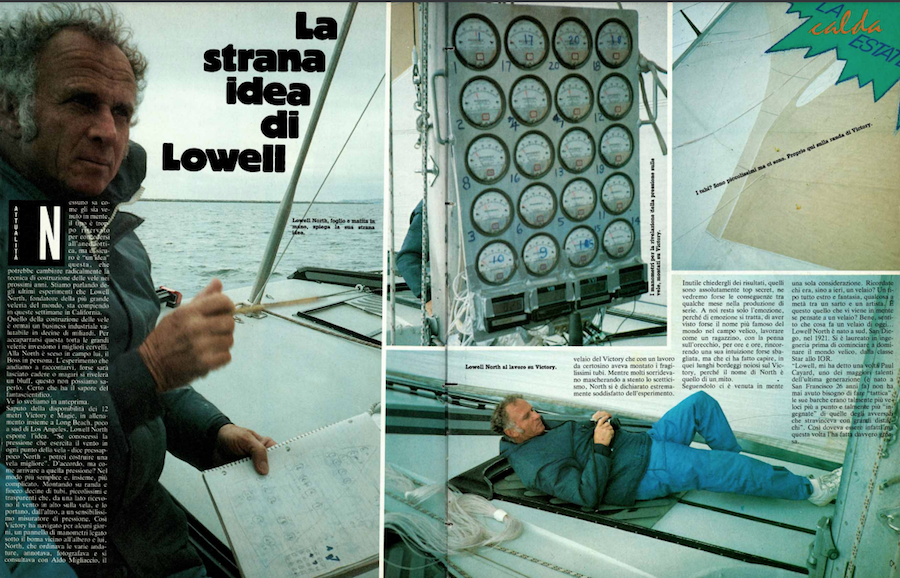
1985. The sails of the future are being born. The GdV is in, with Lowell North
Welcome to the special section “GdV 5th Years.” We are introducing you, day by day, An article from the archives of the Journal of Sailing, starting in 1975. A word of advice, get in the habit of starting your day
Marinedi, the integrated hospitality system
On the occasion of the 50th anniversary of the Journal of Sailing, the great excellences of the sailing world tell their stories and reveal their projects. In this column, discover all the companies and people who have made important contributions
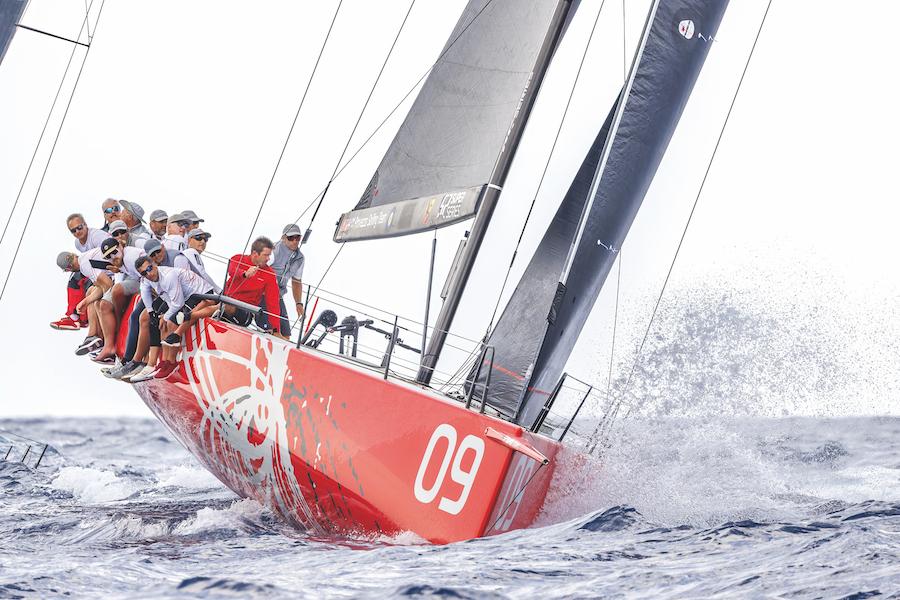
Naval revolution goes through Judel/Vrolijk study
On the occasion of the 50th anniversary of the Journal of Sailing, the great excellences of the sailing world tell their stories and reveal their projects. In this column, discover all the companies and people who have made important contributions

