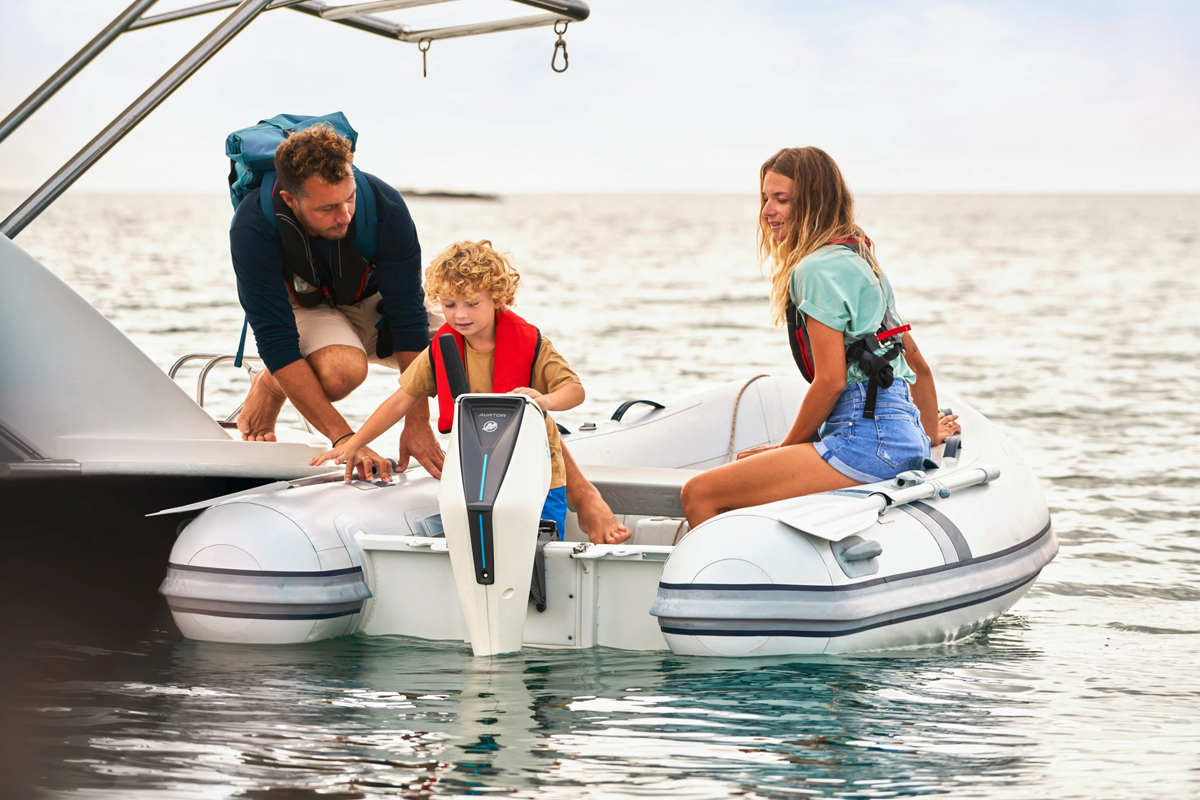
No incentives for electric outboards if you do not submit the “DCI,” the Declaration of Construction or Importation, the boat’s technical certificate issued by Confindustria Nautica.
This is the answer given by Invitalia (the National Agency for Enterprise Development) to a reader of the Giornale della Vela, Marco Z, who wanted clarification on scrapping his 3.5-hp Mercury, as required by the recent measure launched by the Ministry for Enterprise and Made in Italy. This is an inexplicable obligation, given that the scrapping concerns the thrusters, not the boat, and it especially penalizes smaller boats, the main recipient of this contribution aimed at supporting the transition to more environmentally sustainable solutions.
So let’s see what the reader writes and try to understand the reasons why “DCI” in many cases can be a problem.
The DCI paradox
“Unfortunately, ” Marco writes. I’m afraid that the small electric outboard portion of the incentives will remain largely unused: I’ve tried asking Invitalia how to go about accessing incentives to replace a 1984 Mercury 3.5Hp 2T (which works just fine) with a Torqeedo to use for both the dinghy and my Comet 800 for maneuvering in the harbor without having to turn on the diesel and the answer was that in the application you have to attach the details of the navigation license for vessels or, as in my case the Declaration of Construction and Importation (DCI) for the vessel where the electric thruster is intended, indicating the serial number of the engine to be scrapped.
Thus, small watercraft identified only by serial number and lacking DCI cannot be claimed. A paradox given that the ideal target for small outboards are precisely small watercraft, which often lack DCI (and CE certification if they are made before 1993 or under 2.5 meters like many tenders). It remains to be understood why scrapping your motorcycle or car requires only the submission of the registration certificate, while boats require all this red tape “.
Outboard motor, why is DCI needed?
Yes, indeed one really should understand why when it comes to boating everything gets so darn complicated. Invitalia, however, is not to blame. It is precisely the decree that recently allocated 3 million euros to encourage the ecological transition in the boating sector that imposed these strange stakes.
In order to access the funds in question, which make it possible to obtain grants to purchase electric thrusters against the scrapping of traditional gasoline or diesel thrusters, in fact, among other things one must present either the navigation license (in the case of a boat) or the DCI for the vessel (with the engine details) if it is an outboard. But while in the former case it is logical to ask for the navigation license, which contains the details of the inboard, it is less plausible to demand the DCI for an outboard. First of all, because the official document of the thruster would be the Declaration of Power (or Certificate of Use).
Then, because you do not consider the possibility that you may momentarily have only the outboard, which you want to scrap, but not the boat. But mostly because you overlook the fact that applying for a DCI for a boat without CE marking (as there are so many in use), is very complicated. Either you have the old boat type approval certificate (with a manufacturer’s declaration of conformity), which is not very common, or you have to submit an “attestation of suitability,” a certificate issued by a technical body following an inspection of the boat. A procedure that in the best case (eligibility for navigation within 6 miles) costs no less than 500 euros. But what would be the point of spending this amount to get an incentive?
Croatia: non-EC vessels will need to certify the boat
A problem, this one of the obligation to obtain the DCI for vessels without CE marking, destined to reoccur even in the likely event that Croatia’slong-awaited green light for unregistered Italian boatsis made official. The Adriatic neighbors, as is well known, have been threatening for years to block our vessels from entering their waters because they lack registration. So to try to overcome the problem, the government, at the input of Confindustria Nautica, has prepared a sort of hybrid document, an “Attestazione” that consists of a DCI associated with a declaration in lieu of affidavit with which to certify ownership and nationality of the boat.

Since it is not a “real” registration (Slovenia, for example, does not accept it) it was necessary to initiate specific agreements with Croatia, which, according to recent rumors, is expected to formally recognize it soon. And one can only be happy about that. The fact remains that while owners of CE-marked vessels will have no problem getting this attestation, those without it will have to go through the rigmarole described above: inspection of the boat by a technical body and issuance of a certificate of suitability. Around which, moreover, there is a little mystery: which attestation is needed, for sailing within 6 miles, within 12 miles or any one? We asked some technical bodies, but at the moment they don’t know anything either, they are waiting for instructions.
Specific clarifications aside, the fact remains that the “Declaration of Construction or Importation” is taking on an increasingly central role in boating paperwork. It is required for virtually every important or recurring act , from registration to safety certificate renewal (see list at the end). How come? And where did this document originate? But then, is there really a need for it?
The DCI mystery
The Declaration of Construction or Importation (DCI) appears for the first time in 2018 with the Regulations for the Implementation of the Central Telematics System of Recreational Boating. It is a kind of identity card for the boat that contains its essential data printed on a sheet of paper. The same regulation explains that from there on it must be presented “for the issuance of navigation licenses, temporary navigation authorizations, certificates of fitness and safety.” So a key role. And for many, including experts in the field, this comes as a surprise.
Until then, in fact, there is no trace of this document in either the Recreational Code or the Code’s implementing regulations, nor in the indications contained in the law delegating authority to the government for reform to the Recreational Code, where, on the contrary, there is a call to thin, lighten, and simplify the matter from bureaucratic paperwork. Instead, one is added, apparently with anti-fraud functions. The then system of managing the paper records of maritime authorities with its slowness, fragmentation and staff shortages was in fact found to be too vulnerable to fraud and commercial fraud.
And the new DCI is expected to help curb this problem. Too bad it comes too late. And that is just when one of the most awaited and radical reforms is being launched in recreational boating: the computerization of maritime registries with the creation of a central telematics archive, a registrar’s office and a telematics counter for the yachtsman. Which means online paperwork with certain, centralized, technically and legally secure data that can be consulted in real time. So why burden the user with a new document that, moreover, contains information that is largely obtainable from the Navigation License or the EC Declaration of Conformity? But this is not the only anomaly.
Entrustment to private individuals
In fact, the management of the DCI is being “outsourced,” deciding to entrust it to “the most nationally representative association” to which manufacturers and importers of recreational craft over 2.5 meters will have to report their technical data. The choice is obvious: Confindustria Nautica (formerly Ucina), certainly the most important association in the sector. This is then assigned the task of collecting the data of recreational units, transferring them to the new central state telematics archive and issuing, for a fee, the new DCI (which can currently be requested on an online platform at a cost of 30 euros). Yet another tax levy for the recreational boater.
In short, at the very moment when the state decides to centralize, digitize and computerize the management of all recreational boating administrative practices, taking their exclusive management away from the maritime offices and the civil DMV, it entrusts one of primary importance to a private entity. It’s kind of like how in order to register or perform an overhaul to a car, you have to ask ANFIA, the automotive industry association, for certification every time.
In addition, there is the fact that the role of this document becomes increasingly overflowing, as seen in the case of incentives for electric motors. Are we sure it is justified? And if so, would it not then be better to have it handled by the Telematics Desks of the Diportist, like most other industry documents? The not inconsiderable revenue could be used to enhance its operation, among other things.
What is the purpose of DCI
Currently, the Declaration of Construction or Importation (DCI) is used for:
- New registrations for the purpose of issuing navigation licenses, including provisional licenses
- The entry in the Telematics Archive (even of units already registered on a paper register)
- In the case of a vessel that was previously registered and then deleted (from the paper records or the Telematics Archive) and that you want to re-register
- the renewal of the security certificate
- The renewal of the certificate of fitness for hire
- The issuance of coupons to update the technical data contained in the license itself,
- The renewal or endorsement of the safety certificate or certificate of fitness for hire
- The transition from paper registration to the electronic registry
- The variation of technical data contained in the DCI,
- The authorization for the use of the “test plate”
- Apply for incentives for scrapping endothermic engines.
- Proof of ownership and nationality of vessels to sail in foreign national waters.
Fabrizio Coccia
Check out the latest issue

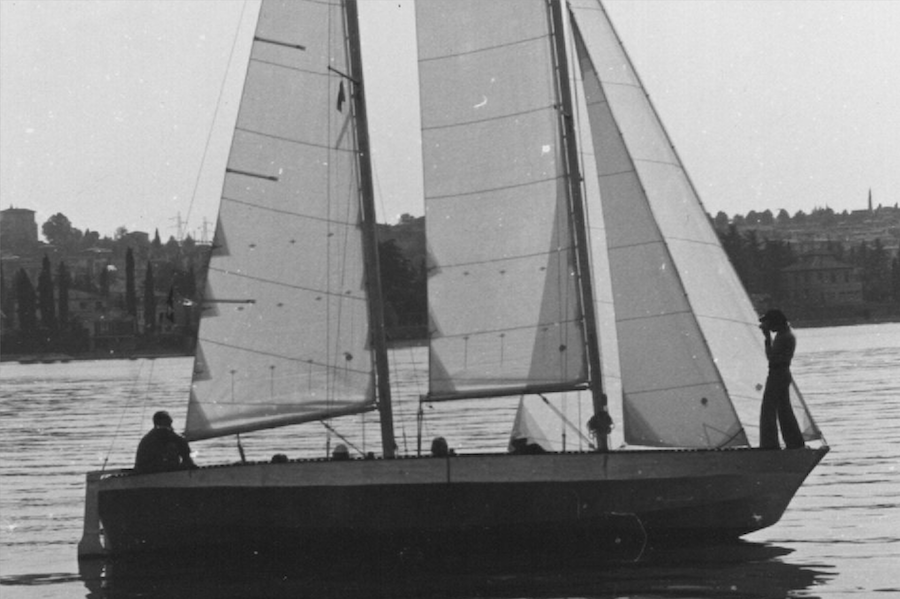
Old boat makes good board! The legendary Fraglia schooner has been “re-launched” after 50 years.
Desenzano, Lake Garda, home of the FVD, Fraglia Vela Desenzano. A Lake classic replicates its launch 50 years after the first time. It is the Fraglia schooner, a light alloy school schooner, the first in Italy to ever be built
VIDEO – Ubi Maior Italia, when a new company is born from a bit of madness
A boat ride in 45 knots and a pinch of madness: these are the ingredients of a story that speaks 100 percent the language of Made in Italy. A story that starts from the heart of Tuscany and has reached
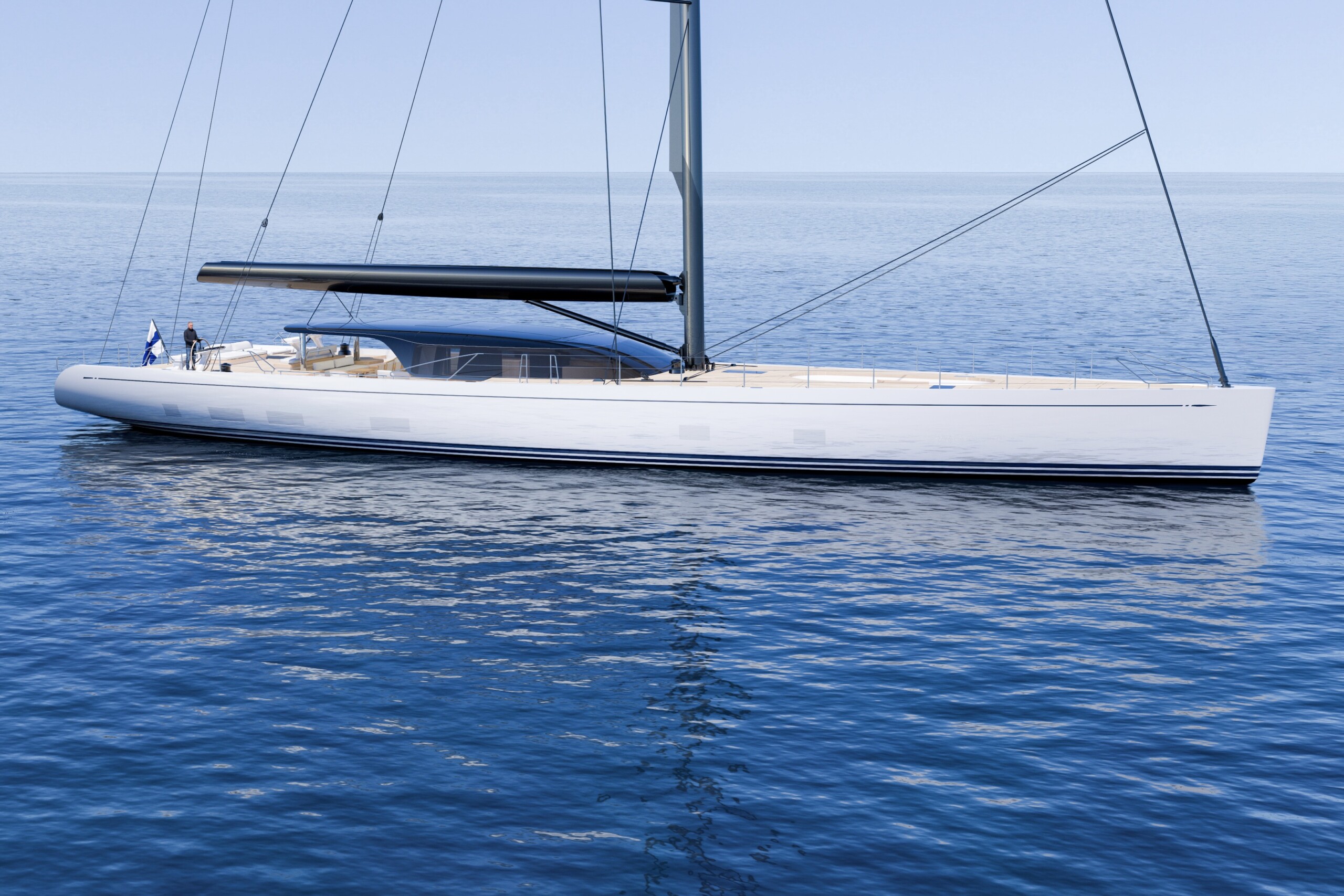
Swan Alloy 44: the new 44-meter aluminum supermaxi
Nautor Swan has unveiled the new Swan Alloy 44, a 44-meter aluminum sailing supermaxi. The first example is scheduled for delivery in summer 2028, with the hull built in the Netherlands and completion in Viareggio. The first owner will be
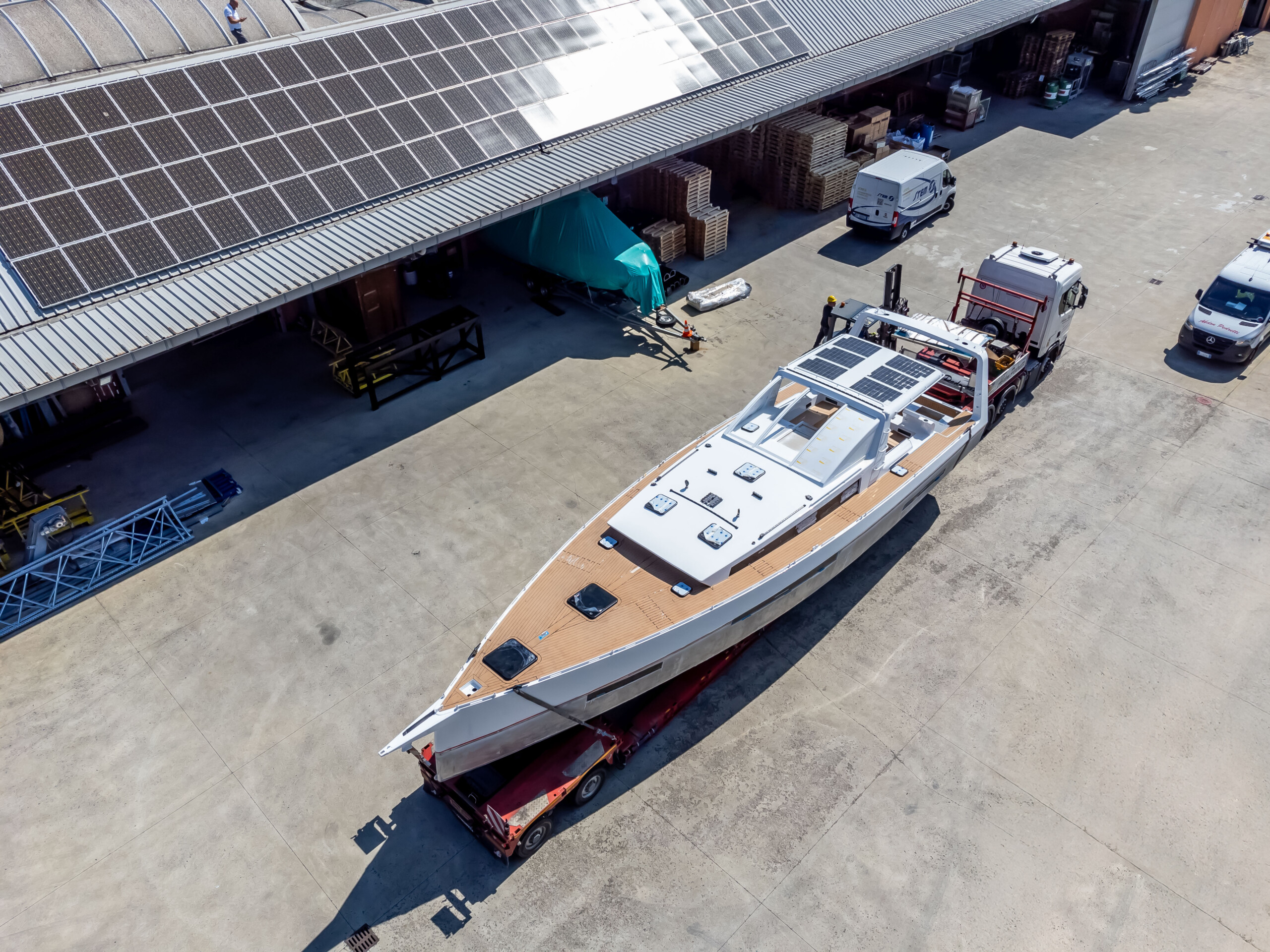
VIDEO – Stem 50 (15.85 m), the 100% Italian aluminum bluewater
We can almost call it “bluewater mania,” because in this 2025 many novelties in sailing come from this type of boat: after the Bluewater 56, the CNB 62, comes a 100% made in Italy boat, which is also a first

