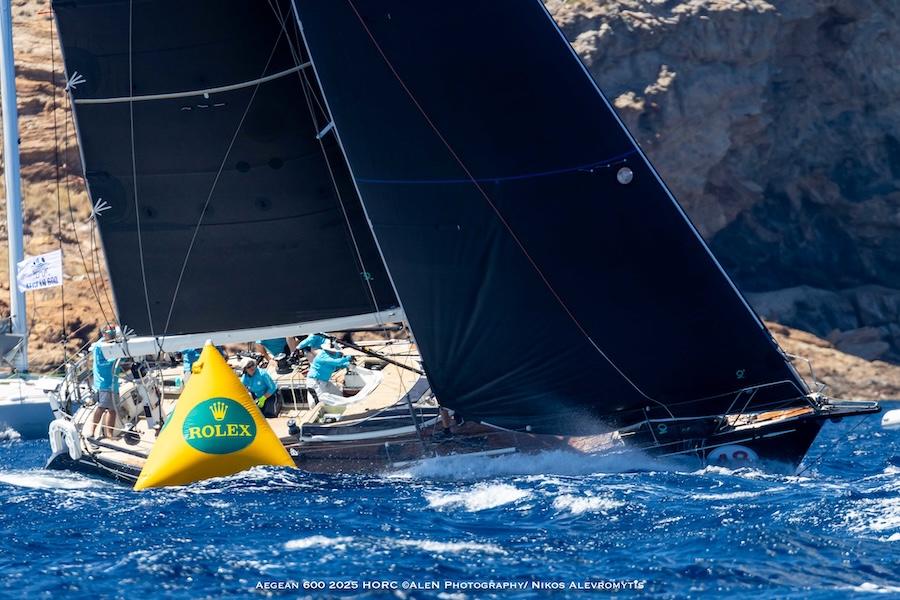
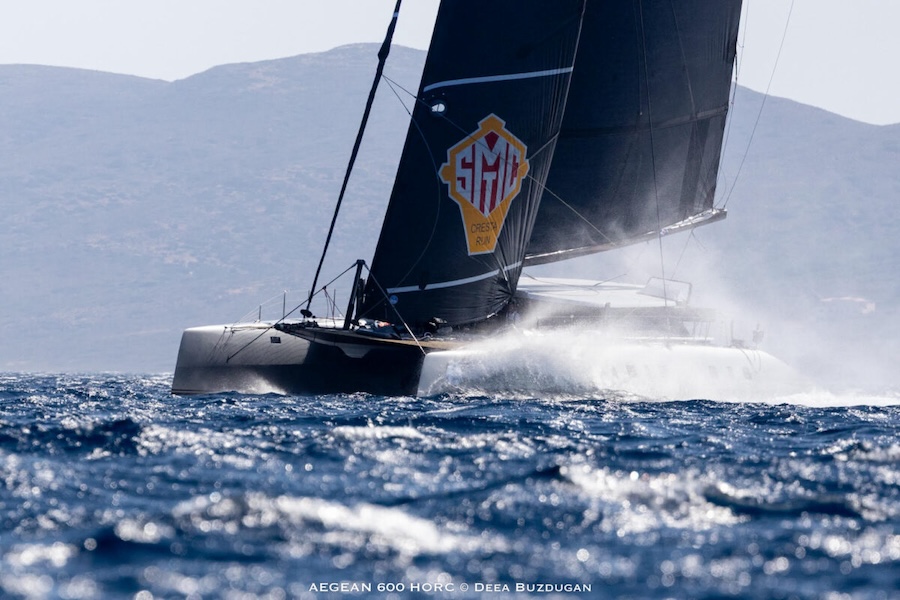
If previous editions of theAegean 600 are remembered for their ‘extreme’ conditions, the 2025 edition represented its opposite: a slow, unstable race, often dominated by becalming. Nevertheless, a heart-pounding finish offered a three-way sprint to line honors, with Aiolos (VO70), Allegra (Multihull 84) and Daguet 5 (Carkeek 54) battling in the Meltemi that finally arrived. But the surprise is not in the real, and we are interested in this one. In fact, to win in Overall theAegean 600, we find a very unexpected Classic Boat, Best Buddies, a 1979 Swan 411R (Ron Holland). Here, in brief, is how this 2025 edition went and, more importantly, how it was a Classic Boat that escaped, snatching victory from all the favorites.
A 46-year-old Classic Boat has won the great Aegean classic
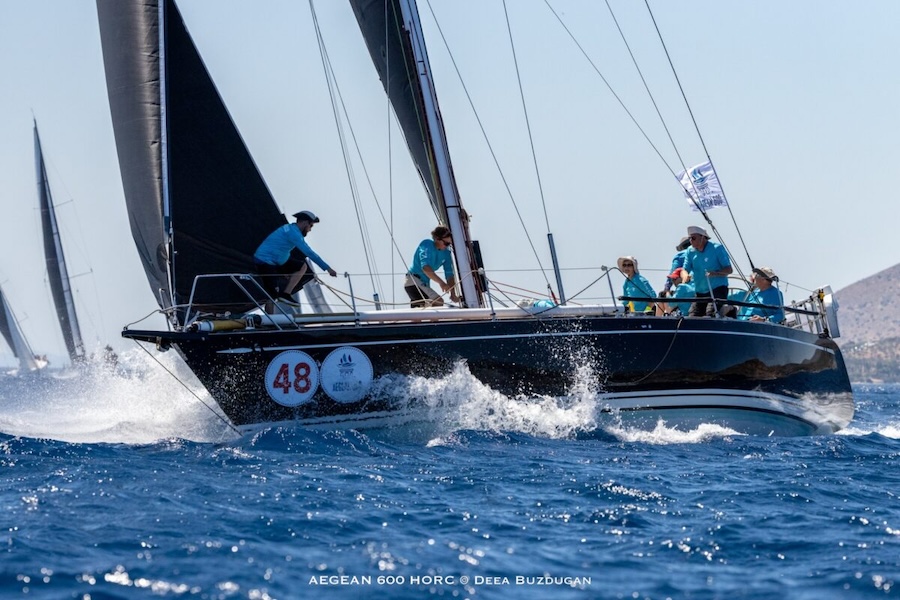
Let’s start with the basics, the course of the regatta. This year, contrary to what previous editions had taught us, it was instability and light breezes that dominated the 605-mile course, breaking the rhythm of the race into several phases, thus requiring a far more thoughtful strategic approach. It is in this context that comes the masterful victory of Best Buddies, let’s repeat, a 1979 Swan 411R (which, by the way, already raced at the Fastnet that same year)…
Best Buddies – Anatomy of a Swan 411R
Before we look at the Aegean 600 2025, and how this one turned out-and even more, how this one was ripped off by a 1970s Swan-let’s look at the boat in question, one of the cult ones that Ron Holland signed for Nautor in the interlude between the iconic Sparkman & Stephens and the eternal German Frers.
Entering the Swan line-up in the late 1970s, the Swan 411 (13.5 x 4.06 m) is the quintessential Holland signature cruiser-racer. In short, it is a hull that can best combine performance and marine qualities, but without denigrating comfort. With this in mind, it presents a moderate displacement, with a not excessive beam, fine entries and reduced drag. But it is in the R (Racing) variant that it extracts the most from its design, taking life in a lightened complex with greater lift-to-drag rate, essential for improved bowline performance.
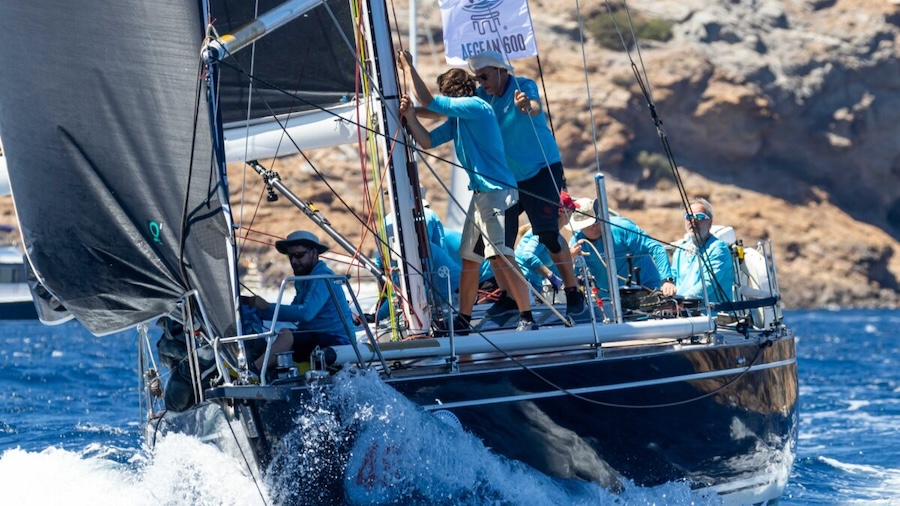
Obviously, the rig and sail plan also change, with a taller mast to increase canvas area in light airs, thus offering more power and more leeway in variable conditions, extracting from the hull a potential beyond her pure speed capabilities. Characteristics that, on the whole, fully reflect Holland’s philosophies of the period, resulting in a boat capable of having its say especially on long offshore, where consistent performance and flexibility can be put to good use if in the right hands. Qualities that, with this year’s Aegean 600, also well demonstrate how much a Classic Boat can still have its say.
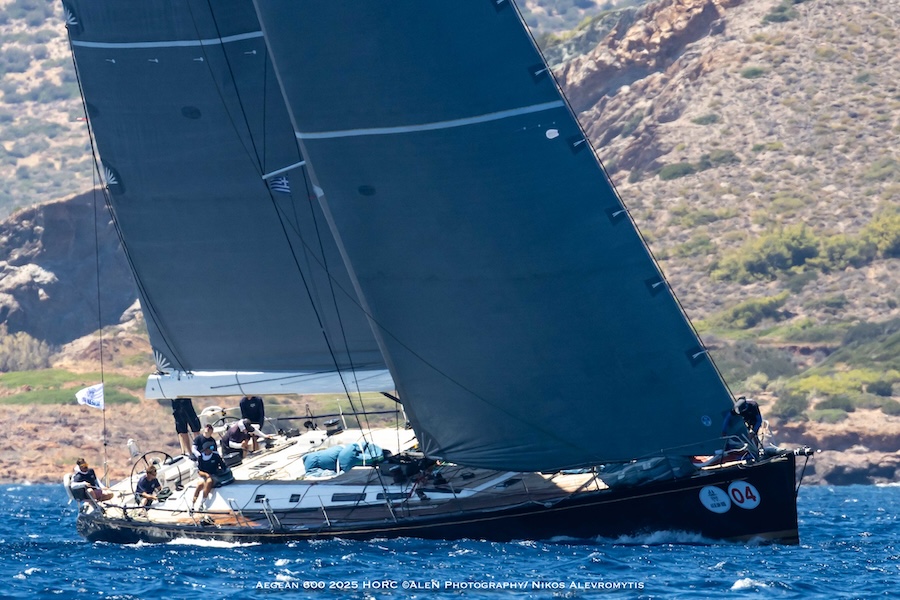
Aegean 600 – Anatomy of a Regatta
A complex Aegean gave us a 605-mile off-shore race that was educational to say the least. Definitely complex conditions, with maddening breezes and lurking holes, did indeed provide a lesson in humility that was not inconsiderable, proving once again how, at the end of the day, it is not the dress that makes the man.
In the first two days, transitions between daytime thermal breezes and weak night winds resulted in repeated “park-ups” at key passages along the route-Milos, Santorini, Karpathos-with constant shuffling in the positions. Models indicated the entry of a southwesterly flow, which, however, never really stabilized. In many areas, so, the wind would appear and disappear within a few hundred meters, creating real stillness pits, tormenting even the most ‘navigated.
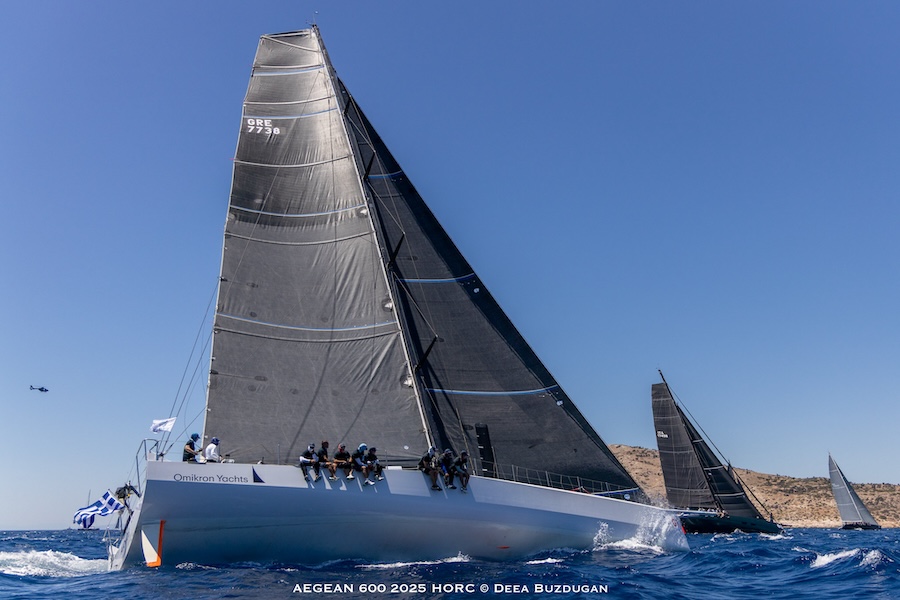
Only the last 24 hours brought a more defined system, with the entry of the Meltemi from the north, which brought winds even above 40 knots, conditions decidedly far from the exasperation of previous breezes. Even at this stage, however, wind distribution was patchy, rewarding those who could read local patterns more than those who could count on absolute performance.
It is against this backdrop that the most significant result of the regatta – oblivious to lines of honor and exaggerated prototypes – stands out: the overall handicap victory of Best Buddies. Led by the German crew of Kay-Johannes Reger, heavier than the fleet average and not optimized for light winds, Best Buddies indeed took impeccable advantage of local accelerations, minimizing losses in wind “gaps” and sailing steadily and without macroscopic errors.
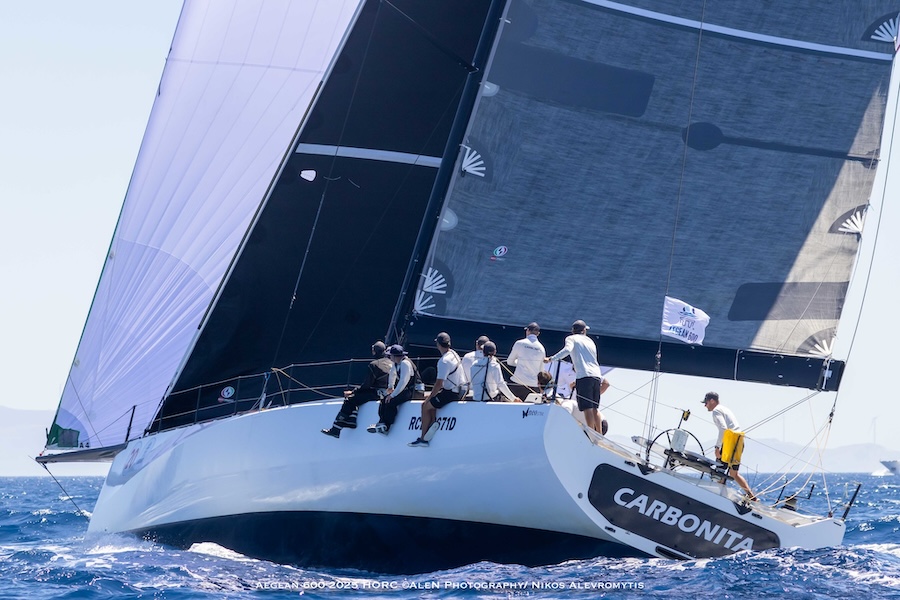
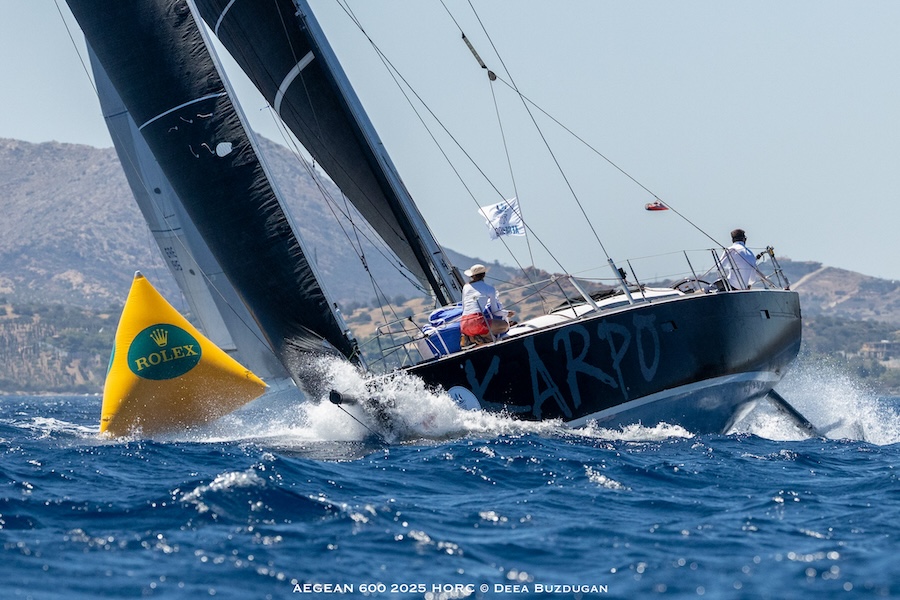
An overall winning tactical approach, which in fact saw her win on both fee systems (ORC and IRC), leaving behind much newer boats – VO70, 80-foot catamarans, and optimized cruiser-racer. Behind her, however, were two ‘small’ boats: second place for Karpo, Elan 450, and third for Elaya, Elan 400.
That is why the success of Best Buddies is not a nostalgic fairy tale or a poetic exception. It is the concrete result of a still-valid design, embedded in a weather-strategic context that has enhanced its qualities. Qualities that – in the right hands – still make a difference today. And which demonstrate, with numbers and results, how much a Classic Boat can still write the present.
You might also be interested in:
Nasce il Registro Ufficiale delle Classic Boat di Valore Storico: ecco cosa sapere
Check out the latest issue

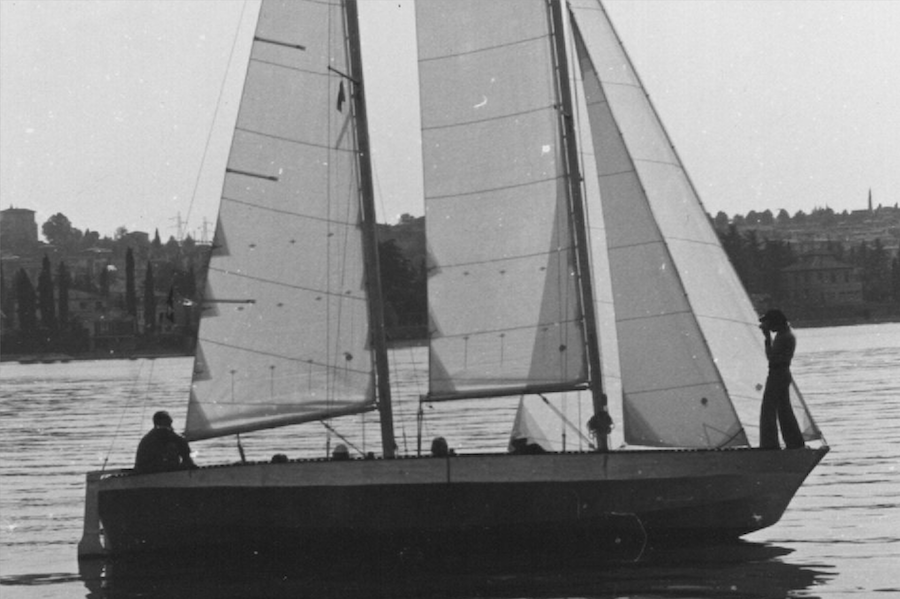
Old boat makes good board! The legendary Fraglia schooner has been “re-launched” after 50 years.
Desenzano, Lake Garda, home of the FVD, Fraglia Vela Desenzano. A Lake classic replicates its launch 50 years after the first time. It is the Fraglia schooner, a light alloy school schooner, the first in Italy to ever be built
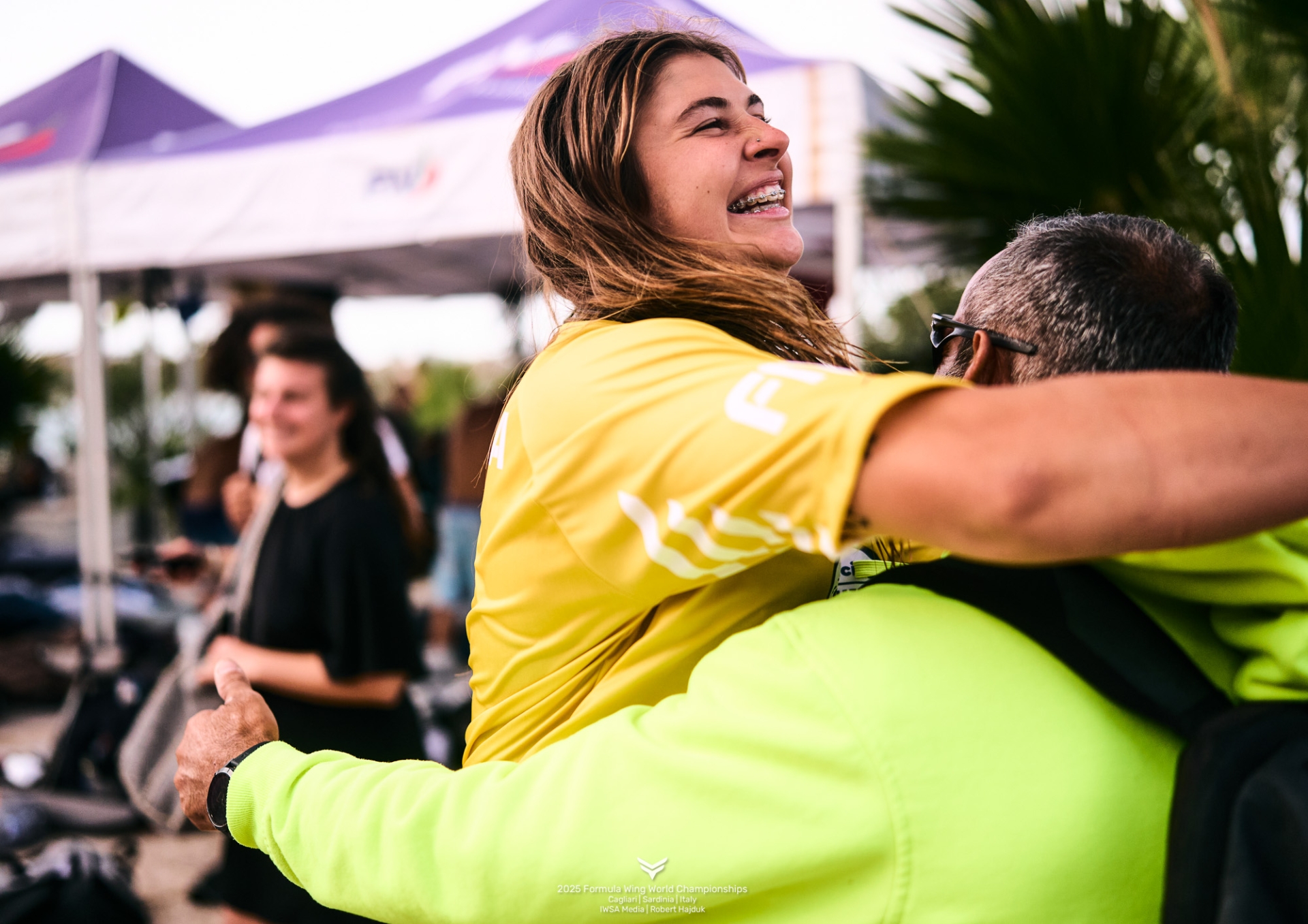
Winning a world championship in your own land is a crazy thrill. Right Magdalena?
Winning a sailing rainbow title is a huge satisfaction. Winning it in one’s own land is even more so. Maddalena Spanu, born in 2006, from Cagliari (but living in Oristano), is the first women’s Formula Wing world champion in history.
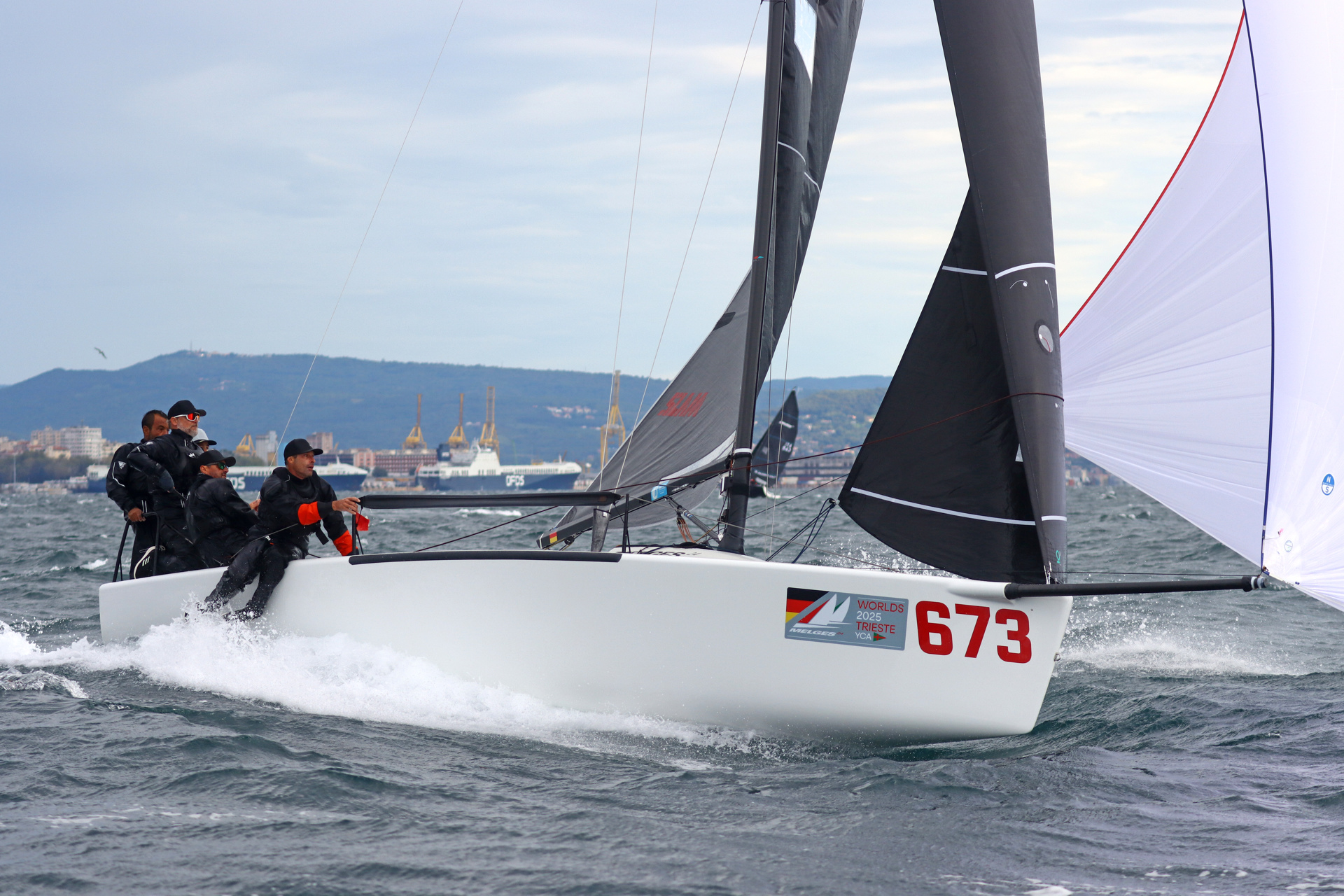
Monotype gathering more than 70 boats at the Worlds after 30 years
Can you find the perfect, and long-lived, racing boat in just 7.32 meters in length? You sure can, especially if the boat in question is called a Melges 24, and proving it, yet another confirmation, was the class World Championship
The 2025 52 Super Series season comes to a close: here’s how it went in Porto Cervo
The 52 Super Series-Porto Cervo-Range Rover Sailing Week, which was held Sept. 22-27 in Porto Cervo, in the waters in front of the Yacht Club Costa Smeralda and which closed the club’s 2025 sports season, has come to an end.

