
Welcome to the special section “GdV 5th Years.” We are introducing you, day by day, An article from the archives of the Journal of Sailing, starting in 1975. A word of advice, get in the habit of starting your day with the most exciting sailing stories-it will be like being on a boat even if you are ashore.
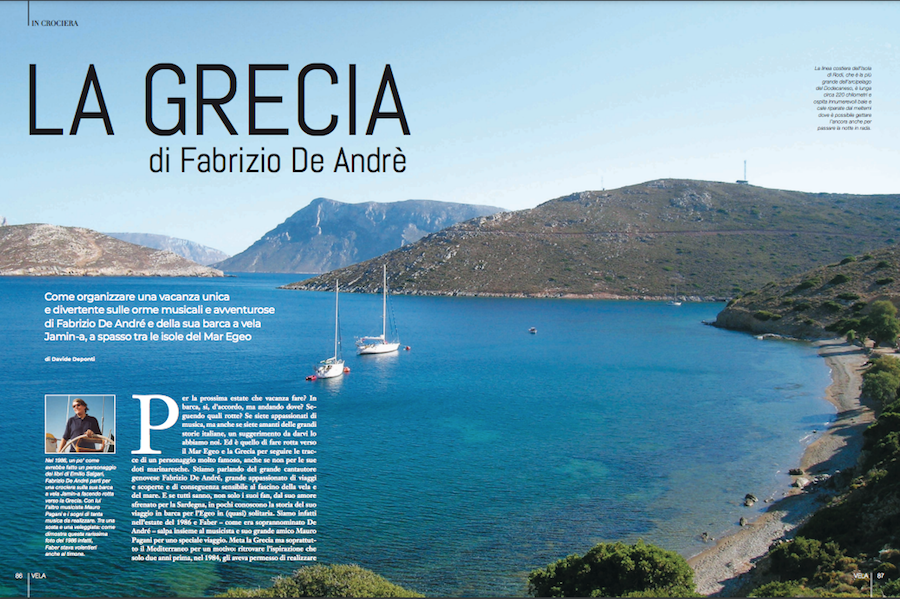
The Greece of Fabrizio De Andrè
Taken from the 2020 Journal of Sailing, Year 46, No. 31, April, pp.86-91.
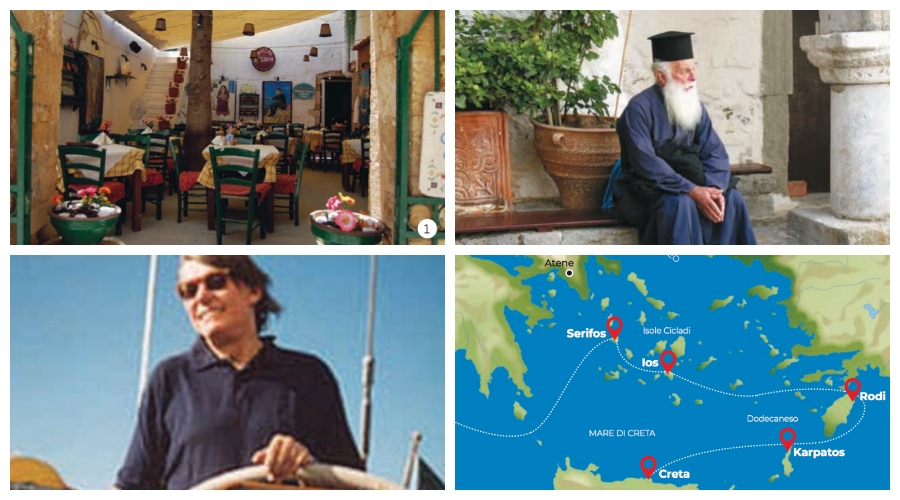
Fabrizio De Andrè was a lover of sailing and Greece. We retrace his routes among the islands of the Aegean Sea while cruising on his boat Jamin-a in the summer of 1986 together with his musician friend Mauro Pagani.
How to organize a unique and fun vacation in the musical and adventurous footsteps of Fabrizio De André and his sailboat Jamin-a, strolling among the islands of the Aegean Sea.
For next summer, what vacation to take? By boat, yes, all right, but going where? Following what routes? If you are a music lover, but also if you are a lover of great Italian stories, we have a suggestion for you. And it is to head for the Aegean Sea and Greece to follow in the footsteps of a very famous figure, though not for his seafaring skills. We are talking about the great Genoese singer-songwriter Fabrizio De André, a great lover of travel and discovery and consequently sensitive to the fascination of sailing and the sea. And while everyone knows, not just his fans, from his unbridled love for Sardinia, few know the story of his (almost) solo boat trip to theAegean. In fact, it is the summer of 1986 and Faber – as De André was nicknamed – sets sail with musician and his great friend Mauro Pagani for a special trip. Destination Greece but above all the Mediterranean for one reason: to rediscover the inspiration that only two years earlier, in 1984, had allowed him to make “Creuza de mä,” a record that is considered one of the masterpieces of an extraordinary career. “We embarked,” Mauro Pagani himself recounted a few years later. on the boat that Fabrizio had named Jamin-a, after the song contained in “Creuza de mä.” And the purpose of the cruise was to rediscover the “Mediterranean” inspiration that had given rise to that record. It was a special voyage, in every sense, also because that boat was soon given a nickname, “the rock,” which emphasized its low speed.” . Nevertheless, the chronicles of the time tell of a Jamin-a which crossed the entireAegean for two and a half months, reaching almost as far as the coast of Turkey. Later, again for his musical research, De André would also visit Egypt, Tunisia and Algeria. We have tried to retrace his route, proposing a special itinerary in the Greek Aegean, between the Cyclades, Dodecanese (just a step away from Turkey) and Crete (on his way to North Africa…).
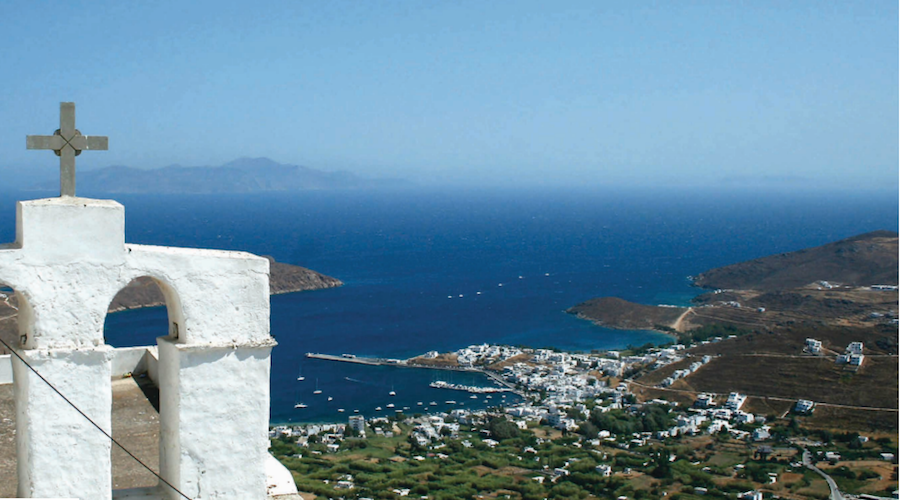
Zigzagging among the beautiful Cyclades
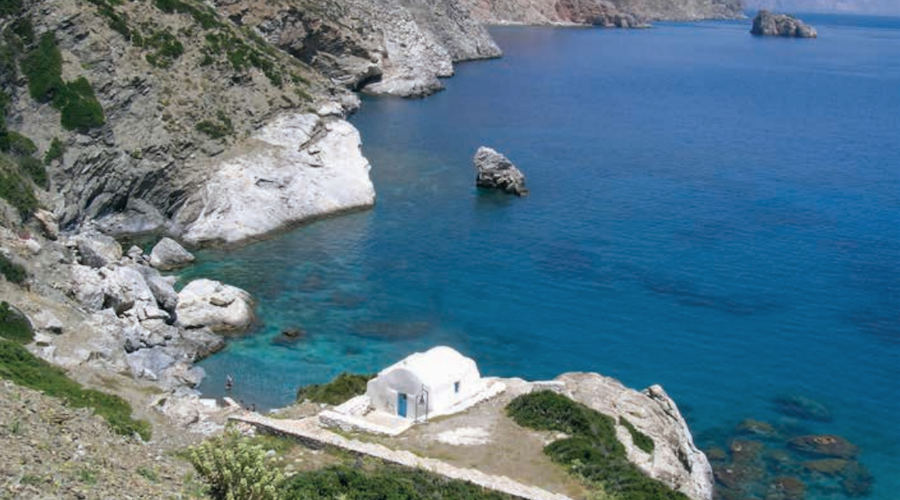
A natural setting of wild, lunar hills, turquoise or cobalt blue sea and wind (the meltemi, of course!) that blows with force and constancy. This is the atmosphere one experiences while sailing between the Cyclades Islands and the Dodecanese archipelago, in the center of the Aegean Sea. It is a landscape to whose ancient and unique charm it is difficult to remain immune, especially if you love sunny silences and a life in contact with the sea. So called because they are dispo ste in a sort of circle around the small, but very important already in Classical times as a commercial and religious center, island of Delos, the Cyclades include so many islands but each of them with characteristics that make it unique. Our journey then begins in Serifos, an authentic island still uninvaded by mass tourism, which even today retains its authentic appearance, with unpaved roads and the silence of the countryside. Those who arrive here by sailboat can dock at the small but organized marina of the capital of the same name to stock up among the stores of the delightful village or go straight to the discovery of the two coves that are really not to be missed. The first, located in the center of the south coast, is that of Ormos Koutala (37°07′ 80N – 24°27′ 30E), which also encloses a beautiful beach, while the second, located north of Cape Ak Kiklops, is that of Mega Livadhi (37°08′ 50N – 24°25′ 80E), delightful and sheltered by the meltemi. Going ashore then are several other beauties of Serifos, such as the so-called Cyclops’ throne, a strange rectangular-shaped construction in Livadi Bay, or the White Tower, built in the Hellenistic period and which was part of the east wing of Gria Castle. Finally, not to be missed is the 16th-century monastery fortress of Moni Taxiarchon. Famous for being an island full of desire for fun, Ios-our second stop in the Cyclades-is also home to fantastic, unspoiled natural scenery. And that’s not all: although Ios has experienced a significant development of beach tourism, its picturesque villages that dot the coast here and there retain their traditional nature. The best example is Chora, the main town: it is a village considered among the most beautiful in the Cyclades, with its white houses and blue roofs, cobbled streets that weave into a labyrinth and characteristic windmills. Those arriving here by boat, however, should begin their exploration of the island from the sea, discovering in particular three well-sheltered coves. In the west is that of Ormos Milopotamou (36°42′ 70N – 25°18′ 50E), in which no less than four coves suitable for dropping anchor and swimming branch off. Then to the east is Ormos Tris Klises (36°40′ 00N – 25°23′ 30E), an inlet with very blue sea and good protection from the meltemi. Finally, on the south coast there is Ormos Manganari (36°39′ 00N – 25°22′ 25E), which closes the very famous and picturesque Manganari beach ashore, surrounded by lush nature. Other beaches worth visiting are those of Mylopotas, about 1 km long with golden sand and turquoise waters, and Agia Theodoti, which owes its name to the small chapel above it and is totally surrounded by trees.
Discovering Rhodes and beyond
Having said goodbye to the Cyclades, here is the Dodecanese, or the “twelve islands,” according to the meaning of the archipelago’s name. Which, however, positioned in the southeastern part of theAegean, opposite the coast of Turkey, comprises well over a dozen islands. The main one of which, where we stop, is Rhodes: some 80 kilometers long and 35 wide, it is a land of mythical and ancient history but today also a splendid tourist destination that combines quality services with unspoiled beauty. Its exploration starts from Ak Ladhiko (36°19′ 30N – 28°12′ 80E), a small and delightful bay that encloses a beautiful beach. Also noteworthy is Ormos Langonia (36°16′ 40N – 27°49′ 50E), a cove not too sheltered by the meltemi but with discreet charm. Here is the beautiful and scenic Lindos Bay (36°05′ 75N – 28°05′ 80E), which opens to the north of the pretty town. Not far away is Limanaki Beach: it lies in the middle of the beautiful Ayios Pavlos Bay and is made of soft golden sand. The deep turquoise sea is ideal for snorkelers. On land, however, not to be missed is the acropolis of Lindos, one of the most important archaeological sites in Greece. Among the monuments it houses is the Doric temple of Athena Lindia, dating back to the 4th century BC. Equally unique is the capital city of Rhodes: erected by the Knights of Rhodes, its old city is bordered by massive walls and is one of the largest and best-preserved medieval settlements in all of Europe. Leaving Rhodes, one heads southwest for the smaller and quieter Karpathos, which while truly magnificent is one of the least touristy islands in Greece. Arriving by sailboat, however, one can first enjoy its three most interesting anchorages. Amorfos Bay (35°27′ 70N – 27°12′ 00E), which is little exposed to the meltemi and has a beautiful sandy beach; Tristoma Bay (35°49′ 30N – 27°12′ 30E), which is a kind of long and spectacular fjord; and Dhiafani Cove (35°45′ 50N – 27°13′ 00E), which is framed by three windmills and has rocky seabeds beloved by divers. On land to visit are the small villages scattered among the mountains of the rugged island: Aperi, the ancient capital, Volada, Othos and Piles, all with the typical white houses of the Dodecanese Islands.
Crete, a labyrinth of emotions
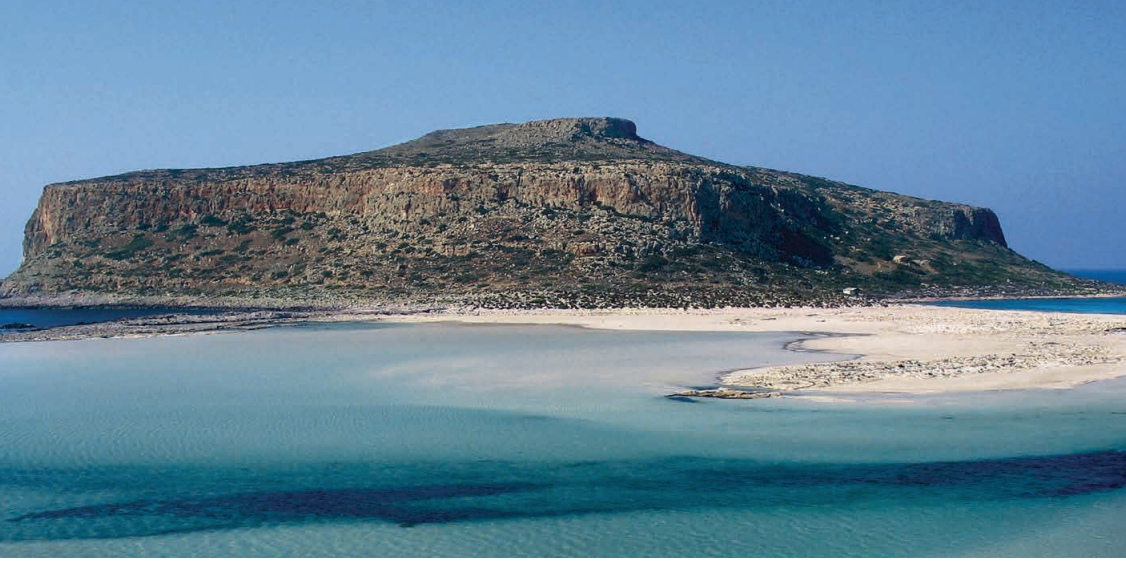
Rocky and barren but also for that reason fascinating, lunar and wild in many of its parts, Crete is the largest island in the Aegean Sea. Narrow and stretching more than 250 kilometers from west to east, in its interior it is home to mighty mountains up to two thousand meters high in a true mosaic of heterogeneous but all beautiful landscapes. Although Crete ‘s main feature remains that it can offer boaters a long and splendidly indented coastline dotted with bays and beaches not to be missed. The first to visit coming to Crete from the north is Ormos Milati (35°30′ 20N – 24°10′ 30E): small and protected by the Akrotiri peninsula, it encloses a delightful sandy beach. Not far from the capital Iraklion here then is Nisis Dhia (35°29′ 00N – 25°13′ 00E): it is a barren, rocky islet on whose southern side four very charming coves open up. A splendid lagoon protected to the east by the islet of the same name on which the once mighty Venetian Fort is conspicuous, Spinalonga Bay (35°17′ 80N – 25°44′ 30E) is a truly magnificent anchorage. It is entered from the only passage to the north, dropping anchor is halfway along the islet’s west coast. Instead, it lies 5 miles south of Cape Ak Plaka, Kato Zakros (35°05′ 80N – 26°16′ 20E), a beautiful, wide sandy bay behind which is a deep rocky gorge that threads its way inland toward the mountains. Magnificent then is Ormos Plakia (35°10′ 30N – 24°23′ 80E), a very picturesque wide bay with a long beach. But perhaps the best anchorage in Crete is that of Nisis Gramvousa (35°35′ 90N – 23°34′ 70E): this is the small island facing the cape of the same name on which opens a wide “double” inlet, well sheltered from all winds.
All around one discovers a silent, beautiful, lunar landscape dominated by the ruins of the Venetian fort. When you finally decide to explore the island from land you must start from the capital city of Iraklion to admire the walls and the Venetian Castle, but also the Archaeological Museum in which there are many Minoan artifacts. And speaking of this very ancient civilization a must stop is Knossos: it is the monumental Minoan palace linked to the myth of the minotaur that has been transformed into a splendid archaeological area that tells a very ancient story.
by Davide Deponti
Check out the latest issue

Michele Molino, nautical engineer with the sea in his vein
On the occasion of the 50th anniversary of the Journal of Sailing, the great excellences of the sailing world tell their stories and reveal their projects. In this column, discover all the companies and people who have made important contributions
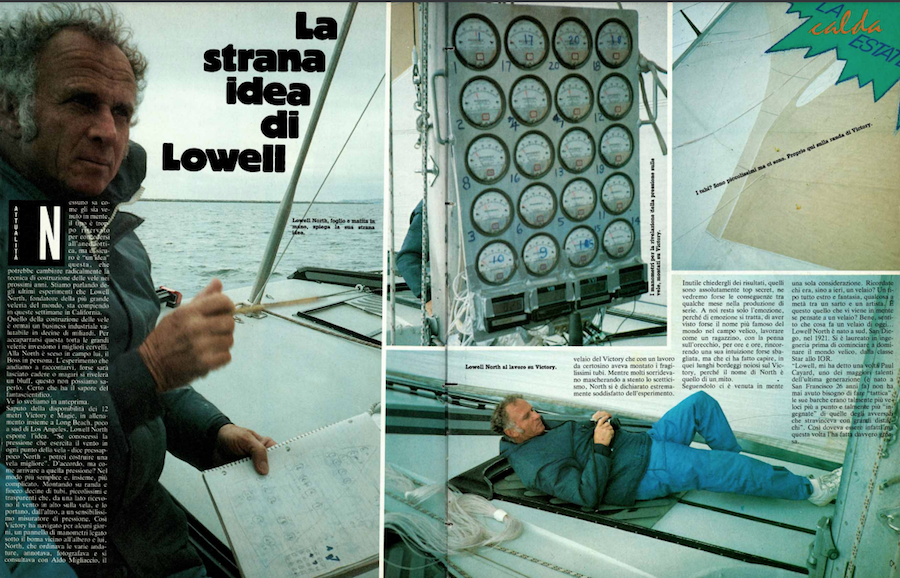
1985. The sails of the future are being born. The GdV is in, with Lowell North
Welcome to the special section “GdV 5th Years.” We are introducing you, day by day, An article from the archives of the Journal of Sailing, starting in 1975. A word of advice, get in the habit of starting your day
Marinedi, the integrated hospitality system
On the occasion of the 50th anniversary of the Journal of Sailing, the great excellences of the sailing world tell their stories and reveal their projects. In this column, discover all the companies and people who have made important contributions
Naval revolution goes through Judel/Vrolijk study
On the occasion of the 50th anniversary of the Journal of Sailing, the great excellences of the sailing world tell their stories and reveal their projects. In this column, discover all the companies and people who have made important contributions

