
Welcome to the special section “GdV 5th Years.” We are introducing you, day by day, An article from the archives of the Journal of Sailing, starting in 1975. A word of advice, get in the habit of starting your day with the most exciting sailing stories-it will be like being on a boat even if you are ashore.
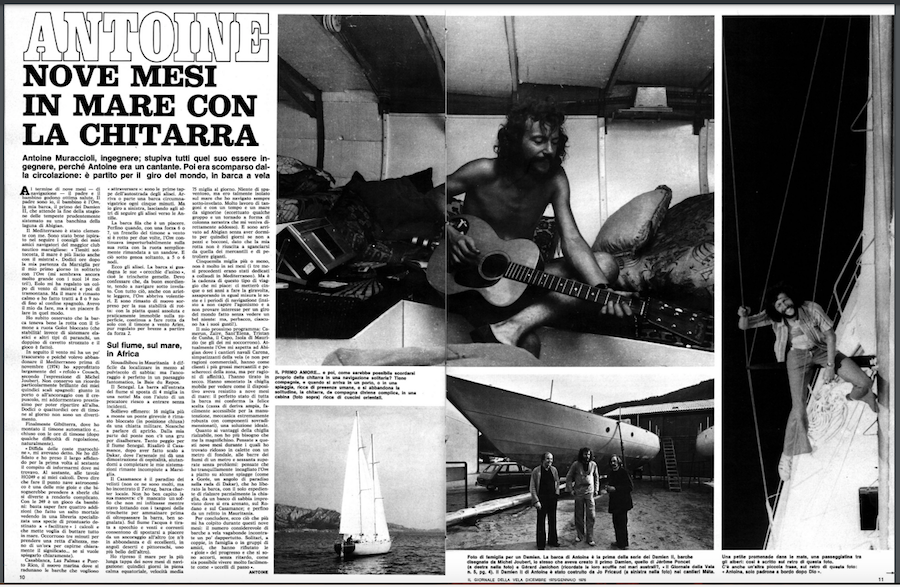
Antoine: nine months at sea with guitar
Taken from the 1975-1976 Journal of Sailing, Year 1, No. 6, December-January, pp. 10-12.
Italian/French singer Antoine comes down from the stage on the crest of a wave and decides to go live on a boat. The account of his new life as told by himself.
Antoine Muraccioli, engineer; it amazed everyone that he was an engineer, because Antoine was a singer. Then he had disappeared from sight: he went on a round-the-world sailing trip.
At the end of nine months of sailing, the father and baby are enjoying excellent health. The father is me, the baby is theOm, my boat, the first of the Damien IIs, awaiting the end of the storm season prudently settled on a dock in the Abigian lagoon. The Mediterranean has been kind to me. I was well inspired to follow the advice of my sailor friends from the largest nautical club in Marseilles: “Keep below the coast, the sea is smoother even in mistral.” Twelve hours after my departure from Marseille for my first solo day with theOm (it still seemed very big to me at 14 meters!), Aeolus gave me a gust of mistral wind and then a tramontana. But the sea remained calm and I did stretches at 8 or 9 knots all the way to the Spanish border. I had my own to do, but it is a pleasure to spin like that. I immediately observed that the boat was holding a good course with the Goïot wheel steering locked in place (what stability! instead of arranging rubber bands and other types of hoists, a twist of choked cable and you’re done). Thereafter, the wind neglected me a bit, and since I wanted to leave the Mediterranean before November (1974), I took ample advantage of the Couach “puff,” according to Michel‘s expression
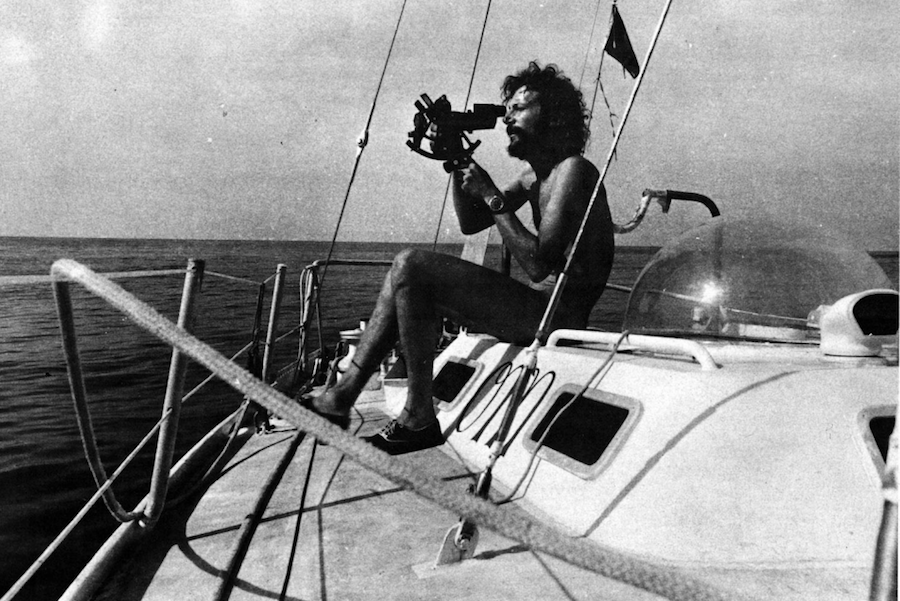
Joubert. I do not retain a particularly bright memory of my fifteen Spanish ports of call: arriving in port or anchorage with dusk, I would fall asleep very early in order to be able to leave again at dawn. Twelve or fourteen hours at the helm a day is no fun. Finally Gibraltar, where I mounted the automatic rudder and was done with the rudder hours (after some adjustment difficulties, of course). “Be wary of the Moroccan coast,” I had been told. I was wary of them and set sail, entrusting the sextant for the first time to inform me where I was. To the sextant, to the HO249 tables, and to my calculations. I must say that doing the astronomical ship point is one of my joys, and one should slap those who enjoy making it complicated. With the 249s it is child’s play: you only need to know how to do four additions (I did a somersault seeing in a specialized bookstore a kind of handbook intended to “facilitate” the calculations and which makes you want to throw everything overboard. It takes three minutes to take a straight line of height, less than an hour to clearly understand its meaning–if you want to explain it clearly). Casablanca, Las Palmas , and Puerto Rico, the new marina where boats wanting to “cross over” gather: these are the first stops on the trade wind highway. A circumnavigating boat arrives or departs every five minutes. But I turn left, leaving others to follow the trade winds toward the West Indies. The boat runs like a charm. Even when, with a force 6 or 7, a windward rudder brake broke twice, the Om continued imperturbably on her course with the wheel simply sent back to a sandow. And that was under genoa only, at 5 or 6 knots. Here are the trade winds. The boat earns its “donkey ears,” that is, twin foresails. I must confess that, as a good beginner, I tend to sail under sail. With all that, even with light airs, the Om happily bows. And I was again surprised at her course stability: with the almost absolute flat and virtually motionless on the surface, she continued to steer on her own with the Aries windvane rudder, albeit adjusted for breezes as low as force 2.
On the river, on the sea, in Africa
Nouadhibou in Mauritania is difficult to locate amidst the dust of sand: but the anchorage is perfect in a phantom landscape, the Baie du Repos. Senegal. The bar at the entrance to the river shifts 4 miles overnight! But with the help of a fisherman I manage to enter without incident. Ephemeral relief: 16 miles further upstream a swing bridge was blocked (in the closed position) by a military barge. Not even talking about opening it. On my side of the bridge there is no crane to dislodge it. So much the worse for the Senegal River. I will sail up the Casamance, after a stopover in Dakar, where the arsenal gives me a show of hospitality, helping me complete my unfinished accommodations in Marseilles. Casamance is a sailor’s paradise (there are not many, but I met the Tetrag, local charter boat. I didn’t quite understand her maneuvering: it was a whisker away from skewering me as I was struggling with the foresail thongs to tack before crossing the well-marked tiller). On the river, the water is pulled to a mirror-like state, and winds and currents allow one to move at will from anchorage to anchorage (there is plenty of excellent ones in deserted, picturesque nooks and crannies, one more beautiful than the next). I took to the sea again for the longest leg of the nine months of sailing: fifteen days in full equatorial calm, average speed 75 miles a day. Nothing frightening, but I was so isolated on the sea that I sailed always under-sailed. Lots of thong work and with ladylike weather and seas (except for a few lumps and a blackish column-shaped tornado coming straight at me). And I arrived in Abigian without having slept for a fortnight except in bits and pieces, as my course failed to disengage from that of merchantmen and giant tankers.
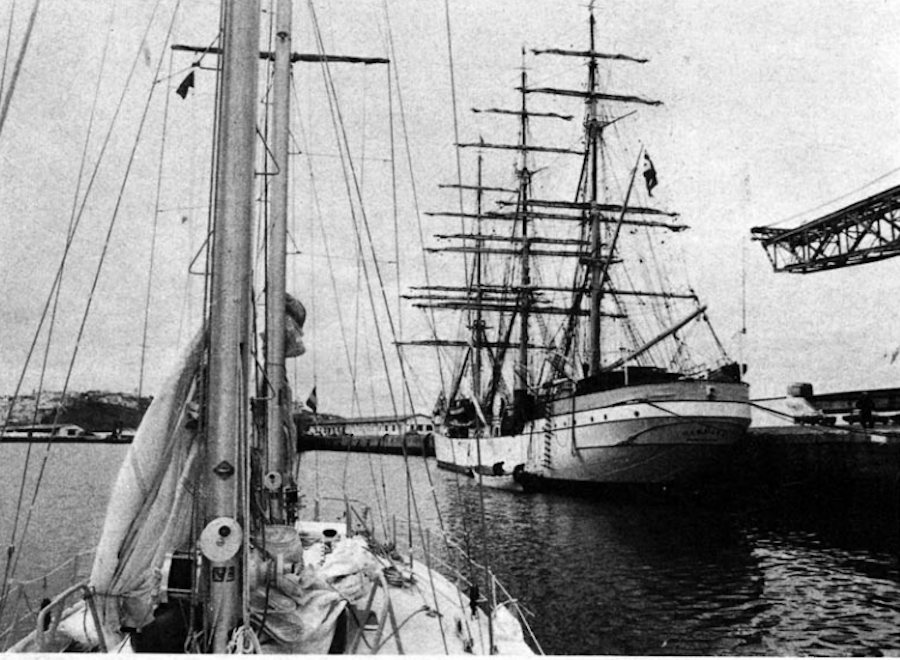
Sailing unhurriedly
Five thousand miles, more or less, is not much in six months (the previous three months had been devoted to testing in the Mediterranean). But it’s the cadence of this kind of travel that I like: it will take me five or six years to make the turnaround, savoring the stops and periods of sailing in equal measure (I insist I don’t understand the competitive nature and have no interest in a round-the-world voyage done without seeing a damn thing: but, by golly, everyone has his own tastes!). My next program: Cameroon, Zaire, St. Helena, Tristan de Cunha, the Cape, Mauritius Island (if the gods rescue me). Currently theOm is waiting for me in Abigian where the Carena shipyards, sympathetic to sailing (and not for commercial reasons-they have the biggest merchant and fishing boats in the area as clients-but for reasons of affinity), have hauled her ashore. They disassembled the lifting keel to see how the device had withstood nine months at sea: the perfect condition of the whole boat confirms to me the happy choice (large drift box, easily accessible for maintenance, extremely robust mechanics with oversized components), an ideal solution. As for the advantages of the lifting keel, I no longer need them to magnify it to me. Think of these nine months during which I have found redoubt in creeks with a meter of bottom, of river bars of a meter and sixty passed without problems: think that I have quietly stranded the Om flat on some beaches (as at Gorée, a corner of paradise in the Dakar roadstead), that I have freed the boat, with the sole expedient of partially raising the keel, from an unexpected sandbar where it had run aground, on the Rhone and the Casamance; and even from a wreck in Mauritania. To conclude, here is what struck me most during these nine months: the considerable number of roving sailboats encountered just about everywhere. Loners, in pairs, in families or in groups of friends, who have rejected the “joys” of progress and who have realized, without delay, how it is possible to live very easily as “birds of passage”
Antoine
Check out the latest issue

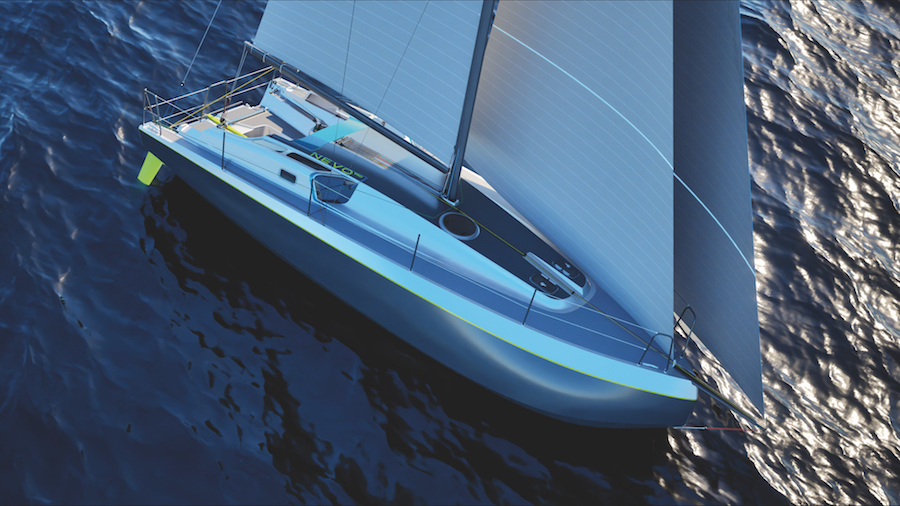
Michele Molino, nautical engineer with the sea in his vein
On the occasion of the 50th anniversary of the Journal of Sailing, the great excellences of the sailing world tell their stories and reveal their projects. In this column, discover all the companies and people who have made important contributions
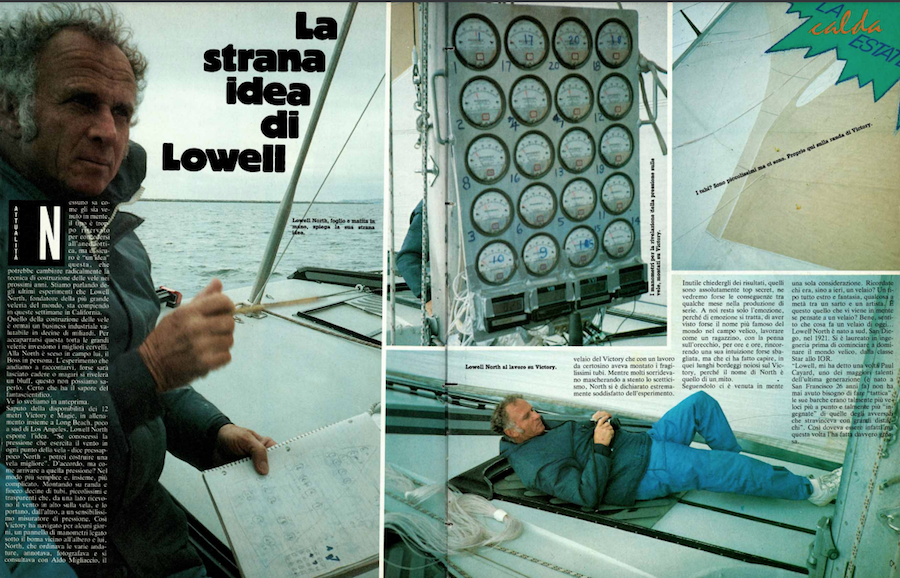
1985. The sails of the future are being born. The GdV is in, with Lowell North
Welcome to the special section “GdV 5th Years.” We are introducing you, day by day, An article from the archives of the Journal of Sailing, starting in 1975. A word of advice, get in the habit of starting your day
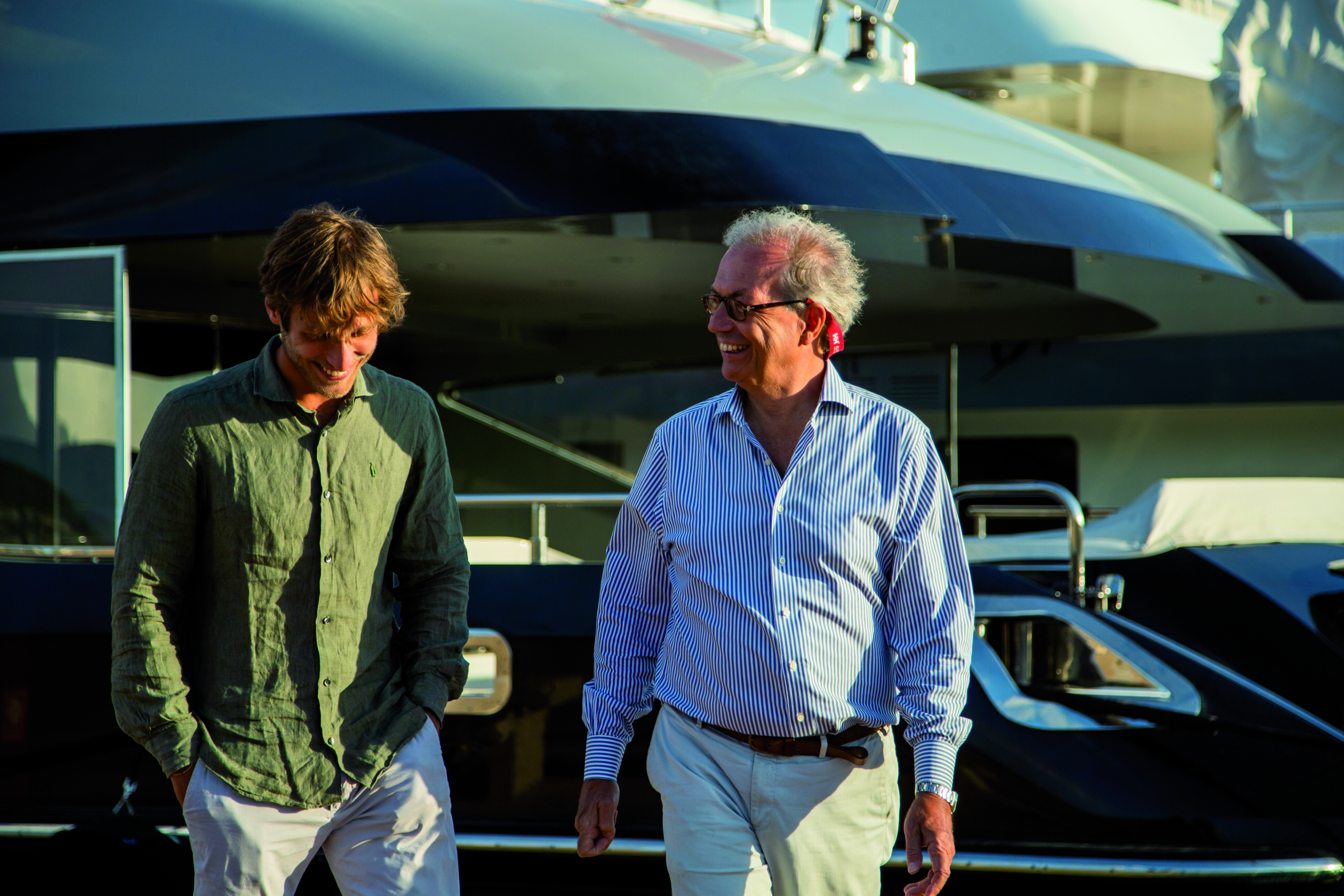
Marinedi, the integrated hospitality system
On the occasion of the 50th anniversary of the Journal of Sailing, the great excellences of the sailing world tell their stories and reveal their projects. In this column, discover all the companies and people who have made important contributions
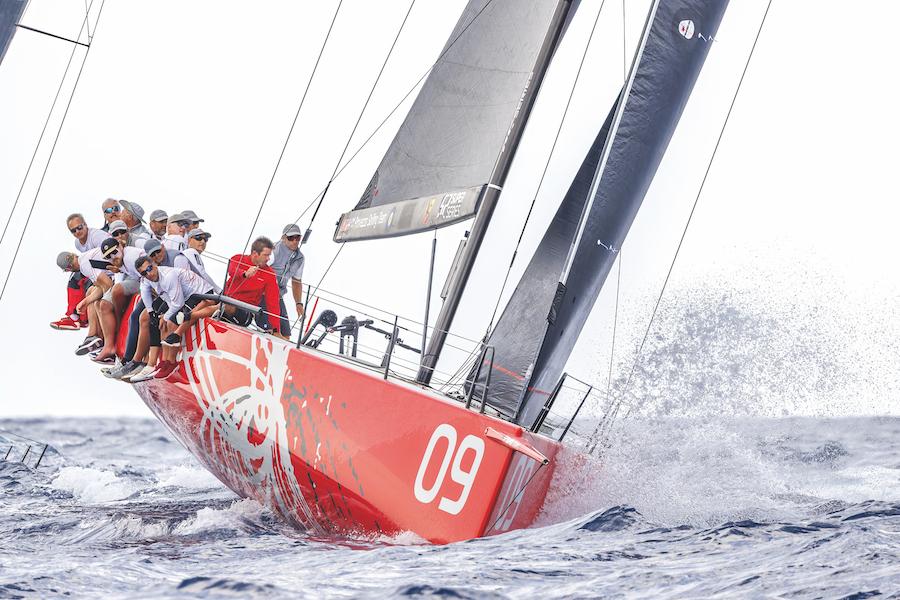
Naval revolution goes through Judel/Vrolijk study
On the occasion of the 50th anniversary of the Journal of Sailing, the great excellences of the sailing world tell their stories and reveal their projects. In this column, discover all the companies and people who have made important contributions

