
Welcome to the special section “GdV 5th Years.” We are introducing you, day by day, An article from the archives of the Journal of Sailing, starting in 1975. A word of advice, get in the habit of starting your day with the most exciting sailing stories-it will be like being on a boat even if you are ashore.
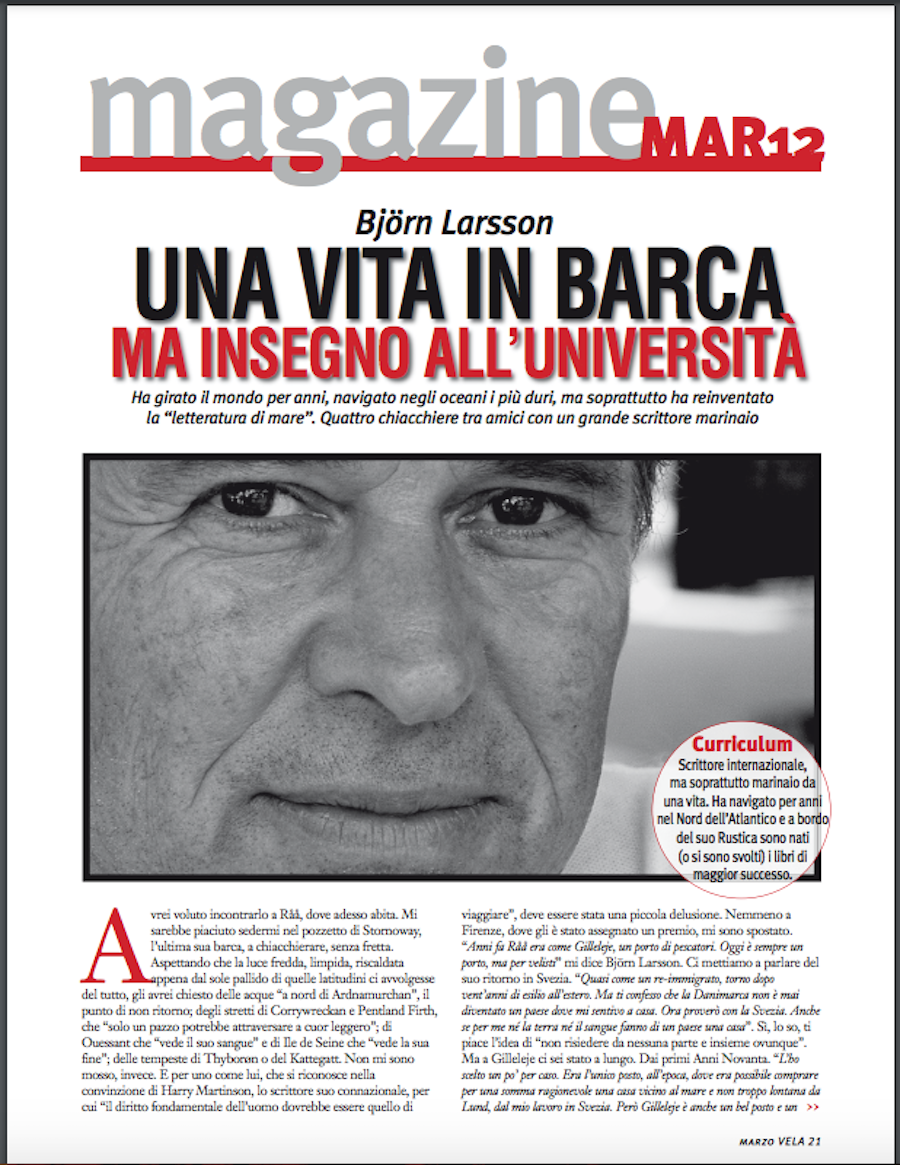
A life on the boat, but I teach at the university
Taken from the 2012 Journal of Sailing, Year 38, No. 02, March, pp. 21-25.
He sailed the world for years, sailed the harshest oceans. Above all, he reinvented “sea literature.” Interview with Bjorn Larsson, the leading contemporary sailing writer, lifelong sailor and storyteller by choice.

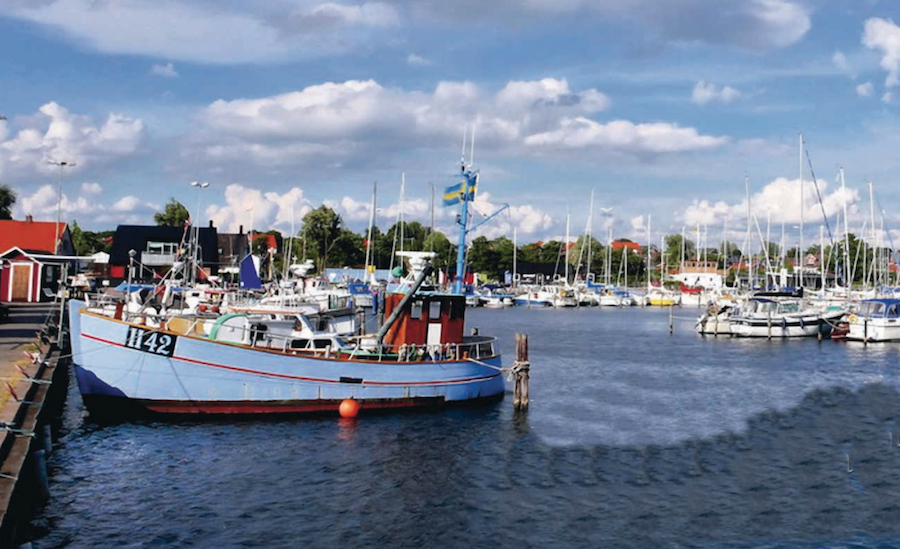
I would have liked to have met him in Råå, where he now lives. I would have liked to have sat in the cockpit of Stornoway, his last boat, chatting, unhurriedly. Waiting for the cold, clear light, barely warmed by the pale sun of those latitudes, to envelop us completely, I would have asked him about the waters “north of Ardnamurchan,” the point of no return; about the straits of Corrywreckan and Pentland Firth, which “only a fool could cross lightly”; about Ouessant, which “sees its blood” and Ile de Seine, which “sees its end”; about the storms of Thyborøn or the Kattegatt. I did not move instead. And for someone like him, who identifies with the belief of Harry Martinson, his fellow countryman writer, that “the fundamental right of man should be to travel,” it must have been a small disappointment. Not even in Florence, where he was awarded a prize, did I move. “Years ago Råå was like Gilleleje, a fishing port. Today it is still a harbor, but for sailors,” Björn Larsson tells me. We get to talking about his return to Sweden. “Almost like a re-immigrant, I am returning after 20 years of exile abroad. But I confess that Denmark never became a country where I felt at home. Now I will try Sweden. Although for me neither land nor blood makes a country a home.” Yes, I know, you like the idea of “residing nowhere and everywhere together.” But in Gilleleje you have been there for a long time. Since the early 1990s. “I chose it somewhat by accident. It was the only place at the time where it was possible to buy for a reasonable sum a house near the sea and not too far from Lund, from my work in Sweden. However, Gilleleje is also a beautiful place and a port full of activity. Do you want to know a funny thing? They told me at the tourist office that there are Italian tourists who come every year to visit the town where writer Björn Larsson lives. That’s why I didn’t have my name on the front door anymore…. It’s a little strange to see people walking past, stopping and taking pictures, or even knocking on the door…”. You have been commuting. From Gilleleje to Lund is two and a half hours by train and ferry in both directions. Because you had not wanted to get a studio apartment, twice a week you slept in the office on a mattress. “At the university today I work in a less pressured way. However, I am also co-director of a writing school that I created with a colleague ten years ago and it works very well. It lasts two years, the exam is a finished book. A novel, poems, short stories, an essay. The only thing that matters is quality. So far, more than thirty students have debuted with reputable publishers in Sweden.” I dreamed of “an agenda with always blank pages…”
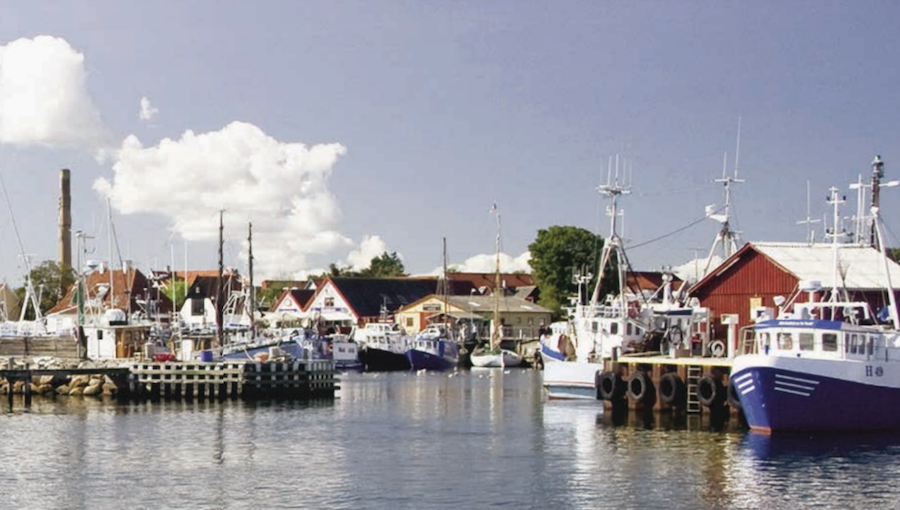
A life around the world
Björn, I will call him that from now on, after a friend, was born in Jönköping, in central Sweden. Here he returns after the death of his father, who was shipwrecked and drowned in a lake when he was seven years old. Here he enrolled in diving school, the youngest in the class. “I had been inspired by the memory of my father, who had been one of the first Swedish divers, and Cousteau’s books.” At fifteen he was certified, two years later an instructor and his first book, a calculus manual for diving that would have good fortune. “It was when I dived along the west coast of Sweden, on islands far from land, that I discovered the beauty and fascination of the sea.” Choosing French in high school. A year in the United States as an exchange student, after crossing the Atlantic on the Bergensgjord, one of the last liner steamers. The reverse route, beginning by bus from Los Angelesand ending on the docks of New York, leaves one longing to leave again. The discovery of Paris follows, the evening French course in Jönköping. But also the first lines, poems and stories published regularly in the local newspaper. In 1971, at the age of nineteen, the call to arms and renunciation (“you are here to learn to obey without thinking”). Three trials, three times in jail for five months. Thank goodness for France: Paris, the café on Boulevard Saint-Germain where he wrote, French lessons for Scandinavians in the summer in Saint-Malo. Then, again, Sweden, the doctorate. And again France, Madrid, Stockholm, Copenhagen. A wandering man. And sailing? “I started learning in Saint-Malo.” The first boat is a bohusjulle, a small flat-bottomed wooden boat, typical of Scania. Then comes Skum, a Folkboat number 38, built in 1934, without an engine, equipped with oars. “I was inspired to sail by the books of Slocum, Moitessier and some Swedish sailors. When I started going out on the Skum I knew more about the winds and waves of Cape Horn than I did about how to hoist the mainsail or haul the jib sheet….”
With Helle, a Danish marine biologist, also comes the If Moana, and thus the Rustica, a Rustler 31, a sturdy cruising boat, “of traditional conception,” as Paolo Lodigiani writes in the afterword of “The Wisdom of the Sea.” Just under ten meters, narrow and deep hull, long keel and well ballasted. In 1986, the choice to ditch the moorings and live by boat, to exchange city life “for another life in the open air and in the wind.” It would be six years of “wandering dwelling, with no port of call,” two of them sailing in the North Atlantic: Scotland, Ireland, Brittany, Biscay, Galicia. Living at five knots, traveling with time “to remember what passes on the way.” And writing The Celtic Circle.
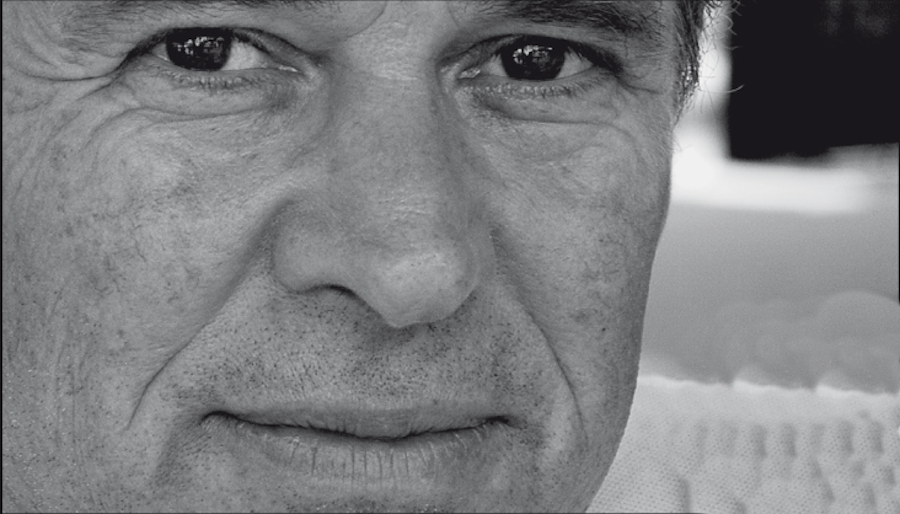
The time to disembark
It also strikes, often inevitable, time to disembark. Björn and Helle live a year in Malmö, then land in Gilleleje. New pages of life: associate professorship at Lund University, “The True Story of the Pirate Long John Silver,” literary success. The pages of the diary become less and less blank. Kathrine, a daughter (now 16), arrives. Life changes. Even at sea? “Yes, something has changed. Not so much because I became more cautious at sea than I already was: I have always been a cautious sailor. But it is true that as long as Kathrine was small I avoided long sailings. That was because I didn’t want her to run the risk of going through what I went through, which is the loss of a father when you are still at a tender age.” So you sailed like the rest of us, on weekends, during the summer? “Yes. But my problem is that I don’t like the idea of round trip when I sail. If you go out on the weekend, as you sail you have to think that you have to return, calculate what the weather will be like, the wind, because on Monday you have to be in the office. I need a week to get in tune with the sea and the boat, another three or four to fiddle with sailing, and another to slowly tack home “. Kathrine is no longer a child. “Now that she’s grown up and on her way to a life of her own – she’s going to a high school where she can take her horse too, you know? -, I am planning a new departure. I will start by sailing to Orkney and Shetland.” I see you, Björn, hunched over the paper. Like when you were lost among the bathymeters of Madagascar…. Dreaming.
Between the Ocean and the Mediterranean
There were many other things, of course. But this is a chat with a friend, not his biography. So, I turn suddenly to the new boat, Stornoway, which is named after the next dream. You write it in “The Wisdom of the Sea,” that you would like to spend a year boating among the Outer Hebrides, wintering in Stornoway, on the Isle of Harris…. “The new boat is a Bulle de soleil, a 38-foot steel boat with a movable daggerboard. When up the boat only draws 80 centimeters, a nice advantage for going places where everyone else doesn’t go. All the ballast is on the bottom of the boat and the drift is clear of weights, so when it’s up the stability of the boat doesn’t change.” Will you sail in the North Atlantic again? Haven’t you had enough of the storms, the mounting currents, the tides, the rain, the fog? Why don’t you go down south, why don’t you try from Galiciato push along Portugal, to Gibraltar, to the Mediterranean? “Meanwhile, from here the Mediterranean is far away. You have to have a month to go and ditto to come back….” Tell the truth: you find it more epic to sail in the Atlantic. Besides, you’ve said several times that it’s too hot in the Mediterranean, there’s a different light and too many people in the summer. “One thing is certain: if I come to sail in the Mediterranean it will be out of season.” You wrote that sailing is a way to meet people. And that if there are no such meetings, interest is lost. In the Mediterranean, you argue, the only thing you are interested in when you arrive in port is to pay for the berth, but there is no one to invite you for a chat like there is in Scotland, Ireland, etc. You said we are a people who do not move from our places, with the “exceptions to the rule” of course…. “There are real sailors in Italy too, people who sail, who stay at sea for a long time. But it is also true that there are very few Italian sailors in the ports of the world. You see Swedes, English, French, but very few Italians. Another thing that surprised me is to see how few sailboats leave Italian ports, with the exception of Trieste. This, I think, is why there are so few places reserved for transit in your marinas. I was once in San Remo. It was a day with perfect wind: in the two hours I looked around, I saw so many people sitting in the cockpits of their boats eating and drinking wine, sterns facing the dock so that everyone could admire their tables and company… I find, generalizing, that you are a people who love very much to be on the beach, to fish–even if you prefer to have fresh fish right at the table–to swim… A coastal rather than a seafaring people.”
Men of the sea
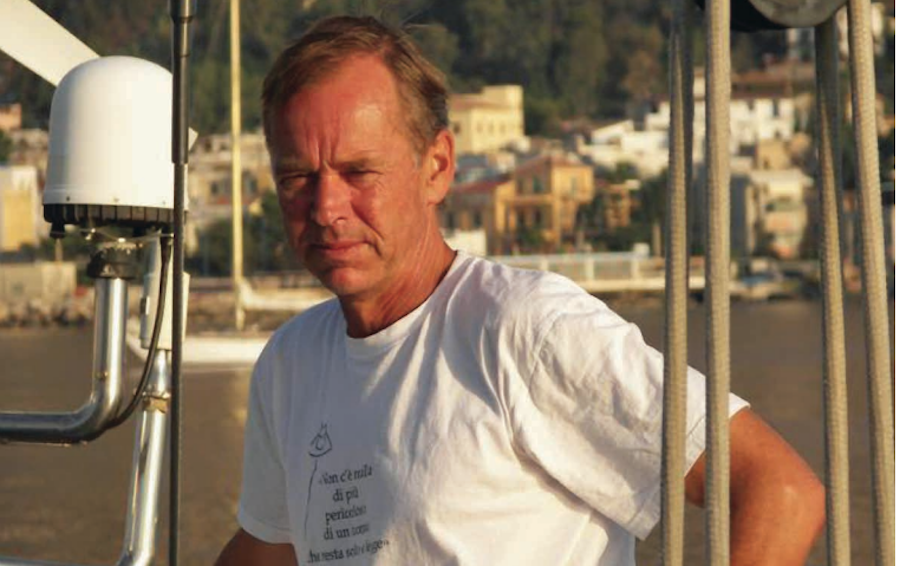
Björn, who speaks Italian very well, uses the English terms seaboard and seafaring in this case. But are you, Björn, a seafaring man? “It depends on what you mean. It is true that I have sailed a lot in the last 30 years, roughly 20,000 nautical miles, that I have lived on a boat full-time for six years, and that I still live there part-time. And that in the face of all this, it might be hard to argue that I am not a sailor. At the same time, however, I believe that I am not a seafaring professional, one of those who know it all. It is also true that I would have great difficulty living away from the sea…. I cannot see myself in a house in the middle of a forest or on top of a mountain.”. I would be almost, tempted, at this point, by the hundred-gun question. I’ll try to explain myself: I think those who have the sea in their hearts live differently, have a different behavioral code than those who feel nothing about getting lost in the blue. “I would like to think so. But this is not the case. I have met all kinds of people on the sea, good and bad, humble and boastful, poor and rich, brave and cowardly. Some buy luxurious boats just to show off in port, while others go out to sea with no intention of impressing anyone. Some sail to win regattas; some do it to escape the gray reality. Some sail to savor the beauty of the sea, others to keep fit…. No, I think the people of boats have the same varieties as the people of ter ra.” The great thing about summer up there in Sweden is that the light never dies. So at this hour, in the cockpit of Stornoway we’d still be there talking. Also about the America’s Cup, inevitable. Do you want to not ask Björn what his thoughts are on the trophy of trophies? “I am not a great friend of sports competitions in general when they are steeped in money. I remember once reading an article about the America’s Cup in which it was said that hiring a crane to lift the masts of boats engaged in racing costs as much as the entire budget allocated by the Swedish Sailing Association to support youth sailing schools. This is unreasonable, don’t you think?”
Never stop dreaming
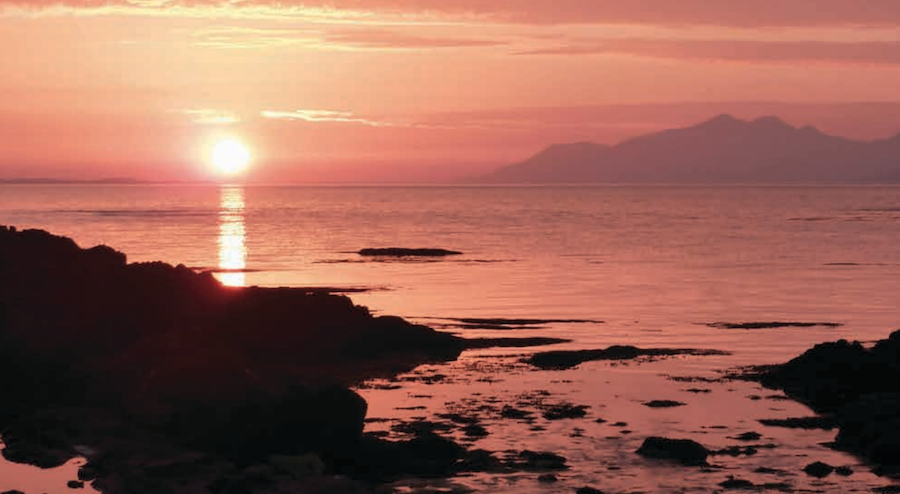
To be free, you write Björn, one must invest in dreams. Persevere, but with realism (I will never become an astronaut). You affirm that no one is a prophet of one’s own life, but you also suggest taking off autopilot and helming oneself not so much in the becalmed or the storm, but “in the trade wind of half-measures,” where “for the enterprising there is much to be accomplished.” You also argue that there is no such thing as the ideal boat, except the sailboat that is “paid for, well equipped and ready to go.” Ultimately, you always end up there: the right to travel is to dream. But do you, Björn, still dream? “I always dream of changing my life. To make it better. And I try to do something to achieve that. There are so many interesting experiences to be had: sailing, making friends, seeing new places – possibly with my boat -, books to read and write, knowledge to assimilate, music to discover. Nor would I say no to falling passionately in love. I would like to have many lives, but I accept the idea of having only one and try to make the latter the best possible one. e”. Darkness is never completely impenetrable. There is always some light (MacDuff’s word).
by Fabio Pozzo
Check out the latest issue

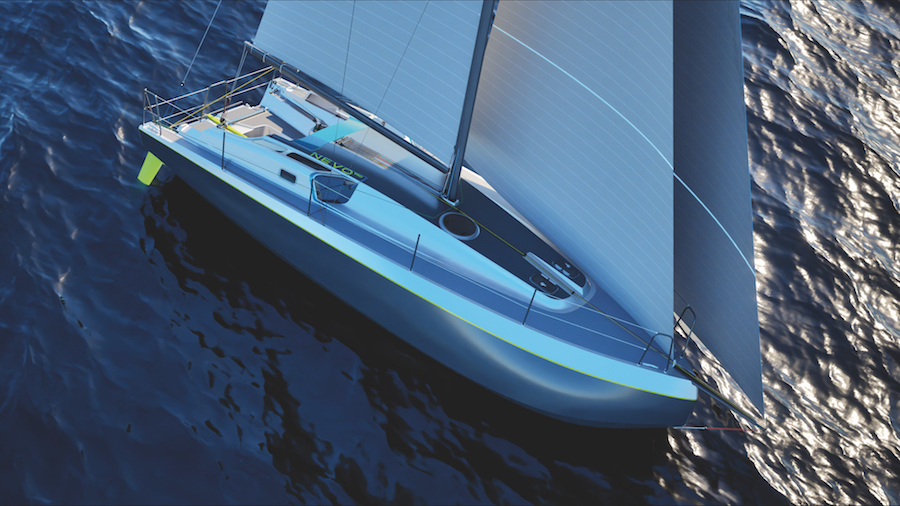
Michele Molino, nautical engineer with the sea in his vein
On the occasion of the 50th anniversary of the Journal of Sailing, the great excellences of the sailing world tell their stories and reveal their projects. In this column, discover all the companies and people who have made important contributions
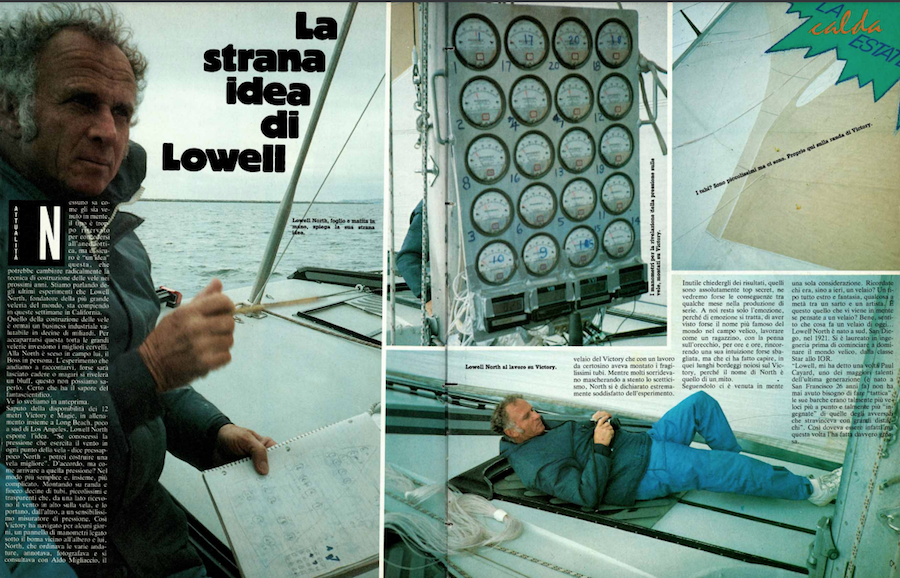
1985. The sails of the future are being born. The GdV is in, with Lowell North
Welcome to the special section “GdV 5th Years.” We are introducing you, day by day, An article from the archives of the Journal of Sailing, starting in 1975. A word of advice, get in the habit of starting your day
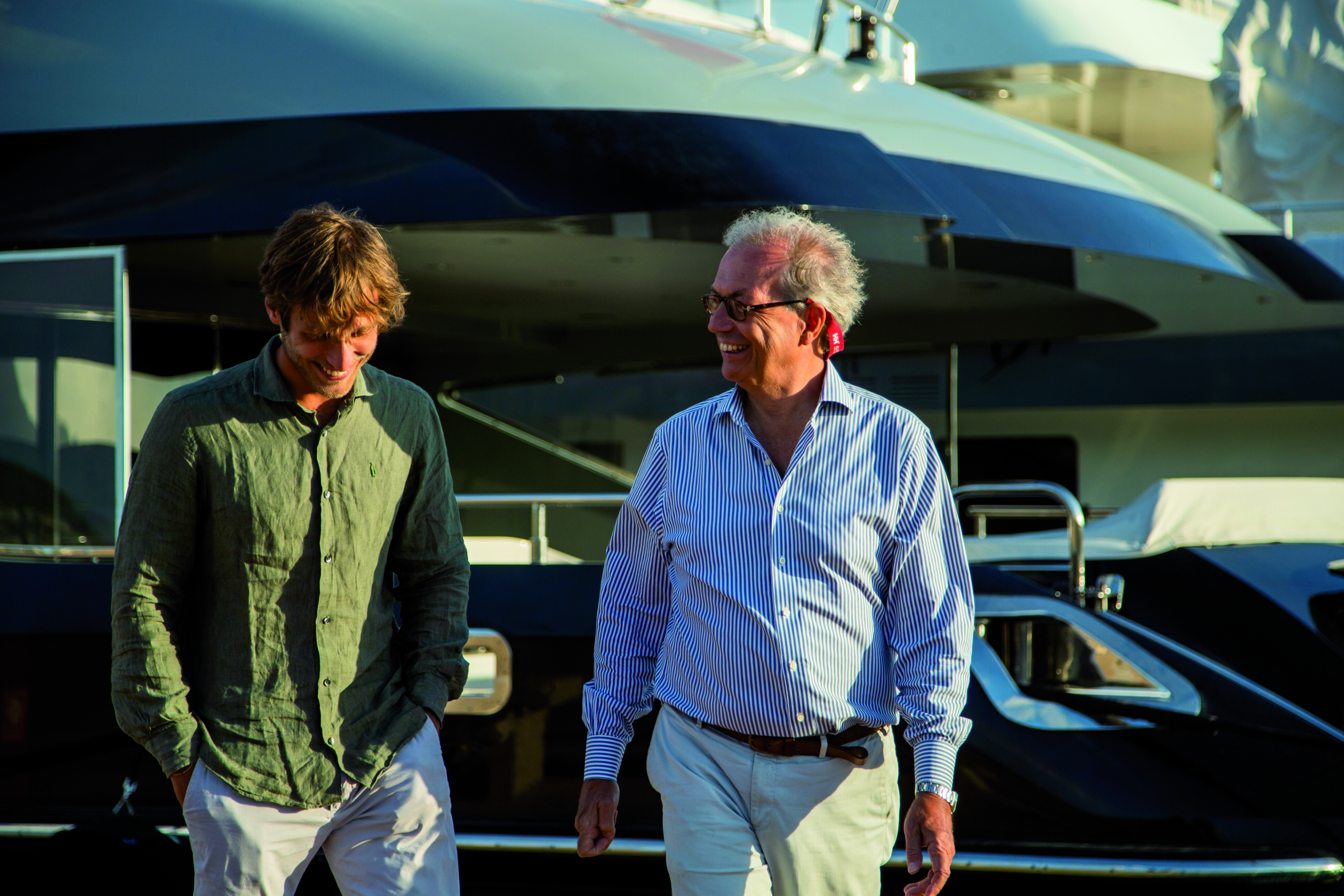
Marinedi, the integrated hospitality system
On the occasion of the 50th anniversary of the Journal of Sailing, the great excellences of the sailing world tell their stories and reveal their projects. In this column, discover all the companies and people who have made important contributions
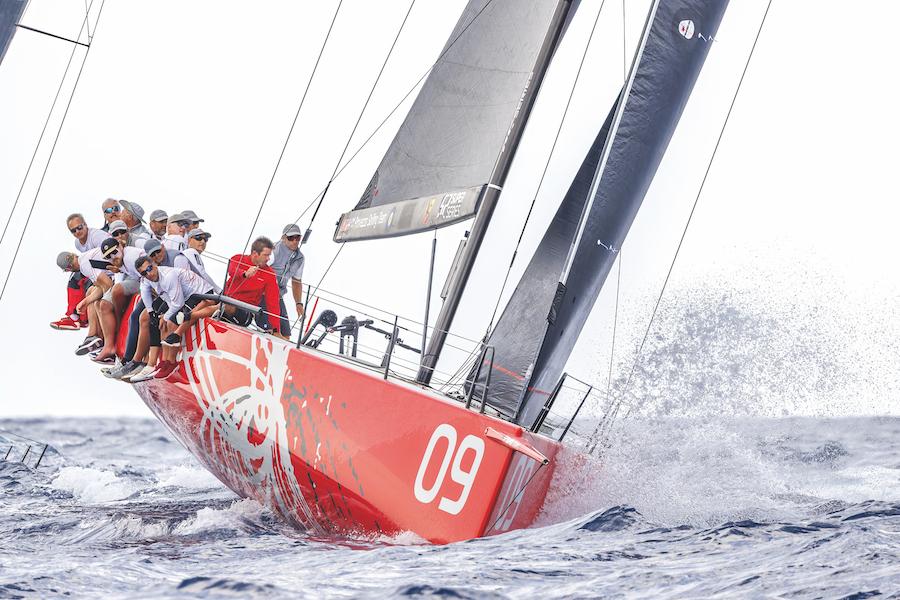
Naval revolution goes through Judel/Vrolijk study
On the occasion of the 50th anniversary of the Journal of Sailing, the great excellences of the sailing world tell their stories and reveal their projects. In this column, discover all the companies and people who have made important contributions

