Welcome to the special section “GdV 5th Years.” We are introducing you, day by day, An article from the archives of the Journal of Sailing, starting in 1975. A word of advice, get in the habit of starting your day with the most exciting sailing stories-it will be like being on a boat even if you are ashore.
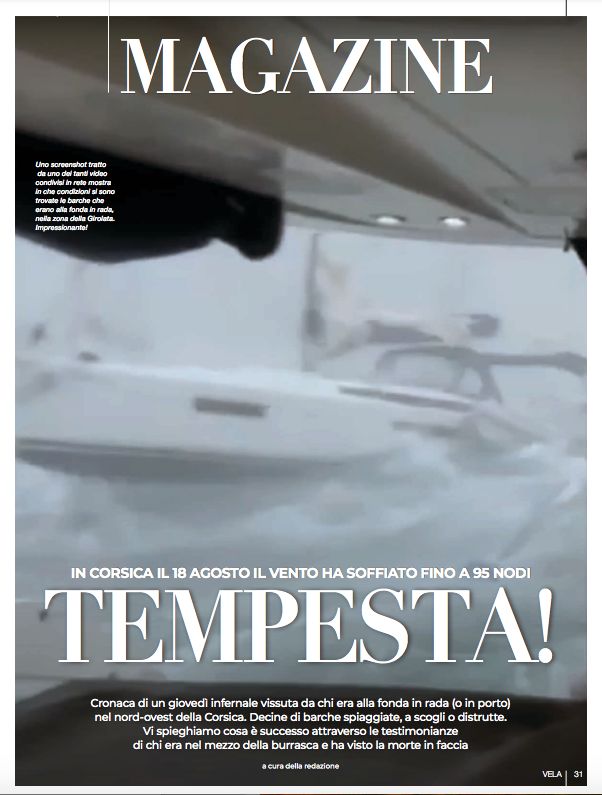
When the wind suddenly blows at 95 knots
Taken from the 2022 Journal of Sailing, Year 48, No. 09, October, pp. 31-36.
Corsica experienced one of the most terrible storms in the history of the Mediterranean Sea on August 18, 2022. Dozens of boats beached, rocked or destroyed. Extraordinarily warm water from a climate gone mad caused winds of over 90 knots. Birth of the “Medicane” that no weather forecast can anticipate.
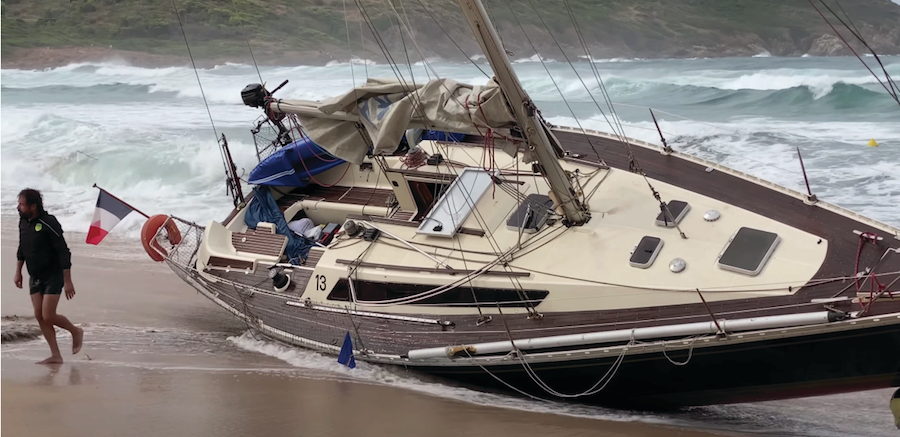
Chronicle of a hellish Thursday experienced by those at anchor in roadstead (or harbor) in northwest Corsica. Dozens of boats beached, rocked or destroyed. We explain what happened through the testimonies of those who were in the middle of the gale and saw death in the face
According to the greatest navigators, the Mediterranean is one of the most dangerous seas, because unlike the Oceans it is unpredictable: and the extraordinarily warm water of the Mare Nostrum is leading, as was logical to expect, to extreme weather phenomena. Hardest hit was Corsica: on Thursday, August 18, between 7 and 9 a.m., a sudden squall (forecasts spoke of harsh conditions coming, but not so harsh) hit the island with winds, especially in the northwestern part of the island (Saint Florent, Ile-Rousse, Calvi, Girolata…), that exceeded 90 knots (with peaks of 225 km/h). For those at anchor in the roadstead, or even in the marinas, all hell broke loose. You can get an idea of the magnitude of the phenomenon from the numbers communicated by Cross Med, the French Ministry of the Sea’s rescue and salvage organization: in the 24 hours following the event, there were 110 rescues at sea (to boats that ended up on rocks, on the beach, or devastated by the storm-some saw catamarans flying!). There were 500 people assisted, 48 boats beached. There were also two victims (a canoeist and a fisherman). Before reporting to you the testimonies we received in the newsroom (some are really goosebumps), it is important to understand why the phenomenon occurred. And most importantly, what to expect in the coming years. Are we heading for increasingly frequent “medicanes” and storms?
What really happened in Corsica
Broadening the horizon, the event on Thursday, August 18, affected all of Europe, with Corsica at the forefront. The storm system that swept over the French island and Italy (Tuscany and other parts of central and northern Italy were hit by severe weather, even Soldini’s trimaran was hit by a whirlwind while on a construction site reservoir near Marina di Carrara) had this devastating impact partly because of the very warm sea. In the facts, this mesoscale thunderstorm system started from the Balearic Islands, ending its course even in the Czech Republic. The origins can be traced to the heat that the long-lasting African anticyclone brought the Mediterranean Sea to abnormal temperatures with a sea surface 5°C above normal. This was undoubtedly the “gasoline” that fueled a phenomenon of such magnitude. Numerous media outlets, both national and international, then discussed the Derecho phenomenon as hypothesis. They explained this well in IconaClima magazine, where Federico Pavan of Pretemp explains why this hypothesis is very plausible. “Derecho” is a Spanish term used in the United States that means “direct,” “on a direction. Derecho is a peculiar and rare convective phenomenon that can be classified as such when a Mesoscale Convective System (MCS) maintains winds of at least 93 km/h for at least 400 km (source: US National Weather Service). This certainly did. In particular, this can be categorized as a “Serial Derecho,” that is, a derecho resulting from a thunderstorm line containing multiple arcing echoes within it (as happened especially after the Apennines overtopped) and formed in the presence of organized low pressure areas.” The bow-echo, or bow-echo, is a particular type of thunderstorm in which a linear multicellular system takes on an arcuate shape in its advancing direction, due to the action of strong currents entering from the rear of the thunderstorm (rear inflow jet). “The derecho in question,” Federico Pavan continues, “formed overnight around the island of Majorca and has not stopped since: Corsica was hit hard, taking winds of up to 224 km/h; the whole belt between La Spezia and Livorno and extending to the northeastern Italian border, with winds first up to 140-150 km/h on the Liguria-Tuscany border and then persistent up to or over 100 km/h (see Venetian); Slovenia, central-eastern Austria, and finally southern Czech Republic. In total the convective system covered more than 1500 km, but for derecho classification the stretch between western Corsica and Venetian is sufficient. The criterion is therefore abundantly fulfilled.”
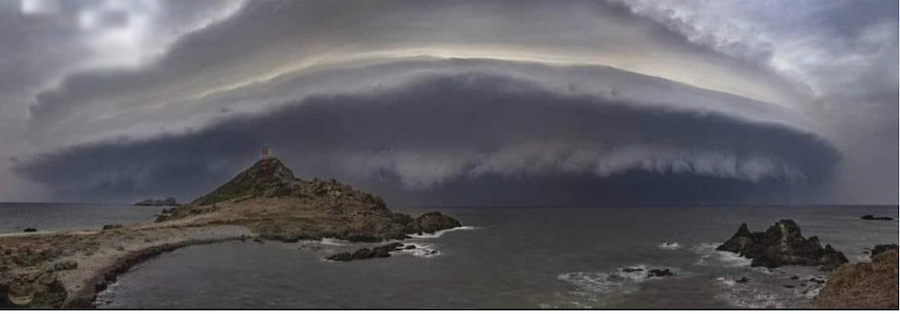
Testimonies from hell
And now, let’s come to the testimonies of those who were in the midst of The first comes to us from Vincenzo Onorato, a shipowner and very passionate sailor (by the way, go read his article on page 112!) who was in Corsica cruising with his beloved Swan 65 Mascalzone Latino. “We were at the Cap Corse,” Onorato recounts. and we caught an incredible mistral blow: 95 knots of wind and sea like mountains. We had damage to rigging and sails, smashed boom, forestay, vang. Even a wave bent the stern pulpit. In addition, the wind disintegrated the mainsail and foresail, otherwise okay, but I have to put the boat back together. And to think that I had not gone out blindly, but looking carefully at the bulletins (I look at 6 of them) including Meteo France and they were giving 20 knots, maximum 30 knots“. More testimony comes to us from Roberto Beccari, a truly impressive account that, at its core, contains another chilling tale. We leave it in the present tense so as not to alter the excitement.”We had a transfer planned and it was skipped; it’s a big weather mess here in Corsica. We caught a thunderstorm this morning with gusts up to 50 knots. The anchor plowed and I’ll let you imagine the chaos. There were other less intense but still significant episodes. We hope this night will be kind; we are exhausted and determined. Then I received a request for help from a friend’s boat to track down some friends of hers, a family on a boat like us in Corsica. They had received no further news. I tried various ways and gave the number of the captain’s office in Girolata where they had last had contact. I am forwarding the message her friend sent about what happened, the same day we had our “problem.” “We are alive by a miracle…alive and unharmed (physically). We saw death in the face. Apparently they recorded wind 300 km/hour then everything blew. We escaped from the boat on the dinghy, the wind capsized us, we were rescued by Frenchmen on a catamaran then from there the Girolata captaincy took us all ashore. It was hell!!! The army and civil defense intervened. From the beach the helicopters rescued the injured and from the sea they then evacuated everyone. They took us to Porto, a nearby village where electricity and connections were down, but at least with water. We found a small hotel to stay in while we were waiting to figure out what to do. The boys are shocked, but we have to see if the boat is in any condition to move. The moorings have held, but they’ve been coming at us. There is still a weather alert. Let’s wait until it’s possible to come back and figure out the damage. We were about 50 boats and at least 20 sank or ended up smashed on the reef “.
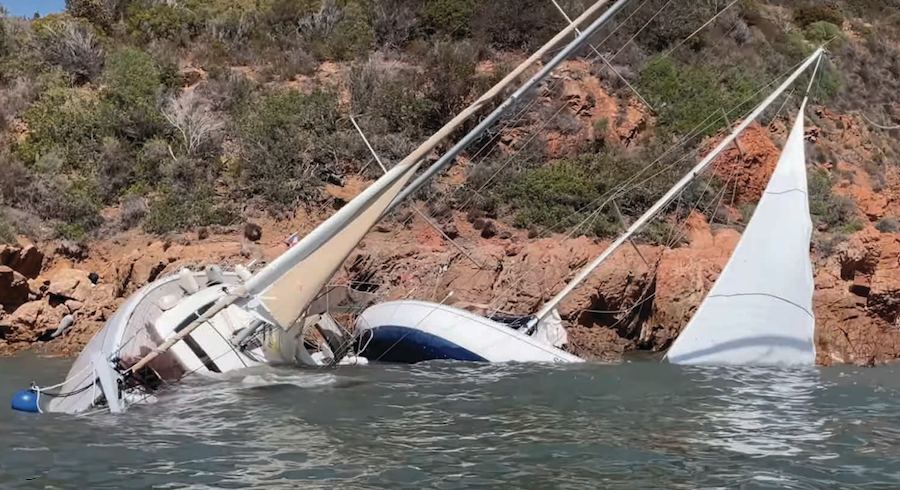
When the wind is blowing at 90 knots you can do very little….
We close with a clear-headed reflection, posted on Facebook, by sailor and writer Luciano Piazza: “I have read the most disparate advice on how to deal with situations similar to the tragic one of the past few days in Corsica. Most betray an absolute lack of knowledge of truly harsh sea conditions and are probably the result of literature that has been misunderstood or misinterpreted “. Piazza, who is a navigator with long experience, in the post, “demolishes” the whole theory on behaviors to be enacted in a gale (escape, hood, heading out to sea, lines aft, floating anchor at the bow, returning to port, and so on) and concludes, “What would I have done? I probably would have ended up on the rocks like everyone else, because, if I read correctly, at the Girolata the boats that stayed afloat dismasted anyway. What wouldn’t I have done? I wouldn’t have left the tender tied out, I wouldn’t have left the lazy bags open, I wouldn’t have left the bimini open. That’s because the forecast, while not 90 knots, was bad. I with forecasts of 20 knots tie the tender on deck, with more like 30 I deflate it and put it in the locker. 90 knots does not even remotely resemble the 30, 40 or 50 that more or less everyone once saw “.
Edited by the Editorial Board
Check out the latest issue

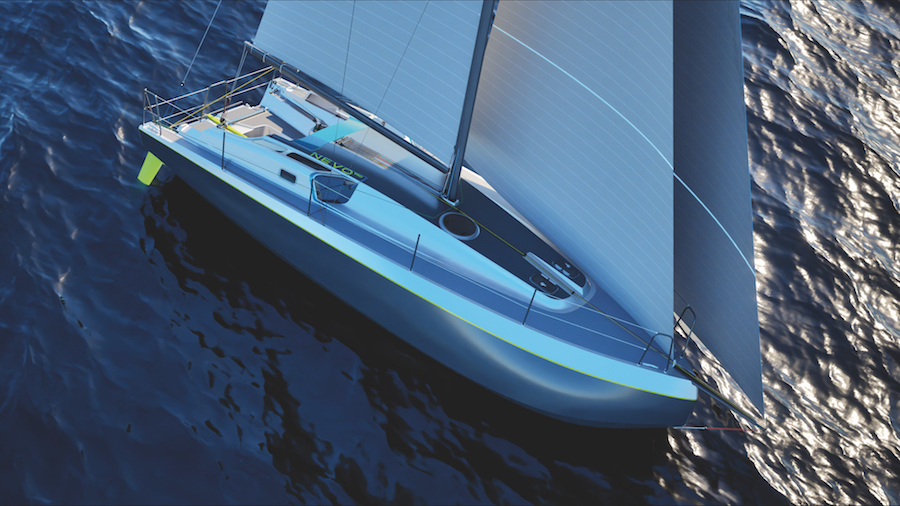
Michele Molino, nautical engineer with the sea in his vein
On the occasion of the 50th anniversary of the Journal of Sailing, the great excellences of the sailing world tell their stories and reveal their projects. In this column, discover all the companies and people who have made important contributions
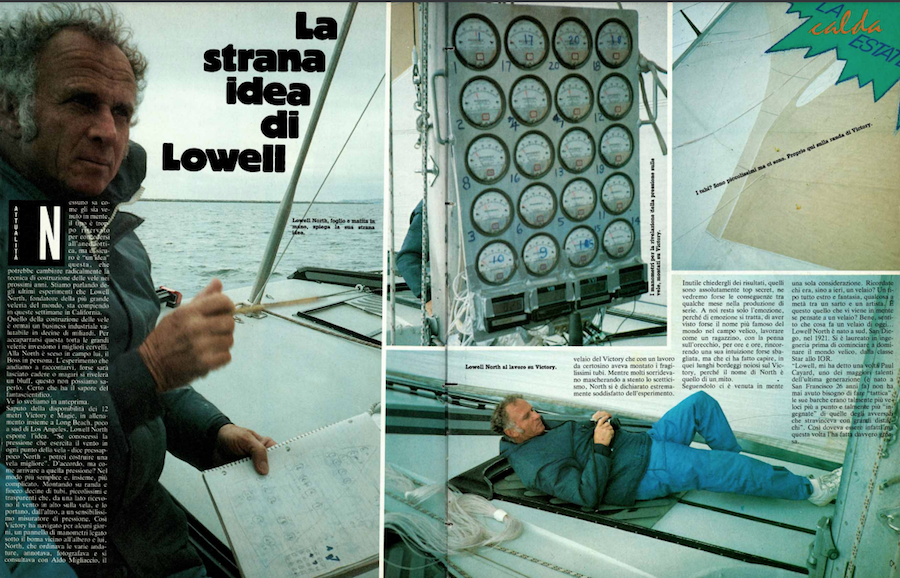
1985. The sails of the future are being born. The GdV is in, with Lowell North
Welcome to the special section “GdV 5th Years.” We are introducing you, day by day, An article from the archives of the Journal of Sailing, starting in 1975. A word of advice, get in the habit of starting your day
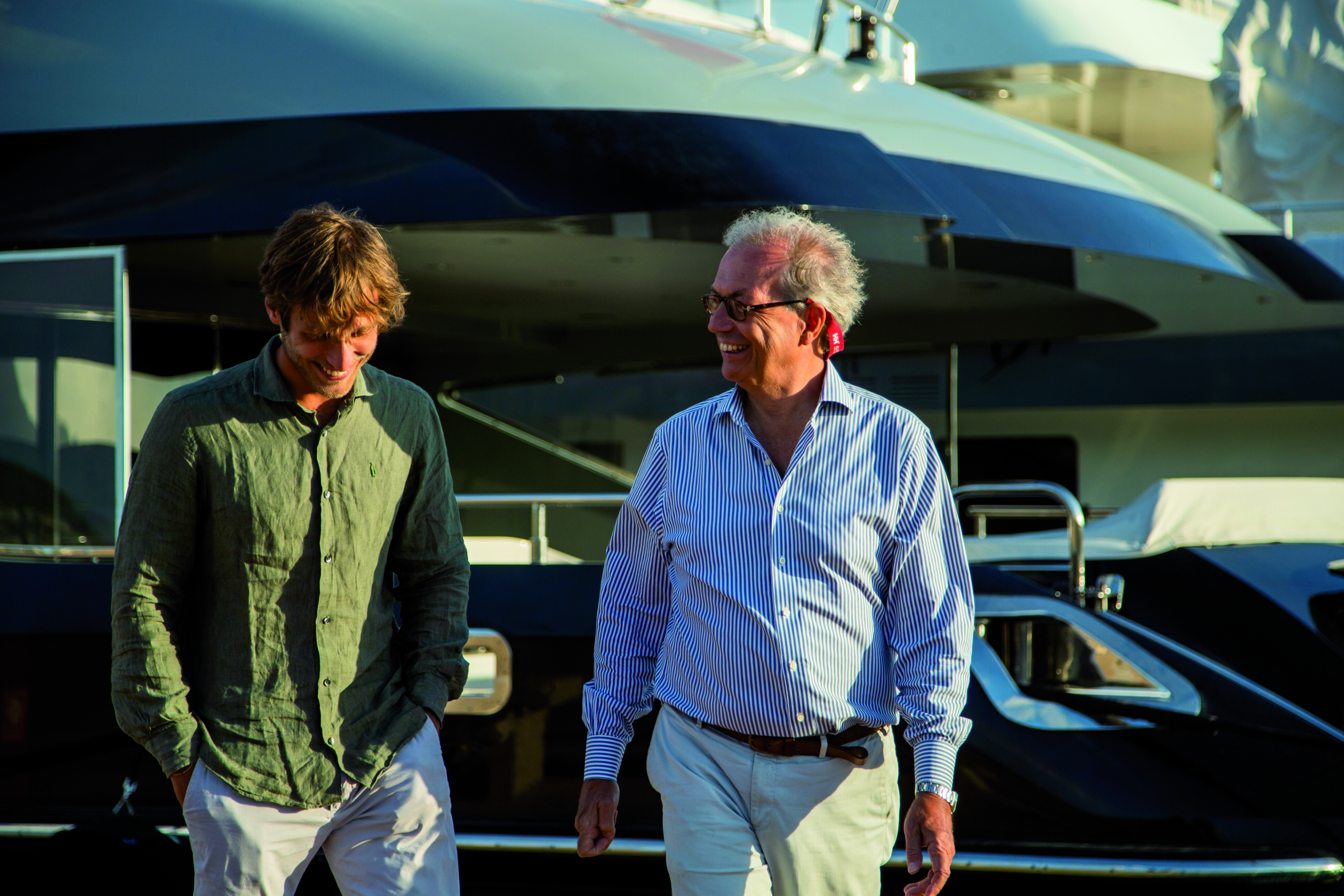
Marinedi, the integrated hospitality system
On the occasion of the 50th anniversary of the Journal of Sailing, the great excellences of the sailing world tell their stories and reveal their projects. In this column, discover all the companies and people who have made important contributions
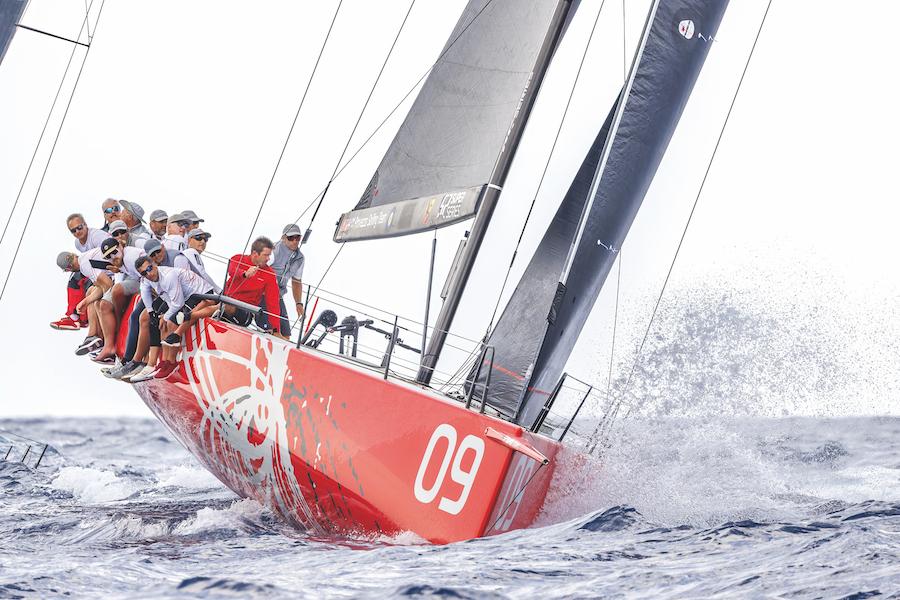
Naval revolution goes through Judel/Vrolijk study
On the occasion of the 50th anniversary of the Journal of Sailing, the great excellences of the sailing world tell their stories and reveal their projects. In this column, discover all the companies and people who have made important contributions

