
On the occasion of the 50th anniversary of the Journal of Sailing, the great excellences of the sailing world tell their stories and reveal their projects. In this column, discover all the companies and people who have made important contributions to the multifaceted world of sailing, which enables us all to go to sea in all forms and contexts.
In this episode, we take you on a tour of the history and news of Roberto Biscontini, a life dedicated to design, from his “heroic” debut at the age of 18 to the heights of the America’s Cup and the challenges of mass production.
“My signature? A boat that speaks to you from the helm.”
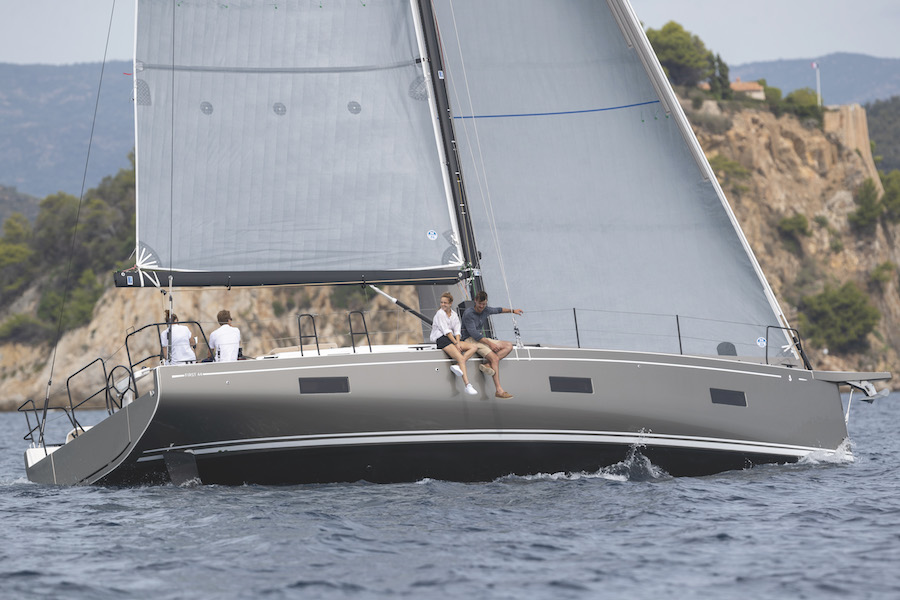
In conversation with the designer who made sailing history, from the Moro of Venice to successes with Bénéteau. A journey between America’s Cup and the challenge of creating fast boats for everyone.
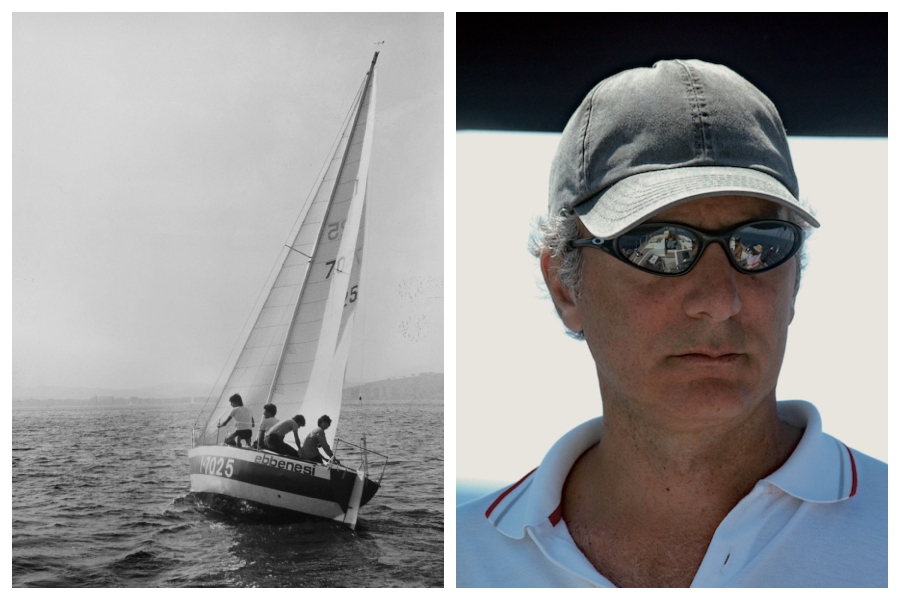
A designer can be judged by his boats, but he can be understood by his words. And those of Roberto Biscontini tell a story that spans several decades of yacht design, uniting two seemingly irreconcilable worlds: the Olympus of the America’s Cup, where the only goal is pure speed, and the complex universe of mass production, where performance has to come to terms with comfort, cost and the market. A path started not by chance, but by a specific vocation. “I was born as a sailor, but already from a very early age I had a lot of curiosity to understand why some boats went better than others,” Biscontini recalls. When he was only 18 years old, he accomplished a feat that he himself calls “heroic.” He designed and together with a friend built his first boat: Ebbenesì, an IOR quarter tonner. “We were in Pesaro, I had limited means and little technical knowledge, but somehow I had managed to figure out the ingredients to make a boat fast.” That boat won immediately, and the success was such that it marked his future. “If it hadn’t gone so well, I would probably be doing another job today.”

From art to science
To turn instinct into expertise, you need to go further. In the 1980s, yacht design was not recognized as a real profession. “I left for England with a brochure in my pocket, not really knowing what I would find. But it was the only place in the world with a yacht design course.” In Southampton he found his size: “From day one I knew it was where I belonged.” Fellows included future notable names such as Aldo Sciomachen, Marc Lombard, Malcolm McKeon, and Giovanni Belgrano. But it was with his subsequent master’s degree in Aeronautical Engineering at Cranfield that his vision changed forever, marking the transition “from art to science, from pure intuition to the reality of numbers.” An unstoppable process, fueled by a digital revolution that Biscontini experiences firsthand. “When I started, everything was done by hand,” he explains. “Today with more and more powerful software, the three-year design work for the Moor of Venice, with its 25 models in a naval tank, a team does it in a few weeks.”
Roberto Biscontini. The leap to Olympus with The Moor of venice
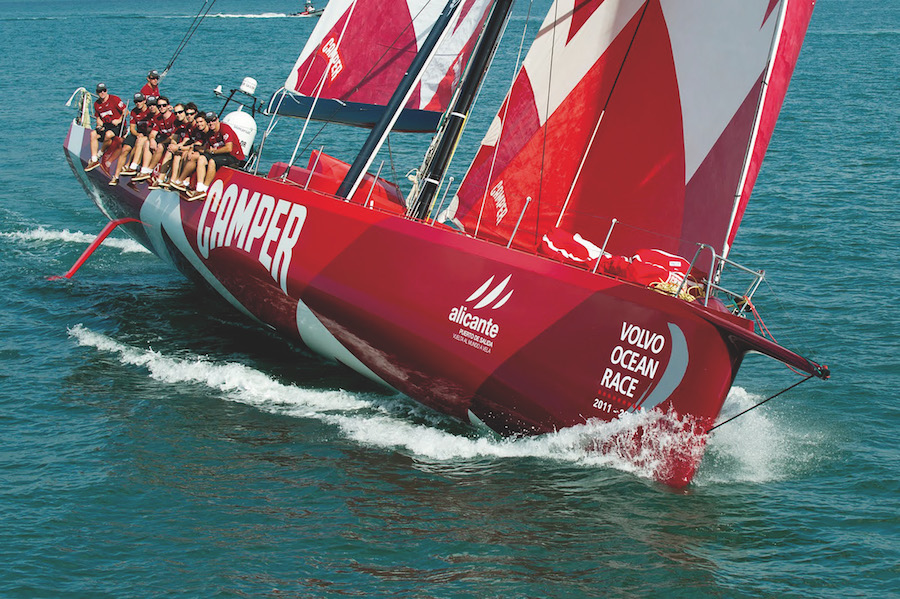
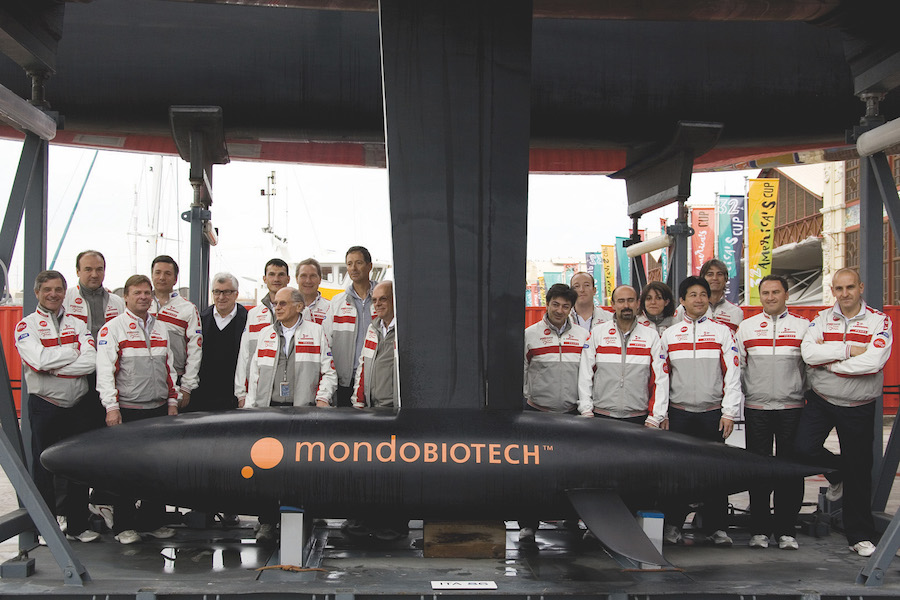
In 1989 came the call that changed his career: the Moor of Venice. Raul Gardini wants to win the America’s Cup. He entrusts the project to his trusted helmsman, Paul Cayard, and a team of American professionals. That team has a shortlist of names in its pocket for the design, and among them is Roberto Biscontini. “It was a call I did not expect, the classic dream come true. Until then I had been working on racing projects with limited resources, and I found myself catapulted into another world . I felt like a kid in a candy store: I had everything at my disposal, technical, economic, human resources. But most importantly, for the first time, I could test ideas without limits.” . From that campaign he learned a key lesson: in the Cup, the real customer is the sailing team. “They are the ones who ultimately decide what kind of boat they want. The dialogue between the design team and the sailors is continuous, and from those meetings I learned a lot of things that have served me well for everything that came after.” Thinking back today on the Moro of Venice can almost make one smile. “We were still using the naval tank: building models, testing them for weeks, analyzing data with a not insignificant margin of error. It was a long and imperfect process.” Today CFD (computational fluid dynamics) has changed everything: “A current team does the same work in a few days, with an accuracy that was unthinkable then.” That campaign of the Moor culminated in the Louis Vuitton Cup victory, the first by an Italian team. And it marked the beginning of a top career for Biscontini: in the following years he would work with Pact 95 (1994- 1995), Young America (1996-2000), Oracle (2000- 2003), Luna Rossa (2003-2007, one of three principal designers), Team New Zealand (2007-2010, one of two principal designers) and Luna Rossa (2011-2013) on a 25-year-long journey to the highest level of world sailing. The year 2007 represents a symbolic point of arrival. “Introducing the new Team New Zealand at one of the temples of world sailing, the Royal New Zealand Yacht Squadron, I’m a long way from home,” he recalls. “I hardly know anyone but I am one of the two principal designers of the new team. I feel like I’ve always raced a lot over the years, always relaunched, and obviously I must have done something good to be there at that time “. That edition of the Cup, however, sadly skipped because of the historic court dispute between Oracle e Alinghi. “We, however, as Team New Zealand worked long and hard on what was to be the new class, the AC90s and later the AC33s ( basically always big TP52s, ed.). With the Cup stopped, we focused on the Volvo Ocean Race, designing the Volvo 70 Camper, which came second in the 2011/2012 edition.”
An equally difficult challenge: serial boats
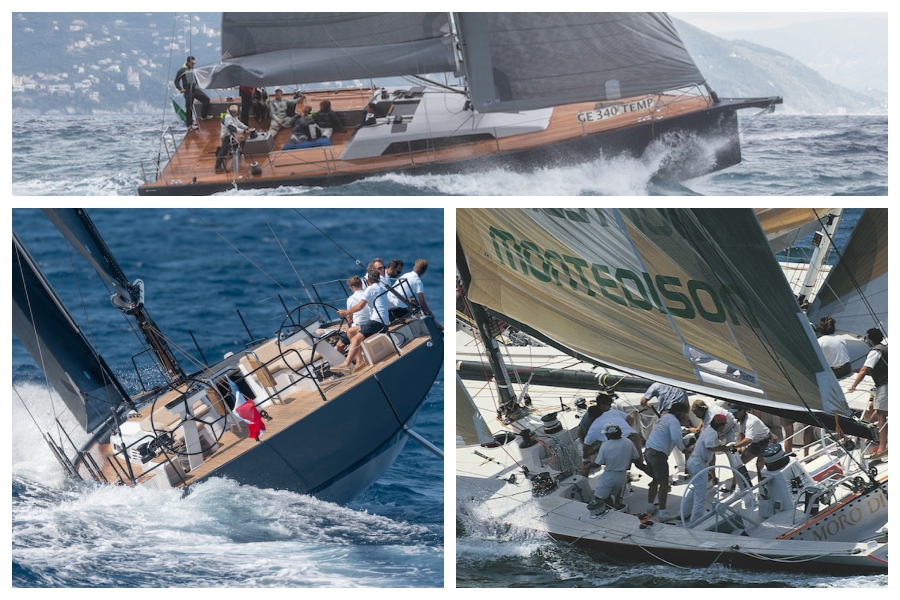
After 25 years at the top, in 2013, Biscontini decided to make a change. Not out of fatigue, but out of vision. “I had been wanting to do other things for a long time as well, and I felt the need to decant the knowledge from the Cup into everyday boats.” The first challenge is theAdvanced A44, a racer-cruiser with which he immediately wonEuropean Yacht of the Year in 2015. It is proof that his philosophy can work outside the racing bubble. But it is with the start of his partnership with Bénéteau in 2017 that he faces his most complex test. “In the America’s Cup, the goal is one: to make the fastest boat. In production boats, the goals are multiple and often conflicting.” Around the table sit marketing, salespeople, the naval architect, the interior designer, and the shipyard. “I pull from the performance side, they want to keep costs down and put in everything. It’s a very complicated process, a subtle balancing act.” Enemy number one? “Weight,” he answers without hesitation. “It is the biggest constraint, the one that deteriorates performance the most. My biggest challenge has been just that: how to be able to make a boat that is fun, that is alive at the helm, while still having significantly more weight than you would like.”
Roberto Biscontini ‘s signature
Despite the compromises, there is one element he never gives up: the pleasure of helming. This is, today, his true signature. “What I always try to do is to create a whole that works well, that gives you good feelings. The connection between the brain and the boat is through the helm, it’s what gives you feedback and makes you enjoy boating.” This search for the perfect balance between the hull, appendages, and sail plan can be found in the successes created for Bénéteau, such as the First 53. “It was the first boat I did with Bénéteau,” Biscontini explains, “a large boat that, for a number of reasons, came out particularly beautiful and successful.” This was followed by other successful models such as the First 44, Oceanis 54, and Oceanis 60. Looking at the market, Biscontini notes an interesting trend. While boating is pushing toward “sometimes excessive luxury, turning sailboats into floating villas,” there is a perception of “a return to the roots.” “There is a certain share of boat owners who are returning to more essential sailing. There is a desire to leave too many ‘toys’ at home to rediscover the real pleasure of sailing.” And it is precisely in this desire for authentic and fun sailing that Roberto Biscontini ‘s mission remains the same: to create boats that, beyond pure performance, know how to excite those who wear them. A signature that you can’t see, but you can feel. Directly on the rudder.
50 years of the GdV: an opportunity not to be missed. Also for your brand
To celebrate its 50th anniversary, Il Giornale della Vela is organizing the largest communication campaign in its history, which will reach a total audience of 2,000,000 “sea lovers” interested in the world of sailing.
How? Deploying all its communication channels: magazine (paper+digital), websites, E-mail marketing, social (facebook/instagram). The certainty is that 2 million interested people will be reached to whom you can tell your company’s story.
Why you’d better embark with us
The Newspaper of Sailing proposes that all companies interested in the boating target audience tell their story, just as the GdV tells its own. Don’t worry, our journalists are on hand to help you produce attractive and effective text and images to reach two million “sea lovers.”
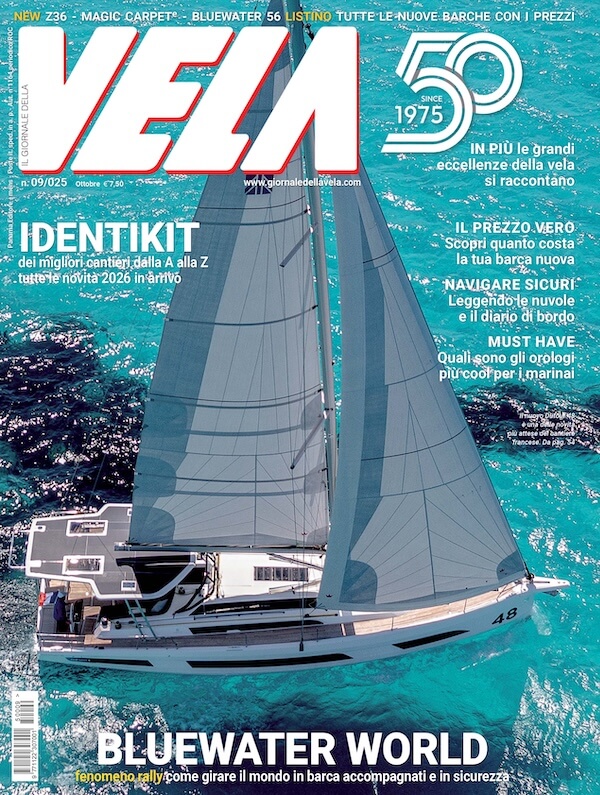
Check out the latest issue

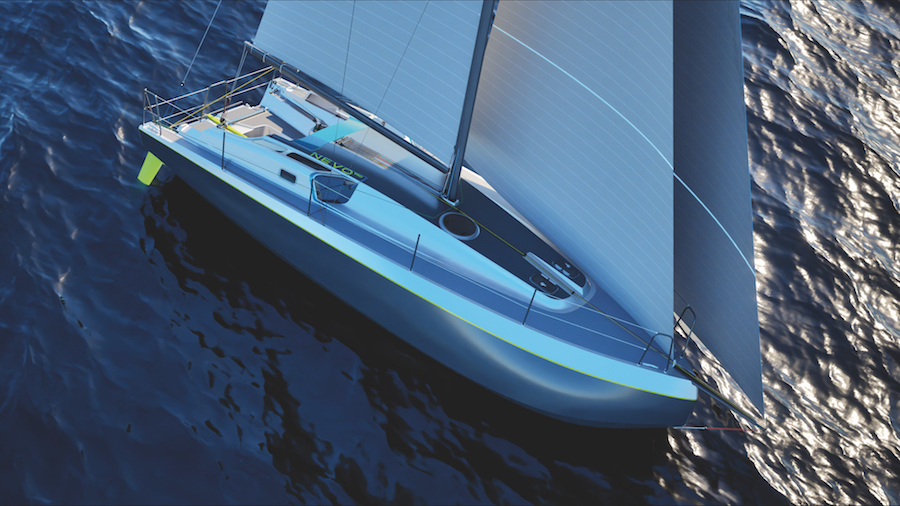
Michele Molino, nautical engineer with the sea in his vein
On the occasion of the 50th anniversary of the Journal of Sailing, the great excellences of the sailing world tell their stories and reveal their projects. In this column, discover all the companies and people who have made important contributions
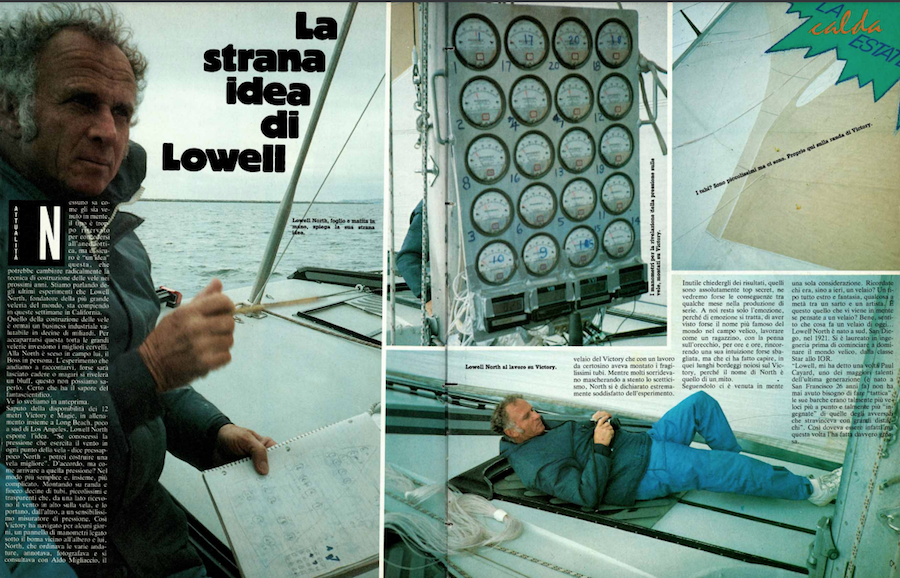
1985. The sails of the future are being born. The GdV is in, with Lowell North
Welcome to the special section “GdV 5th Years.” We are introducing you, day by day, An article from the archives of the Journal of Sailing, starting in 1975. A word of advice, get in the habit of starting your day
Marinedi, the integrated hospitality system
On the occasion of the 50th anniversary of the Journal of Sailing, the great excellences of the sailing world tell their stories and reveal their projects. In this column, discover all the companies and people who have made important contributions
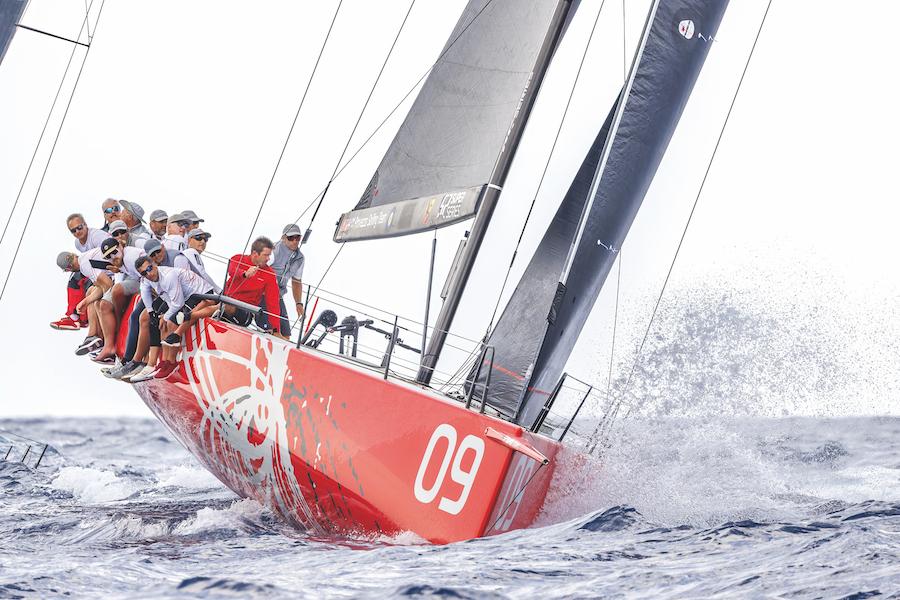
Naval revolution goes through Judel/Vrolijk study
On the occasion of the 50th anniversary of the Journal of Sailing, the great excellences of the sailing world tell their stories and reveal their projects. In this column, discover all the companies and people who have made important contributions

